Palazzo Salimbeni: history and curiosities of Monte dei Paschi’s headquarters
Simple Booking loading...
Introduction: an austere palace that hides 700 years of stories
Palazzo Salimbeni, sometimes called Rocca Salimbeni, is one of the most distinctive buildings in Siena’s historic centre. Although slightly set back from the main streets, this fortress‑like gothic palace stands in Piazza Salimbeni and serves as the historic headquarters of the Banca Monte dei Paschi di Siena (MPS). Founded in 1472 as a Monte di Pietà (charitable pawnshop) to lend money at low interest rates to citizens in difficulty , the institution adopted the name Monte dei Paschi in 1624 when the Grand Duke pledged revenues from the state pastures (paschi) of the Maremma as collateral . This guide traces the story of Palazzo Salimbeni and the bank, answers frequently asked questions, and explains how to visit it. It also suggests staying at Hotel Minerva as a convenient base for exploring Siena .
Historical origins and the Salimbeni family
When was Palazzo Salimbeni built?
The building dates from the 14th century. It was erected as a fortified residence by the Salimbeni family by enlarging a pre‑existing 12th–13th‑century castellare (fortified manor) . Parts of the original fortress, such as a truncated tower and brick walls at the rear, are still visible today .
Who were the Salimbeni?
The Salimbeni were a wealthy noble family active in Siena in the 13th and 14th centuries. Initially aligned with the imperialist Ghibelline faction, they rivalled the Tolomei family and amassed a fortune through grain and spice trading and early banking activities . Palazzo Salimbeni became their stronghold for nearly two centuries . The house welcomed illustrious guests: Emperor Charles IV of Luxembourg stayed here in 1355, and Charles of Valois (brother of the French king) visited half a century earlier . However, family fortunes declined due to conflicts with the city government; in 1419 the Republic of Siena confiscated the palace, ending the Salimbeni’s domination .
From castellare to bank headquarters
After the expropriation the building took on civic functions: part of it served as a customs office and tax house in the 15th century, while from 1472 it housed the newly founded Monte Pio, the original Monte di Pietà . Over subsequent centuries the palace underwent various adaptations. The decisive change came with Italian unification: in 1866 the Monte dei Paschi di Siena purchased the building, having absorbed Monte Pio and becoming a modern bank . Architect Giuseppe Partini remodelled the palace between 1877 and 1880: he raised some parts, demolished or rebuilt other wings, and gave the entire façade a neo‑gothic makeover to evoke Siena’s glorious medieval past . Partini also modified the adjacent palazzi Tantucci and Spannocchi, creating a unified scenic ensemble .
Later interventions included a restoration at the start of the 20th century by Carlo Ariotti and Vittorio Mariani . For the bank’s 500th anniversary in 1972, architect Pierluigi Spadolini modernised the interior while highlighting medieval structures: he recovered hidden elements, highlighted the original tower and inserted a dramatic elliptical staircase of reinforced concrete and wood at its base . Spadolini also created a permanent display of silk banners embroidered by Siena’s contrade (districts) in gratitude for the bank’s support of the Palio . The former church of San Donato, adjacent to the palace, was restored as a conference hall and gallery .
Piazza Salimbeni and architectural features
Neo‑gothic façade
Although it appears as an authentic medieval castle, Palazzo Salimbeni’s present façade is largely the result of Partini’s 19th‑century reconstruction. It features:
Trifore windows (triple lancet windows) framed by pointed arches and topped by a continuous battlement .
A string course of blind arches running under the merlons, inspired by the 14th‑century Gothic style of Siena’s Palazzo Pubblico .
No door at street level; instead, a small flight of steps leads to a raised Gothic portal, and the ground‑floor windows are set high above the street . Along with the heavy wooden door, these elements recall the building’s original defensive function .
Piazza Salimbeni
Palazzo Salimbeni stands in a small square set back from Via Banchi di Sopra. The square is enclosed on three sides by the palaces Salimbeni, Tantucci and Spannocchi. In the centre rises the statue of Sallustio Bandini, an 18th‑century economist and precursor of liberal theories, holding a book . Sculpted by Tito Sarrocchi in 1882, the statue commemorates Bandini’s donation of his library to Siena . At night the square is beautifully illuminated, highlighting the neo‑gothic façades and creating an atmospheric scene .
The square’s other palaces:
Palazzo Tantucci (on the left when facing Salimbeni) – built in the 16th century for the noble Tantucci family from Montepulciano; later used as a customs house and now offices of MPS .
Palazzo Spannocchi (on the right) – constructed in 1473 for banker Ambrogio Spannocchi by Giuliano da Maiano. Partini restored it in the 19th century to harmonise with the other buildings . Its façade is adorned with sculpted heads depicting famous figures and Roman emperors – an unusual decorative feature for a banking palace .
Visiting Palazzo Salimbeni: practical information
Because Palazzo Salimbeni remains an active bank headquarters, it cannot be visited freely like a museum. However, the bank opens its doors three times a year, offering free guided tours :
2 July (morning) – for the Palio in honour of the Madonna di Provenzano .
15 August (morning) – the eve of the Palio dell’Assunta .
First Saturday in October – during the national event “Invito a Palazzo”, when many Italian banks open their historic headquarters .
Tours are free and led by knowledgeable guides (often MPS staff). Visitors should arrive early (around 8:30) to queue, as admission is on a first‑come basis and visiting hours are typically 9:00–12:30 . During the tour you can see:
The historic offices of the Director and President with period furnishings and painted ceilings .
The Galleria Peruzziana, an elegant glass‑roofed corridor that was once an open loggia .
The Pinacoteca and Museo di San Donato (housed in the deconsecrated church) where part of the bank’s art collection is displayed. The MPS collection specialises in Sienese art from the 13th to the 19th centuries, with works by Jacopo della Quercia, Pietro Lorenzetti, Sano di Pietro, Domenico Beccafumi, Sassetta, Rutilio Manetti, Francesco Vanni and others . Visitors can also see illuminated manuscripts, coins and other precious objects .
The Historical Archive, which preserves original documents such as ledgers, credit certificates and diplomas dating back to the bank’s founding . During special tours even restricted areas like the vault or council chamber may be shown .
A complete visit lasts about 30–40 minutes and offers a unique glimpse into Siena’s economic and artistic heritage .
Getting there
Location: Piazza Salimbeni 1, along Via Banchi di Sopra in the heart of Siena .
By foot: from Piazza del Campo it is a five‑minute walk north along Banchi di Sopra . From Piazza Tolomei or Via di Città it is also just a few minutes away.
By train: the railway station is about 1.5 km away. You can take an urban bus to Piazza Gramsci (two minutes’ walk from Salimbeni) or use the escalator from the Porta Siena shopping centre to San Domenico and walk 10 minutes .
By car: the square lies in a pedestrianised Zone a Traffico Limitato (ZTL), so you cannot drive there. Leave your car at car parks such as Parcheggio Santa Caterina or Parcheggio Stadio/Fortezza and walk 10 minutes . Alternatively, staying at Hotel Minerva provides a private car park and a short ten‑minute walk to Palazzo Salimbeni .
Hotel Minerva: a perfect base
The article explains why Hotel Minerva is an ideal base for discovering Siena :
Easy access by car: the hotel sits just outside the ZTL but within the medieval walls, offering a private covered parking garage .
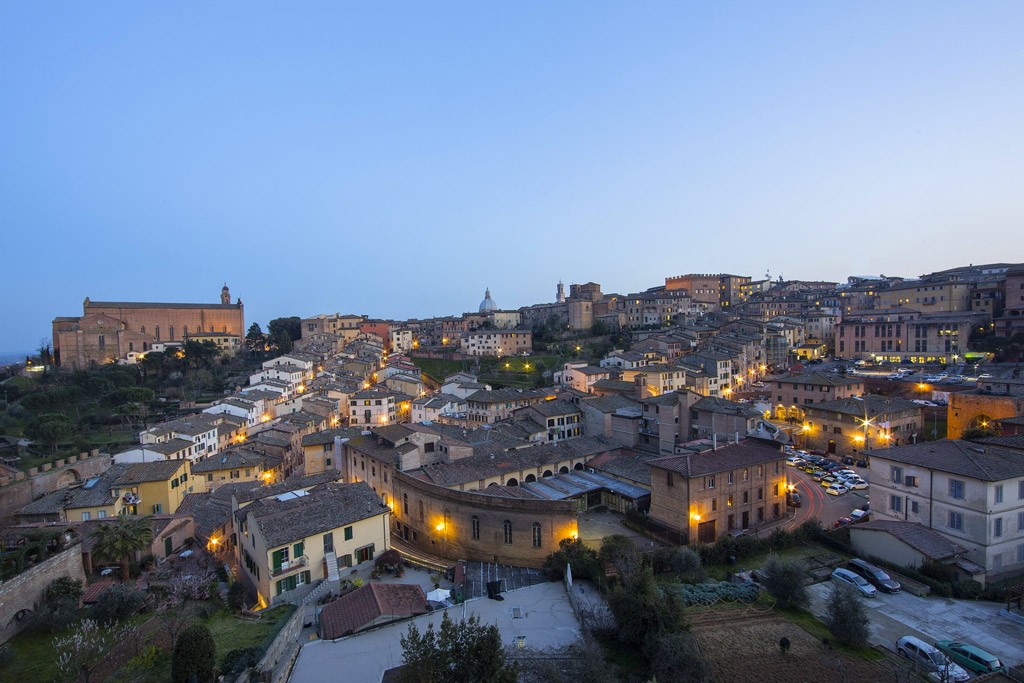
Central yet quiet: Piazza del Campo is a 15‑minute walk; the Duomo about 17 minutes; the Fortezza Medicea 13 minutes; Palazzo Salimbeni only 10 minutes; and the railway station 1 km away . The hotel’s location makes it possible to return during the day for a rest or to drop off shopping .
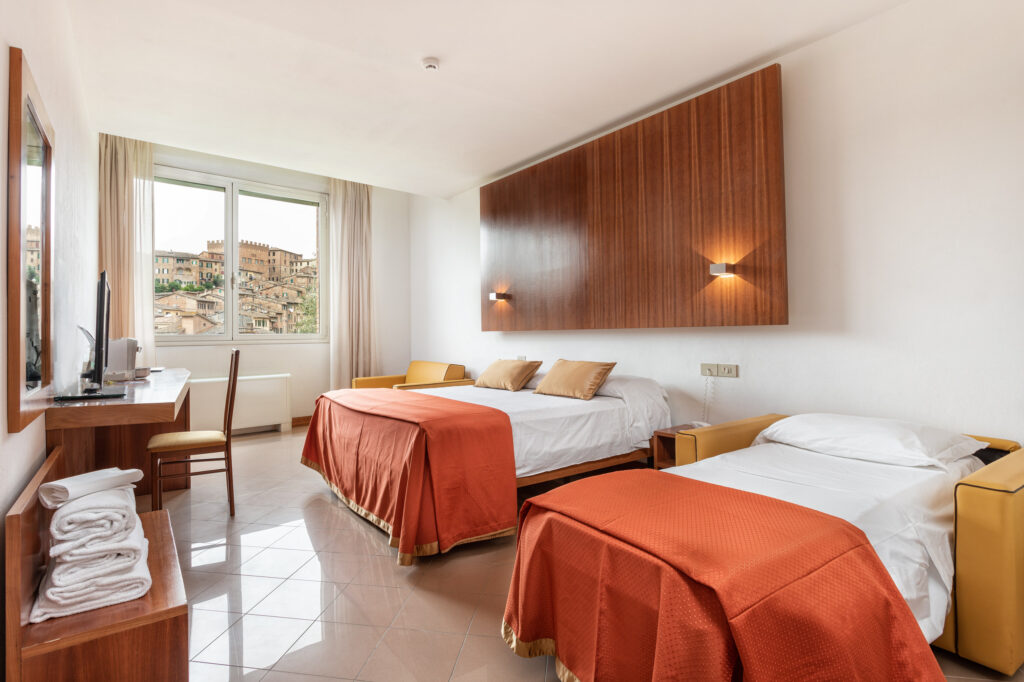
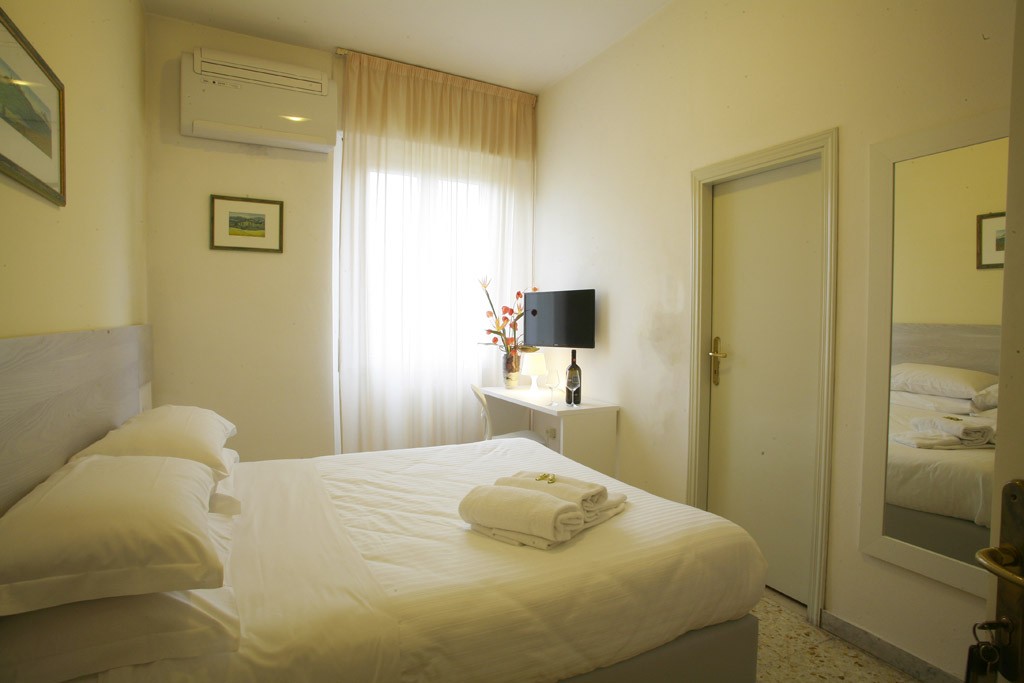
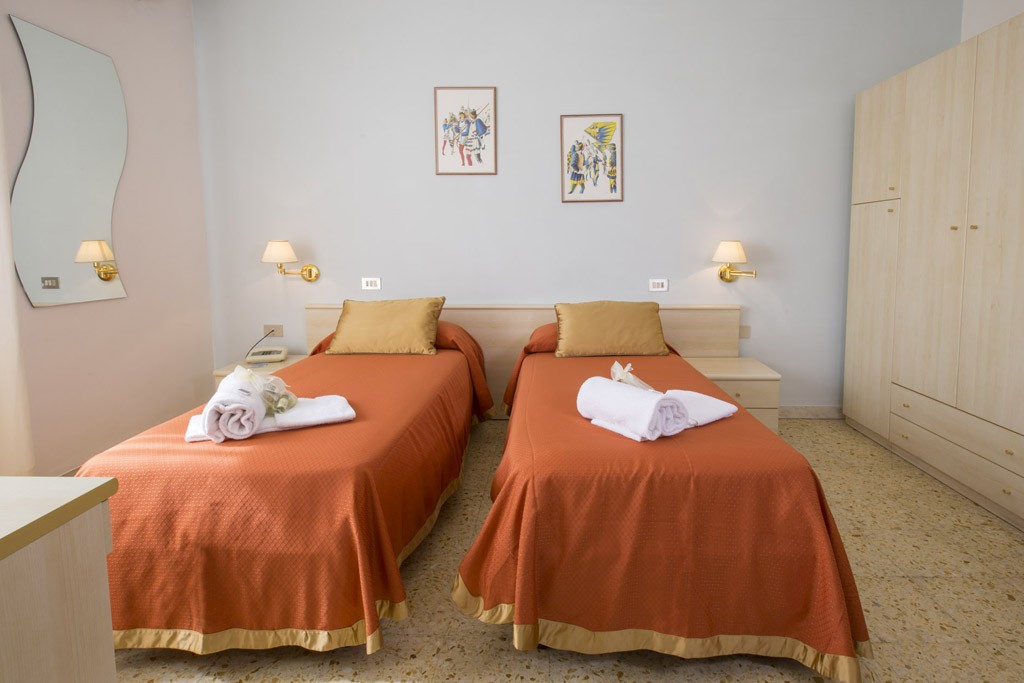
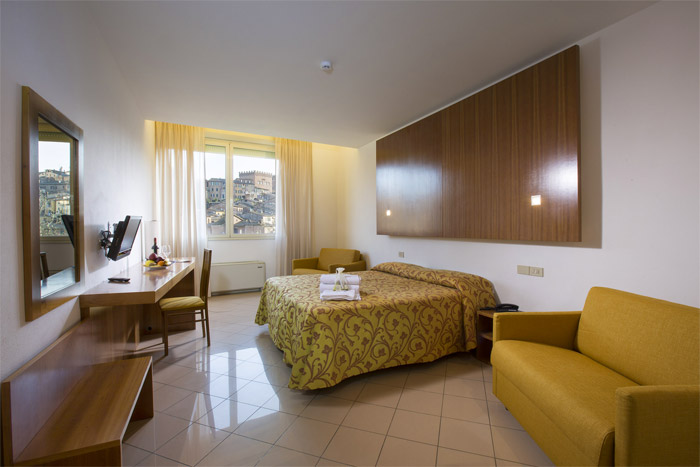
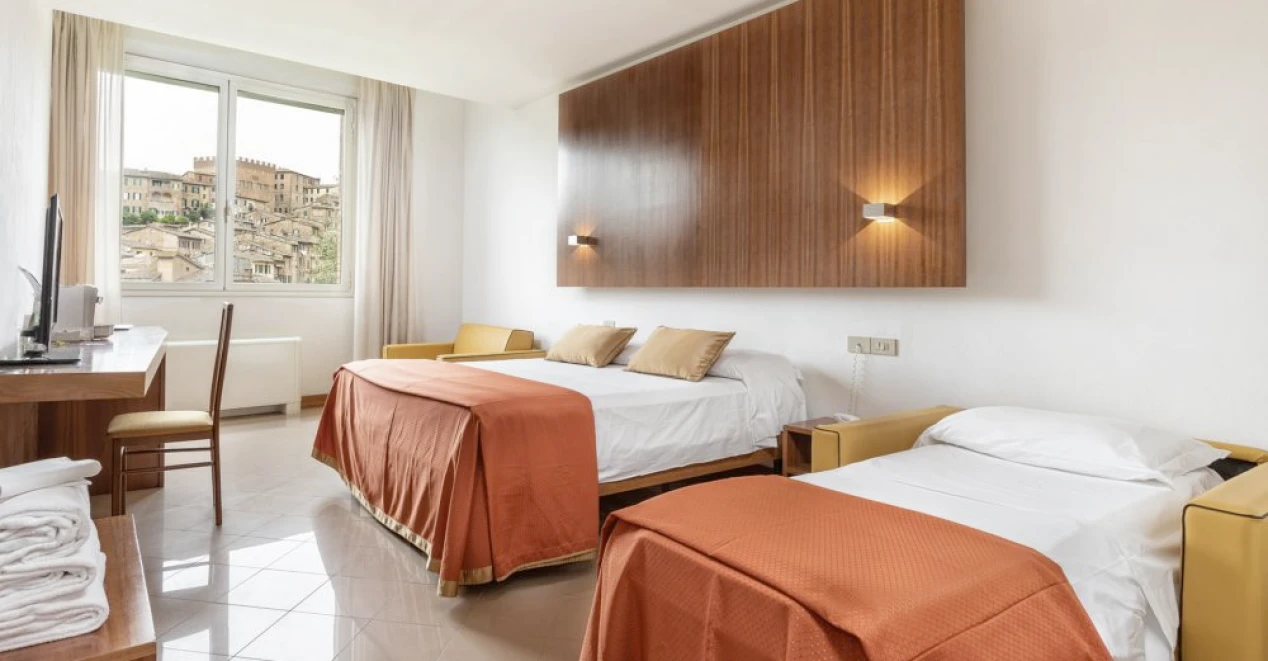
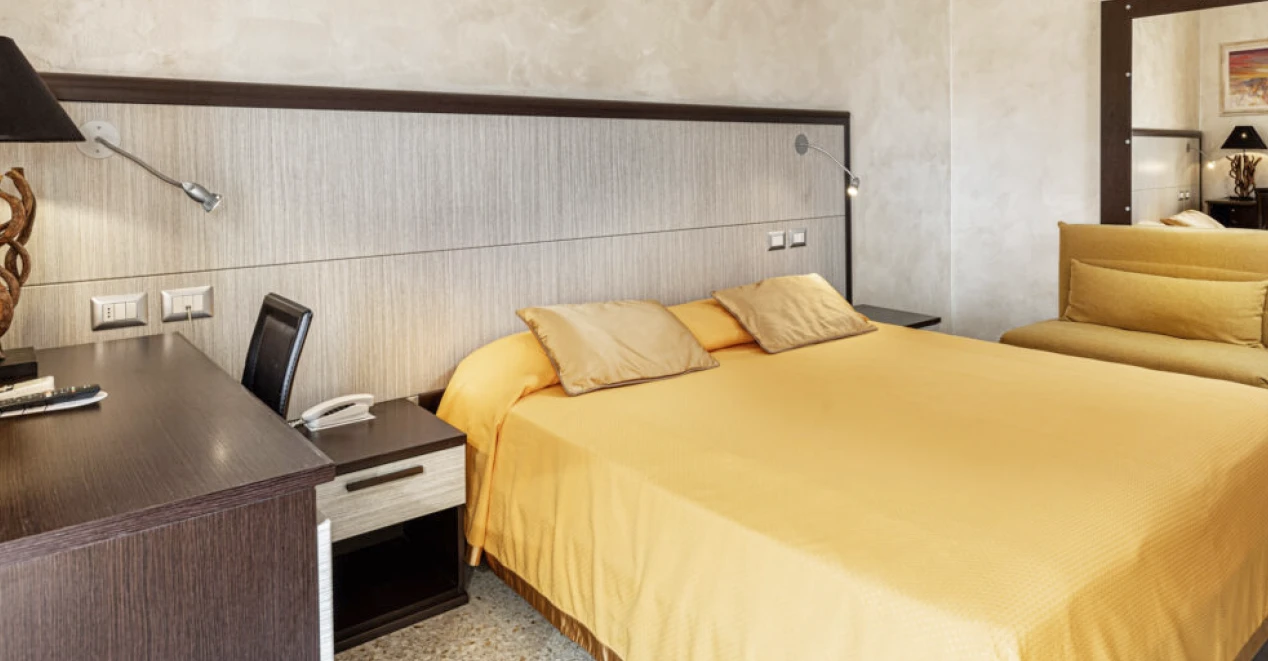
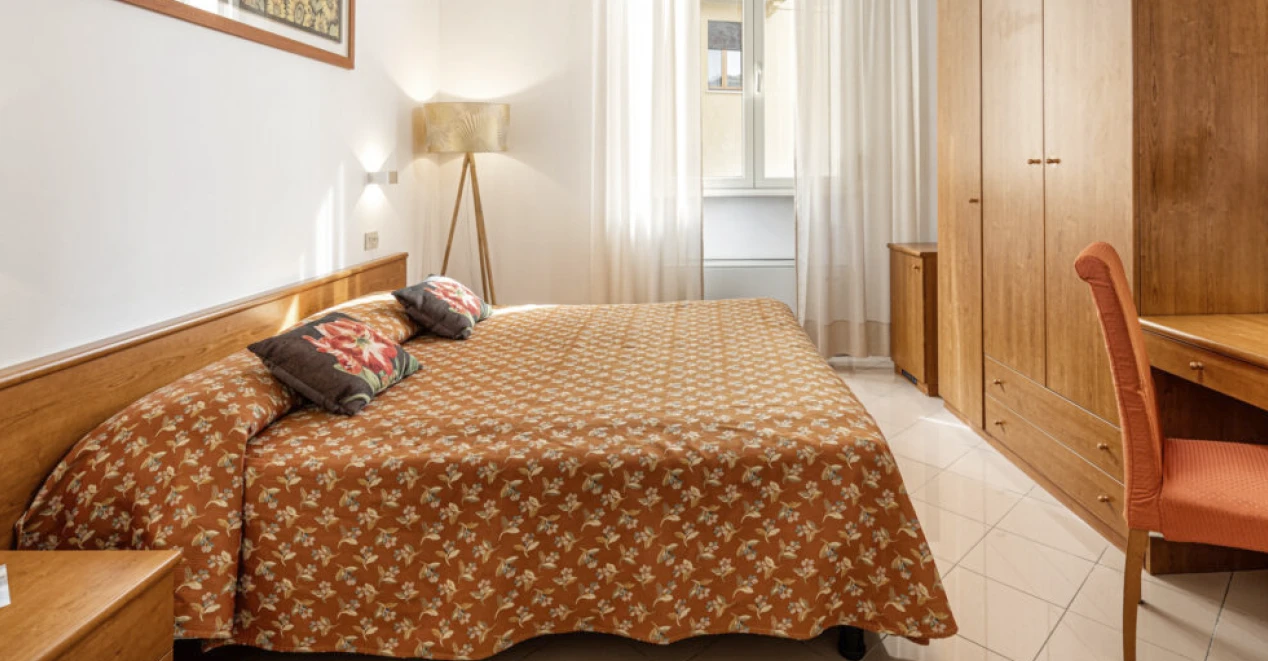
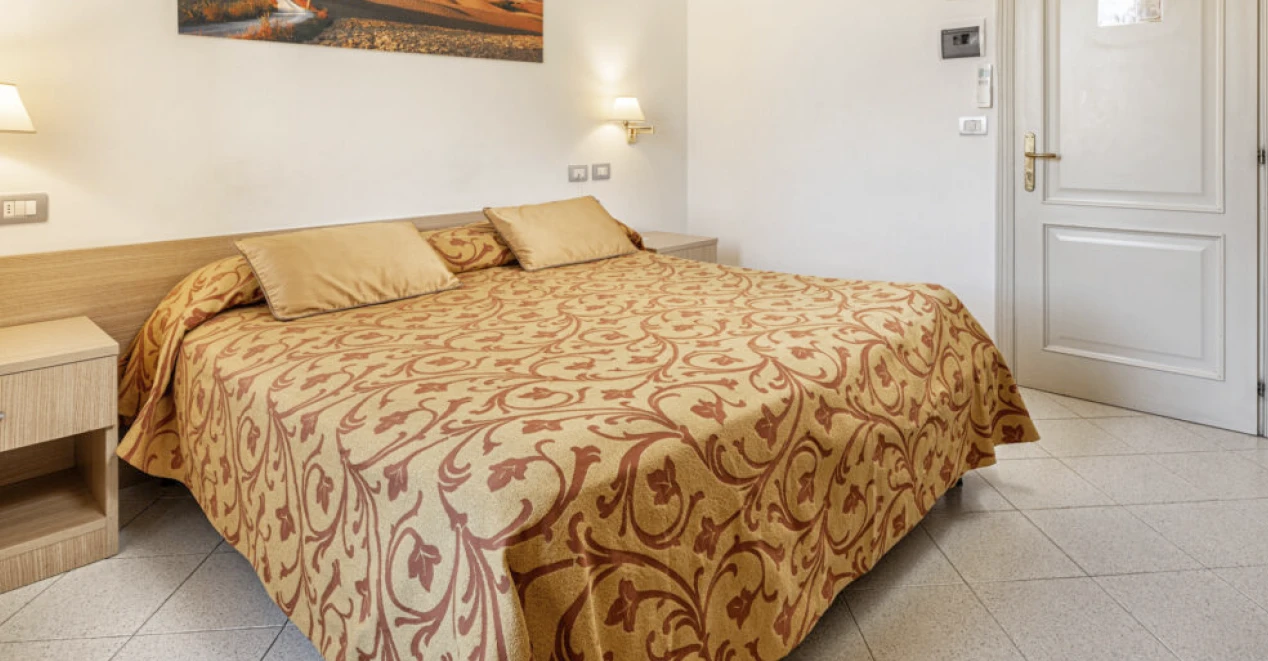
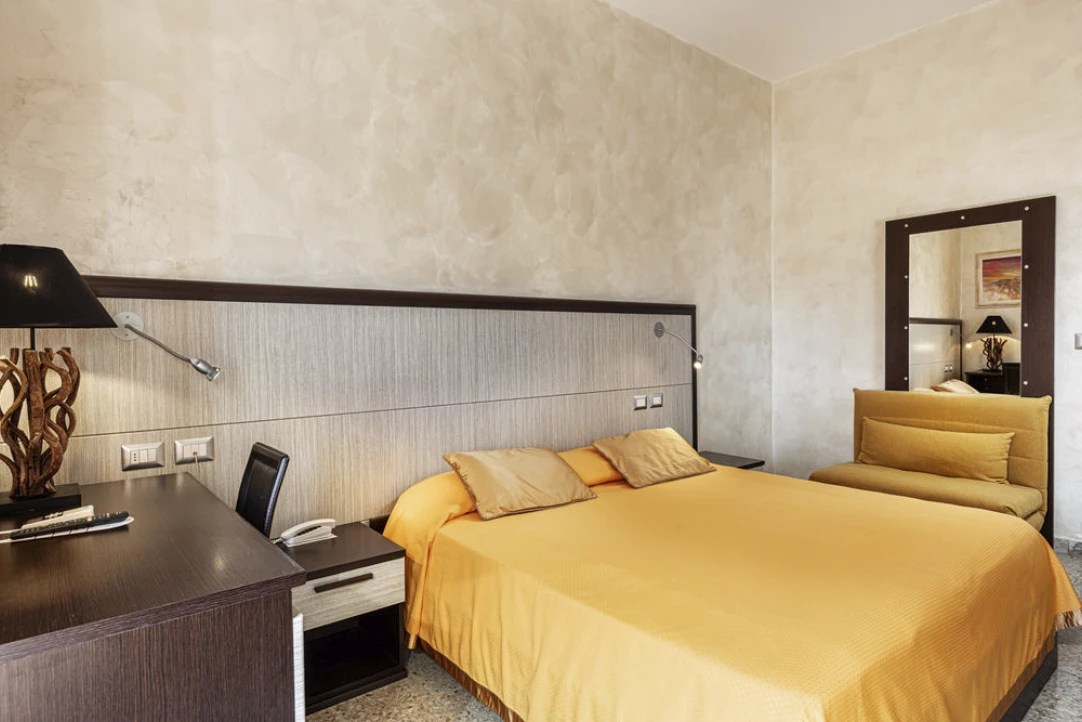
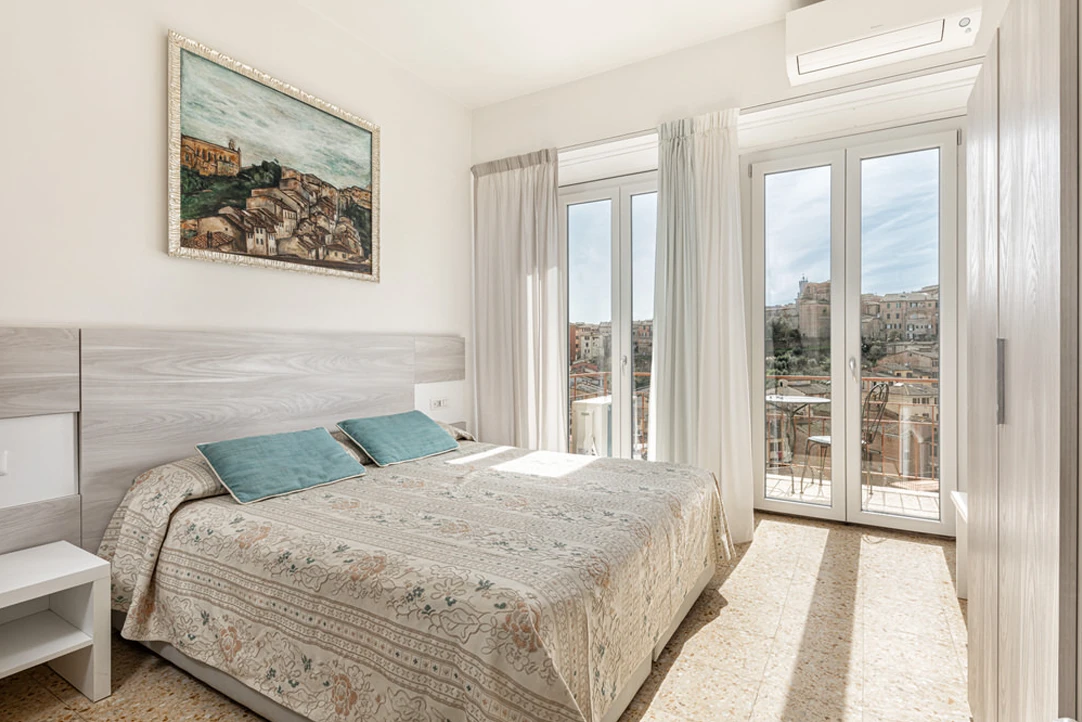
Historic charm and modern comfort: the 3‑star hotel blends traditional terracotta floors, exposed wooden beams and local art with modern amenities such as air‑conditioning, high‑speed Wi‑Fi and satellite TV . Many rooms offer panoramic views over Siena’s rooftops .
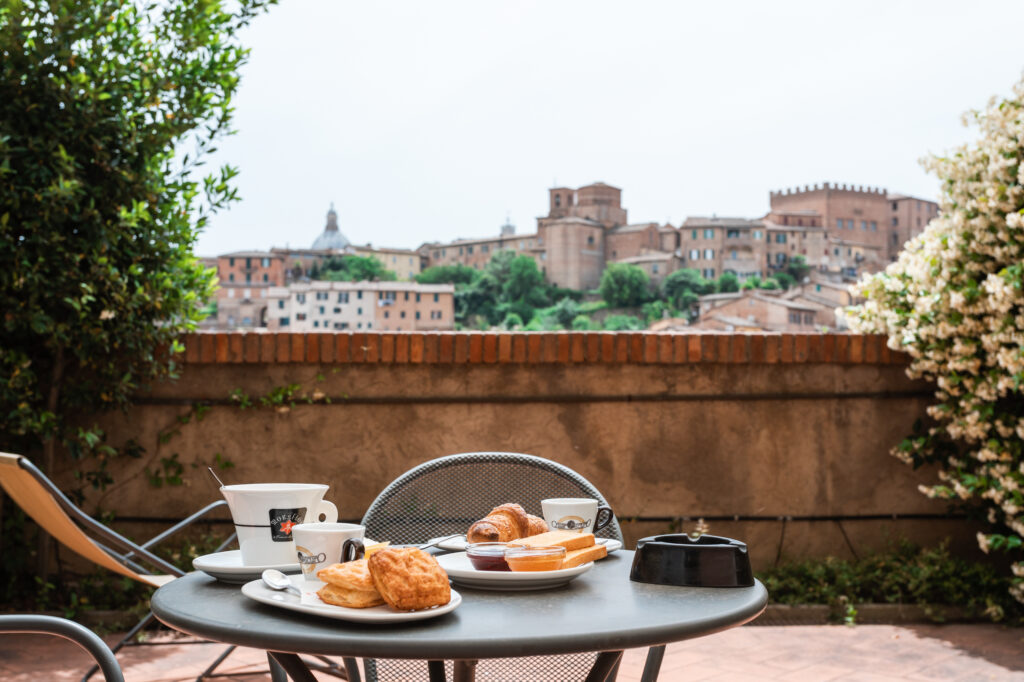
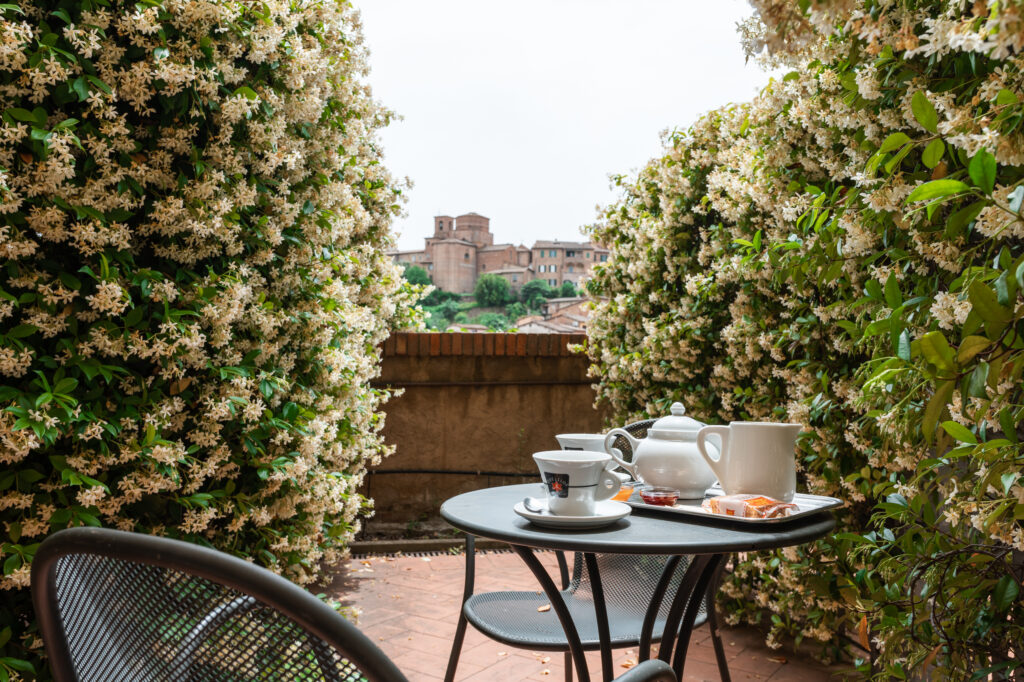
Warm hospitality: the 24‑hour reception staff are known for their friendliness and expertise; they can suggest hidden itineraries, local restaurants and Palio stories . Breakfast includes homemade cakes, fresh Tuscan bread, jams, fruit, cold cuts and cheeses, served in the breakfast room or on a panoramic terrace ; room service is available for a small fee .
Facilities: there is an internal bar, a relaxing lounge with art books, a meeting room with natural light, free high‑speed Wi‑Fi throughout and services such as laundry and tour reservations . The hotel is also a convenient base for day trips thanks to its proximity to the station and the Siena–Bettolle motorway . It lies in the Contrada della Lupa, so visitors during the Palio can feel part of this district .
Distances from Hotel Minerva
Place
Walking time from Hotel Minerva
Piazza del Campo
~15 minutes
Duomo
~17 minutes
Torre del Mangia / Palazzo Pubblico
~15 minutes
Basilica di San Domenico
~10 minutes
Palazzo Salimbeni
~10 minutes
Fortezza Medicea
~13 minutes
Siena railway station
~15 minutes (1 km)
What to see in Siena
The article offers an extensive list of places to visit. Key highlights include:
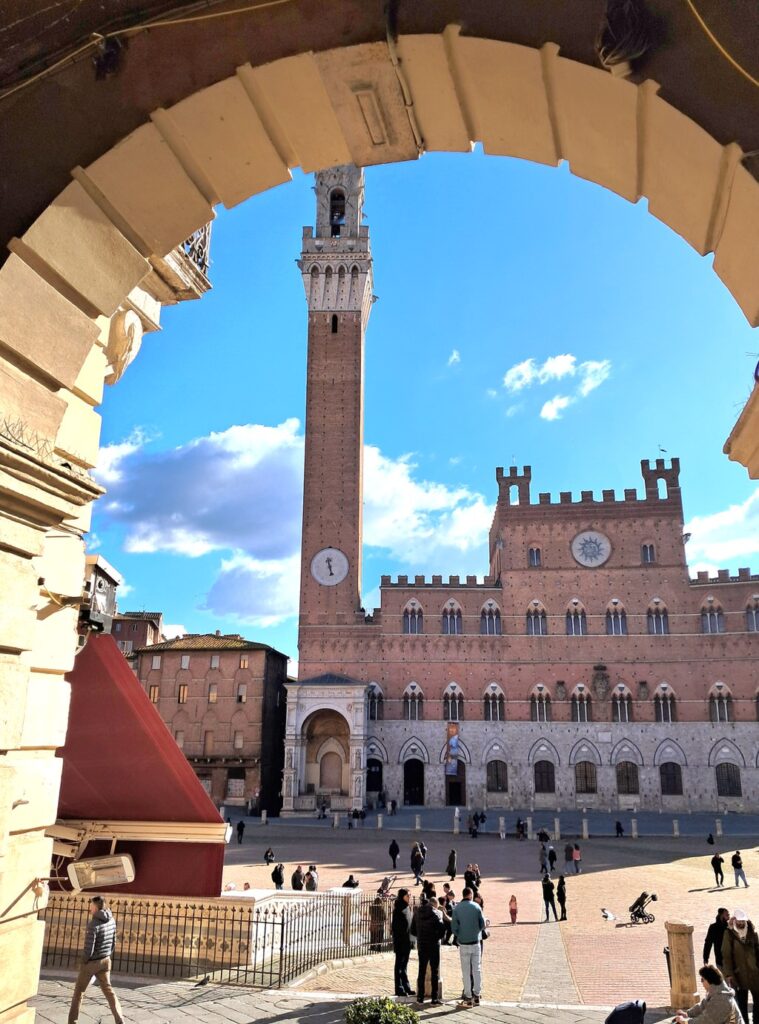
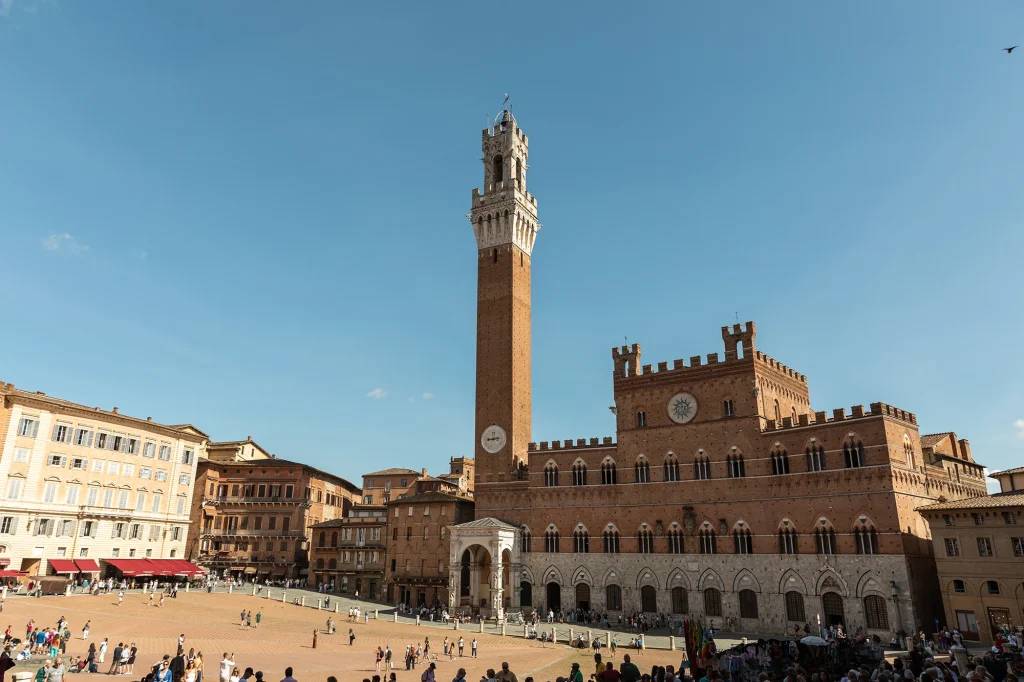
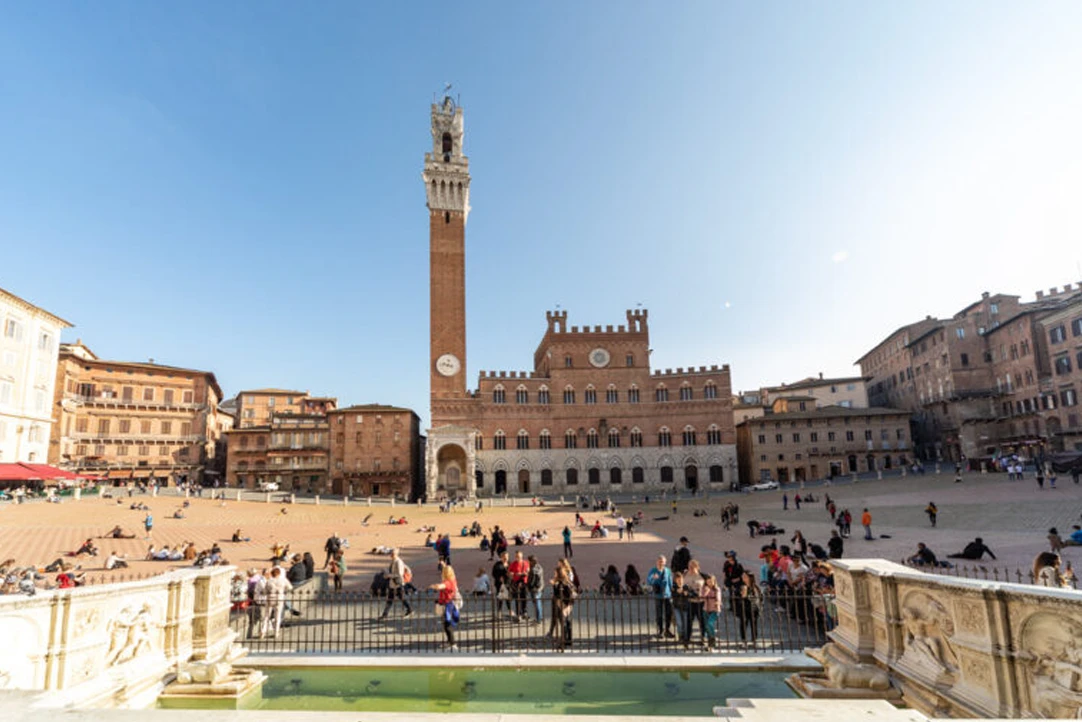
Piazza del Campo: the shell‑shaped heart of Siena where the Palio is run. The square is lined with medieval palaces and dominated by the red‑brick Palazzo Pubblico and the 88‑m Torre del Mangia; in the centre is the Fonte Gaia . Nine sectors of the piazza symbolise the historic government of the Nine .
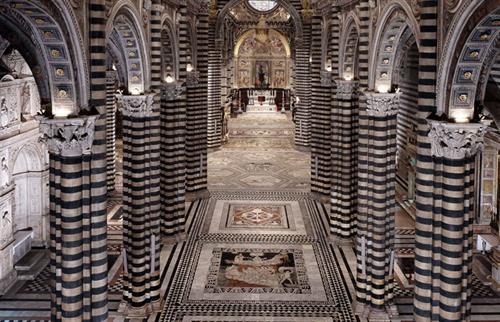
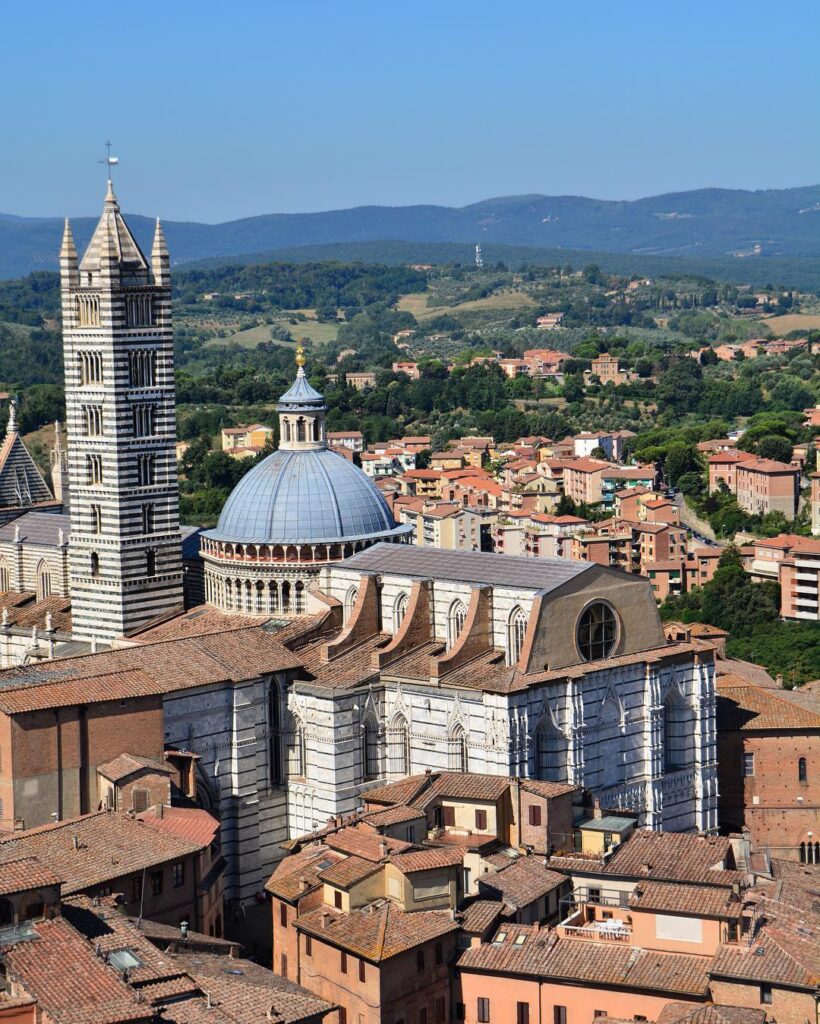
Duomo di Siena (Cathedral): a masterpiece of Italian Gothic with a richly decorated façade of white, dark green and red marble. Inside are alternating black‑and‑white columns, frescoed vaults, Pinturicchio’s Piccolomini Library and the unique inlaid marble floor (open only at certain times). Works by Michelangelo, Donatello, Bernini and others fill the church. Nearby are the Baptistry and the Museo dell’Opera; climbing the unfinished Facciatone offers panoramic views .
Santa Maria della Scala: the former medieval hospital opposite the Duomo, now a museum complex with frescoed pilgrims’ halls and a variety of collections .
Basilica of San Domenico: a brick church that houses the relics of Saint Catherine of Siena and Sodoma’s frescoes .
Palazzo Tolomei: one of Siena’s oldest private palaces (13th century) on Piazza Tolomei; it still bears its austere merlons and now houses a bank .
Loggia della Mercanzia: a 15th‑century loggia at the Croce del Travaglio crossroads where Sienese merchants met; it features Renaissance sculptures .
Palazzo Chigi‑Saracini: an elegant palazzo on Via di Città with a curved façade. Once the residence of noble families, it now houses the Accademia Musicale Chigiana. Guided tours or concerts allow entry to its art‑filled rooms .
Museo Civico: inside the Palazzo Pubblico, home to Lorenzetti’s “Good and Bad Government” frescoes and the Maestà by Simone Martini; climbing the Torre del Mangia rewards visitors with sweeping views .
Orto de’ Pecci: a green retreat behind Piazza del Campo with gardens, farm animals and a restaurant .
Other sights include the Basilica di San Francesco, the Pinacoteca Nazionale, the Sanctuary of Saint Catherine, the Synagogue and the Ghetto .
Excursions around Siena
If you have several days, the article recommends exploring the surrounding area. Hotel Minerva serves as a perfect base. Suggested excursions include:
San Gimignano: UNESCO‑listed town famous for its 14 medieval towers; enjoy the historic squares and the local Vernaccia wine .
Monteriggioni: a small walled village with 14 round towers, evoking Dante’s descriptions; it is 15 km from Siena and hosts a medieval festival in summer .
Colle di Val d’Elsa: known for its crystal production; explore the medieval upper town and nearby natural waterfalls on the River Elsa .
Chianti Classico: the hilly region between Siena and Florence, dotted with vineyards and castles such as Castello di Brolio. Follow the SR222 road through Castellina, Radda and Gaiole in Chianti, stopping for wine tastings .
Val d’Orcia: UNESCO landscape south of Siena with hill‑top towns like Pienza, Montalcino, San Quirico d’Orcia and thermal villages like Bagno Vignoni; an hour’s drive away .
Arezzo and Cortona: to the east, renowned for Piero della Francesca frescoes and Etruscan‑medieval charm .
Florence and Pisa: major Tuscan cities reachable in a day; Florence is 1¼ hours by bus or car and offers Renaissance treasures, while Pisa (two hours via Empoli) captivates with the Leaning Tower and lively riverfront .
A stay in Siena can therefore combine medieval art, scenic drives, wine tastings and cultural excursions .
Conclusion
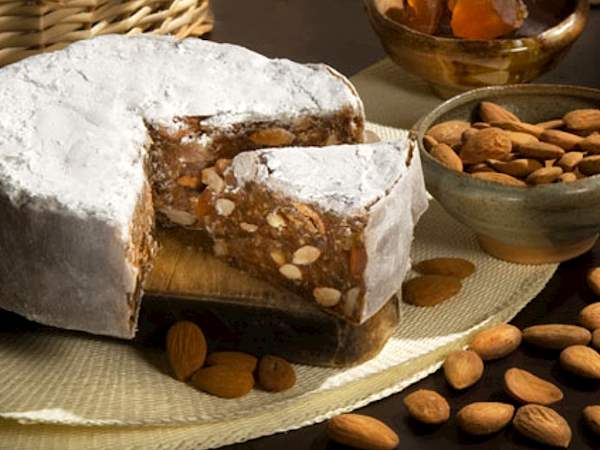
Palazzo Salimbeni is a symbol of Siena’s blend of tradition and innovation: a 14th‑century fortress transformed over centuries into the headquarters of the world’s oldest bank. Even if you cannot enter its halls, pausing in Piazza Salimbeni allows you to sense the weight of history and admire the neo‑gothic façade and Bandini statue . Plan your visit during one of the special openings to discover its art collections and archives, and use Hotel Minerva as your base to explore both the city and the surrounding Tuscan countryside . Between a stroll through Siena’s medieval streets and a tasting of local sweets like ricciarelli and panforte , you will experience the rich tapestry of art, banking history, gastronomy and hospitality that defines this unique city .