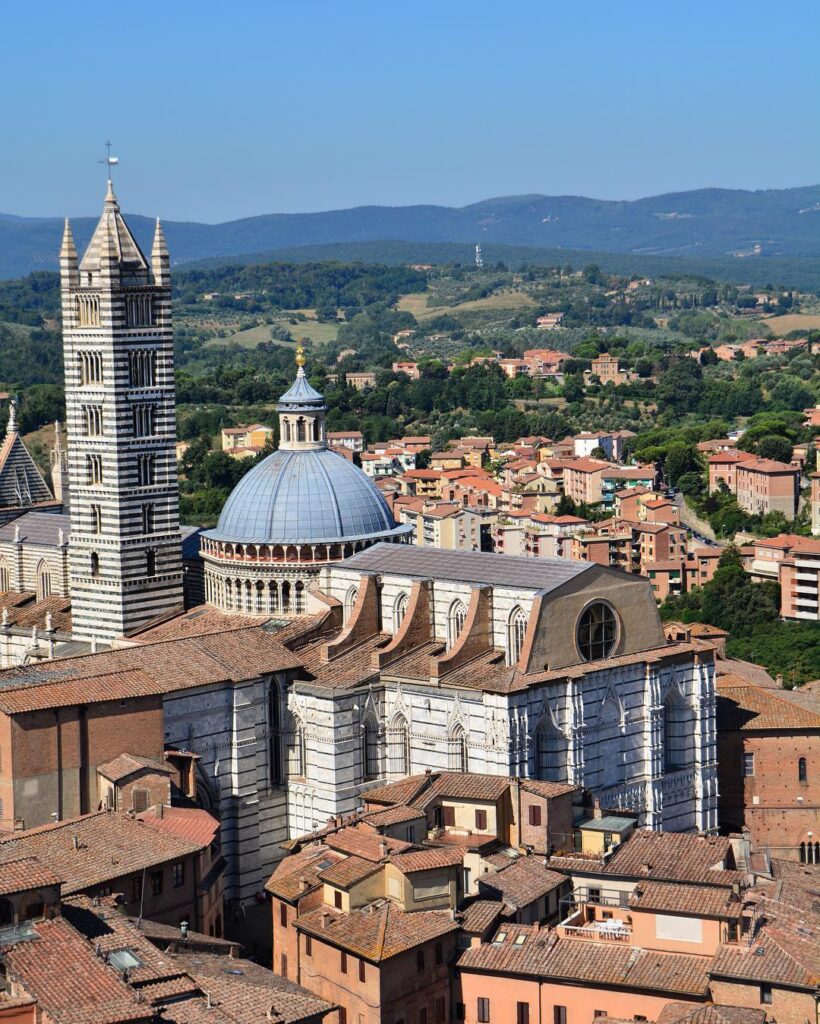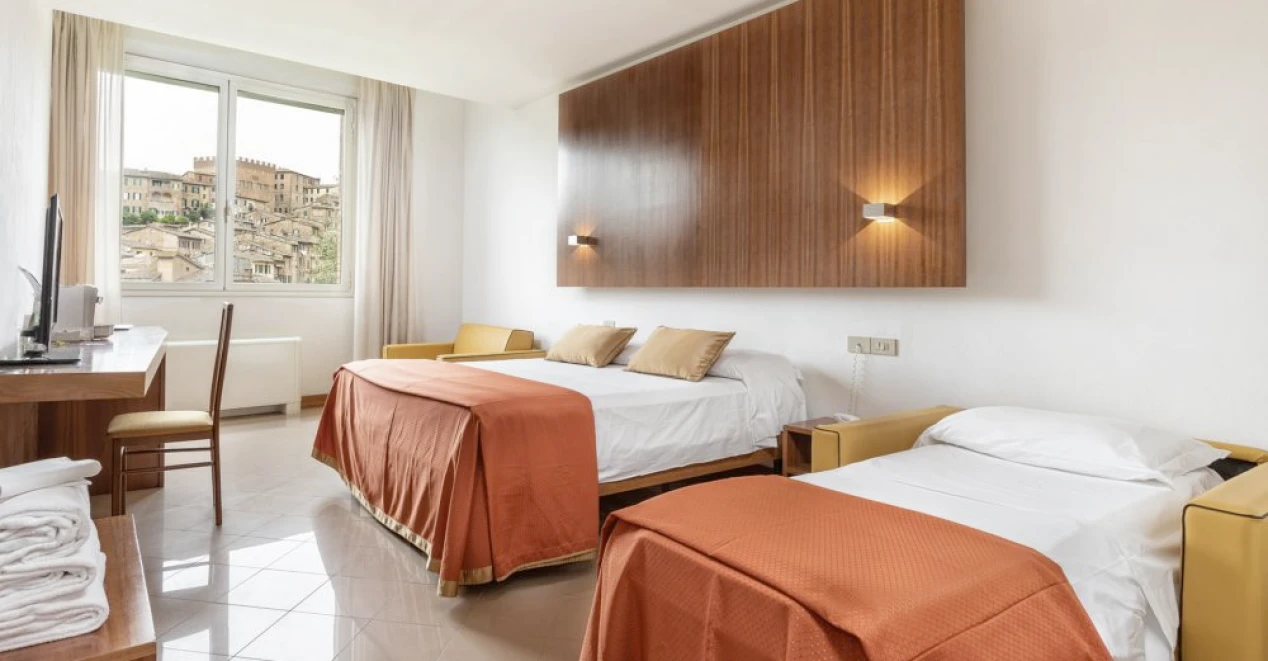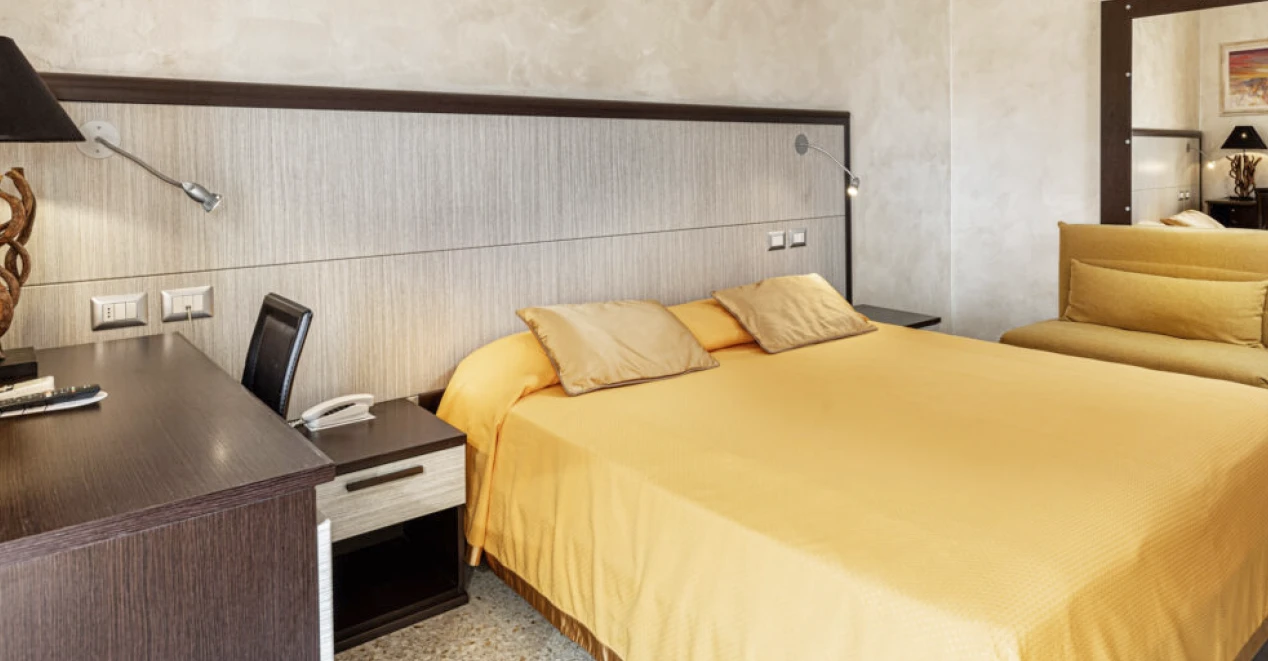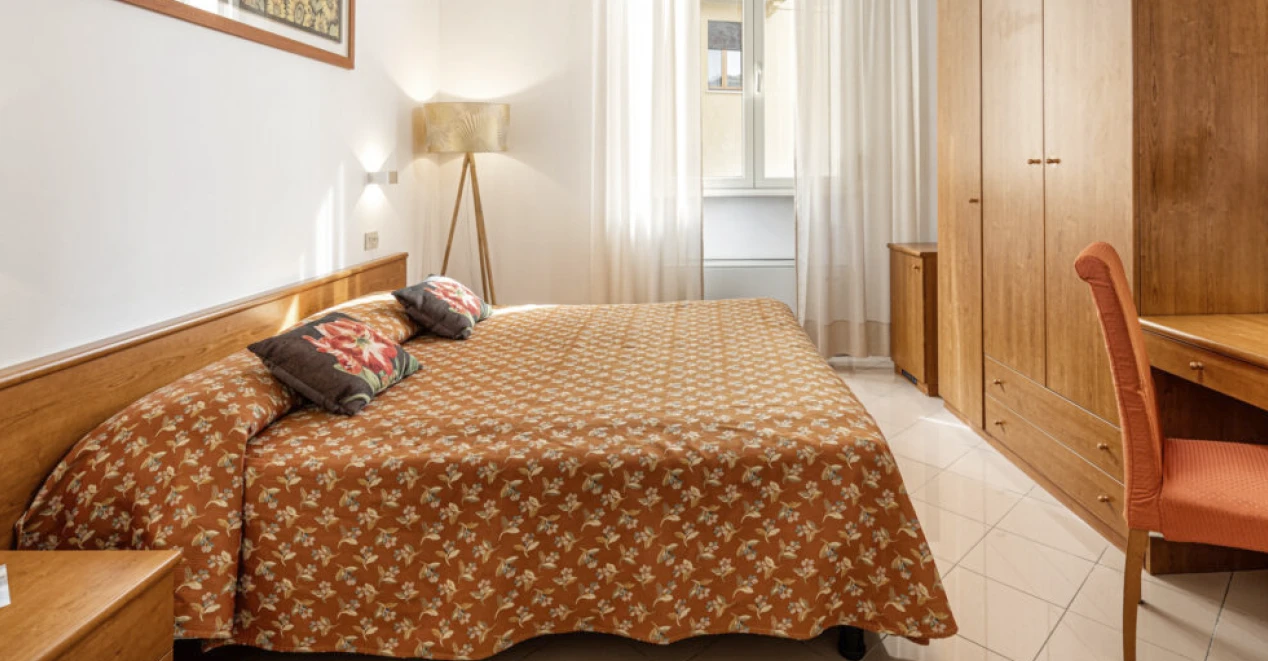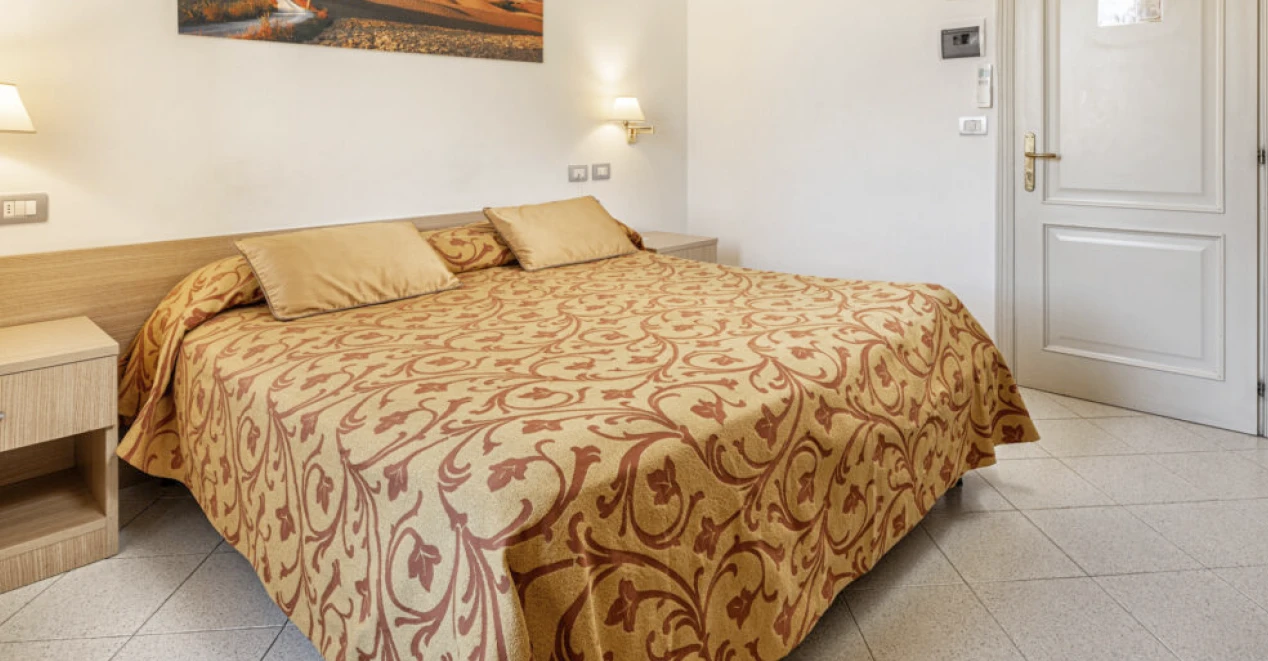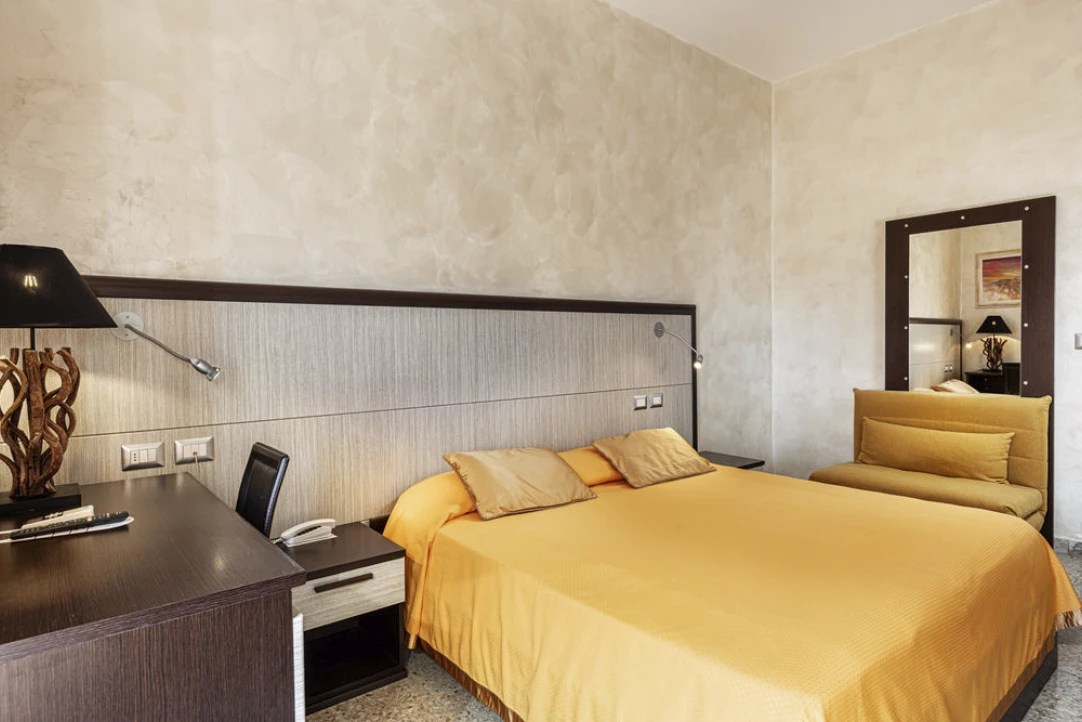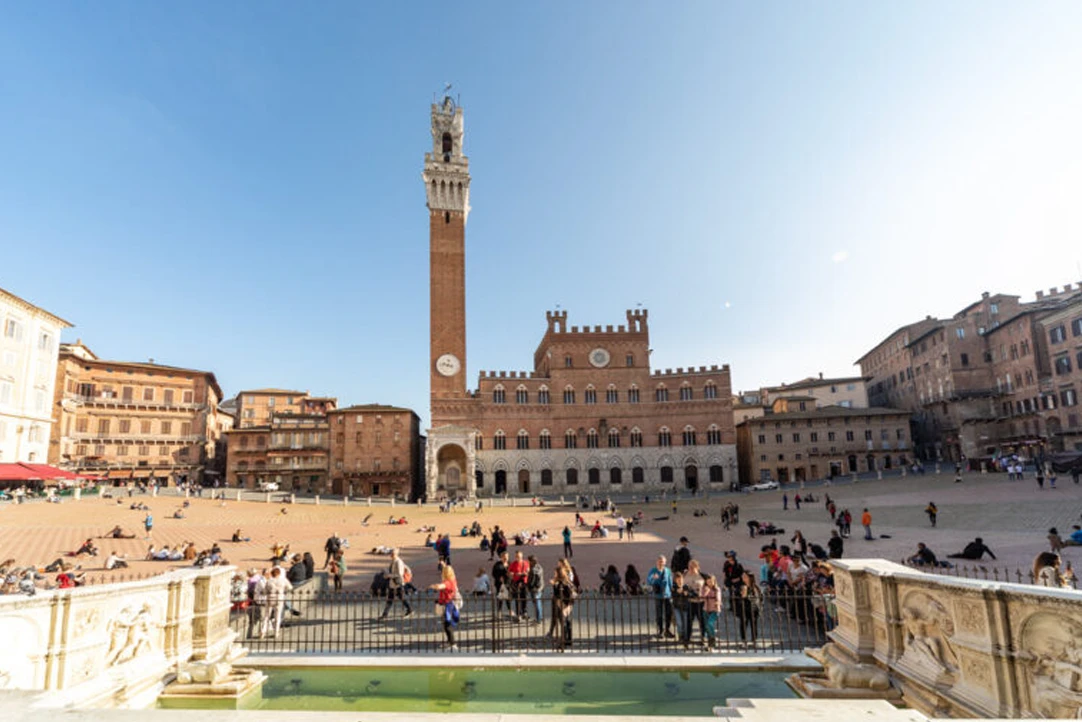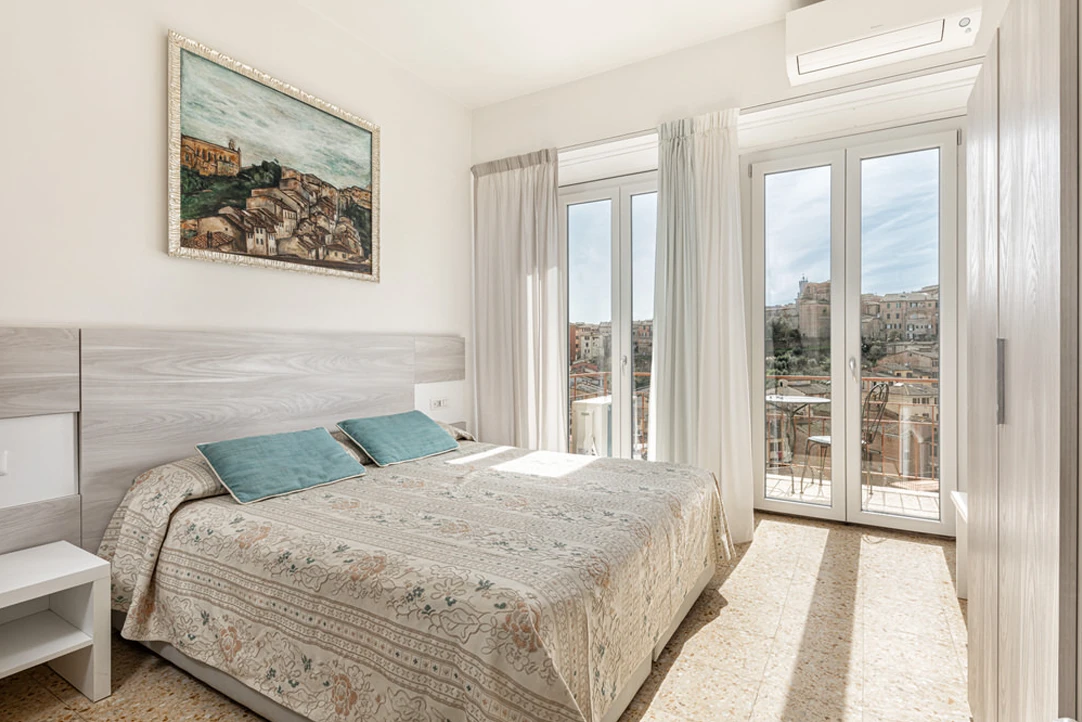

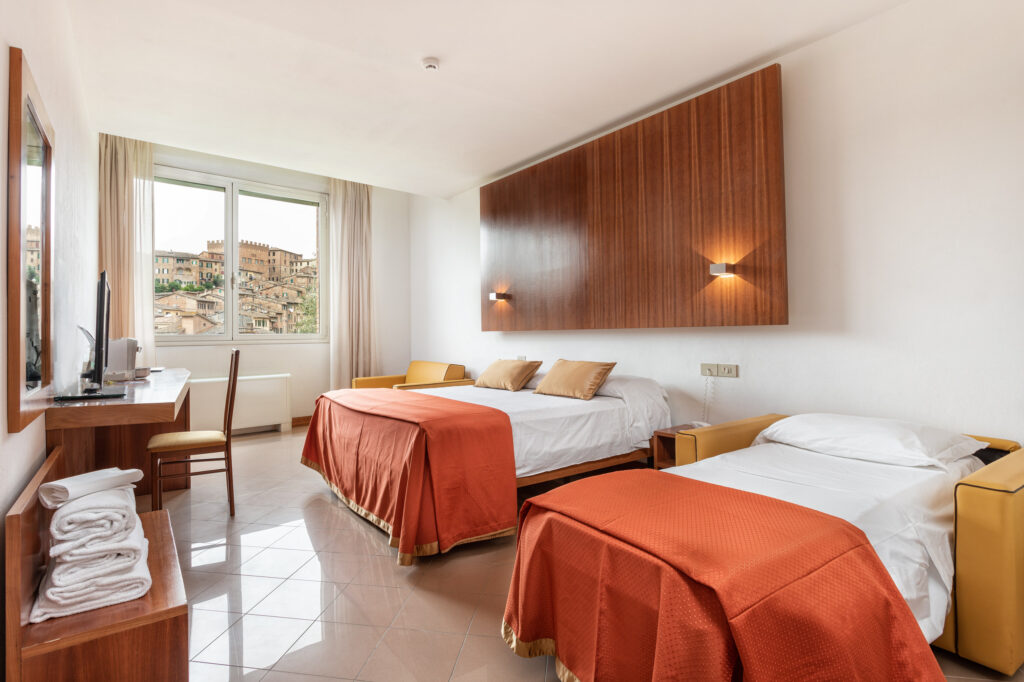
Welcome to this informal and practical guide on what to see around Siena, starting from Hotel Minerva! 🙂 This guide is designed to let you discover the wonders of the province of Siena on easy day trips, suitable for families, couples, solo travellers, business travellers and students. We will always depart from Hotel Minerva in Siena (Via Garibaldi 72), a strategic position just outside the ZTL and near the station – ideal for taking the car from the parking or hopping on a bus at Piazza Gramsci.
In store are perched medieval villages, hills dotted with vineyards, fascinating abbeys and relaxing natural spas. All the proposed destinations can easily be visited in a day, by car or public transport. Get your backpack, camera and desire to explore ready: let’s go! 🚗🚌
Monteriggioni – The Fairy Tale Medieval Castle
Aerial view of the fortified village of Monteriggioni, with its ring of walls and perfectly preserved medieval towers.
Why visit: Monteriggioni is a small fortified village that looks like it’s straight out of a medieval fairy tale book. Its circular walls with 14 towers stand out on the hills and are even mentioned by Dante Alighieri! Inside you’ll find a compact village with a central square (Piazza Roma) with the Romanesque Church of Santa Maria Assunta and shops selling local products. You can walk along the ancient ramparts to enjoy a wonderful view of the surrounding hills. Don’t miss the small Museum of Armour, where both adults and kids can admire reproductions of medieval weapons and even try on helmets and armour! 🏰✨
Average visit time: Monteriggioni is very small: in a couple of hours you will have seen the village at leisure. You can spend the rest of the day having lunch in a typical restaurant or, if you have a car, consider combining it with another stop (for example San Gimignano is close by). In July the village hosts a famous medieval festival with costumed figures – if you are there on those days the atmosphere becomes magical, although entrance to the village is charged during the event.
How to get there from Siena/Hotel Minerva: Monteriggioni is only 13 km from Siena, making it a perfect quick trip. By car it takes about 15 minutes taking the Siena-Firenze link (exit Monteriggioni). Hotel Minerva is just outside the centre, convenient for hopping onto the highway; in no time you’re on your way! If you travel by public transport, there is a TIEMME 130 bus directly from Siena (Piazza Gramsci) leaving roughly every hour and taking 20-25 minutes to the “Monteriggioni (Scuola)” stop. Note: the bus stop is at the foot of the hill of Monteriggioni; you’ll need to walk about 1 km uphill to reach the castle entrance. It’s not too strenuous – it’s actually a pleasant scenic walk! – but good to know, especially with small children.
Practical tips: The village is pedestrian; outside the walls there are well signposted paid parking (arrive early on weekends to get a spot). Inside, the streets are paved in ancient stone: wear comfortable shoes (and maybe a baby carrier for little ones, because cobblestones can be uneven for strollers). Entrance to the village is free, while to climb the ramparts and visit the Armour Museum there’s a single ticket of about €4-5 (reduced ~€3 for children). It’s worth it for the views from above! Monteriggioni is perfect for an impromptu picnic on the benches along the walls (maybe with prosciutto sandwiches bought locally) or for lunch in one of the square’s restaurants – prices aren’t super cheap (it is a tourist spot, after all), but dining inside a medieval castle is a unique experience.
Summary table – Monteriggioni:
| Distance from Siena | Time by car | Time by bus | Entrance fee | Visit duration |
|---|---|---|---|---|
| 13 km | ~15 minutes | ~25 minutes (bus 130) + 10 min walking | Village free; walls + museum ~€4-5 | ~2 hours for the village |
San Gimignano – Medieval Towers and World-Champion Gelato
Why visit: With its tall medieval towers dominating the hills, San Gimignano is called the “Manhattan of the Middle Ages”. This UNESCO village will take you back to the 13th century: walking along its paved streets you will admire soaring tower houses, ancient palaces and beautiful frescoed churches. See Piazza del Duomo (with the Collegiate Church, rich in 14th-century frescoes) and Piazza della Cisterna, the heart of the village, surrounded by towers and famous gelaterias. Here you must take a tasty break: Gelateria Dondoli, multi-award winning, serves cups of artisanal gelato that delight tourists from all over the world 😋🍨 (be prepared for a bit of a queue in high season!). For panoramic views, climb the Torre Grossa (54 m, the only one open to the public) or reach the fortress park Rocca di Montestaffoli, a park with ruins from where the skyline of the towers is spectacular, especially at sunset.
Average visit time: The historic centre isn’t huge, but offers plenty to do. We recommend at least half a day in San Gimignano: ~3-4 hours are enough to climb a tower, visit the Collegiate Church and the Civic Museum (if you’re interested in medieval art), browse the shops and maybe have lunch with a bruschetta and a glass of local Vernaccia. If you have an entire day, you can explore more leisurely, maybe visiting the Museum of Torture (for those who like that sort of thing, it’s small but appropriately macabre!) or shopping for ceramics and saffron, typical local products.
How to get there from Siena: San Gimignano is about 40 km northwest of Siena. By car plan for 50 minutes or so: from the Minerva follow the signs for the Siena-Firenze expressway (RA 3), exit at Poggibonsi Nord and from there follow the provincial road to San Gimignano. The route is well signposted and passes through beautiful landscapes. By bus there is the same 130 line (Siena–Poggibonsi–San Gimignano) which terminates at San Gimignano: the direct journey takes about 1 hour 15 minutes from Siena. Note it isn’t very frequent (around one bus every hour or two, check updated schedules). An alternative is to take bus 131O to Poggibonsi and transfer to bus 133 for San Gimignano, but that extends the trip by about fifteen minutes and is less convenient. In any case the buses depart from Piazza Gramsci. If you travel in high season, start early in the morning: San Gimignano is very popular and the lanes get crowded by midday (particularly with groups from Florence).
Practical tips: You cannot drive into San Gimignano (very strict ZTL); you’ll find various paid car parks outside the walls. The most convenient are Car Parks 1 and 2 (near Porta San Giovanni) and Car Park 3 (near Porta San Matteo) – they cost about €2-3/h, plan around €6-10 for half a day. The village is hilly: be prepared to walk up and down between the gates and main squares. Wear comfortable shoes and bring a water bottle in summer. For lunch you have many options: from restaurants with views (excellent dishes with local saffron) to filled focaccia and pizza by the slice to enjoy on a bench. Tip: there’s a small COOP supermarket on Via San Giovanni if you want to grab sandwiches, fruit or snacks at low cost. Public toilets are available (for a fee) near Porta San Giovanni and Porta San Matteo. Finally, to avoid the busiest hours, consider visiting in the late afternoon and staying until sunset: the tourist coaches will have gone and you can enjoy the towers in golden light and a little more tranquility.
Summary table – San Gimignano:
| Distance from Siena | Time by car | Time by bus | Cost of main sites | Visit duration |
|---|---|---|---|---|
| ~40 km | ~50 min (via Poggibonsi) | ~1h15 (direct bus 130)~1h30 (with change at Poggibonsi) | Torre Grossa €9; Duomo €5; various museums €5-10 (packages available) | 4-5 hours (half day) |
Montalcino – Wine, Fortresses and Views in Val d’Orcia
Why visit: Montalcino is the kingdom of Brunello wine, but also an enchanting hilltop village rich in history. As soon as you arrive you’ll notice the majestic 14th-century fortress that dominates the town: you can enter freely into the courtyard (now home to a wine shop) and, if you wish, climb the ramparts to admire a breathtaking view of the Val d’Orcia. Montalcino’s centre has steep streets, ancient churches (the Church of Sant’Agostino, the Cathedral) and various wine bars and shops where you can taste the famous Brunello di Montalcino DOCG. Even if you’re not a connoisseur, stopping to taste this robust red wine is almost obligatory 🍷. We recommend the Enoteca del Forte or one of the many small producers in the centre. Nearby, if you have a car, a few kilometres away is the Abbey of Sant’Antimo, a Romanesque abbey isolated among olive trees where Gregorian chants are often heard: a mystical and evocative place, reachable in just a few minutes by car from the town.
Average visit time: To visit Montalcino at leisure allow for half a day or more (4-5 hours). In this time you can wander the village, visit the fortress, perhaps do a wine tasting and have lunch. If you also want to see Sant’Antimo add another hour. Montalcino is also a great place to stop for lunch: typical dishes include hand-made pici with ragù, Tuscan soups and excellent pecorino cheeses accompanied – of course – by Brunello or its “little brother” Rosso di Montalcino.
How to get there from Siena: Montalcino lies 42 km south-east of Siena, in the heart of the Val d’Orcia. By car, from the Minerva take the SS2 Cassia towards Rome: you’ll pass through Buonconvento and then follow the signs to Montalcino (SP45). The journey takes about 50-60 minutes on scenic roads through the hills. Alternatively from Siena you can take the scenic road via Asciano – Crete Senesi and San Giovanni d’Asso, a bit longer but very beautiful (recommended if you love driving through breathtaking landscapes). By public transport Montalcino isn’t very easy: there’s no direct train (the nearest rail station is in Buonconvento, 10 km below Montalcino), but there’s a TIEMME 114 bus from Siena to Montalcino taking around 1 hour. Note that this line has limited schedules (aimed mainly at commuters and students, with more runs on weekdays mornings and late afternoons, almost none on Sundays). So if you want to use the bus, check the schedules in advance for both the outward and return trip! Alternatively, you might consider a transfer service or an organised tour from Siena that includes Montalcino and maybe Pienza/Montepulciano.
Practical tips: Montalcino is all uphill – from the lower car parks to the fortress it’s a bit of a climb, but don’t worry: take your time and enjoy the views along the way 😉. Park your car just outside the walls (there are both free and paid car parks in various areas, follow the blue P signs). If you have strollers, be prepared to push uphill or better bring a baby carrier. The village is walkable, with lots of wine bars: many offer tastings without booking, usually for a fee (e.g. 3 Brunello samples for €10-15), but sometimes they refund the tasting if you buy a bottle. For food, there are excellent trattorias: don’t miss the hand-made pici and maybe a taste of local honey (Montalcino is also famous for honey and santoreggia). If you’re driving, though, be careful not to overdo the wine! A couple of glasses are enough – you can always buy a bottle to take home. Most shops close around 7 PM, and return buses to Siena after that time are scarce, so plan to be back by evening.
Summary table – Montalcino:
| Distance from Siena | Time by car | Time by bus | Cost of attractions | Visit duration |
|---|---|---|---|---|
| 42 km | ~1 hr (via SS2 Cassia) | ~1 hr (bus 114, few runs) | Fortress free entry; Bastions €4 (optional); Wine tastings ~€10-20 | 4-5 hours (½ day) |
Pienza – The Ideal Renaissance Town and Postcard Views
Why visit: Pienza is a little Renaissance jewel in the heart of Val d’Orcia, known as the “ideal city” created by Pope Pius II in the mid-1400s. Its small and harmonious historic centre will enchant you with romantic glimpses: no wonder there are a Via dell’Amore and a Via del Bacio! 💕 Highlights include Piazza Pio II, with the Cathedral and Palazzo Piccolomini (papal residence with a panoramic loggia). Just behind the Duomo there’s a breathtaking view over the Orcia hills: get ready to take wonderful photos, especially in the golden hour light. Pienza is also famous for its pecorino cheese: the aroma of aged pecorino fills the shops along Corso Rossellino. Don’t hesitate to step into a shop and taste pecorinos of various ages, maybe accompanied by jams or honey – a treat! 🧀
Average visit time: Pienza is small and pedestrianised: in 2-3 hours you can see the main attractions. Palazzo Piccolomini takes about 30 minutes to visit (there’s a lovely hanging garden with a view, where scenes from the film Gladiator were filmed). The Cathedral is quick to see (free entrance, donation appreciated). Afterwards, the best thing is to lose yourself in the lanes admiring flower-filled balconies and views over the valley. If you have half a day, you can also walk a short stretch of the Path of the Via dell’Amore, a walking trail outside the walls that hugs Pienza between fields and cypresses – ideal for an outdoor picnic. Don’t forget to buy some pecorino to take home: many shops vacuum-pack it for travel.
How to get there from Siena: Pienza is about 50 km southeast of Siena, in Val d’Orcia. By car it takes about 1 hour via SS2 Cassia to San Quirico d’Orcia, then a turnoff to Pienza. The route is very scenic among hills and cypress rows – driving here is a pleasure. Another driving option is via Asciano/Trequanda through the Crete Senesi, a barren and undulating landscape that looks lunar (a bit longer but spectacular). By public transport: there is a TIEMME bus (line 112) from Siena to Pienza taking about 1.5 hours, passing through Buonconvento and San Quirico. The bus isn’t very frequent (a few runs a day) and some 112 connections continue to Montepulciano. In winter the service is reduced, so it’s better to plan the visit in summer or at least check schedules before setting out. Alternatively, some agencies organise mini-van tours in Val d’Orcia including Pienza, or you can rent a car for a day if you want more freedom.
Practical tips: Pienza is all ZTL (pedestrian zone): there are paid car parks just outside the walls, tariffs around €1-2/h. Finding a spot can be tough on busy weekends, so arrive early in the morning or in late afternoon. The village is flat and very easy to walk, suitable for strollers and wheelchairs (the only caution: the square has a brick paving slightly uneven in places). Accessibility: the panoramic terrace behind the Duomo has a ramp, so everyone can enjoy the view. If you travel with kids, know that Pienza has several ice cream bars and a nice garden play area just outside Porta al Prato. For lunch, you can choose between typical osterias (where you can try pici cacio e pepe made with local pecorino!) or a snack: for example a sandwich with pecorino and Cinta Senese salami bought in a food shop. In autumn Pienza hosts the Fiera del Cacio – a cheese fair with games in the square – but generally any period is good to visit this peaceful and romantic village.
Summary table – Pienza:
| Distance from Siena | Time by car | Time by bus | Cost of attractions | Visit duration |
|---|---|---|---|---|
| ~50 km | ~1h (via Cassia/San Quirico) | ~1h30 (bus 112 to Montepulciano) | Palazzo Piccolomini ~€7; Duomo free (donation); Pecorino: tastings free in shops 😄 | ~2-3 hours (half day) |
Montepulciano – Art, Vino Nobile and Renaissance Atmosphere
Why visit: Montepulciano is an elegant Renaissance town famous for its Vino Nobile, as well as for its stately palaces and breathtaking views over Val di Chiana. The town stretches along a ridge: the main street climbs up to the magnificent Piazza Grande, a film setting (Twilight, for example) with the Duomo and the 14th-century Palazzo Comunale, reminiscent of Palazzo Vecchio in Florence. Climbing the tower of the Palazzo Comunale you can admire a 360° panorama of countryside and lakes. Montepulciano is rich in historic wine shops dug into the ground: don’t miss visiting the monumental cellars of palaces like Cantina del Redi or Contucci, where huge oak barrels rest in ancient underground rooms – entrance is often free and includes a tasting. Along the streets you’ll also find shops selling hand-made pici, ceramics and truffle products. Outside the centre, in a scenic position, stands the Temple of San Biagio, a Renaissance church isolated among cypresses, reachable by a short walk from the centre (downhill on the way there, uphill on the return!).
Average visit time: Montepulciano deserves half a day. Allow about 4 hours to climb to Piazza Grande, visit the Duomo and maybe a winery, shop and take photos from the various viewpoints. If you also want to visit San Biagio or climb the town hall tower add another hour. In a full day, many travellers pair Montepulciano and Pienza (as they’re only 12 km apart) – but that’s only really feasible if you have a car. In that case, morning in Montepulciano and afternoon in Pienza (or vice versa) is a classic itinerary in Val d’Orcia.
How to get there from Siena: Montepulciano is the farthest village among those described, at the southern edge of Siena province. It’s about 65 km from Siena. By car, from Hotel Minerva take the Siena-Bettolle link road to Bettolle/Sinalunga, then follow signs for Torrita di Siena and Montepulciano: it takes about 1 hour 15 minutes. Alternatively, via Cassia and then SS146 passing through Pienza (more scenic but slightly longer). By public transport: there’s the same 112 bus line from Siena to Montepulciano (via Pienza) taking about 1h30 – 1h45. Note: as mentioned for Pienza, runs are few and in winter there’s virtually no late afternoon return, so it’s only doable in high season or by carefully planning the schedules. Another option (not very handy) is the train: Montepulciano has a railway station (Montepulciano Stazione) on the Siena-Chiusi line, but it’s 10 km from the historic centre! From the town of Montepulciano Stazione there’s then a local bus to the centre, but honestly it’s better to aim directly for the 112 bus or a car. If you have difficulty with the schedules, you might consider staying overnight in the area or joining an organised tour.
Practical tips: Montepulciano is all uphill: from the bottom (Porta al Prato) you climb about 1.5 km to Piazza Grande with a substantial gradient! Take it easy, stopping at shops or sitting on panoramic benches. Comfy shoes are essential. For parking, there are several at various levels of the town: to avoid climbing all the way up, you could try driving up to car parks P5 or P6 (close to the top, paid), or leave at P1-P2 at the bottom and enjoy the walk. For those with reduced mobility, there’s an electric shuttle service from the multi-storey P8 car park to the centre in summer. The monumental cellars are generally in the historic centre (Cantina Ercolani has a free interesting underground path with Etruscan artifacts on display). Beware in the cellars: stairs can be slippery, hold kids’ hands 😉. Tastings: many wine shops offer free tastings of Rosso and Nobile di Montepulciano; for Brunello and reserve wines they often ask a small contribution. If you’re passionate, you can buy a souvenir glass with a deposit in some cellars and go around tasting. Montepulciano offers great views: one of the best points is behind the Duomo in Piazza Grande, facing Lago Trasimeno. Don’t miss it!
Summary table – Montepulciano:
| Distance from Siena | Time by car | Time by bus | Cost of attractions | Visit duration |
|---|---|---|---|---|
| ~65 km | ~1h15 (via Bettolle) | ~1h30-1h45 (bus 112) | Town Hall tower €5; Duomo free; Cellars free entry (tasting fees vary) | ~4-5 hours (½ day) |
Tour in Chianti – Villages, Vineyards and Tastings along the “Chiantigiana” Road
Why visit: The Chianti Classico area lies in the north of Siena province and offers an irresistible mix of picture-perfect landscapes – hills lined with rows of vines and olive trees – and picturesque wine villages full of charm. A tour in Chianti means driving (or cycling, for the more sporty!) along scenic roads like the SR222 Chiantigiana, stopping in towns like Castellina in Chianti, Radda in Chianti or Gaiole in Chianti. In Castellina you can walk along the characteristic Camminamento del Viaio (a covered passage in the ancient walls) and visit wine and specialty product shops. Radda offers evocative lanes and a splendid view over the surrounding hills, as well as a wine shop in the Palazzo del Podestà. Gaiole is famous for the castles in the area, primarily the Castello di Brolio, belonging to the Ricasoli family, with gardens to visit and a historic cellar (the formula for Chianti Classico was born here!). Wherever you go you’ll find wineries and farms ready to let you taste Chianti Classico Gallo Nero, perhaps accompanied by bruschetta with new olive oil or Tuscan cold cuts. 🍷🥖
Average visit time: A full day is ideal for a taste of Chianti: for example leaving Siena in the morning you can stop in Castellina, then Radda, have lunch in a farmhouse or wine shop, and in the afternoon visit a winery with cellar tour and tasting (there are many, some by appointment). Alternatively, if you have less time, you can dedicate half a day to just one Chianti village, like Castellina (which is the closest to Siena) and its surroundings. Many people also choose organised half-day tours with tastings included, so nobody needs to drive back! 😉
How to get there from Siena (typical itinerary): Chianti is “around the corner”: Castellina in Chianti is only 20 km from Siena. By car, from the Minerva follow signs to Castellina (SR222 Chiantigiana) – in about 30 minutes of gentle curves among the vines you’ll arrive. From Castellina to Radda it’s another 10 km (15 min), and from Radda to Gaiole about 12 km (15-20 min). The distances seem small, but remember they’re hilly roads: take your time to drive calmly and maybe stop to take photos of the views (there are spectacular panoramic lay-bys along the Chiantigiana). By public transport: it’s possible to reach some main centres: for example Castellina is connected by a bus (line 125) that departs from Siena station a few times a day, but the service is limited and not very practical for touring several towns. The recommendation for Chianti is to travel by car, motorbike or bike, so you can explore freely. Alternatively, a guided tour from Siena (there are many that combine Siena – Chianti – San Gimignano in one day, or just Chianti with 2-3 wineries) is a great option if you don’t want to drive but want to taste.
Practical tips: Driving in Chianti is a pleasure, but be careful not to drink if you have to drive! Ideally have a designated driver in your group, or spit out the wine during tastings (sommeliers do it, but I know it’s a shame… 😅). The roads are well-maintained but winding: if you get car sick, prepare with some ginger sweets. Towns like Castellina and Radda have free parking just outside their historic centres (which are small and partly pedestrian). For tastings, many wineries require booking, especially in high season: check in advance. Some smaller businesses welcome without booking, just show up. If travelling with children, Chianti can still be fun: some farms have animals to see (e.g. goats, chickens) and green spaces where kids can run while parents taste wine. Bring some snacks for the little ones, because attention may drop during wine tours… A good idea for families and groups is stopping at a farmhouse for lunch: there are many that offer homemade Tuscan meals with house wine, in rustic settings where children can play. Chianti doesn’t have “must-see” museums or monuments like elsewhere, the landscape is the main attraction: enjoy it unhurriedly. In autumn, during the harvest, the colours are beautiful; in spring the bright green and poppies between the vines are equally stunning!
Summary table – Chianti Classico itinerary:
| Recommended stops | Distance from Siena | Time by car | Public transport | Notes |
|---|---|---|---|---|
| Castellina in Chianti | 20 km | ~30 min | Bus 125 (few runs) | Medieval village, tunnel in walls, view of hills. |
| Radda in Chianti | 30 km | ~45 min | No direct bus (taxi/tour) | Panorama from the town, historic wine shops. |
| Gaiole in Chianti (Brolio) | 28 km | ~40 min | No direct bus | Castello di Brolio (gardens €6, cellar), Eroica cycling event. |
| Tip: itinerary by car or organised tour. Tastings: book if possible, or choose wine shops in the villages. |
Abbey of San Galgano – Mysticism and the Legend of the Sword in the Stone
Why visit: The Abbey of San Galgano is a unique place: it’s an ancient Cistercian abbey without a roof, in the countryside, which gives a mystical and almost surreal atmosphere. Walking in the nave under the open sky, with the sky instead of vaults, is a spine-tingling experience (and very photographable!). A few steps from the abbey, on a little hill, stands the Hermitage of Montesiepi, a circular chapel famous for containing the Sword in the Stone. Yes, that’s right: embedded in the rock is an authentic medieval sword, which according to legend was thrust there by the knight Galgano in 1180 as a sign of his conversion – basically the Tuscan version of the King Arthur legend! ⚔️ The entire surrounding area is very quiet, surrounded by fields and woods: a real corner of spiritual peace.
Average visit time: Visiting the abbey and chapel takes about 1-2 hours in total. You can first explore the abbey (there are explanatory panels about its history and often classical music in the background to enhance the atmosphere), then climb the short path up to the hermitage to see the sword. Many visitors combine San Galgano with a picnic stop or lunch at a nearby farmhouse (there are some in the Chiusdino area) or with a detour to the village of Chiusdino, birthplace of San Galgano, where there’s a small museum dedicated to him. If you leave Siena in the early afternoon, for example, you can do it all comfortably in half a day.
How to get there from Siena: The abbey is in the municipality of Chiusdino, about 30-33 km from Siena southwest. By car the journey is about 40 minutes: from the Minerva take the SS73 Senese towards Roccastrada/Massa Marittima, after passing San Lorenzo a Merse follow signs for Monticiano–San Galgano. The road in the last few kilometres is smaller but still paved and well indicated, with parking available near the abbey. By public transport: there is a local bus (line 122 for Chiusdino) from Siena but runs are very few (one early morning and one in the afternoon, Monday to Saturday). Without handy runs, reaching San Galgano without a car is tricky – you could get to Monticiano by another line and then hitchhike or taxi for the last kilometres. Consider perhaps renting a car for half a day, or joining private tours that sometimes include San Galgano and other abbeys.
Practical tips: Entrance to the abbey is charged (€5), with reductions for kids and over 65; the hermitage is free (offering appreciated). Hours: the abbey opens roughly from 9 AM to 6 PM (up to 8 PM in high summer), last entrance half an hour before closing. It rarely closes, except on Christmas Day. Inside the abbey there is no artificial lighting, so if you go at sunset it might start to get dark – better a full light to enjoy it. Within the abbey complex there’s a small bar and souvenir shop, with toilets. The place is quite isolated: bring a water bottle. The car park costs a few euros (a couple of euro for the whole stay). The path up to the Hermitage of Montesiepi is a short 5-10 minute paved path: doable with strollers and even wheelchairs (it’s steep but short). Inside the chapel the sword in the rock is protected by plexiglass, you can’t touch it (sadly no sword extraction like Arthur 😄). Photo tip: if visiting in summer, sometimes the abbey hosts concerts or events – find out because it could be a spectacular experience listening to music under the stars among these millennia-old walls.
Summary table – Abbey of San Galgano:
| Distance from Siena | Time by car | Time by bus | Entrance cost | Visit duration |
|---|---|---|---|---|
| ~33 km | ~40 min | ~1h40 (bus 122, 2 runs/day) | Abbey €5; Hermitage free | ~1-2 hours |
Rapolano Terme – Relax in Thermal Waters
Why visit: After walking so much among villages and hills, what could be better than a bit of relaxation in hot waters? Rapolano Terme is famous for its natural thermal springs, about 30 km from Siena. Here sulphuric water springs at about 38-39°C, used by two thermal complexes: Terme San Giovanni and Terme Antica Querciolaia. Imagine immersing yourself in large outdoor pools of hot water, maybe at sunset, with views over the hills – a true tonic for body and mind! 🏊♀️🌅 Rapolano’s spas suit everyone: couples seeking romance, families (there are pools for kids), young and old. In addition to bathing, they offer spa treatments, but just the basic pool admission is a rejuvenating experience. Rapolano itself is small, but nice to see if you have time left, with medieval walls and a museum of the Antica Grancia (about the fortified farms of Siena).
Average visit time: Depends on how long you want to soak! Spa entry usually applies for half a day or the whole day. You can organise like this: arrive in the morning, spend a few hours in the thermal baths, have lunch in the onsite restaurant or with a sandwich, and perhaps another relaxation session in the afternoon. In 4-5 hours you’ll have enjoyed the pools enough. If you prefer, you can do the session only in the afternoon/evening (some days the spas stay open late, check opening times), combining it perhaps with a visit to Siena in the morning. Flexibility is maximum according to your tastes.
How to get there from Siena: Rapolano Terme is about 28 km east of Siena. By car the trip is quick: 25-30 minutes taking the Siena-Bettolle link road (exit Rapolano) or SS73 towards east, then following signs for Asciano/Rapolano. By public transport: great news – Rapolano is well served: you can take either a regional train from Siena to Rapolano (line to Chiusi) in about 35 minutes travel, or a bus (line 107 to Sinalunga) in about 40-45 minutes. Both trains and buses leave roughly once an hour. From Rapolano FS station, the spas are ~2 km: usually there’s no shuttle service, but you can take a pleasant 20-minute walk or grab a local taxi (there’s often someone waiting at peak times). The Antica Querciolaia is slightly closer to the town centre/station, whereas San Giovanni is a bit further out (better take a taxi if you don’t have a car).
Practical tips: Bring your swimsuit, flip flops and towel/bathrobe. If you forget something, don’t worry: at the spas they rent towels/bathrobes and sell flip flops, caps etc. A swimming cap is usually mandatory in the pools, remember that. The facilities have changing rooms with showers and lockers (they give you a wristband or key). The thermal water smells of sulphur (rotten eggs 😅) but you quickly get used to it and it does wonders for the skin and respiratory passages! Avoid wearing jewellery in water because sulphur can oxidise it. The outdoor pools are the main attraction, but there are indoor pools for winter too. In summer, remember to put on sunscreen if you stay outdoors for a long time. Both establishments have a bar/restaurant for light lunches or drinks. Prices: weekday daily admission is around €12-18 per adult depending on the spa and whether it’s weekend/holiday (holidays cost a bit more). There are reductions for children and family packages. If you plan to go often, there are membership deals. For a romantic experience, check the theme evenings: sometimes they organise night openings with bathing under the stars, music or apericena included. Rapolano is also great for kids: the warm water is fun and healthy (just be careful not to keep them in too hot water too long, better alternate with breaks out of the water). Alternative lunch idea: if you don’t want to eat at the spas, in Rapolano town there are bakeries and delis where you can get stuffed focaccia or pizza by the slice to enjoy in the small park outside the spas between baths.
Summary table – Rapolano Terme:
| Distance from Siena | Time by car | Time by train | Spas entry | Recommended duration |
|---|---|---|---|---|
| 28 km | ~30 min | ~35 min (regional train)~45 min (bus 107) | €12-18 adult (depending on day/time);Reduced for kids; Towel rental €5 | 4-5 hours (half day) |
Practical tips for different types of travellers
Every traveller has different needs: here are some tailored tips I’ve gathered to help you enjoy these trips to the fullest, whether you’re travelling with family, as a couple, solo, for work or as a student on a budget!
Families with children 👨👩👧👦
- Child-friendly planning: Choose nearby destinations with short travel times to avoid kids getting bored on the journey. Monteriggioni is ideal (short trip, space to run along the walls and a museum where they can touch the armour!). Rapolano Terme is also popular with kids – the idea of bathing in thermal pools excites them, and there are shallow pools for them.
- Strollers & Co.: In medieval villages the streets are often cobbled and sometimes steep. Bring a sturdy stroller or a baby carrier/backpack for the youngest. Pienza and Castellina are easy with strollers; Montepulciano and Montalcino require pushing uphill, take some strategic gelato breaks 😉.
- Meals and needs: Always carry some snacks, water and maybe simple sandwiches: kids might not love the more “strange” Tuscan dishes (like wild boar or strong cheeses). An impromptu picnic in a park can be more relaxing than a restaurant meal if the kids don’t like sitting still. For example, in San Gimignano there’s a playground in Parco della Rocca where you can have a snack with a view of the towers. Check the availability of changing tables: generally the main tourist destinations have them in public toilets (or ask in bars, they’re usually nice about it).
- Entertainment: Get the kids involved with local stories and legends! Tell them about the Sword in the Stone at San Galgano – they’ll feel like little King Arthurs – or get them to count how many towers they see in San Gimignano. At Monteriggioni they can pretend to be knights defending the castle. Many villages sell toy swords and shields in the little shops: a perfect souvenir that turns the visit into a game.
- Toilet break and nappies: Paid public toilets in towns (Pienza, SG, Siena itself) are usually clean and have changing tables. Alternatively go into a bar, maybe buying a juice for the child, and use their bathroom – it’s generally not a problem.
- Safety: Villages like Monteriggioni and Pienza are pedestrian ZTL – kids can walk freely without the danger of cars. Be mindful instead in San Gimignano (there are mopeds and residents’ cars sometimes inside the walls) and especially keep an eye on the walls in Monteriggioni: despite the protections, hold little ones by the hand.
Couples on a romantic getaway 💑
- Dream atmospheres: For you, the moment is what counts. Choose destinations with breathtaking sunset views: Pienza and San Gimignano offer incredible backdrops for photos together in golden light. You might organise an impromptu toast with a glass of wine at the lookout in Pienza or on Monteriggioni’s walls at sunset.
- Relax & Pampering: Dedicate at least half a day to thermal relaxation: Rapolano in the evening is very romantic, some pools have soft lighting, and bathing in the hot waters under the stars is magical. Often they offer packages “admission + dinner/aperitivo” – take advantage for a special experience.
- Dinners by candlelight: In Siena province there are intimate restaurants for romantic dinners. If you’re back in Siena in the evening, Hotel Minerva is near the centre: you can stroll to an osteria in Siena’s lanes and end the day with a good Chianti and pici all’aglione. Or dine directly in the villages: in Montalcino enjoy dinner with vineyard views, in San Gimignano an outdoor table in a piazza with illuminated towers. Remember in Italy restaurants typically open around 7:30-8:00 PM.
- Romantic souvenirs: In Chianti many wineries personalise wine labels for you – a bottle of Chianti Classico or Brunello with your names and date can be a lovely reminder of the trip. In Pienza buy a small pecorino cheese to share at home with a glass, recalling the trip.
- Photos together: Take advantage of the scenic places for a romantic selfie: Via dell’Amore in Pienza is practically obligatory! At San Galgano take a photo under the “open sky” abbey, maybe kissing in the middle of the nave – very cinematic! If you can, travel mid-week for fewer crowds and more intimacy in the spots.
- Watch the time: Without kids and fixed schedules, you might stay late enjoying each place. Just watch out for the last bus/train if you need one: check well so you’re not left stranded. If needed, keep a taxi number on hand (even though it’s expensive for long routes, it can be a lifeline if you miss a bus).
Solo travellers 🚶
- Freedom to improvise: Travelling alone? How great, you can change plans on the fly if a place particularly strikes you. Enjoy the freedom: if at San Gimignano you want to detour on a trail outside the walls to take photos, do it without the need to get anyone’s agreement. If in Montalcino you want to spend 2 hours in a wine bar chatting with the sommelier, go!
- Socialising on the road: Tuscans are sociable. On a tasting tour in Chianti you’ll often find yourself chatting with other travellers; at Rapolano Terme you might make friends with someone in the pool (maybe another tourist or locals relaxing). Don’t hesitate to strike up a conversation: ask for advice, tell them where you’re from. Beautiful conversations often arise, and perhaps you’ll find company to share a stretch of journey.
- Safety and organisation: Travelling alone in this area is safe. The villages are small and quiet, even at night. Still bring a small power bank to always have a charged phone and maps handy. If you use public transport, note return times (especially the last bus). Hitchhiking isn’t common in rural Tuscany, better rely on public schedules or taxis.
- Accommodation outside Siena: If you decide to extend the excursion, know that almost all these villages have B&Bs and agriturismi. It can be nice, for example, to stay overnight in a Chianti farmhouse and return to Siena the following morning. Travelling alone you’ll easily find a last-minute room if you like the idea.
- Budget and food: Alone it’s easy to manage meals: you can even eat local street food without always sitting down at a restaurant. A sandwich with porchetta in Montepulciano while looking at the panorama is worth a thousand starred lunches. And costs €5! 😉 Still watch Italian meal times (around 1 PM and 8 PM): outside those times many restaurants are closed, but bars and bakeries always have something.
- Photos and memories: Take photos of yourself! Even if you’re alone, don’t be shy about asking someone to take a picture with Val d’Orcia behind you. Or use a timer. You’ll bring home important visual memories. If you keep a travel diary, these villages will inspire you: jot down feelings and encounters, it will be nice to reread it.
Business travellers 💼
- Optimising limited time: Are you in Siena on business and only have small free slots? Focus on nearby and quick destinations. Monteriggioni is perfect for a 2-3 hour getaway (perhaps in the afternoon, back for dinner): in 15 min by car you’re there, walk the walls, have a coffee in the square and return. Or Rapolano Terme in the evening, to relax after meetings: in half an hour by car or 40 min by train you’re soaking in the pools, and you’ll return to the hotel refreshed!
- Schedules and appointments: If you have the morning free and meetings in the afternoon, choose something reliable timewise: for example the Abbey of San Galgano opens early in the morning, you could go early and return by lunchtime (thus avoiding overlaps). Always check the opening times of attractions: many museums or churches close at lunchtime (but outdoors like villages and abbeys generally don’t). Bring everything you need (laptop, documents) in case you have to go straight to an appointment on the return.
- Smart transport: If you don’t have a company car, use fast public transport: the train to Rapolano, the 131R express bus to Florence in a day, etc. Ask the staff at Hotel Minerva – they are in the centre and used to business guests, they’ll be able to point you to trusted taxis or shuttle services if needed. The advantage of the Minerva is that parking and leaving the city are easy: no traffic, so you can plan to leave without delays.
- Quick meals: On a work trip time is precious: for lunch you might not manage to sit at a restaurant and wait. Better a quick lunch: bars with ready meals, sandwich shops, or buy something the day before (fruit, sandwich) and have a quick picnic. For instance, a quick lunch in Castellina in Chianti with schiacciata and local pecorino requires 10 minutes to buy and you can eat in the car or on a panoramic bench.
- Wi-Fi and signal: If you need to stay reachable, know that in main towns the mobile signal is virtually everywhere (in some remote Chianti valleys it might drop, but in town centres it’s fine). Hotel Minerva has Wi-Fi, but around rely on your 4G/5G. Many bars have public Wi-Fi if you need a quick connection. For safety, download offline maps and schedules in PDF the night before, so even without signal you know where to go.
- Dress code & comfort: If you go on a trip between meetings, you might be in formal wear. Bring a pair of comfortable shoes to change into in the car! So you don’t ruin your dress shoes on medieval cobblestones and you’ll enjoy the walk. And maybe a casual T-shirt so you don’t sweat in a shirt during the trip (you can switch back to a jacket if needed).
Students (on a budget) 🎒
- Limited budget, unlimited creativity: For you guys every euro saved is another euro for gelato! Good news: many of these trips can be done cheaply. Transport: use buses and regional trains: they’re cheap (e.g. bus Siena-Monteriggioni around €3, Siena-Pienza ~€6-7) and take you everywhere, though with patience. Maybe make a timetable or use the Tabnet or MyCicero app to buy bus tickets on your phone.
- Low-cost food: Forget expensive restaurants, go for sandwiches, pizza by the slice, market. Before leaving Siena, you can shop at the Conad supermarket in the centre and fill your backpack with sandwiches, fruit and snacks. Alternatively, discover local bakeries and delis: in San Gimignano, for example, a nice piece of focaccia and Tuscan salami will fill you up for a few euros. Water from fountains is drinkable everywhere: fill your bottles instead of buying bottled water.
- Student discounts: Always carry your university or ISIC card. Some entries (museums, towers, etc.) offer student discounts. Sometimes under 25s pay reduced price. Ask, don’t be shy – saving is your right! For example, the Torre Grossa in San Gimignano has a discount for under 25s, as do some civic museums.
- Group travel: If you’re a group of friends, consider splitting costs: for example renting a car for a day and splitting fuel may cost per head as much as the buses, but gives you more freedom (and a great playlist belted out through the hills!). Or if you take a taxi back because you missed the last bus (it happens…), in 3-4 you share the cost without drama.
- Alternative experiences: Besides cultural visits, look for free or cheap events: village fairs (there are many in summer/autumn with local food for a few euros), political festivals, markets. For example, in Montalcino in September there’s the Sagra del Miele (Honey Fair), in Monteriggioni in July the medieval festival (entry not free but guaranteed spectacle). Find out at tourist offices or even on local socials.
- Night out? If you want to stay out late (maybe at a party or just to watch the stars in the countryside) and miss your return to Siena, consider hostels or campsites: there’s a cheap hostel in Siena, but also in San Gimignano and Chianti you’ll find budget hostels/agriturismi. Bring a light sleeping bag if you think you might improvise a night (in summer, bivouacking under the stars – responsibly and where not prohibited – could be the adventure you’re looking for, but watch safety and regulations).
- Smartphone ally: Download apps like Omio or Trenitalia Tper for train schedules, and Google Maps works fairly well even for local buses (but always double-check). Follow on Instagram pages like VisitTuscany or Discover Valdorcia – they often publish free events or hidden gems you can explore for zero cost, like panoramic trails, giant benches, etc.
FAQ – Frequently Asked Questions
Q: How do I travel from Siena? Is it better by car or public transport?
A: If you have a car you are more flexible: you go where you want, when you want, and you can combine multiple stops in the same day. Hotel Minerva has convenient parking and is near the exit routes, so leaving by car is easy. However, public transport covers many destinations: buses to Monteriggioni, San Gimignano, Pienza, Montepulciano, Rapolano and trains to Buonconvento, Asciano, Rapolano etc. The buses from Siena depart all from Piazza Gramsci (in the centre) or from the FS station. For schedules and tickets: you can buy them at the Tiemme ticket office in Piazza Gramsci or at the newsstand in the station underpass. Important: remember to validate your ticket! On the bus stamp it as soon as you get on (machine behind the driver); on the train validate it in the green machines in the station. If you don’t have a car and still want to see the more awkward places (like scattered Chianti or San Galgano), consider organised tours: there are many departing from Siena, often available at the hotel or tourist office.
Q: Can I visit more places in one day? Which combinations are feasible?
A: Yes, with some organisation you can combine 2 stops in a day. Some classic ideas:
- Monteriggioni + San Gimignano: early morning to Monteriggioni (1-2h visit), then move on to San Gimignano before lunch and enjoy the afternoon there. They’re on the same route (bus 130 connects them both from Siena).
- Pienza + Montepulciano: they’re 12 km apart. Better if you have a car. Visit Pienza in the morning, quick lunch, and Montepulciano in the afternoon (here cellars tend to close around 6-7 PM). With public buses it’s tough to do both in one day due to limited schedules, doable only in summer with a very early start and late return (but risky).
- Chianti tour (multiple villages): by car you can do Castellina -> Radda -> Gaiole in the same day, starting early. By bus it’s virtually impossible to see more than one Chianti village in a day due to connections.
- Montalcino + Abbey of Sant’Antimo: Sant’Antimo is 9 km from Montalcino. If you have a car, after Montalcino head down to the abbey (closes around 6 PM). By bus you can’t, as 114 goes back to Siena directly and doesn’t pass Sant’Antimo.
- San Galgano + Massa Marittima (or the sea): this is for those with cars and wanting a different trip, heading towards Maremma. See the mystical abbey in the morning and then push on to Massa Marittima (medieval town in Grosseto province) or even a dip in the sea at Follonica. It’s a longer trip, but many do it in summer.
Remember not to overdo: better to enjoy places well than to rush around. If unsure about timing, ask the staff at the Minerva or Siena’s tourist offices; they’re very willing to suggest sensible itineraries.
Q: How does the ZTL work and parking in Siena and surroundings?
A: Well, Siena city has a ZTL (limited traffic zone) in the historic centre where only authorised vehicles can enter. Hotel Minerva, however, is outside the ZTL and has its own parking, so if you stay there you’re sorted: you can arrive by car without passing under cameras. From there you move on foot for Siena, or get back in the car for the trips. In the provincial villages, usually the historic centre is pedestrian or ZTL for non-residents. You’ll find signposted car parks at the village entrance:
- At Monteriggioni you park outside the walls (big parking 100m from Porta Romea).
- At San Gimignano 4 big numbered car parks around the walls (P1-P4), all paid. Hourly rates, keep in mind in summer they fill up.
- At Pienza there’s a car park just outside Porta al Prato and others along the walls, pay-and-display.
- At Montepulciano multi-storey and roadside car parks up the hill, some free further away, those nearer the centre paid. Consider going up to car park P5 (paid) which saves you some climbing.
- Montalcino: free car parks near the fortress and below the walls, or paid in the centre. They’re fairly easy to find, except perhaps on weekends during harvest.
- Rapolano Terme: both establishments have dedicated car parks free or low cost for customers.
- Chianti: in towns like Castellina, Radda etc. parking is free in many areas (white lines). Blue lines (paid) are usually only in peak times to limit long stays.
A tip: always keep some coins for pay-and-display machines, not all take cards. And check the signs: some car parks have a disc parking limit (max 1-2 hours). Fine: the municipal police in Tuscany are fairly strict, better to pay for the ticket and display it clearly on the dashboard! 😉
Q: And for those who don’t drive? Are taxis available outside Siena?
A: Taxis in the Siena area are not abundant, and are expensive for long distances. There’s a radiotaxi in Siena (number 0577 49222) but it’s rare to find taxis “around” in small towns. If you really need one (e.g. you’re stuck in San Gimignano without an evening bus), you can call the Siena radiotaxi: they’ll come from Siena to get you, but you’ll pay for their journey from Siena to you. Modern alternative: check Uber or Itaxi, sometimes they have NCC drivers available. Anyway, better rely on the bus schedules. One idea: if you’ve stayed beyond the last bus in a tourist village (like San Gimignano, Pienza), ask at the bar/restaurant: they often know local private drivers who do transfers on call, maybe at a slightly lower cost than the official taxi. Finally, there’s BlaBlaCar (car pooling) for longer routes: for example some commuters offer rides Siena-Florence or Siena-Rome. Not for small destinations though.
Q: What’s the best time for these excursions?
A: Each season has its charm! In spring (April-May) the hills are brilliantly green and blooming, mild climate – perfect for exploring and being outdoors. In summer it’s hotter (July-August can be tough at 35°C) but the evenings are long and full of events, and you can enjoy the spas outdoors even late in the evening. Also in summer many villages hold fairs and medieval festivals. Autumn (September-October) is beautiful: vineyards coloured red and yellow, good weather, harvest time – ideal for wine lovers. In winter some small museums or services reduce hours, and it’s chilly, but the hot springs are even more enjoyable with crisp air! And the villages are quiet without crowds; around Christmas you’ll also find Christmas markets. So I’d say: go whenever you can! Just, in the height of summer organise visits in the less hot hours (e.g. historic centres in the early morning or late afternoon, and maybe use the afternoon for a siesta or the spas).
Q: Are there combined tickets to visit multiple things?
A: Generally each village has its own passes: for example in San Gimignano there’s a “Passepartout” ticket for 5 civic museums + Torre Grossa around €13 (you save compared to individual tickets). In Pienza the Palazzo Piccolomini ticket includes also entrance to the Diocesan Museum with a small extra. In Montepulciano they offer tasting + tower or similar packages in some cellars. However, there isn’t a single provincial ticket for everything – each place is separate. If you’re students always ask for reductions as mentioned. Another tip: some small local museums are free or by donation – e.g. the Mezzadria Museum in Buonconvento, or certain oratories. Find out locally. If you want to save money, you can enjoy the villages without entering every museum: often the most beautiful thing is the village itself. Maybe choose one paid attraction must (like a panoramic tower) and wander freely for the rest.
Q: Can we have a packed lunch? Are there picnic areas?
A: Of course! In Tuscany no one will say anything if you sit on a bench to eat a sandwich and enjoy the view. Just use common sense: don’t litter, don’t take over private spaces, and in more touristy towns (e.g. San Gimignano, Pienza) avoid picnicking right in the middle of the Duomo square out of decorum. Better find a little park or a wall with a view. Some places have equipped picnic areas:
- In Pienza there’s a small public garden with benches near Porta al Prato.
- In San Gimignano the Rocca di Montestaffoli area is perfect for lying on the grass and eating (when there’s no ban due to events).
- In the woods around San Galgano there are rustic picnic tables, but watch out for ants 😅.
- At Rapolano Terme outside the Querciolaia complex there’s a little park where you can picnic if you don’t want to eat at the bar.
Generally in the countryside you can improvise wherever, as long as you respect the environment and take away your rubbish. If you prefer a seated lunch, many little restaurants offer light lunch menus or gourmet sandwiches for a few euros. For example in Montalcino some wine bars serve mixed platters that two people share for €10-15 total. Consider the options on the spot. The important thing is not to stay hungry: walking among hills and villages builds an appetite!
Q: Do I need to book anything in advance?
A: Usually no for entrance to villages, churches, etc. You only need to book if you want to do guided tastings in wineries (contact your chosen winery maybe a day before) or if you want to lunch/dine in well-known restaurants on weekends (like Osteria Acquacheta in Montepulciano, known for its fiorentina steak – always full). For Rapolano Terme no booking is required for pool entry; only spa treatments/massages need booking if you’re interested. In peak season (Ferragosto, Easter) some specific attractions may have restricted access, but generally you buy the ticket on the spot and enter. If you travel in August and want peace of mind, you can buy online tickets for the Torre del Mangia in Siena or Torre Grossa in SG, but for our day trips I’d say booking isn’t indispensable. The exception is if you decide to do an organised tour (like a one-day bus trip with an agency): in that case it’s best to book a few days ahead to ensure your seat.
Q: Does Hotel Minerva offer services or packages for these excursions?
A: Yes, often hotels in Siena like the Minerva have arrangements or useful info. From their website I see they highlight the strategic location for visiting Monteriggioni and surroundings. You can ask at reception: sometimes they have free maps, printed bus timetables, or even contacts for guided tours. Some hotels sell Tuscan Pass or tickets for the Duomo in Siena, but for the province I think they’ll give more informative support rather than packages. However, you never know: for example they might have bicycles for rent to take a trip in Chianti (I know many places do this). Ask if they have bikes or e-bikes available for guests – exploring the hills by electric bike is a wonderful experience if you like that! Hotel Minerva is also bike-friendly (according to their website), so they certainly can suggest cycling routes if you’re interested. In short, use the staff’s local knowledge: often the person behind the counter is local and knows the territory like the back of their hand and will suggest something off the beaten path.
Happy travels and happy excursions in the splendid province of Siena! Each day will be a different experience – from medieval mysteries in Monteriggioni to sunset glasses in Chianti – and in the evening you’ll return to Hotel Minerva with your eyes full of Tuscan beauty. Have fun and enjoy discovering! 🌻🏞🍷