
Introduction
Montalcino is a hilltop town in southern Tuscany famous around the world for Brunello di Montalcino, a prestigious red wine. The town stands 564 m above sea level on a ridge that dominates the Val d’Orcia. Its name derives from the Latin Mons Ilcinus, meaning the mountain of holm‑oaks . Although the area was inhabited by Etruscans and Romans, Montalcino flourished under the Republic of Siena and hosted the short‑lived “Republic of Siena in exile” after Siena’s defeat in 1555 . Today visitors wander medieval alleyways lined with stone houses and churches and enjoy sweeping views over vineyards and olive groves .
What to see in Montalcino
Fortezza di Montalcino (The Fortress)
The pentagonal fortress on the highest point of town was built by Siena in 1361. Visitors can stroll around the inner courtyard free of charge and climb the ramparts for a small fee (€4, reduced €2) to admire panoramic views of the village and Brunello vineyards . Inside is Enoteca La Fortezza, a wine bar with more than 1 000 labels where you can taste Brunello .
Piazza del Popolo and Palazzo dei Priori
The town’s civic heart is the small Piazza del Popolo. On one side stands the Palazzo dei Priori, a medieval town hall whose slender tower bears heraldic shields. Beneath it is a Renaissance loggia known simply as La Loggia . Cafés, wine bars and shops line the square, making it a pleasant place to stop .
Duomo di Montalcino (Cathedral)
Montalcino’s Cathedral of the Most Holy Saviour was rebuilt in neo‑classical style in the early 19th century. The façade features a portico with columns and pediment, while inside three naves are covered by a coffered barrel vault . Notable artworks include Francesco Vanni’s Immaculate Conception (1588) and an organ from 1858 .
Musei Riuniti (Civic and Diocesan Museum)
Housed in a former convent near the church of Sant’Agostino, the combined civic and diocesan museum displays more than 200 works of art across 12 rooms . Highlights include a 12th‑century wooden crucifix from Sant’Antimo, paintings by Simone Martini and Ambrogio Lorenzetti, Renaissance panels such as the Coronation of the Virgin and the Maestà del Vecchietta, as well as sculptures, ceramics, illuminated manuscripts and archaeological finds .
Other churches and fountains
Beyond the main monuments, Montalcino conceals minor churches, such as the Gothic Sant’Agostino (13th century) and San Francesco with its bell gable, and the Baroque sanctuary of Madonna del Soccorso outside the walls. Medieval fountains – like Fonte Castellana and Fontebuia – and stretches of the old walls and gates invite further exploration .
Abbazia di Sant’Antimo
About 10 km south of Montalcino lies the Abbey of Sant’Antimo, a Benedictine monastery that, according to legend, was founded by Charlemagne. The Romanesque church is built of pale alabaster stone; its simple lines and sculpted capitals create an atmosphere of serenity . Visitors often hear Gregorian chant during services. The abbey is open daily (opening times vary seasonally) and entrance is free, although donations are welcome . A small shop sells monastic products, and picnic tables overlook the countryside .
Opening hours and costs (summary)
| Attraction | Opening times | Admission (approx.) | Location |
|---|---|---|---|
| Fortezza di Montalcino | Tue–Sun 09:00–18:00 | €4 (reduced €2) to access the ramparts | Piazza Cavour, Montalcino |
| Cathedral (Duomo) | Usually open daily (hours may vary) | Free entry | Piazza del Popolo, Montalcino |
| Musei Riuniti | Tue–Sun (seasonal hours) | Admission a few euros; free for children | Via Spagni, Montalcino |
| Madonna del Soccorso | Daytime hours | Free | Outside the town walls |
| Sant’Antimo Abbey | Open daily (seasonal hours) | Free (donation suggested) | Castelnuovo dell’Abate |
Brunello di Montalcino and wine tourism
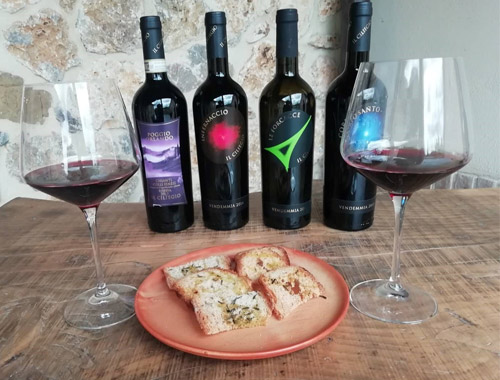
Brunello di Montalcino is a DOCG wine produced exclusively from Sangiovese (locally called Brunello) and aged at least four years, of which two are in oak barrels. Until the mid‑19th century, the area was known for a sweet Moscadello wine, but the pharmacist Clemente Santi and his grandson Ferruccio Biondi Santi perfected the long‑aged red wine that became Brunello. Today more than 200 producers range from small artisan estates to large companies.
Wine travellers can visit numerous wineries around Montalcino. Many are housed in castles or historic villas and offer tours of the vineyards, cellars and ageing rooms followed by tastings. Notable estates include:
- Tenuta Greppo – Biondi Santi: the historic estate where Brunello was born; visits are by appointment.
- Fattoria dei Barbi: open daily with guided tours of its cellars and a small Brunello museum.
- Castello Banfi: a large winery and resort offering tours (normally at 11:00 and 16:00) and tastings of Brunello, including at its renowned wine shop and restaurants.
- Argiano, Col d’Orcia, Altesino and many other estates also welcome visitors for tours and tastings.
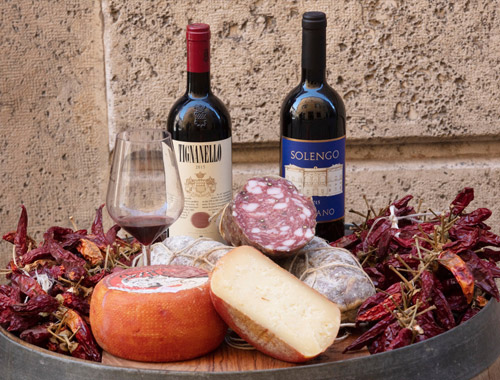
Tastings should be booked in advance, especially in summer and during events. Many wineries pair wines with local cheeses, cured meats and other Tuscan specialties.
Practical tips and frequently asked questions
How to get there
- By car: From Siena, follow the SS2 Cassia south and then the SP del Brunello to Montalcino. From Florence or Rome, follow the A1 motorway and exit at Siena–Bettolle or Chiusi–Chianciano and then take secondary roads .
- By public transport: There is no train station in Montalcino. You can take a train to Buonconvento and then a bus to Montalcino, or direct buses from Siena .
- Parking: Several free car parks exist (for example La Spiga and Prato Spedale) and paid parking near the fortress . Avoid driving into the limited‑traffic zones (ZTL) in the historic centre .
When to visit
Montalcino is charming all year round, but late spring (May‑June) and early autumn (September‑October) offer the best combination of mild weather, vineyards in bloom or harvest colours, and fewer crowds . Spring brings green hills and pleasant temperatures ideal for walking among the vines . July and August have long days and events such as the Jazz & Wine festival, but heat can be intense during the daytime . Autumn sees grape harvests in September–October, the Sagra del Tordo festival at the end of October and is perfect for wine tours . Winter is quiet and cold; snow is rare but possible. The advantage is lower prices and Christmas markets, with the Benvenuto Brunello wine preview in February .
Is Montalcino suitable for children?
Yes. The historic centre is largely pedestrian and safe. Families should be aware that the town is on a slope, so pushing a pram up the hills can be tiring . There are playgrounds near Viale Strozzi and Via Lapini, a green park outside the walls and an open area near the fortress where kids can play . Some wineries are family‑friendly: for example Castello Banfi offers grape juice for children during tastings, and many agriturismi have farm animals or pools . For infants, bring a baby carrier so you can access lanes with steps or underground cellars during tours .
How much time do you need?
To explore Montalcino’s main sights and visit a winery, allow a full day. In half a day you can see the fortress, walk through the historic centre and do a quick tasting, but you will need to hurry. With a full day you can add the museums and Sant’Antimo. Two days are ideal if you plan to visit several wineries or explore nearby towns in Val d’Orcia .
Events and festivals
Montalcino has several annual events that give a taste of local traditions:
| Event | When | Description |
|---|---|---|
| Sagra del Tordo | Last weekend of October (e.g., 24‑26 October 2025) | Medieval festival with costumed parades, drummers, flag‑wavers and an archery contest between the town’s districts; food stalls serve autumn dishes and new wine . |
| Jazz & Wine in Montalcino | Third week of July (about six days, e.g., 22‑27 July 2025) | International jazz festival with evening concerts in the fortress and wineries; audiences can taste Brunello during performances . |
| Benvenuto Brunello | Mid‑February (four‑five days) | Preview of the new vintages of Brunello and Rosso. Over 100 producers offer tastings in the cloister of Sant’Agostino and there are seminars and gala dinners . Tickets are limited and sell out quickly. |
| Giorni del Miele (Honey Days) | Late September | Market devoted to honey and bee products with tastings and workshops . |
| White Truffle Fair (San Giovanni d’Asso) | Second and third weekend of November | Market in San Giovanni d’Asso featuring local white truffles, truffle‑hunting demonstrations, food stands, wine tastings and a heritage steam train from Siena . |
Note: Dates may vary; check municipal or event websites for details.
Exploring the surroundings
Montalcino’s location on the western edge of the Val d’Orcia makes it an excellent base for discovering nearby villages and landscapes.
Pienza
About 20 km away, Pienza is renowned as the “ideal city” of the Renaissance. Pope Pius II remodelled his birthplace in the 15th century as a utopian town, centred on Piazza Pio II . The square is framed by the Renaissance cathedral, the Palazzo Piccolomini with its hanging garden overlooking the Val d’Orcia, and the town hall. The town’s lanes have romantic names like Via dell’Amore and Via del Bacio, and shops sell the famous Pecorino di Pienza cheese . From the walls there are panoramic views over the valley .
Bagno Vignoni
The tiny spa village of Bagno Vignoni (18 km from Montalcino) centres on a large rectangular pool of steaming thermal water in the main square . Bathing in the historic pool is no longer allowed, but you can wander around it and enjoy the vapours rising from the water. Nearby, the Parco dei Mulini shows how the thermal water once powered mills . Visitors can relax in the spa hotels or – for a free experience – soak their feet in natural pools downstream in the countryside . At night the illuminated pool gives the village a magical ambiance .
San Quirico d’Orcia
Just 10 km from Montalcino, San Quirico d’Orcia was an important stop on the Via Francigena pilgrimage route . The Romanesque collegiate church of Santi Quirico e Giulitta has beautifully sculpted portals ; opposite stands the 16th‑century Palazzo Chigi . The town’s gem is the Horti Leonini, a formal Italian garden created in 1580 . Entrance is free and visitors stroll through boxwood hedges and symmetrical paths to a terrace with views over roofs and hills . Nearby landmarks include the photogenic cypress cluster along the road to Pienza and the Cappella della Madonna di Vitaleta amid the fields . San Quirico can be visited in half a day and is often combined with its surroundings .
Montepulciano
About 35 km east of Montalcino, Montepulciano is a larger hill town famed for Vino Nobile di Montepulciano. Its steep main street climbs to Piazza Grande, flanked by Renaissance palaces and the 16th‑century cathedral . The square also contains the town hall, reminiscent of Florence’s Palazzo Vecchio, and the Pozzo dei Grifi e dei Leoni . Beneath the palaces are ancient wine cellars open for visits and tastings . Outside the walls stands the magnificent church of San Biagio, designed by Antonio da Sangallo the Elder . Montepulciano warrants a full day if including winery visits and shopping .
Val d’Orcia landscapes
The Val d’Orcia itself, a UNESCO World Heritage landscape, is famed for its rolling hills, cypresses and farmhouses that look like paintings . Scenic drives include the SR146 from San Quirico to Pienza, the gravel road from Torrenieri to San Quirico past the celebrated cluster of cypresses, and the route from Montalcino down to Sant’Antimo and Castelnuovo dell’Abate through vineyards . Photographers flock to the curving road between Pienza and Monticchiello, where scenes from the film Gladiator were shot . Nearby villages worth a detour include Castiglione d’Orcia with the ruined Rocca di Tentennano for a panoramic view, and Bagni San Filippo, where hikers soak in natural sulphur pools and admire white calcite formations like the “Balena Bianca” .
Visitors often spend two or three days based in Montalcino or nearby villages to explore these sights and take time for photos and relaxation .
Siena and Hotel Minerva: a convenient base for the Val d’Orcia
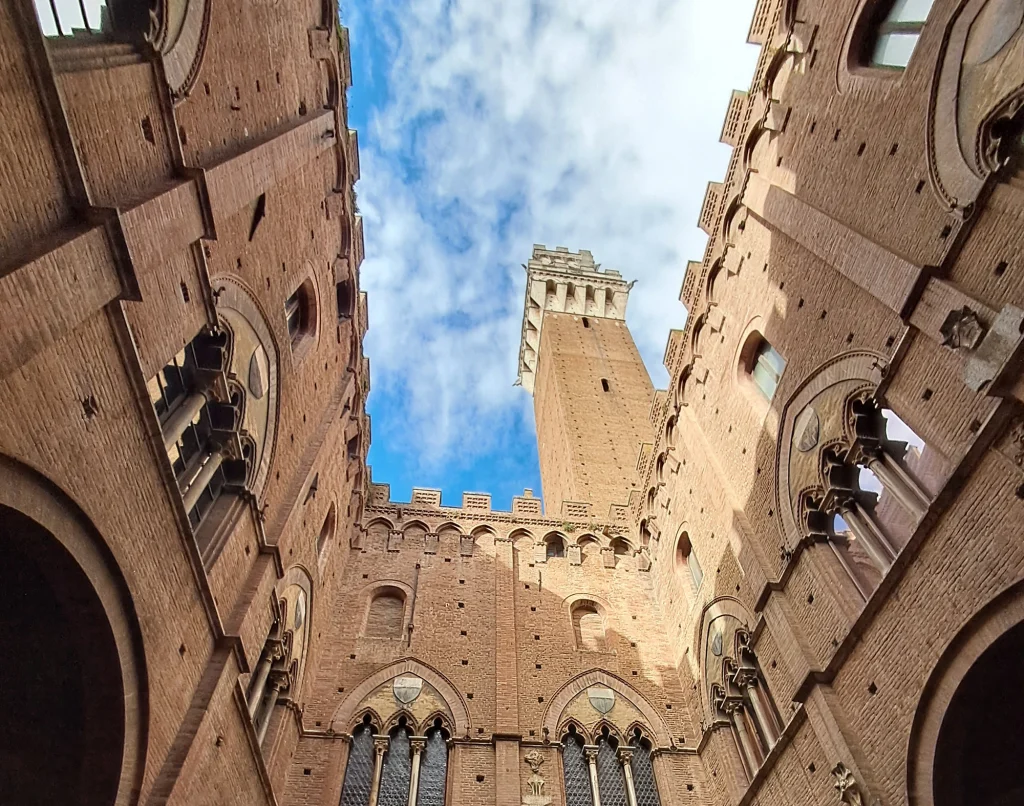
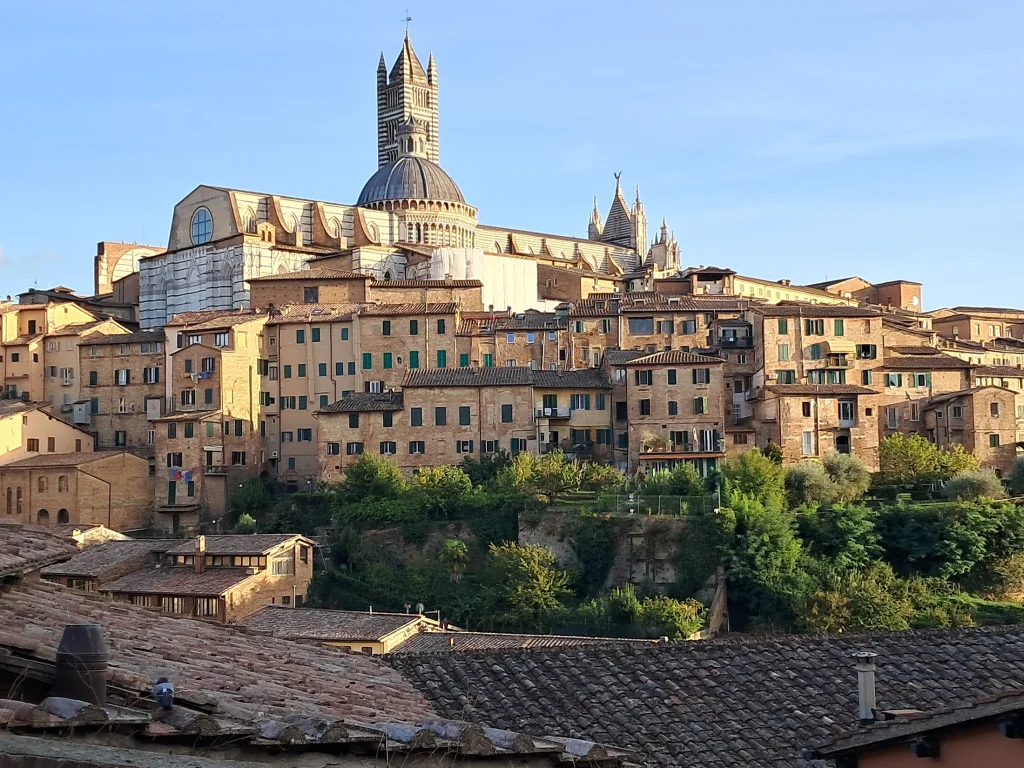
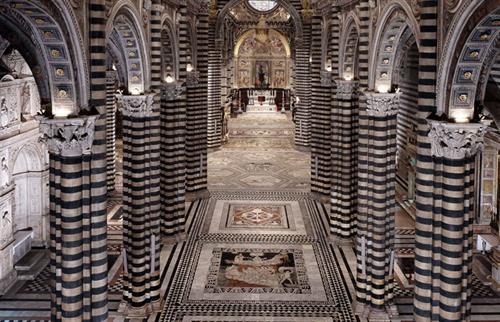
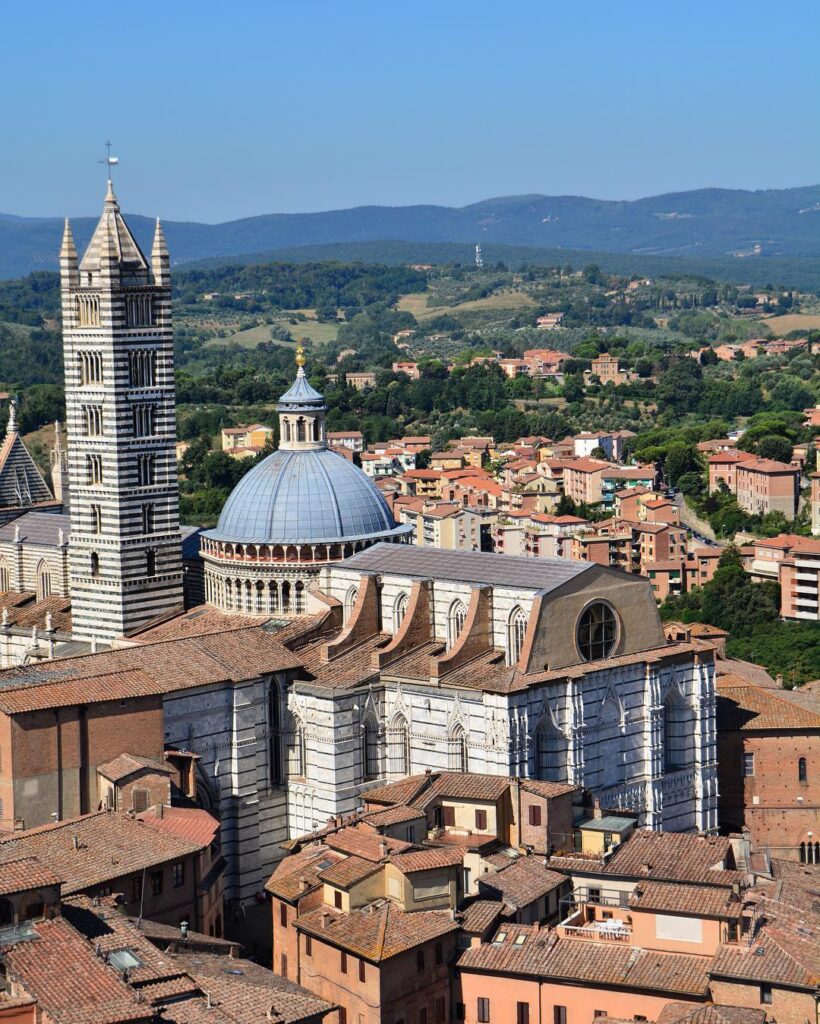
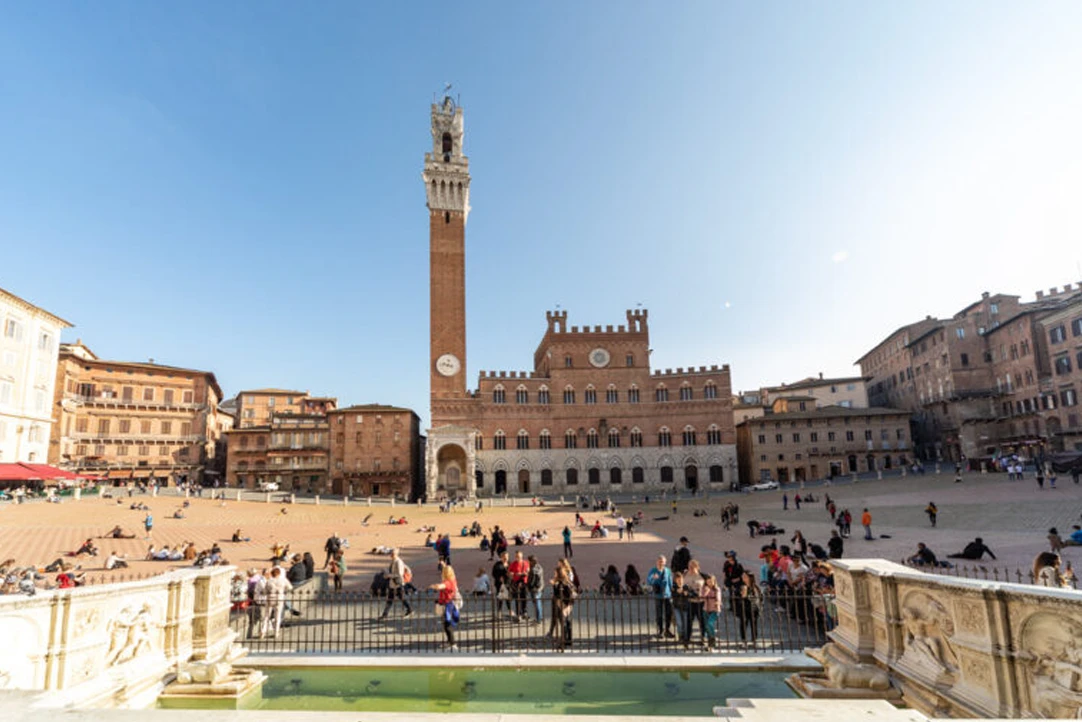
Many travellers choose to stay in Siena, about 40 km north of Montalcino, and make day trips to the Val d’Orcia. Siena’s UNESCO‑listed old town deserves at least two or three days to itself, with highlights such as the striped marble Duomo, shell‑shaped Piazza del Campo where the Palio horse race is held, and numerous Gothic museums . From Siena you can reach Montalcino, Pienza, Montepulciano, San Gimignano and even Florence within an hour or so .
Hotel Minerva: location and convenience
Hotel Minerva is a three‑star hotel located inside Siena’s medieval walls at Via Garibaldi 72, just outside the limited‑traffic zone. This makes it easy to reach by car, and the hotel offers a secure covered garage with around 20 spaces . Once parked, most attractions are within walking distance: Piazza del Campo is about 15 minutes away and the cathedral about 17 minutes . The train station is around one kilometre away and reachable by local buses . Thus the hotel is convenient both for exploring Siena on foot and for day trips around Tuscany .
Character and services
The hotel occupies historic buildings and combines traditional Tuscan details such as terracotta floors and exposed beams with modern comforts . The 24‑hour reception staff are multilingual and eager to suggest hidden itineraries or arrange tours . A continental buffet breakfast includes homemade pastries, Tuscan bread, local cold cuts and cheeses, fruit and yoghurt . In fine weather breakfast can be taken in the panoramic garden, and there is also a bar for coffee or a glass of Vernaccia . A small lounge with leather sofas and a library invites relaxation, and a meeting room with views over Siena can host up to 40 people . Fast Wi‑Fi is available throughout the property .
Rooms and hospitality for couples and families
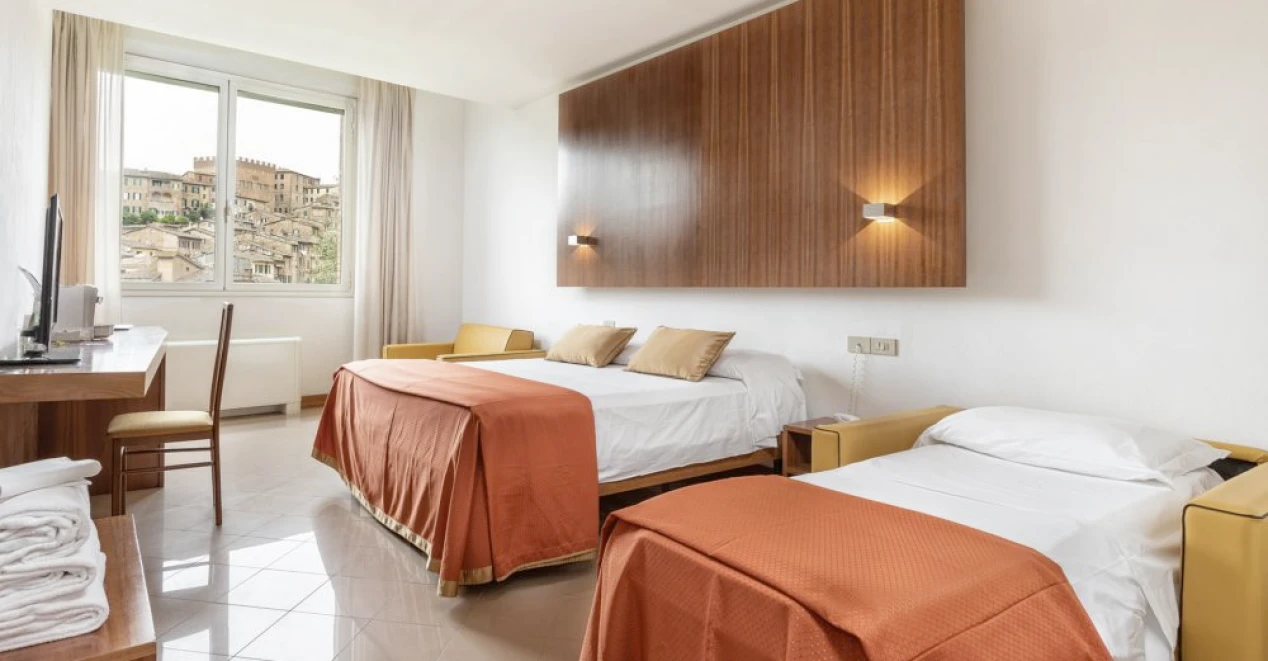
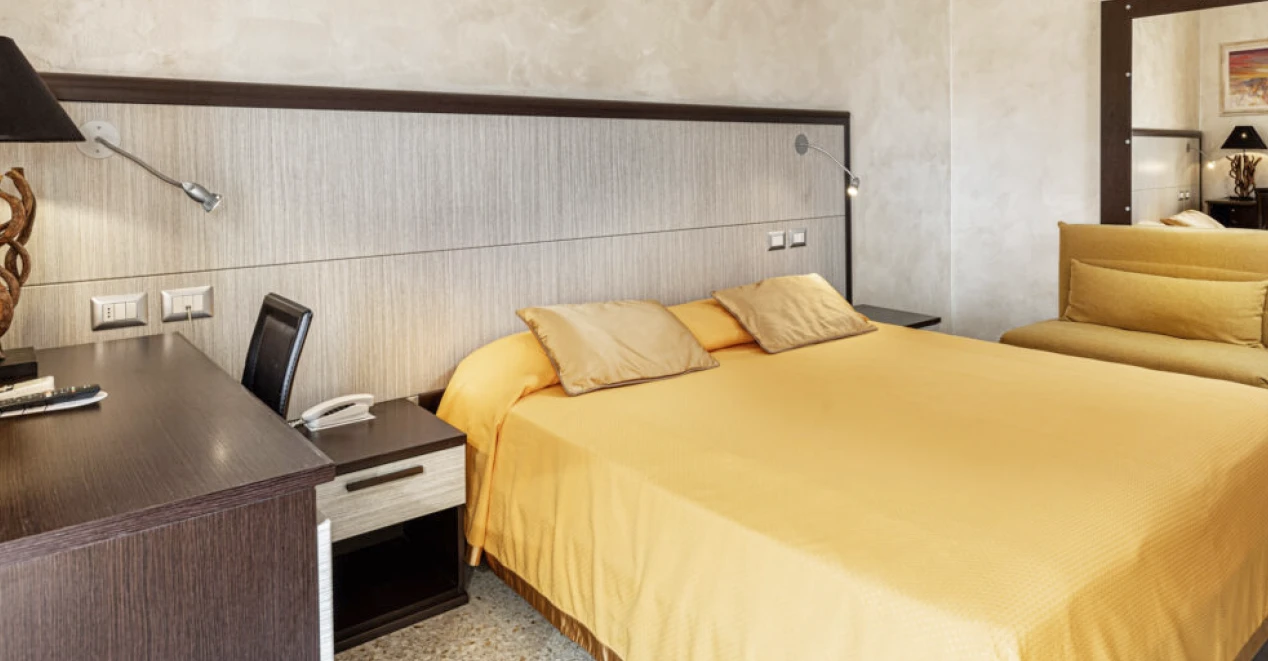
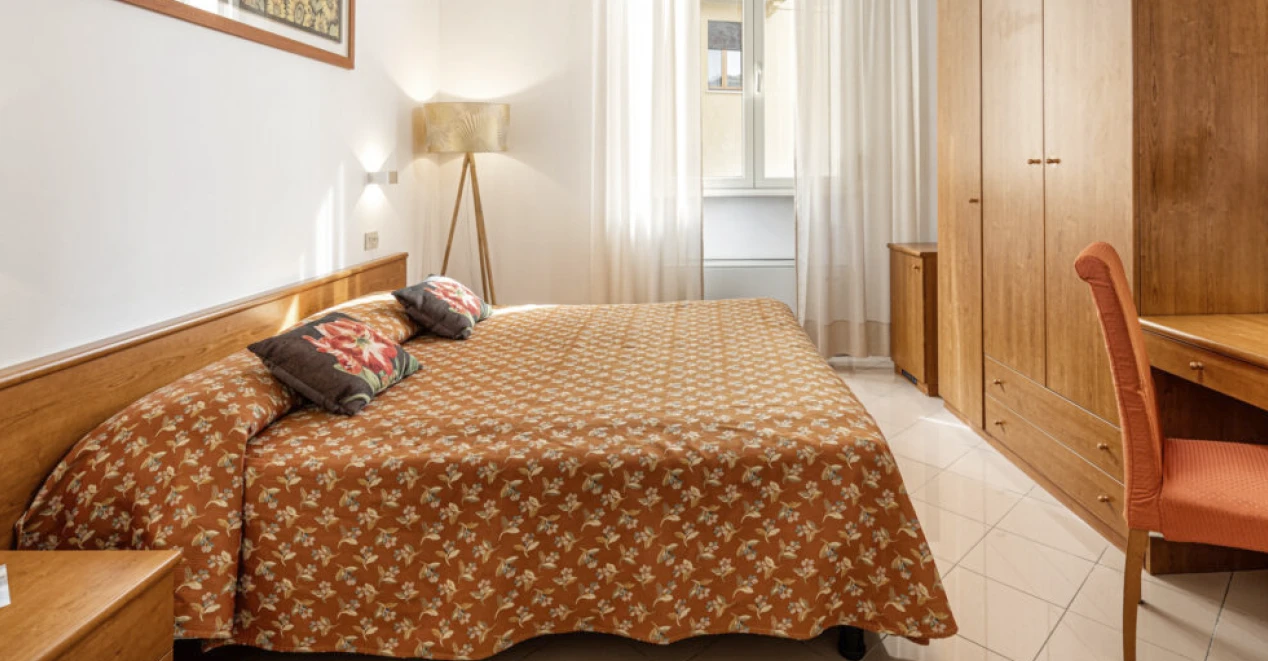
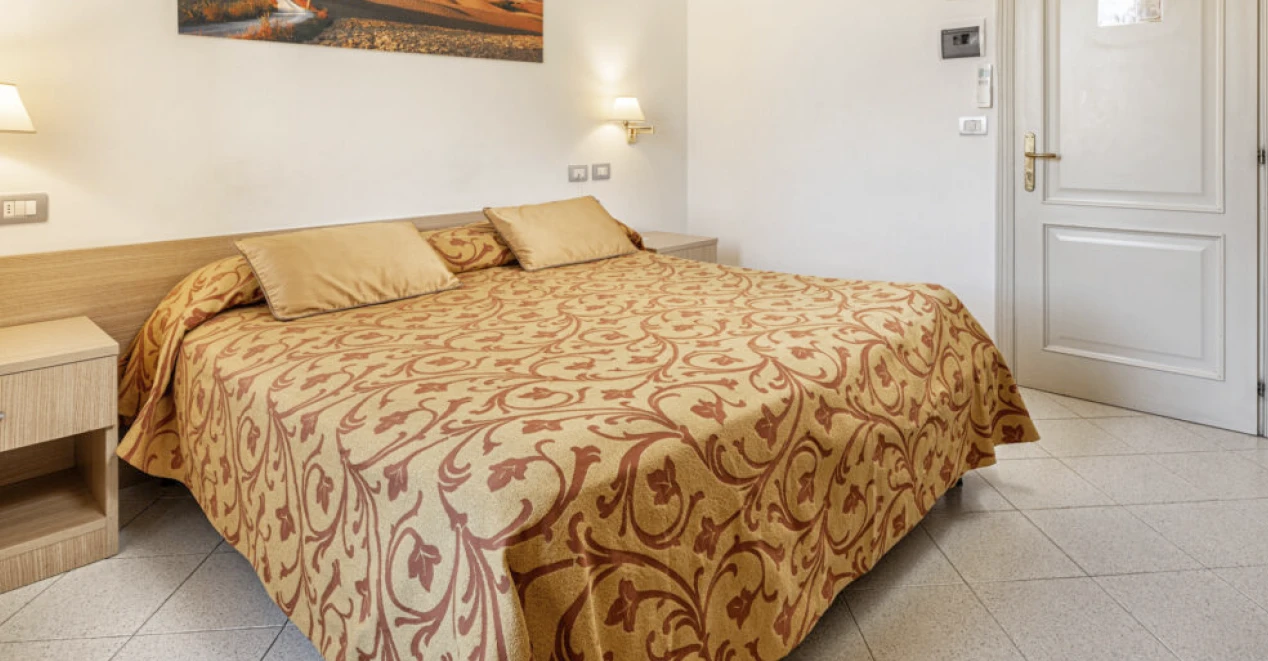
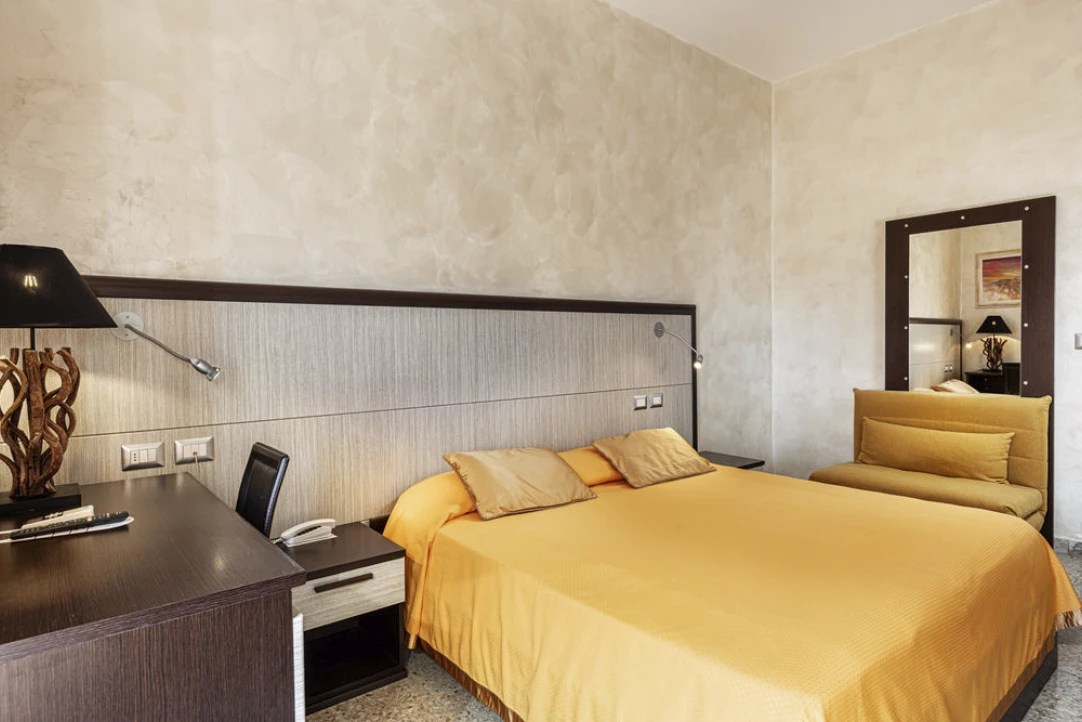
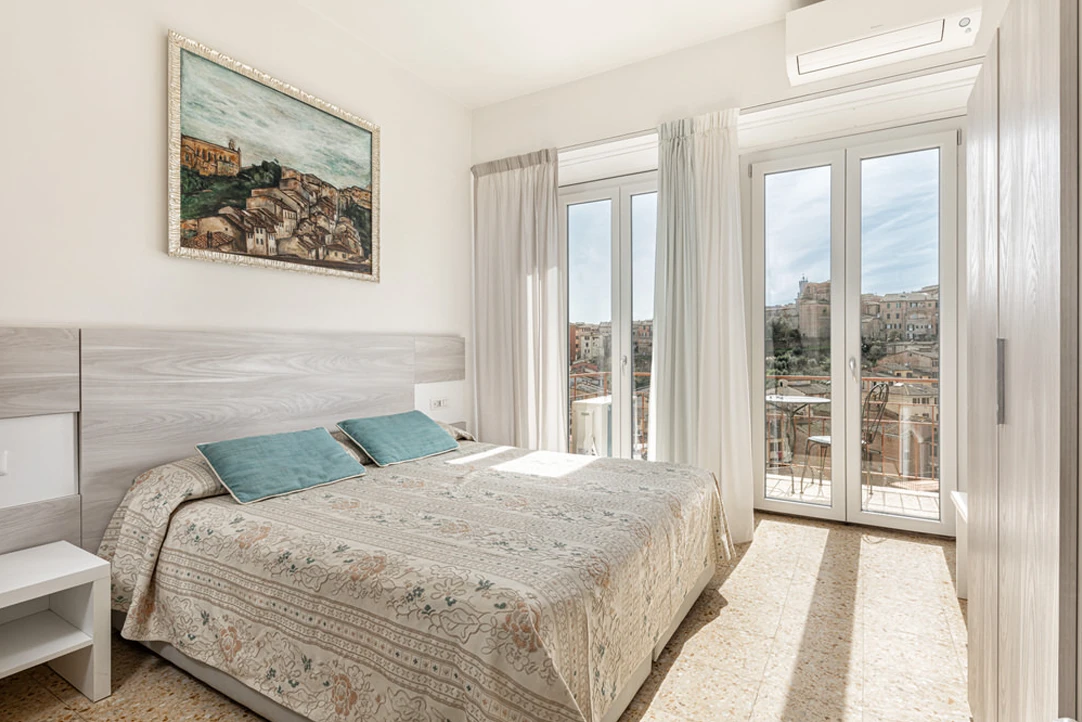
Hotel Minerva offers various room categories. Easy/Economy (also called Smart) rooms are simple and cost‑effective, while Superior and Junior Suite rooms feature panoramic views of Siena’s rooftops . All rooms are bright and furnished in warm contemporary style with Tuscan touches; they include air conditioning/heating, flat‑screen TVs (many with smart‑TV functions), minibars and safes . Bathrooms have modern fixtures, roomy showers or bathtubs and toiletries inspired by Tuscan flowers . Many rooms have balconies or large windows .
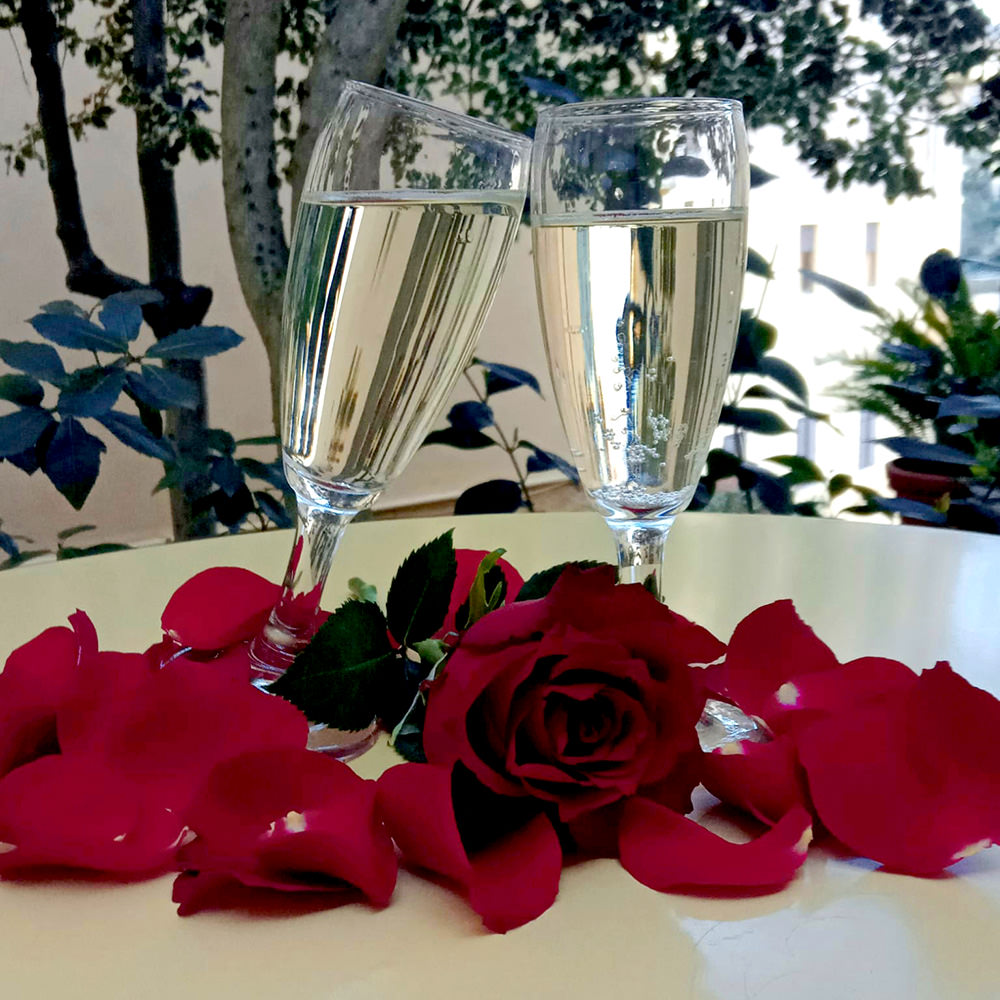
Families are welcome: triple and quadruple rooms are available, and cots, bottle warmers and a children’s playroom are provided . The hotel is near playgrounds and the green Orto de’ Pecci with farm animals , giving parents space to relax while children play. Couples appreciate the romantic setting: staff can arrange rose petals or a bottle of sparkling wine in the room on request, and the panoramic garden is ideal for sunset drinks . Junior Suites offer extra space and private terraces . Flexible check‑out, luggage storage and a spacious lift contribute to a stress‑free stay .
Conclusion
Whether you are a wine lover, a fan of medieval history or a family looking for rolling landscapes, Montalcino and the Val d’Orcia have something to offer. From sipping Brunello while gazing over vineyards to strolling through Renaissance towns or relaxing in warm thermal pools, the experiences in this corner of Tuscany create lasting memories . Staying in Siena at Hotel Minerva provides comfort, convenient access and a warm welcome after days of exploring . Enjoy your journey through the land of Brunello!