
Monteriggioni is one of Tuscany’s most iconic medieval villages, famous for its perfectly preserved ring of walls and the towers that crown it—so striking that Dante Alighieri mentioned it in the Divine Comedy. This small fortified town, built by the Sienese in the early 1200s, stands on a hill surrounded by vineyards and olive groves and welcomes visitors into an atmosphere that feels suspended in time.
Walking along its cobbled lanes is like stepping into the Middle Ages: the walls—about 570 meters long and around 10 meters high—enclose a settlement that has remained almost unchanged for centuries. Monteriggioni is so evocative that it has even been used as a setting for films and video games (it appears, for example, in the Assassin’s Creed saga) and it has been awarded the Touring Club’s Orange Flag for tourism quality.
Founded for defensive purposes, today it’s an unmissable destination for anyone visiting Siena and the surrounding area. In this guide you’ll find Q&As to explore Monteriggioni at its best, practical tips for families and couples, summary tables with attractions and events, and a look at what to see nearby. You’ll also discover why Hotel Minerva in Siena can be the ideal starting point for visiting Monteriggioni and the whole area.
Get ready for a journey through history, legends, great food, and breathtaking views!
Where is Monteriggioni and how do you get there?
Monteriggioni is in Tuscany, in the Province of Siena, about 15 km northwest of Siena. It sits on a small hill at the gateway to the Sienese Chianti, in a strategic position along the ancient Via Cassia and the Via Francigena (the medieval pilgrims’ route). It’s no coincidence the Sienese built it in the 13th century to control the valley and defend themselves from Florentine incursions.
Here are the main ways to reach Monteriggioni:
- By car: the most convenient option. From Siena, take the Siena–Florence expressway and exit at Monteriggioni; you’ll arrive in about 20 minutes. The village itself is pedestrian-only: you can park at the area at the foot of the walls (Parcheggio Colonna di Monteriggioni). It’s also a great stop for those driving between Florence and Siena, since it’s just a few kilometers from the main route.
- By bus: extra-urban buses leave from Siena city center (Piazza Gramsci bus station) toward Monteriggioni (routes in the direction of Colle Val d’Elsa / Poggibonsi). The stop is at Colonna di Monteriggioni, at the foot of the castle, and the trip takes about 25–30 minutes. Services are fairly frequent (about one per hour during the day), but it’s best to check updated timetables, especially on holidays.
- By train: Monteriggioni does not have a station inside the village. The nearest station is Castellina Scalo–Monteriggioni, on the Siena–Empoli–Florence line, about 4 km away. From there you can continue by taxi or local bus. Alternatively, you can use Poggibonsi station (about 10 km away) or Siena and then combine with a bus.
- On foot or by bike: for the more adventurous, Monteriggioni is a stop along the Via Francigena. The walking route from Siena to Monteriggioni is about 20 km through the hills of the Montagnola Senese. Arriving on foot through woods and vineyards makes for a dramatic entrance—just like medieval pilgrims. It’s also a pleasant cycling trip: there are cycling routes connecting Siena, Monteriggioni, and nearby areas (ask the tourist office for maps and information).
Why is Monteriggioni famous?
Monteriggioni is famous mainly for its medieval walls, which have remained almost intact through the centuries. The sight of the rounded walls crowned with towers is so unique that it impressed Dante Alighieri: in Canto XXXI of Inferno, he compares the giants standing in the infernal pit to the towers of Monteriggioni, writing: “As Monteriggioni crowns its round ring with towers…”
Even today, outside the village near the Porta Fiorentina, a stone plaque bears the famous verse as a tribute to this literary reference.
But Monteriggioni is not just a postcard image: it was built by the Sienese between 1213 and 1219 as a defensive outpost against Florence. For centuries it served as an almost impregnable bastion: legend says its walls were never breached in battle. Its position allowed control of the route between Siena and the Val d’Elsa, making it crucial in medieval conflicts.
A historic turning point is the “Great Betrayal” of 1554: that year Monteriggioni—the last stronghold of the Republic of Siena in the war against the Medici of Florence—fell not by military conquest but because the Sienese commander Giovannino Zeti handed the keys to the Florentines. This marked the end of Sienese independence. A local legend still says the traitor captain’s ghost wanders near the well in the square, tormented by remorse.
In short, Monteriggioni is famous because it is an authentic fragment of the Middle Ages miraculously preserved. Its battlements, gates, and central square offer the same view as centuries ago. This historic charm, together with the idyllic Tuscan hill scenery, makes Monteriggioni beloved by photographers, travelers, and history enthusiasts.
Its reputation is also enhanced by events like the Medieval Festival (see below) and by its proximity to Siena, a UNESCO World Heritage Site. Anyone who visits Monteriggioni rarely forgets the feeling of stepping into a medieval “time machine,” protected by imposing walls that tell stories of sieges, banquets, and ancient traditions.
What to see in Monteriggioni?
Despite its small size, Monteriggioni offers many historical attractions and evocative corners. The best part is that everything can be visited on foot in just a few hours—but every detail deserves attention. Here is a summary table of the main sights, with brief descriptions and useful notes.
Attraction — Description — Special note
- The Walls and Towers — An elliptical ring of walls about 570 m long, punctuated by 14 medieval stone towers (originally 15 if you count an internal tower). Today 11 towers still rise above the walls, while the others were lowered in the 1500s. Two panoramic wall-walk sections are open to visitors. — A magnificent example of medieval military architecture, cited by Dante (“Monteriggioni crowns itself with towers”).
- Porta Franca (Porta Romea) — The main gate, facing south toward Rome. It opens at the base of a tower and originally had a drawbridge and a heavy portcullis that could be lowered in case of danger. Passing through it leads directly into the central square. — Called Porta Romea because the Via Francigena continued toward Rome from here. Entering through Porta Franca creates a theatrical effect: the square and church immediately appear in front of you. Above the arch you can still see the slots for the ancient portcullises.
- Porta Fiorentina (Porta San Giovanni) — The second gate, on the north side, oriented toward Florence. Smaller than Porta Franca and opened directly into the walls without an external tower; it was also known as Porta di Sotto. — Named after Florence, the historic rival city. Outside there is a plaque with Dante’s verse about Monteriggioni’s towers. A great point to admire the full extension of the walls from outside.
- Piazza Dante Alighieri (formerly Piazza Roma) — The village’s central square, a wide irregular open space, once simple packed earth (paved in the 1970s). It is surrounded by stone houses, some with elegant porticoes and Renaissance details that once belonged to nobles and merchants. A medieval well/cistern stands at the center. — The social heart of Monteriggioni: once the place for markets and gatherings, today lined with small restaurants, cafés, and artisan shops. Legends speak of secret tunnels from the well leading outside the walls—or even all the way to Siena—adding mystery to the place.
- Church of Santa Maria Assunta — The small parish church overlooking the square. Built around 1214, it is a simple Romanesque building with a stone gabled façade. Inside, a single sober nave with minimal decoration and a simple altar. — The village’s main religious building. It preserves two Gothic-style tabernacles and a painting of the Madonna attributed to Lippo Vanni (14th century). The church is open to visitors and offers a peaceful, contemplative stop—often accompanied by the sound of its bells echoing in the village.
- Armor Museum (Monteriggioni in Arme) — A small but interesting museum dedicated to medieval arms and armor, located next to the church and reached via a staircase. It displays historical reproductions of swords, halberds, helmets, breastplates, and other weapons from the Middle Ages to the Renaissance. — Interactive and great for kids: some stations allow visitors to try on helmets and armor pieces, lift swords to feel their weight, and explore illuminated maps telling Monteriggioni’s story.
In the evening, with soft lantern lighting, the village takes on a unique fairytale charm.
Monteriggioni for families: what to do with children?
Monteriggioni is an ideal family-friendly destination for a day trip with children, thanks to its small size, safe atmosphere, and lack of traffic. Here are some common questions parents ask, with useful tips:
- Is it suitable for strollers?
Yes. The internal streets are short and gently sloped, with stone paving and some cobbles. A sturdy “urban trekking” stroller works well. The only caution is the wall-walk sections: there are steep stairs, so it’s better to carry smaller kids or leave the stroller below for a short time (the village is tiny and quiet). - Will children get tired?
Usually not. Monteriggioni is compact and doesn’t require long walks. For kids it often feels like a “castle village” from a storybook. - What activities do kids enjoy most?
The walk on the walls is a top experience—feeling “on patrol” like medieval guards—and the Armor Museum, where they can see weapons up close and try on pieces (always a hit).
In general, seeing children running happily in a car-free village, imagining stories of knights and princesses, is one of the joys of visiting places like Monteriggioni as a family. Nearby Siena also offers family-friendly attractions (hands-on museums, botanical garden, and more), so basing yourself in the area lets you enjoy a different adventure every day for both adults and kids.
And Hotel Minerva, with its dedicated services (cribs, bottle warmers, spacious rooms), helps even the youngest travelers feel at home.
Monteriggioni for couples: medieval romance
If you’re looking for a romantic getaway, Monteriggioni will win you over with its intimate atmosphere, suspended in time. Especially outside peak periods, the village offers enchanting views and moments that are perfect for couples.
Imagine walking hand in hand on the ancient walls at sunset: the Tuscan hills turn golden and the sun sinks behind the battlements… a dreamlike scene. The wall walk is one of the most romantic experiences—stop at the highest point, take in the panorama, and maybe snap a keepsake photo with the village behind you.
In short, between postcard views, dinners under the stars, and timeless strolls, Monteriggioni is a perfect setting for romance. Many couples even choose this village for marriage proposals or alternative honeymoons. And if you stay in Siena (perhaps in a romantic Junior Suite at Hotel Minerva, with a private terrace), you’ll have comfort and charm close at hand to complete the experience.
Events and local life: when to visit Monteriggioni?
Even though it’s a small place, Monteriggioni hosts events that highlight local traditions and create unmissable moments of village life for visitors. Here’s what happens throughout the year and the best times to experience the atmosphere at its fullest.
One of the key events is the Monteriggioni Medieval Festival, which draws visitors from all over Tuscany (it’s among the region’s oldest historical reenactments), yet it remains very manageable and especially family-friendly: there are areas and games for children, who can dress up as little knights or ladies and have fun safely. Entry requires a ticket (around €10 for adults, reduced for children; family packages are often available). Booking is recommended if you also want to join the opening medieval dinner.
Visiting Monteriggioni during the festival means seeing the village at its most folkloric and spectacular—truly immersive, though naturally more crowded than usual. If you love historical reenactments, it’s absolutely worth planning your trip around this event.
And don’t worry about accommodation: Siena is very close, and you can easily return to Hotel Minerva after the event (possibly using a transfer or a car, given the late hour). The hotel can also help you organize logistics or purchase tickets in advance.
Best time to visit
Every season has its own charm in Monteriggioni. Here is a comparison to help you choose when to go:
Spring (March–May)
Bright green hills dotted with wildflowers; mild weather, longer days. Fewer crowds and a peaceful atmosphere. Ideal for walking or cycling on the Via Francigena thanks to comfortable temperatures. Great for landscapes and photos with nature in bloom. Around Easter there are suggestive religious services in the village church; spring long weekends also bring fairs and local festivals in the surrounding Sienese area.
Summer (June–August)
Sunny and hot (often above 30°C in July–August); long bright days. Peak tourist season: more visitors during the day, but evenings are still pleasant. Highlights include the Siena Palio (July 2 and August 16) and the Monteriggioni Medieval Festival in early July, with reenactments and nightly shows. Outdoor dinners and vineyard tastings are popular. Book accommodation well in advance.
Autumn (September–November)
Warm golden colors in the vineyards and woods; crisp mornings and evenings, often mild days through October. Fewer tourists after summer, slower pace. Harvest season (late September and October) brings wine and olive oil activities, with opportunities to taste new wine and fresh oil. Beautiful foliage in the Montagnola Senese, perfect for panoramic photos. Food-and-wine events in the area (wine festivals, porcini mushroom and chestnut fairs). Relaxed atmosphere to visit without crowds and enjoy a good Chianti outdoors in the afternoon.
Winter (December–February)
Intimate and quiet atmosphere; few visitors; locals return to everyday life. Cold and humid but rarely harsh (lows around 0°C, occasional light snow); short days. Christmas lights create a fairytale setting; there is often a Christmas market in mid-December and a candle-lit Christmas Eve walk along the Via Francigena. Perfect for those seeking total tranquility: you may find yourself almost alone among the towers wrapped in mist, experiencing the village in an authentic way. Many restaurants remain open (except possibly for short closures in January), and accommodation around Siena is often more affordable.
As you can see, there’s no “wrong” time to visit Monteriggioni—it depends on your interests. If you want events and long lively evenings, choose summer. If you prefer peace and natural colors, spring and autumn are ideal. If you love Christmas atmosphere and don’t mind cooler weather, winter gives you the village almost to yourself.
From a weather perspective, May–June and September are often the best months: pleasant temperatures, spectacular nature, and fewer crowds than peak summer, with generally less frequent rain than October–November. In any season, dress in layers: even in summer, after sunset the air can cool quickly inside the walls.
The area around Monteriggioni: what to visit nearby
After exploring Monteriggioni, it’s worth discovering the other wonders nearby. The village’s position in the heart of the Province of Siena makes it perfect for reaching other places of historical, cultural, and food-and-wine interest in a short time. Here are a few:
- Abbey of Abbadia a Isola — Just 4 km from Monteriggioni along the Via Francigena. Founded in the 11th century, it was once an important stop for pilgrims. Today you can visit the Romanesque Church of Saints Salvatore and Cirino, with its frescoes, and the hostel created inside the former monastery. The abbey sits in a flat basin that was once marshy and was reclaimed in the 1200s—Monteriggioni’s famous “reclamation tower” once protected the drainage works. The atmosphere is especially mystical and silent at sunset; the small hamlet also has a small archaeological museum and a Via Francigena information point.
- Colle di Val d’Elsa — About 10 km away (15 minutes by car to the west). Known as the “Bohemia of Italy” for crystal production: 95% of Italian crystal is produced here, with many artisan workshops. Its upper historic center, Colle Alta, is a charming medieval town with a Cathedral, the Crystal Museum, and beautiful views over the Val d’Elsa. Don’t miss the Baluardo (ancient fortifications) and elegant Via delle Volte, a medieval tunnel street now used as a covered road. Colle bassa offers trattorias and wine bars.
- San Gimignano — About 30 km away (40 minutes by car to the northwest). Famous for its 14 slender medieval towers, earning it the nickname “Manhattan of the Middle Ages.” A UNESCO World Heritage site: stroll through Piazza della Cisterna and Piazza del Duomo, admire the frescoes in the Town Hall and the Cathedral, and climb Torre Grossa for the view. San Gimignano is also home to Vernaccia, an excellent local white wine, and delicious products like pure saffron. It’s easy to combine with Colle di Val d’Elsa in a single day.
- Castellina in Chianti — About 18 km away (25 minutes by car to the east). One of the main towns of the Sienese Chianti. Perfect for wine lovers: you’ll find wine shops in ancient cellars, the Chianti Archaeological Museum (with Etruscan artifacts) housed in the medieval Rocca, and beautiful vineyard views from the covered walkway of Via delle Volte. Nearby wineries offer Chianti Classico tastings.
- Castello della Chiocciola — A lesser-known curiosity about 5 km from Monteriggioni (southward along the Via Francigena): a private medieval castle in the woods, famous for its helical spiral staircase that gives it its name. It’s not always open inside, but it can be admired from outside—an atmospheric stop for those who love “minor” castles away from classic circuits.
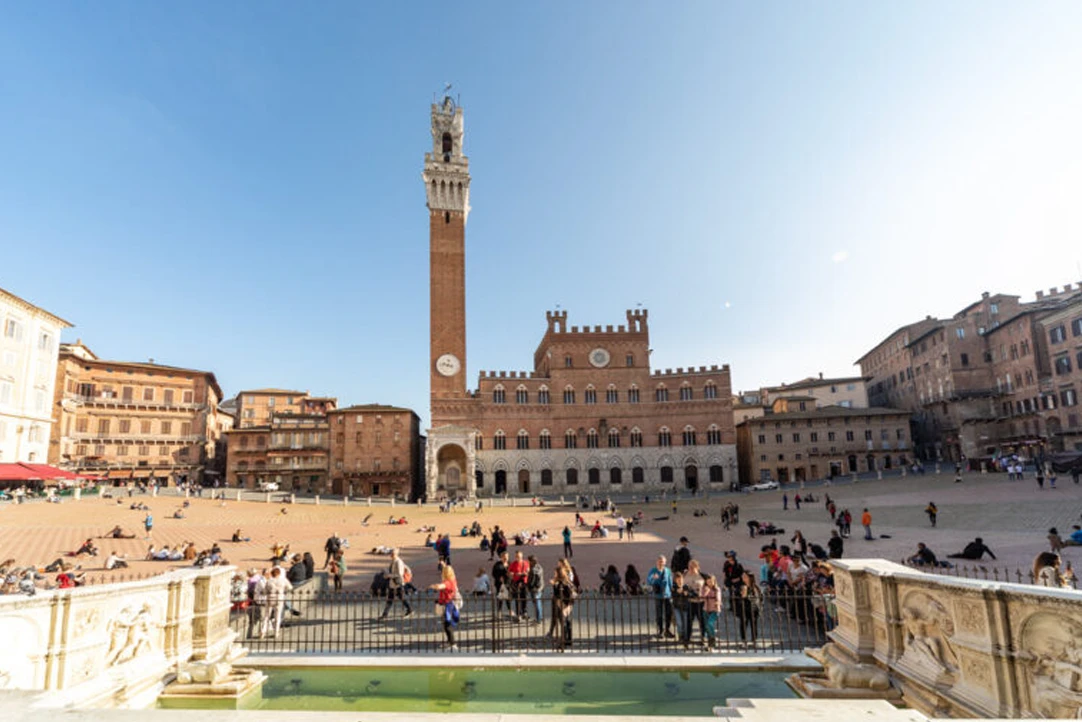
- Siena — Impossible not to mention. Even if it’s “nearby” in a broader sense (15 km), Siena is the natural base for visiting Monteriggioni and deserves several days. From your stay at Hotel Minerva, you can reach Piazza del Campo and Siena Cathedral in just minutes on foot. Enjoy the maze of lanes, the city’s artistic masterpieces (from Palazzo Pubblico to the magnificent Cathedral), and the unique Palio atmosphere if you’re there in July or August. Siena completes Monteriggioni perfectly: also medieval, but with the grandeur of a major Republic that rivaled Florence.
Where to stay: Hotel Minerva in Siena as the ideal base
To make the most of discovering Monteriggioni and its surroundings, it’s recommended to stay in Siena, which offers more accommodation options and services. Hotel Minerva in Siena, in particular, stands out as a strategic starting point to explore not only the city of the Palio but also nearby villages (first and foremost Monteriggioni, but also San Gimignano, Chianti, Val d’Orcia). Here’s why Hotel Minerva is a great choice and what comforts it offers travelers.
Convenient, strategic location
Hotel Minerva is within Siena’s medieval walls, just outside the limited traffic zone. This means it’s easy to reach by car (it has a private secured parking area for guests—a real rarity in Tuscan historic centers!), and at the same time, once you park you can forget about the car: from here you explore Siena on foot.
In a pleasant 15-minute walk through lanes and artisan shops you can reach Piazza del Campo; the Cathedral is about 17 minutes, and the Medici Fortress about 13. Being this close to major sights is priceless: you can return to the hotel to rest or drop off shopping and then head out again without stress—perhaps for an evening gelato in Piazza del Campo as the Torre del Mangia lights up.
At the same time, the hotel’s area is quiet and silent at night, away from the nightlife chaos—so restful sleep is guaranteed. Siena railway station is just 1 km away (15 minutes on foot or 5 minutes by bus), convenient for those arriving by train or planning car-free day trips (for example, Florence by train). By car, from Hotel Minerva it’s only 20–30 minutes to Monteriggioni, San Gimignano, Montalcino, and more.
Hospitality and services for everyone
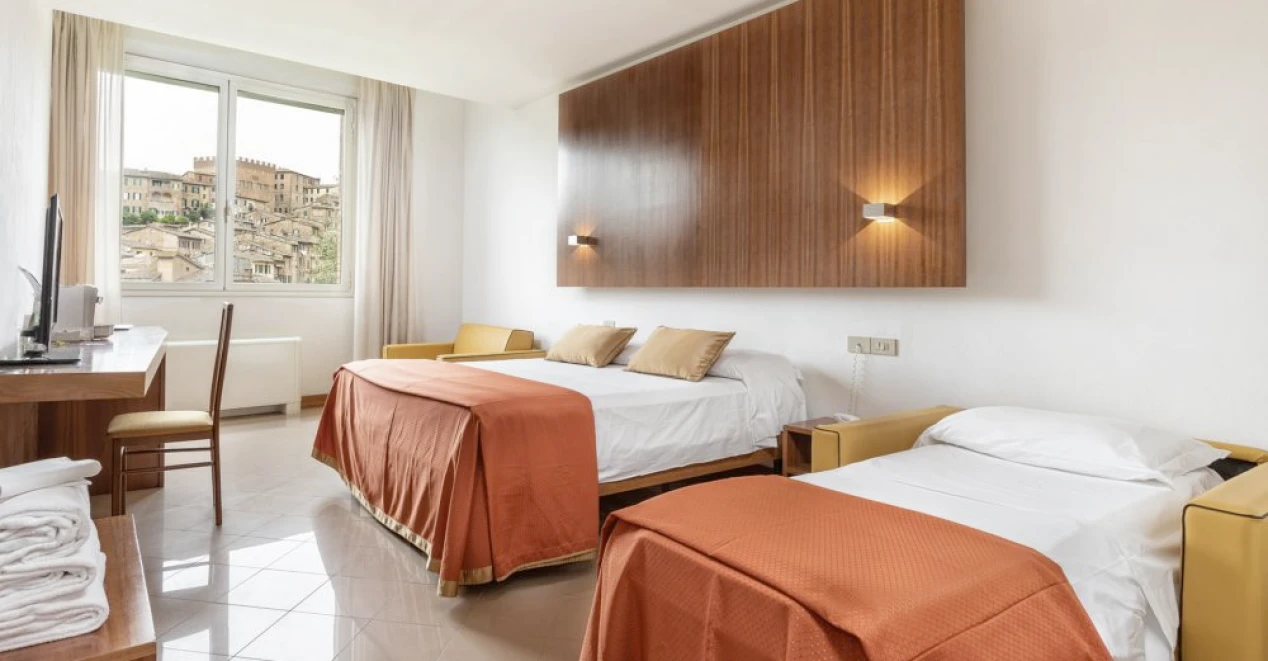
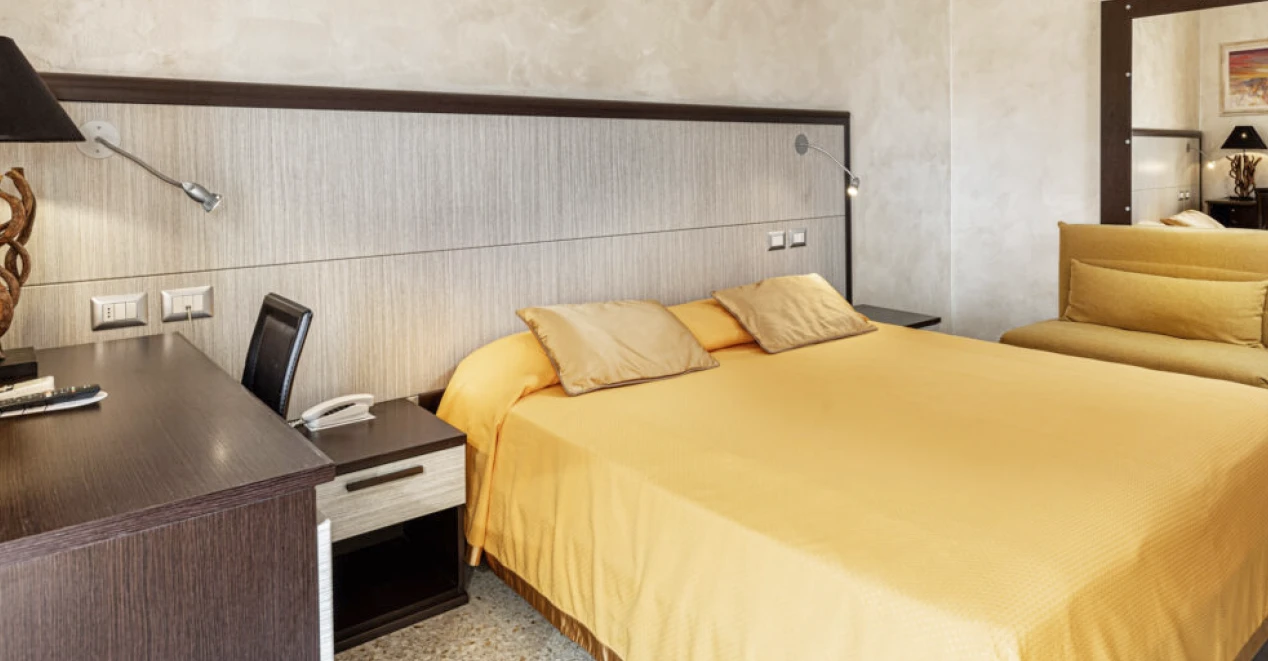
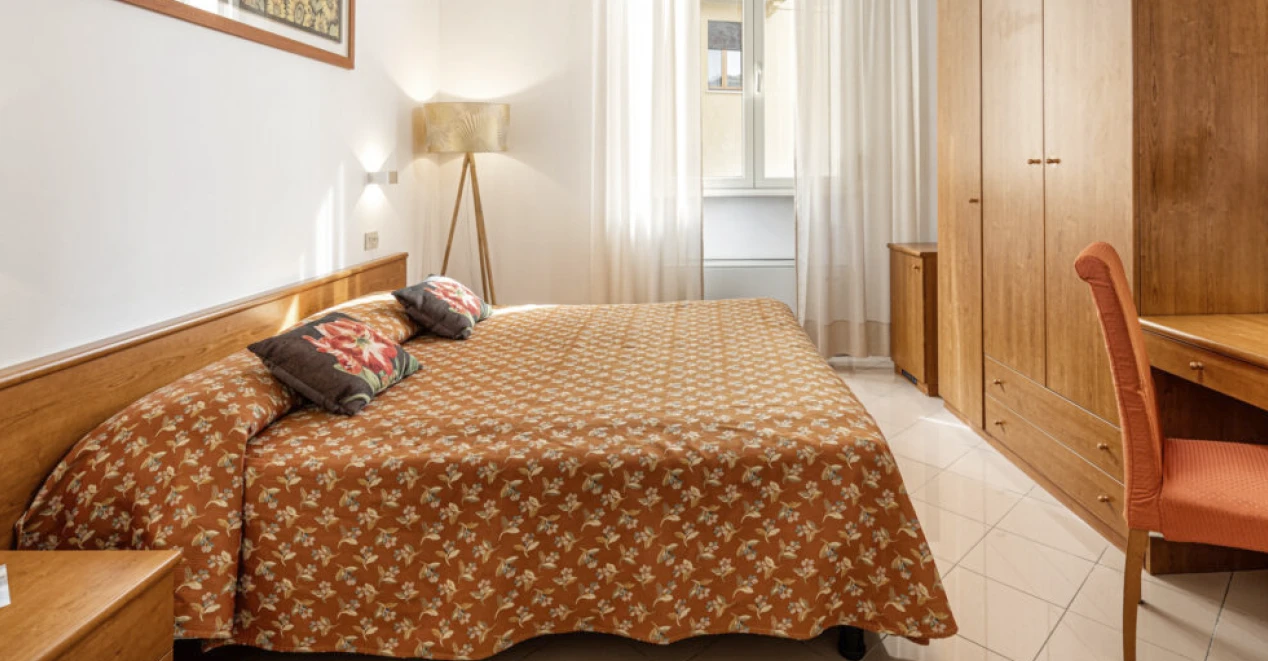
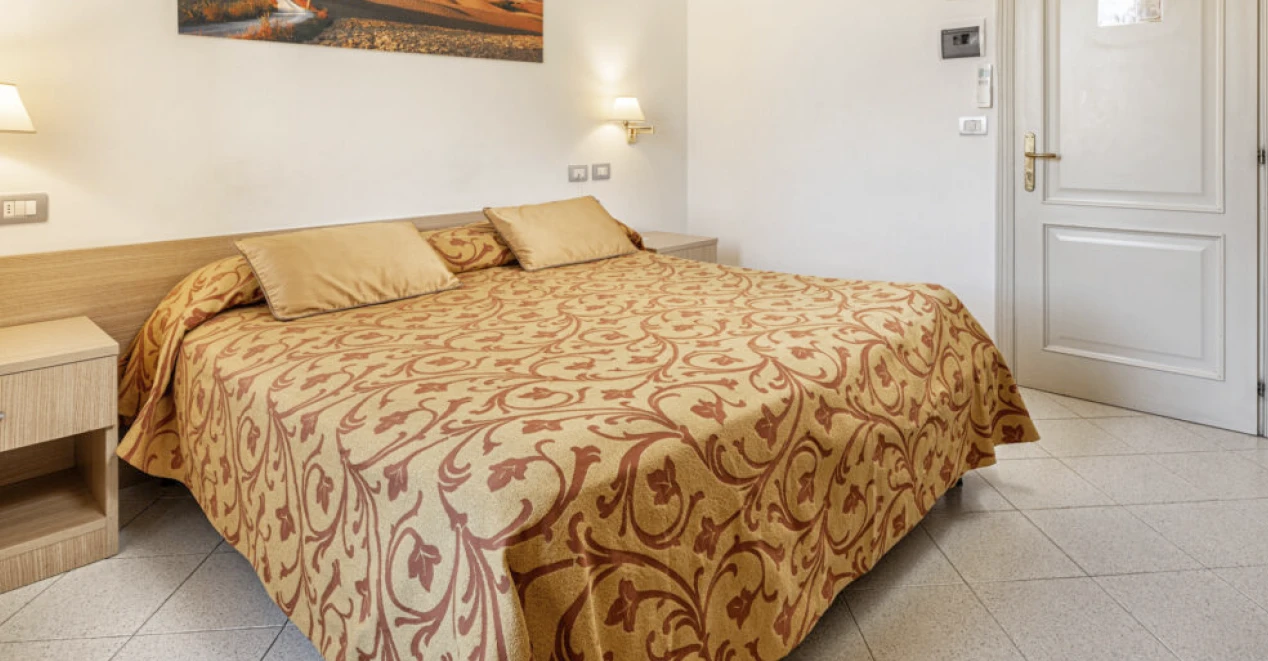
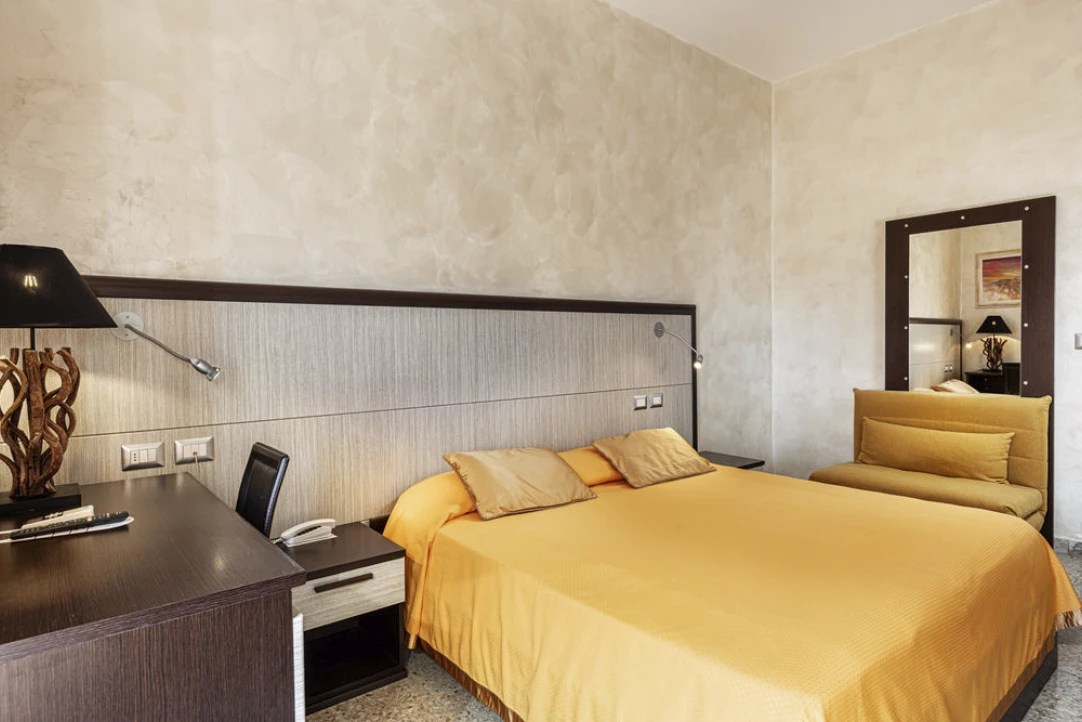
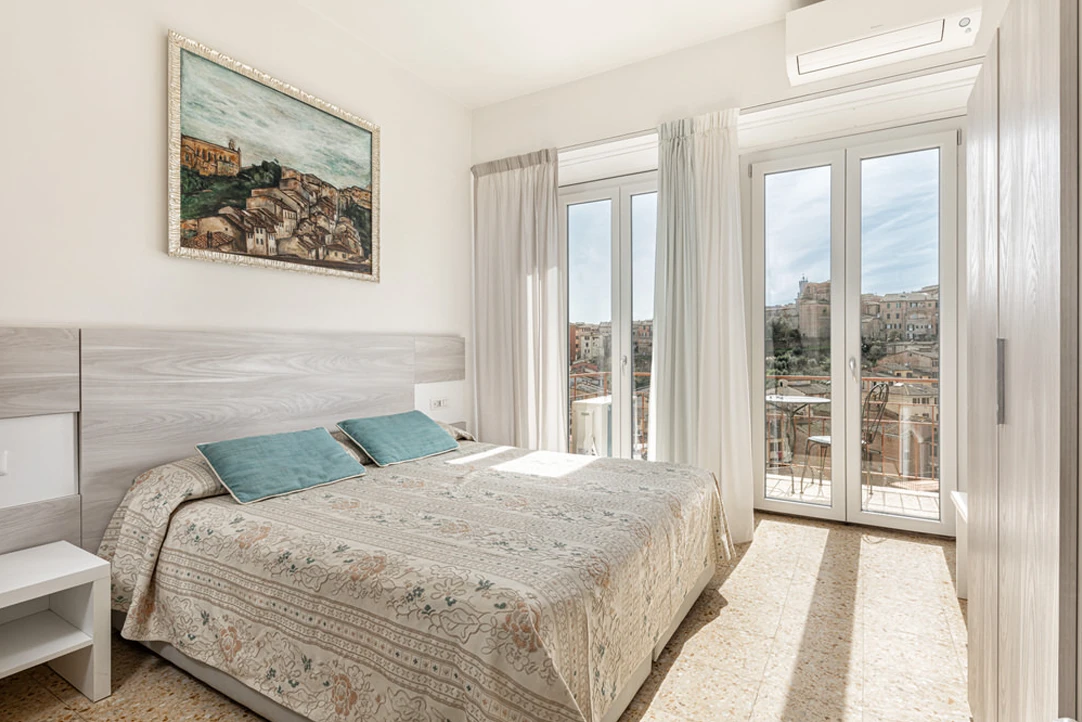
Hotel Minerva is a historic 3-star hotel in Siena, with 56 rooms in different categories. The property blends traditional charm (terracotta floors, exposed beams in some areas) with modern comfort. Reception is open 24/7 with multilingual staff ready to suggest hidden itineraries, romantic restaurants, and current events.
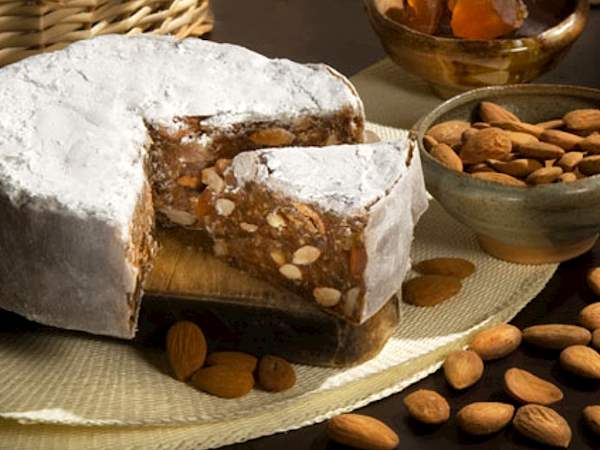
So if you’re wondering what time the last bus leaves Monteriggioni or where to buy the best panforte, you’ll always find someone happy to help with a smile.
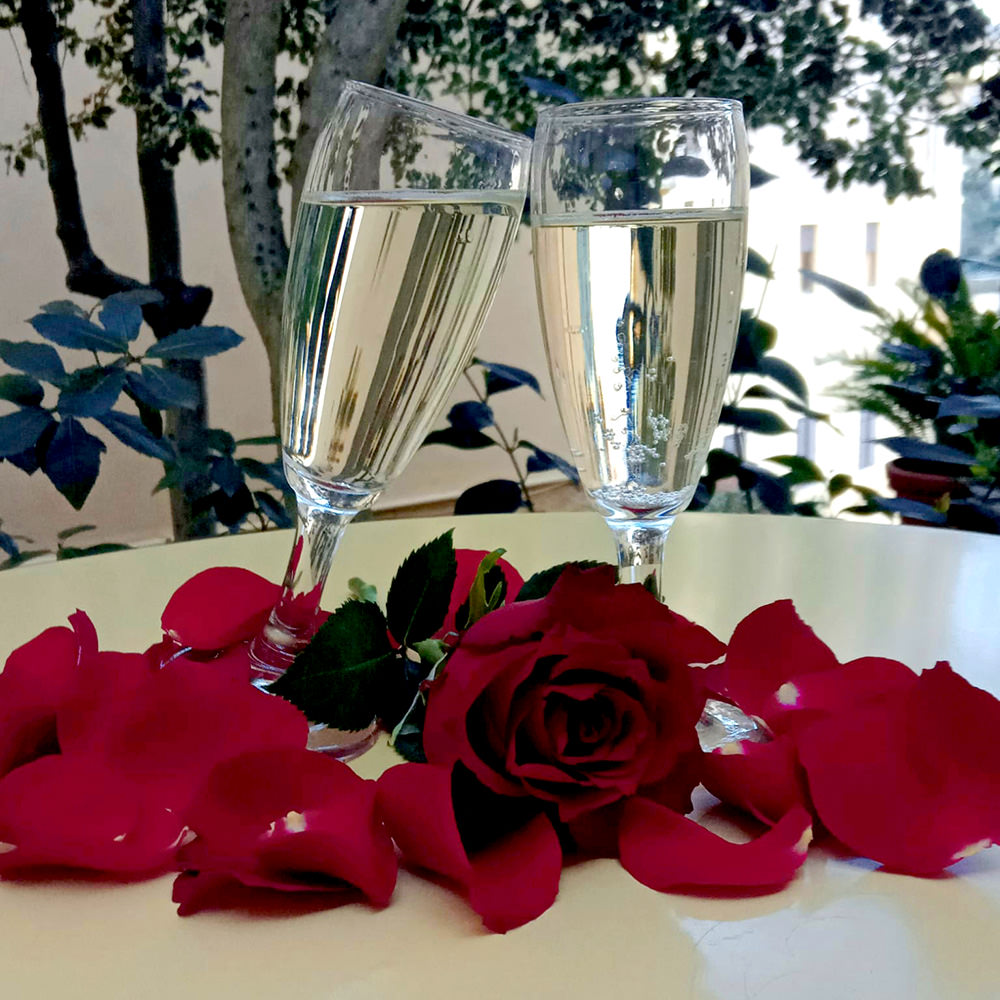
For couples on a romantic trip, the hotel offers special touches on request: they can arrange a bottle of prosecco in the room or tailor-made experiences (like a wine tasting in a Chianti castle or a sunset horseback ride). Many rooms have balconies or private terraces with views over Siena’s rooftops and towers—enjoying local wine on your own terrace while overlooking the city is an exceptional bonus. Hotel Minerva also features romantic Junior Suites with panoramic terraces, ideal for anniversaries and special occasions.
If you want extra privacy one morning, you can request breakfast in your room (with a small supplement): staff will bring a tray of treats directly to your private balcony so you can enjoy the view in peace.
The hotel also has a welcoming internal bar (for an afternoon espresso or an evening glass of wine) and a lounge area with sofas and art books where you can relax and plan excursions. Wi-Fi is free and available everywhere, including the garden—perfect for sharing your best travel photos in real time or doing a bit of work if needed. There is also a meeting room, for those combining leisure with business.
In conclusion: choosing Hotel Minerva in Siena as your base means guaranteed comfort, warm hospitality, and an unbeatable location. After full days exploring medieval villages like Monteriggioni, you’ll know you’re returning to a welcoming place where you can rest and be pampered. Guests often highlight the staff’s kindness—sometimes by the second day they’re already calling you by name, making you feel among friends. This “at home” style is part of the hotel’s approach: don’t be surprised if they share genuine tips on the best artisanal gelato under the stars or tell you anecdotes about Siena’s contrade.
So whether you’re traveling as a couple, with family, or with friends, Hotel Minerva offers that extra touch that makes a vacation unforgettable. Monteriggioni will stay in your heart—and having such a convenient and charming base will let you enjoy it to the fullest without logistical worries. Pack your bags: medieval Tuscany awaits, and Hotel Minerva’s hospitality will be ready to welcome you after every excursion with its warm magic.
Enjoy your journey through time between Siena, Monteriggioni, and the surrounding area!
Book your stay at Hotel Minerva directly on the website.