
Introduction
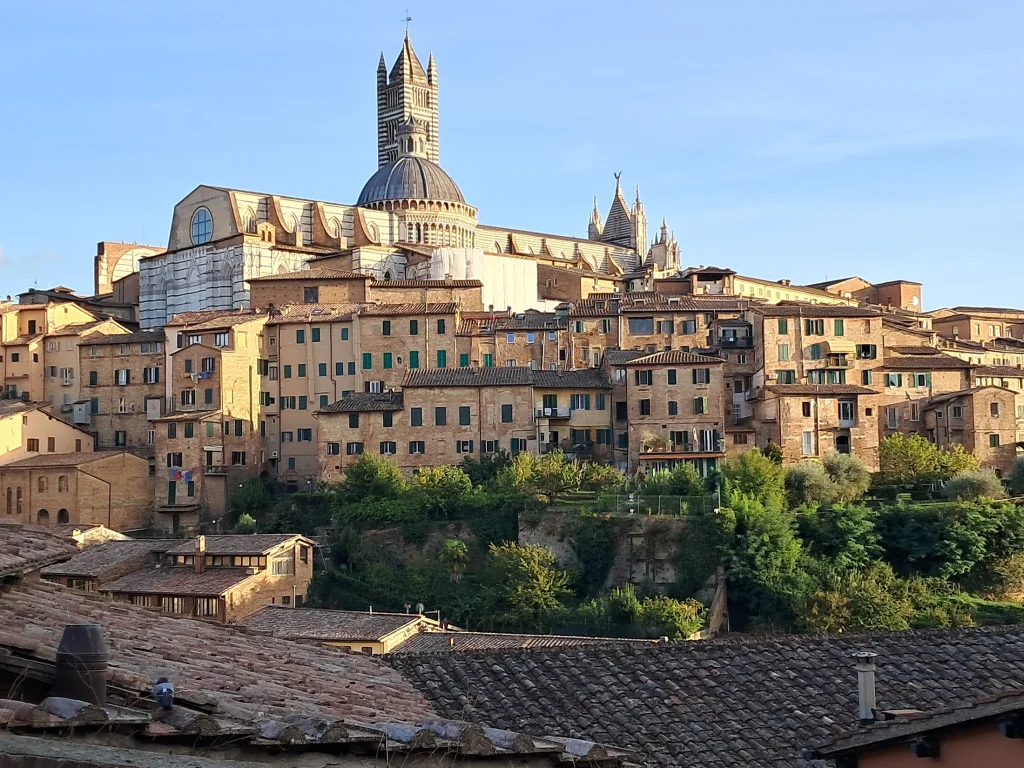
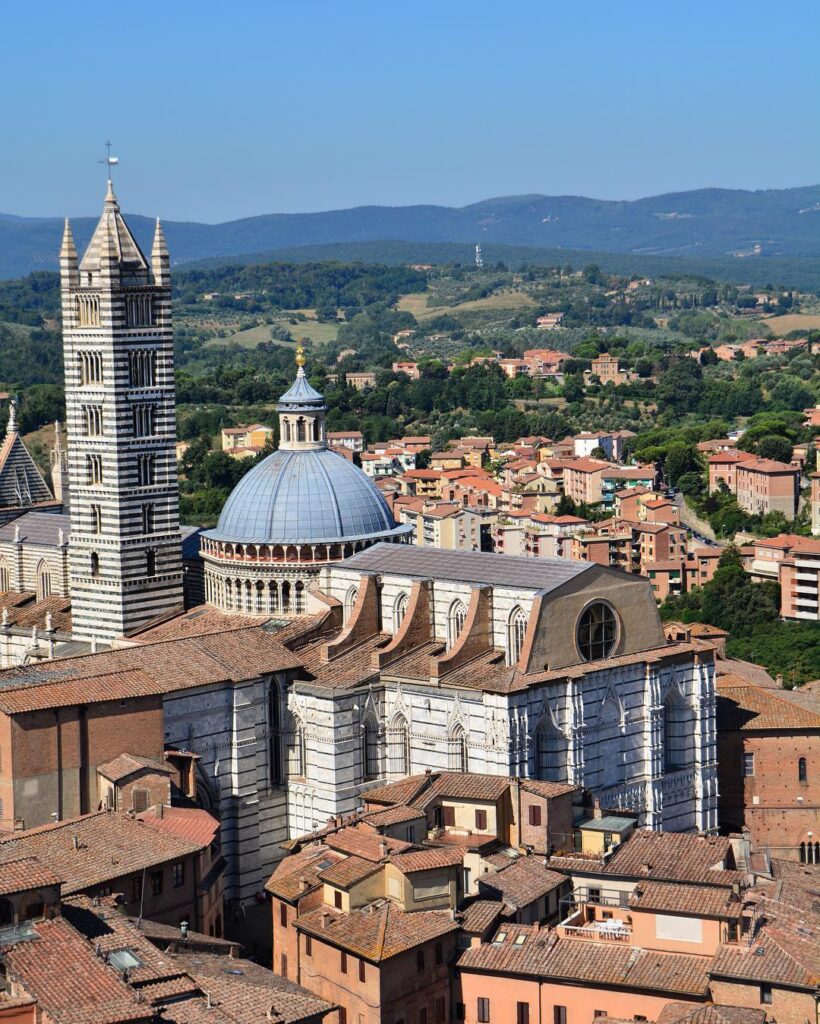
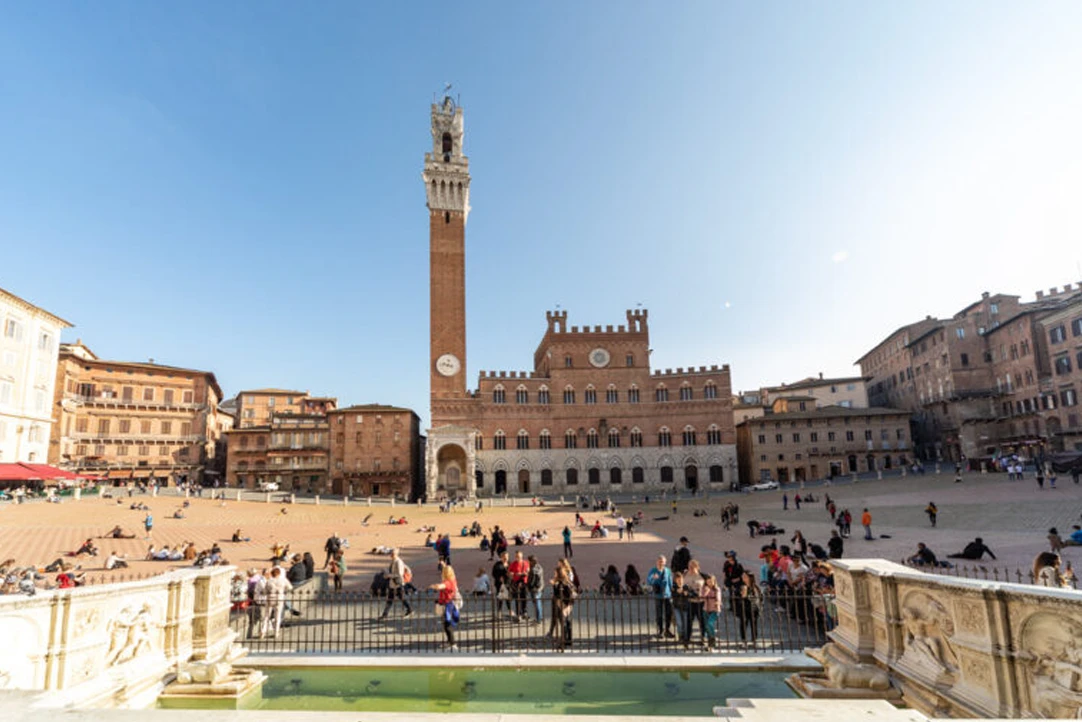
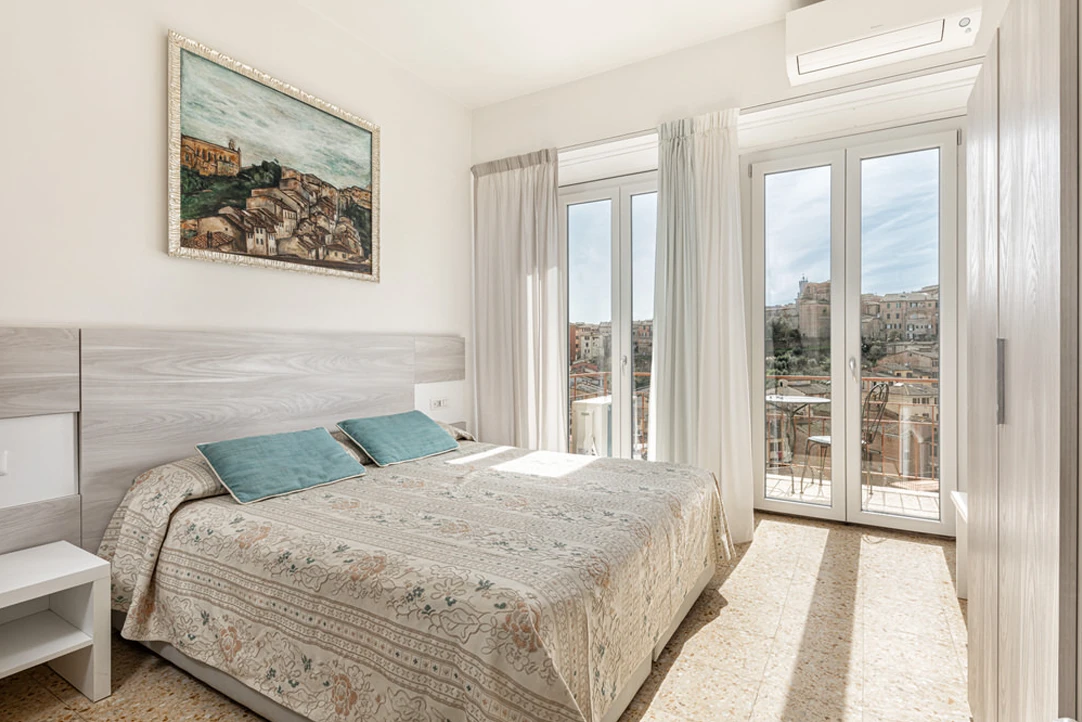
Siena is a Tuscan city that instantly evokes images of medieval squares, golden sunsets and narrow cobbled lanes lined with brick palaces. Its historic centre, a UNESCO World Heritage Site, is an open‑air museum where every stone tells centuries of art and tradition . Right in the heart of this fairy‑tale setting is a less‑known but unmissable jewel: the National Archaeological Museum of Siena. Housed in the former Santa Maria della Scala complex opposite the cathedral, it offers a deep dive into the city’s ancient roots. This guide explains what the museum offers—from Etruscan and Roman collections to temporary exhibitions—and why it is well worth visiting . We answer practical questions about opening times, tickets, accessibility and services, give advice for families and suggest how to explore the surrounding area. We also introduce Hotel Minerva, a charming property in the city centre, as an ideal base for experiencing Siena and its wonders .
What is the National Archaeological Museum of Siena and where is it located?
Q: What is the National Archaeological Museum of Siena and what is its history?
A: The museum is a major state institution dedicated primarily to Etruscan and Roman antiquities found in the territory of Siena . It was founded in 1933 by the scholar Ranuccio Bianchi Bandinelli as a Museo Etrusco to gather various local archaeological collections. Since 1993 it has been housed in the Santa Maria della Scala complex, a vast former medieval hospital on Piazza del Duomo, directly opposite Siena’s cathedral . Santa Maria della Scala was one of Europe’s oldest hospitals, active until 1995; the complex now serves as a cultural centre. The archaeological museum occupies the lowest levels of the complex (floors −2 and −3), in rooms that once served as storerooms and underground passages of the hospital .
Q: What makes the museum’s location special?
A: Being inside Santa Maria della Scala makes for a truly evocative visit. One enters through the historic hospital—already a monument in itself—and descends into tufa‑hewn galleries and broad brick vaults . You literally walk under the city of Siena: semi‑subterranean corridors, tunnels and historic rooms provide the setting for the exhibits, creating a unique atmosphere where the venue becomes part of the experience . (In the original article there is an image of the museum’s tunnels in tufa and brick.)
Q: Where exactly is the museum and how do you get there?
A: The museum is inside Santa Maria della Scala with entrance at Piazza del Duomo 1, directly across from the cathedral façade . The historic centre is pedestrianised, so you cannot drive right up to the square. Visitors arriving by car can park in public car parks just outside the city walls (such as Parcheggio Il Campo, Parcheggio Duomo or Parcheggio Santa Caterina) and then use escalators or walk to the Duomo . From Hotel Minerva—discussed later—the museum is easy to reach: the hotel lies within the walls about 15–20 minutes on foot from Piazza del Duomo, following the streets of the centre . Alternatively, from Siena’s railway station you can take an urban bus to Piazza Postierla/Duomo, or use the escalators linking the San Francesco area to the historic centre . In short, the museum is centrally located and easy to include in a walking itinerary of Siena .
Why visit the Archaeological Museum?
Q: Is it worth visiting this museum? What makes it special compared to other attractions in Siena?
A: Absolutely! The National Archaeological Museum of Siena is a must‑see to understand the ancient roots of the city and its territory . While places like the Duomo or Piazza del Campo display Siena’s medieval and Renaissance splendour, the archaeological museum takes you back to Etruscan and Roman times, revealing the origins of local civilisation . Thousands of artefacts from excavations in Siena, Chiusi, Murlo, Monteriggioni and beyond cover a vast time span from the Bronze Age to the Roman and early medieval periods . Visiting the museum allows you to follow the historical evolution of the region—from mysterious Etruscan tombs to Roman Siena—giving a complete picture that enriches your understanding of the visible beauties above ground .
Another reason to visit is that the museum is often less crowded than other city attractions. Many tourists flock to the Duomo and the Torre del Mangia, but few are aware of the treasure hiding right in front of the cathedral: Santa Maria della Scala and its archaeological museum . This means you can enjoy the exhibits calmly and quietly, almost in private contemplation, especially outside weekends . It is a hidden gem: visitors come out surprised and enriched, wondering why it is not more famous given the quality of the collections .
The visit also offers more than the name suggests: because the museum is inside Santa Maria della Scala, the ticket gives access to other parts of the complex. For example, you can admire the 14th‑century frescoes in the Sala del Pellegrinaio (the former hospital ward decorated with vibrant 15th‑century frescoes) and other historical sections of the hospital, along with art collections and sacred relics displayed on various levels . In practice, by entering for the archaeological museum you will explore a vast multidisciplinary complex—art, archaeology, medieval medicine, religious architecture—all in one place . Few museums can boast such a rich and varied setting.
Finally, the museum often hosts special events and exhibitions (discussed later) that enrich the visit. From summer evening openings with free admission to archaeological book presentations and contemporary art shows in historic rooms, there is always something new to discover . In short, visiting the Archaeological Museum of Siena means taking a journey through time in an enchanting setting, discovering lesser‑known aspects of Sienese culture and enjoying an authentic experience away from the crowds .
Collections and exhibits
Q: What can you see inside the museum?
A: The museum’s collections are rich and tell the story of the Etruscan and Roman civilisations of the area. The itinerary is divided into two main sections :
- Antiquarian section: This part displays six historic collections—Bonci Casuccini, Bargagli Petrucci, Chigi Zondadari, Mieli, the collection of the Accademia dei Fisiocritici and the Municipal collection . Assembled between the 19th and early 20th centuries, they include eclectic materials: ancient vases, bronzes, coins and votive objects . The Bonci Casuccini Collection features precious finds from the Chiusi area—an important Etruscan city—such as funerary urns and ceramics. The Bargagli collection brings objects from Sarteano; the Chigi Zondadari Collection includes finds from Asciano and other sites . This section reflects the antiquarian taste of past collectors and offers a glimpse into the history of Sienese archaeology —it’s like visiting a museum within the museum, where each display case also tells the story of donors and how the artefacts entered the collection.
- Topographical section: Organised by the area of provenance, this section takes you on a geographical journey through the archaeological sites of the province . There are rooms dedicated to Siena city (with Roman sarcophagi from the 3rd–4th century AD and a Roman copy of a philosopher’s portrait known as “Pseudo‑Seneca”), to Chiusi (featuring canopic jars—anthropomorphic cinerary urns—from the 7th–5th century BC), to Montepulciano (with buccheri, red‑figure Attic ceramics and funerary furnishings from archaic necropolises), to Murlo – Poggio Civitate (with Etruscan architectural decorations from the famous aristocratic site), to Sarteano (with alabaster urns in Volterran style from the 2nd century BC), to Monteriggioni (with black‑figure Attic ceramics, such as an amphora with Dionysian scenes from the 6th century BC) and more . This layout highlights the cultural variety of northern Etruria and the Sienese area: each territory had distinctive funerary customs and artistic productions, and here you can compare them side by side .
Masterpieces not to miss
Among the many exhibits, some stand out as masterpieces and are worth seeking out :
- Red‑figure and black‑figure ceramics: A splendid large krater (wine‑mixing bowl) decorated with the Death of Aegisthus from the Oresteia is on display . This Italiote vase from Magna Graecia, found in an Etruscan tomb, shows how Greek figurative culture was appreciated by the Etruscans. Nearby are other high‑quality vases—Attic, Apulian and Campanian red‑ and black‑figure ceramics from the 6th to 4th centuries BC—depicting heroes, gods and banquet scenes .
- Necropolis finds: Urns and sarcophagi draw particular attention. From the Tumulo di Molinello near Asciano come travertine urns with sculpted figures belonging to the Etruscan Marconi family . From Sarteano come fine alabaster cinerary urns with Etruscan inscriptions, like those from the Tomba dei Sentinate Cumere showing the deceased reclining on the lid with mythological scenes on the front . Don’t miss the collection of votive offerings—small bronze statuettes of worshippers, animals and anatomical ex‑votos that the Etruscans dedicated to the gods to request protection or healing .
- Antefixes and architectural decorations: Along the route you will see carved terracotta roof tiles—antefixes—that decorated Etruscan buildings. They come in various forms: some depict the Gorgon (Medusa) sticking out her tongue, others show female heads or lion heads in relief . These elements both protected and embellished buildings, and their lively expressions are surprising .
- Roman sculptures: The star piece is the so‑called “Pseudo‑Seneca”—a bronze or marble bust (depending on rotation) discovered in Siena in 1930 . Initially thought to depict the philosopher Seneca, scholars now believe it represents a Greek poet or philosopher, perhaps Hesiod, dating to the 1st century AD . Its hollow, thoughtful face with dishevelled curls, sunken eyes and bristly beard make it a captivating portrait . Beside it are other Roman artefacts: decorated oil lamps, sculptural fragments and stone sarcophagi with geometric motifs and funerary inscriptions from the 3rd–4th centuries AD .
- Relief of the “Muses”: Another notable work is a marble relief known as the “Chigi Muses,” a panel thought to depict the poet Sappho being welcomed among the nine Muses . Dating from the imperial period (perhaps under Hadrian) and coming from the Chigi collection, it impresses for the finesse of its female figures and the rare subject. It attests to Siena’s cultural eclecticism, where refined Greek‑inspired iconographies circulated even in Roman times .
These examples are only a glimpse of the many objects on display . You will also see a Roman floor mosaic, sets of weapons and fibulae (brooches) from tombs, ancient coins, Etruscan gold jewellery and even human skeletons in reconstructed burials, making the past feel very real . Each case tells a story: take time to read the bilingual labels (Italian/English) and consider joining a guided tour or using the museum app for extra explanations . You will leave the Archaeological Museum of Siena with images of ancient gods, heroes, mythical creatures and everyday objects from millennia ago—a true journey through time beneath the city’s foundations .
The museum for families and children
Q: Is the museum suitable for children?
A: Absolutely! The museum can be a highly engaging experience for families with children . The very setting—underground, with tunnels carved into rock, dimly lit rooms and cases full of ancient “treasures”—stimulates young imaginations. Kids will feel like little archaeologists or explorers . Moreover, the Santa Maria della Scala complex houses the Museum of Art for Children, a dedicated area with interactive exhibitions and creative educational activities . There are often workshops and themed guided tours for families: treasure hunts in the halls, art workshops where kids draw inspiration from frescoes or create objects inspired by the Etruscans, and visits animated by costumed performers .
During summer and for special events, the Archaeological Museum participates in regional initiatives like the Notti dell’Archeologia, offering evening activities for families and children (often free) such as game‑visits and workshops . There is even a Siena Comics for Kids festival in October that fills the Santa Maria della Scala with drawing workshops, encounters with comic artists and cosplayers among the artefacts . In short, attention to young visitors is high .
From a practical perspective, children up to 11 years old enter free , and there is a convenient family ticket allowing two adults with children over 11 to save money (see ticket section). All internal routes are accessible with strollers thanks to lifts , and toilets have changing tables. The custodial staff are usually very friendly with children; don’t be surprised if a passionate guard opens a case or shows a piece up close, telling a little story!
Outside the museum, Siena offers many other family‑friendly activities. A short walk from Hotel Minerva you will find the 19th‑century Giardini della Lizza with a playground . The city also hosts the Museum of Natural History – Accademia dei Fisiocritici (with animal skeletons, minerals and even a taxidermied crocodile), the Botanical Garden of the University of Siena and the Orto de’ Pecci, a corner of countryside with gardens, donkeys and farm animals a few minutes from the centre . A walk through the Orto de’ Pecci is often appreciated by children: you can have a picnic among greenery overlooking Siena and see animals up close . Hotel Minerva itself caters to families: it can provide cots for babies (on request) and useful accessories like bottle warmers and sterilisers . Knowing you have a comfortable, baby‑friendly hotel to return to after visits makes travelling with children much more serene .
In summary, the Archaeological Museum of Siena is not just for adults or history lovers; it can entertain and fascinate children too . With some preparation—perhaps showing images in advance or explaining who the Etruscans were as “mysterious ancient peoples”—the visit becomes an adventure for the whole family .
Opening hours and days of closure
Planning your visit begins with knowing the opening hours. The Archaeological Museum follows the schedule of the Santa Maria della Scala complex, with seasonal variations. As of 2025, the current hours are :
| Period | Days and opening hours | Notes |
|---|---|---|
| 2 November – 14 March | Monday, Wednesday, Thursday, Friday: 10:00 – 17:00 (last entry 16:15)\ | |
| Saturday, Sunday and holidays: 10:00 – 19:00 (last entry 18:15)\ | ||
| Tuesday: closed | Ticket office closes 45 minutes before closing time . | |
| 15 March – 1 November | Every day (Mon–Sun): 10:00 – 19:00 (last entry 18:15) | In high season the museum is open every day, including Tuesdays . |
| Reduced hours on Palio days | 2 July (Palio di Provenzano): closing at 17:00 (last entry approx. 16:15)\ | |
| 16 August (Palio dell’Assunta): closing at 16:30 (last entry approx. 15:45) | During Siena’s Palio horse races the complex closes earlier for organisational reasons . | |
| Christmas period | 23 December – 6 January: 10:00 – 19:00 (last entry 18:15)\ | |
| Closed on 25 December (Christmas)\ | ||
| Reduced hours 1 January: 10:00 – 16:00 |
Note: The ticket office always closes about 45 minutes before the indicated closing time; it is advisable to arrive at least an hour before closing to enjoy the museum calmly . Remember that on the first Sunday of every month the Santa Maria della Scala (and thus the archaeological museum) is open free of charge, part of the national initiative “Domenica al Museo” . On those days there may be more visitors, so it’s worth arriving early in the morning .
Tickets: prices and discounts
The National Archaeological Museum is a state museum but is part of the municipal Santa Maria della Scala complex; tickets include access to all open sections. The official price list (as of 2025) is summarised below :
| Ticket type | Full price (online) | Notes and reductions |
|---|---|---|
| Standard | €9.00 (€8.00 with reservation) | Ordinary ticket for adults aged 19–64 . |
| Reduced | €7.00 (€6.50 with reservation) | Valid for ages 12–18, adults over 65, university students not enrolled at Siena universities, military personnel and other affiliated categories . |
| Free admission | €0.00 | For children up to 11 years old, residents of the Municipality of Siena, students and teachers from Siena schools and universities (on educational visits), tourist guides, journalists, people with disabilities and one companion . |
| Family ticket | €20.00 (€18.00 with reservation) | Includes two adults + all under‑18 children; convenient especially if the children are over 11 (younger children are already free) . |
| Groups | €5.00 per person (€4.50 with reservation) | Special rate for tourist groups of at least 10 people; advance booking is often required . |
| Schools | €5.00 per student (€4.50 with reservation) | Rate for school groups (non‑Sienese). Schools in Siena and the University of Siena enter free by prior booking . |
In addition to individual tickets, there are combined passes to visit several civic attractions and save money. For example, a “Municipal Museums” ticket costs €14.00 and includes entry to both Santa Maria della Scala (Archaeological Museum plus other sections) and the Museo Civico in the Palazzo Pubblico on Piazza del Campo . A €20.00 pass includes the Museo Civico, the Torre del Mangia and Santa Maria della Scala—great for those wanting to see the museum, climb the tower and visit the town hall in one day .
Where to buy tickets: We recommend purchasing tickets online on the official portal (siena.b‑ticket.com), especially in high season, to benefit from the €1 discount and skip any queues at the ticket office . Alternatively, the physical ticket office at Santa Maria della Scala (Piazza del Duomo) is open until 45 minutes before closing . Keep an eye on the museum’s website and social media for free admission dates, such as the already mentioned first Sundays of the month, 10 August (Night of San Lorenzo) when the complex often opens for free evening events , and European Heritage Days when there may be further concessions .
Guided tours and audio guides
Visiting the Archaeological Museum on your own is fascinating, but it can be even more engaging with expert guides or multimedia tools. Here are the options :
- Official guided tours: Santa Maria della Scala offers, on request, guided tours with specialised guides. You can book private tours (in Italian or other languages) by contacting the museum’s secretariat . For pre‑formed groups or school trips, the complex provides internal guides and museum educators who adapt the tour to visitors’ interests (e.g., simplified language for children). In summer, during the Notti dell’Archeologia, evening tours are organised, often free or included in the ticket . It is worth checking the events calendar to see when guided tours are scheduled .
- External tourist guides: Alternatively, you can hire an authorised tourist guide of Siena. Many local guides offer private tours of the Duomo complex + Santa Maria della Scala or Etruscan‑themed tours. If you are already taking a guided city tour, ask if it can include the archaeological museum. External guides are usually authorised to lead tours in state and municipal museums and can tailor the visit .
- Apps and multimedia guides: There is no traditional audio guide for hire at the ticket office, but there is a free official App of Santa Maria della Scala . Available in Italian, English, French, German and LIS (Italian Sign Language), it offers audio and written texts, insights and images . It functions like a multimedia audio guide on your smartphone or tablet. If you don’t have a device, the museum lends iPads free of charge . The app offers different itineraries (“short route”, “main works”, or deeper insights for experts) and enriches your understanding with reconstructions and historical narratives . Ask at the entrance about how to use the app or devices .
- Panels and captions: Even without a guide, the visit is easy thanks to clear bilingual information panels in every room . For important exhibits, detailed notes often include photos of the excavation context . For example, near the case of Etruscan canopic jars from Chiusi, there is a panel explaining the funerary ritual and a map of the necropolises ; next to the urn of Larth Sentinate Cumere you’ll find a translation of the Etruscan inscription . In short, even on your own you can follow a logical thread and learn a lot .
Overall, if you are passionate about archaeology and have time, we recommend a guided visit: experts can point out details that may escape the naked eye (like graffiti on urn walls or technical features of ceramics) and tell anecdotes about the excavations and collectors . A good combination is to explore on your own calmly and then perhaps join a short guided tour to ask questions .
Accessibility and visitor services
The Archaeological Museum of Siena (and the Santa Maria della Scala complex) is committed to ensuring a comfortable experience for all visitors, including people with mobility impairments or special needs :
- Physical accessibility: All exhibition levels are accessible by lifts or ramps . At the entrance (level IV of Santa Maria) there is a lift to the lower floors; some internal passages, being in a historic building, may require staff assistance (e.g., to open alternative routes or operate stairlifts) . Museum staff are prepared to accompany disabled visitors along the route. Wheelchairs can be borrowed free of charge . Along the path there are seats with armrests for resting, designed to help those with motor problems or the elderly .
- Accessible toilets: Every floor of Santa Maria della Scala has wheelchair‑accessible toilets equipped with grab bars and emergency call buttons . Some bathrooms also have changing tables for infants .
- Visitors with sensory disabilities: The museum app includes a section in LIS (Italian Sign Language), providing video content with sign translation . For blind or visually impaired visitors, there is not yet a widespread tactile system, but special visits with reproductions of artefacts have been organised in some instances. It is advisable to contact the museum in advance for information on audiodescriptions or tactile tours . Staff are attentive to needs and may accompany a blind visitor through the rooms, describing the spaces .
- Other services: At the entrance level you will find an information desk, a cloakroom/coat check (where you can leave large backpacks, strollers if not needed, umbrellas, etc.) and a cafeteria with indoor and outdoor tables . The café, accessible from inside and outside, is open during museum hours and is a great place to have a coffee or lunch, with a view over the internal courtyard . There is also a bookshop before the start of the museum route, where you can buy guidebooks, catalogues, postcards and small souvenirs related to Siena and Tuscan archaeology .
Note: Siena is a medieval city with sloping streets and stone pavements; for those with reduced mobility, reaching Piazza del Duomo may involve some effort. However, thanks to escalators and public lifts from the lower parts of the city, and to the assistance once at the museum, the visit is fully feasible . Do not hesitate to ask for help: the staff at Santa Maria della Scala are aware of the architectural challenges and will do their best to facilitate access for everyone .
Temporary exhibitions and special events
Besides the permanent collection, the Archaeological Museum and the entire Santa Maria della Scala complex host various temporary exhibitions, cultural events and special programmes throughout the year . These initiatives make each visit potentially different and offer reasons to return. Here are some examples :
- Art and archaeology exhibitions: The spacious halls of Santa Maria are often used for major temporary shows—not only archaeology but also modern and contemporary art. For example, in summer 2025 the complex hosted the exhibition “Jacob Hashimoto. Path to the Sky”, a contemporary installation that engaged with the ancient spaces (22 May – 30 September 2025) . In the past there have been exhibitions on Ambrogio Lorenzetti, Jacopo della Quercia, photographic displays and more . When visiting, check if a temporary exhibition is running in other sections of the complex: the ticket usually includes them . Sometimes you will find pieces from other museums on display for thematic shows, as happened with “Siena. Story of the city from its origins to the Middle Ages”, which illustrated urban history with archaeological objects and documents .
- Notti dell’Archeologia: Every year in July the Tuscan Region promotes the Nights of Archaeology, and the Siena museum participates enthusiastically . On these evenings, the museum opens late (usually for free) with programmes of guided tours, lectures and themed workshops . For example, on 31 July 2025 there was an opening until 23:00 with theatrical guided tours for adults and educational activities for children . Seeing Etruscan tombs and artefacts by the soft evening light, while archaeologists tell stories of ancient rituals, offers a different experience .
- Night of San Lorenzo (10 August): Another date to note is the night of shooting stars. On 10 August Santa Maria della Scala often organises a special evening with museum access combined with wine tastings, music and art . In 2025 the complex opened for free from 21:00 to 24:00, allowing visitors to explore exhibitions and collections while enjoying local wine tastings and live jazz concerts—a unique blend of culture and pleasure . It’s a magical way to experience the museum on a summer night.
- European Heritage Days (Giornate Europee del Patrimonio): Each year at the end of September, Santa Maria della Scala participates in these events promoted by the Italian Ministry of Culture. Usually one of the two days (Saturday or Sunday) has extended evening hours at a symbolic ticket price (1 euro) with free guided tours, book presentations and more . If you’re in Siena at that time, you might find the museum open late with interesting lectures .
- Festivals and family events: The already mentioned Siena Comics for Kids festival transforms the museum with drawing workshops, meetings with comic artists, games and even cosplayers among the artefacts . Other times there are theatre festivals for children or screenings of archaeological films .
- Conferences and book presentations: As the seat of important collections, Santa Maria sometimes hosts book launches or conferences on archaeology. For example, on 27 May 2025 the volume “La collezione di monete etrusche del Museo Archeologico Nazionale di Siena” was presented with the participation of scholars and curators . Events like this offer the chance to meet experts and chat with them .
In summary, the Archaeological Museum of Siena is never the same: there is always something new happening . Before your visit, check the events calendar on the official website or the complex’s social media pages to see if there are temporary exhibitions or events to include in your itinerary . If you align your visit with an evening opening or a particular exhibition, your experience will be richer .
Hotel Minerva: the ideal base for exploring Siena
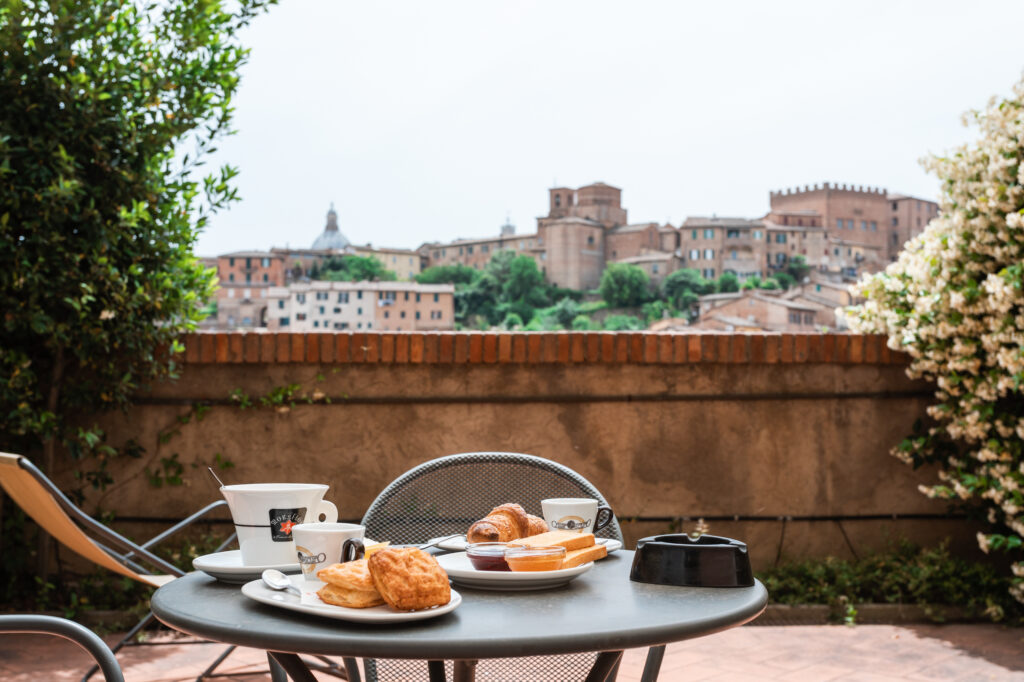
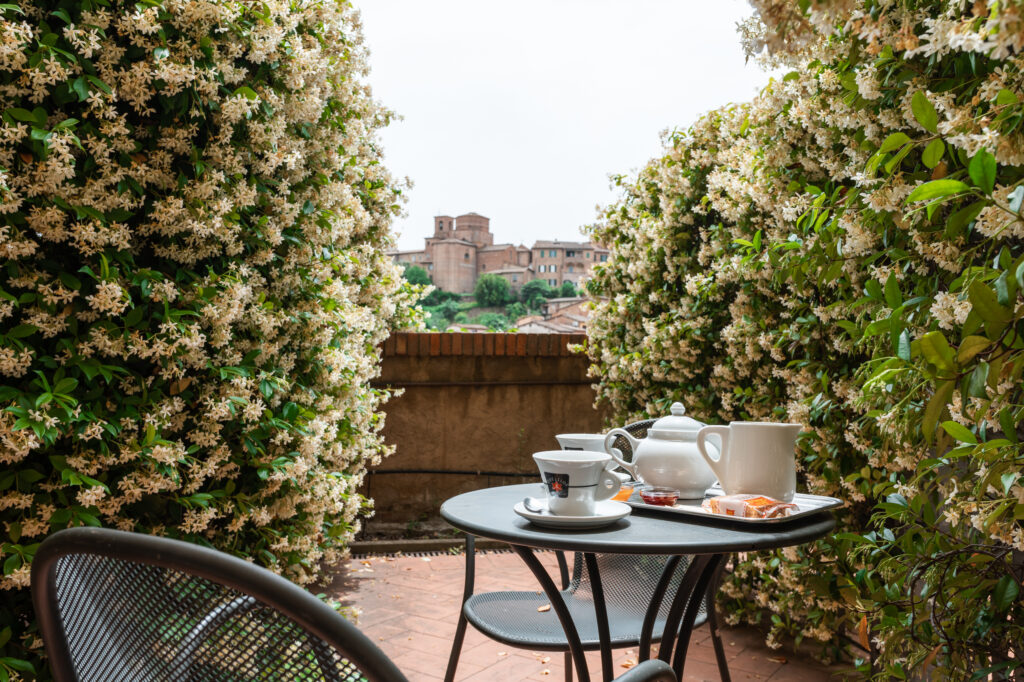
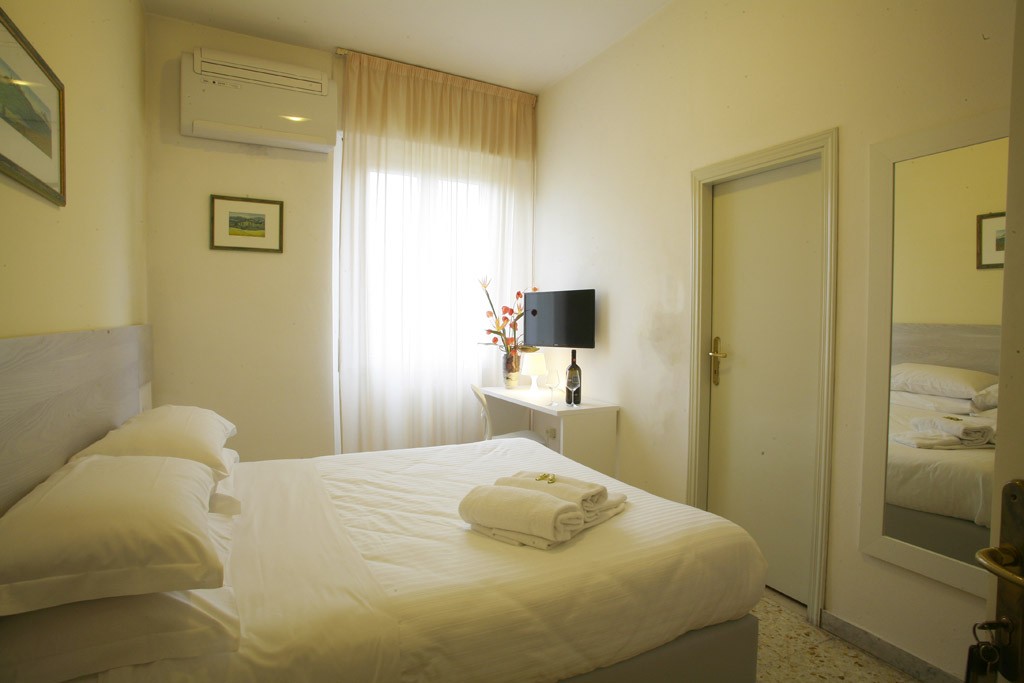
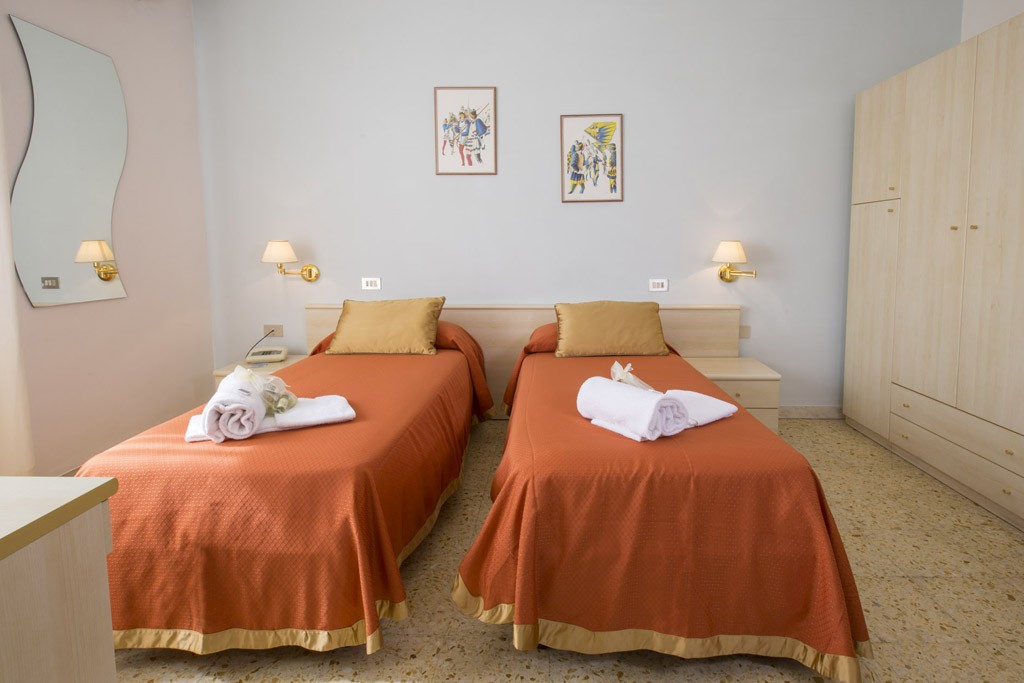
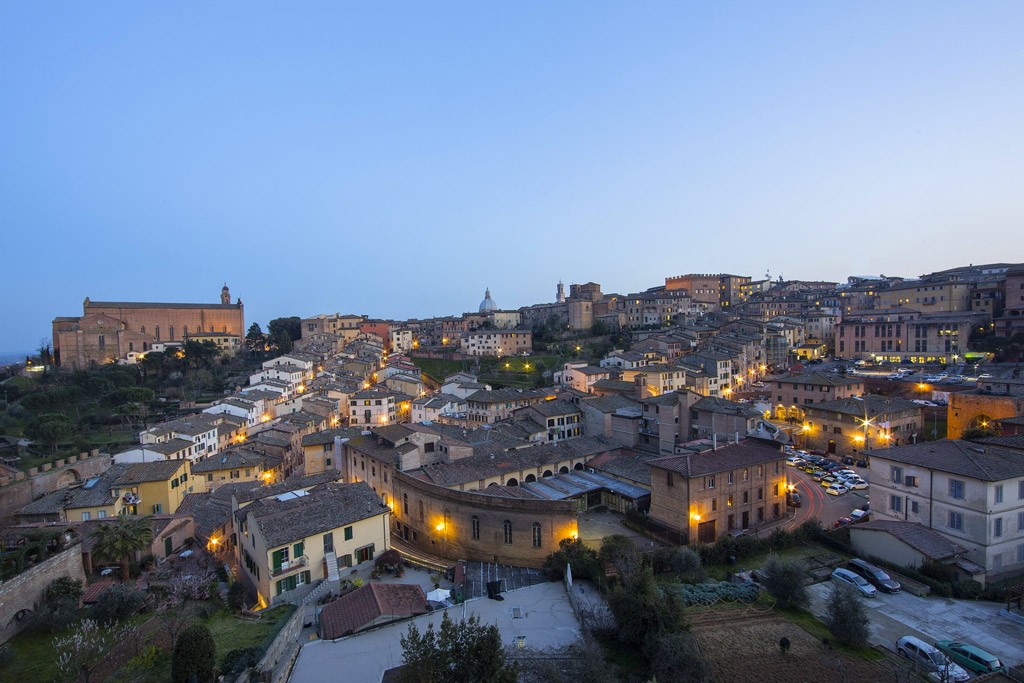
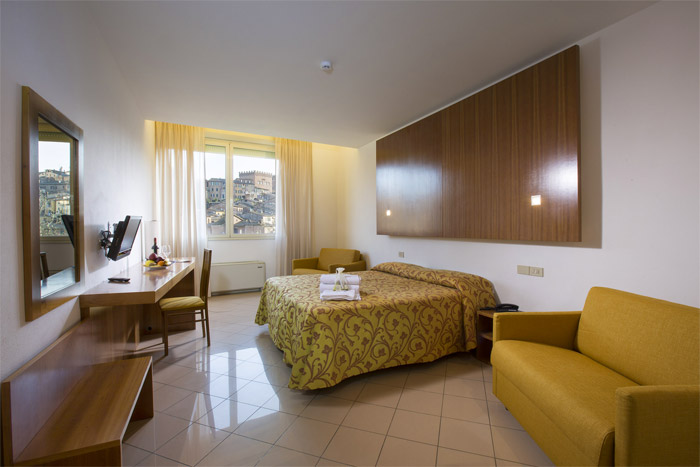
After learning about the museum, you may be ready to plan your trip to Siena. A natural question arises: where should you stay? Hotel Minerva in Siena is an excellent answer, especially if you seek convenience, hospitality and a strategic location .
A charming stay in the heart of Siena
The Hotel Minerva is a historic three‑star hotel in central Siena at Via Garibaldi 72, within the medieval city walls . Its location is privileged: the hotel lies just outside the limited traffic zone (ZTL), making it reachable by car, and it has its own covered, video‑supervised parking for your vehicle . Once you arrive, you’ll hardly need a car: from the hotel’s doors, Siena is entirely walkable . Major sights are a few minutes away: Piazza del Campo is about 15 minutes on foot; the Duomo about 17 minutes; the Pinacoteca Nazionale, Archaeological Museum and Basilica of San Domenico all fall within 10–20 minutes . A table in the original article summarises walking times .
Warm hospitality and services for families
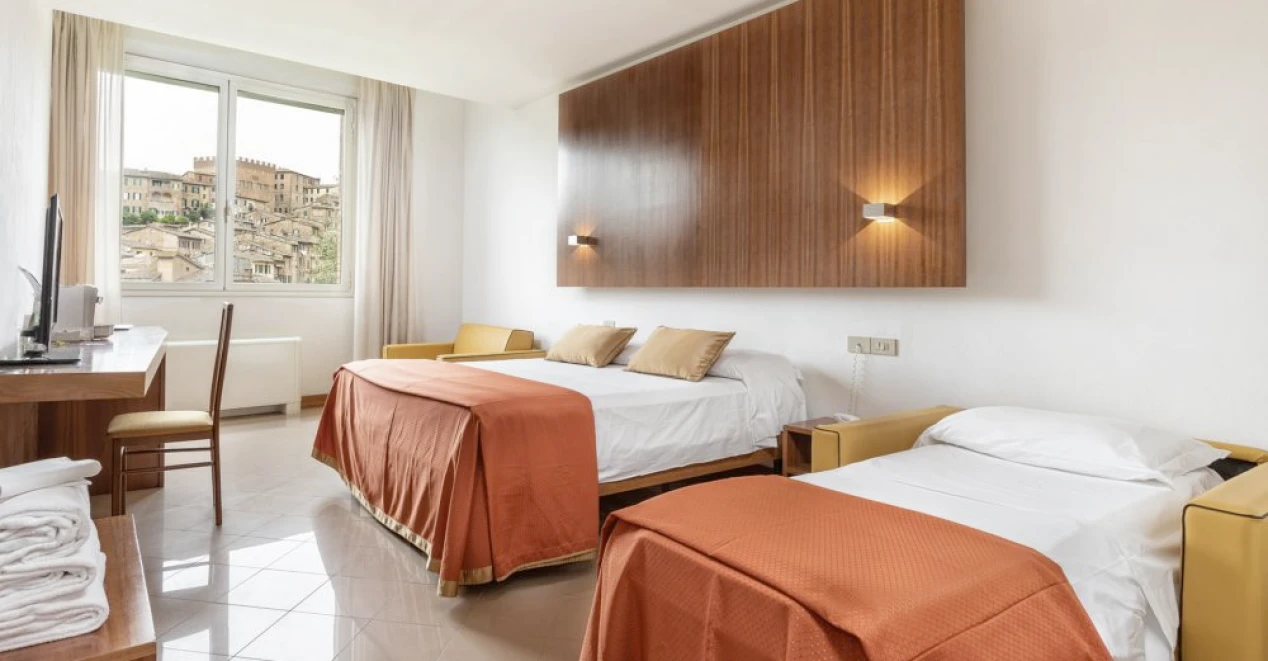
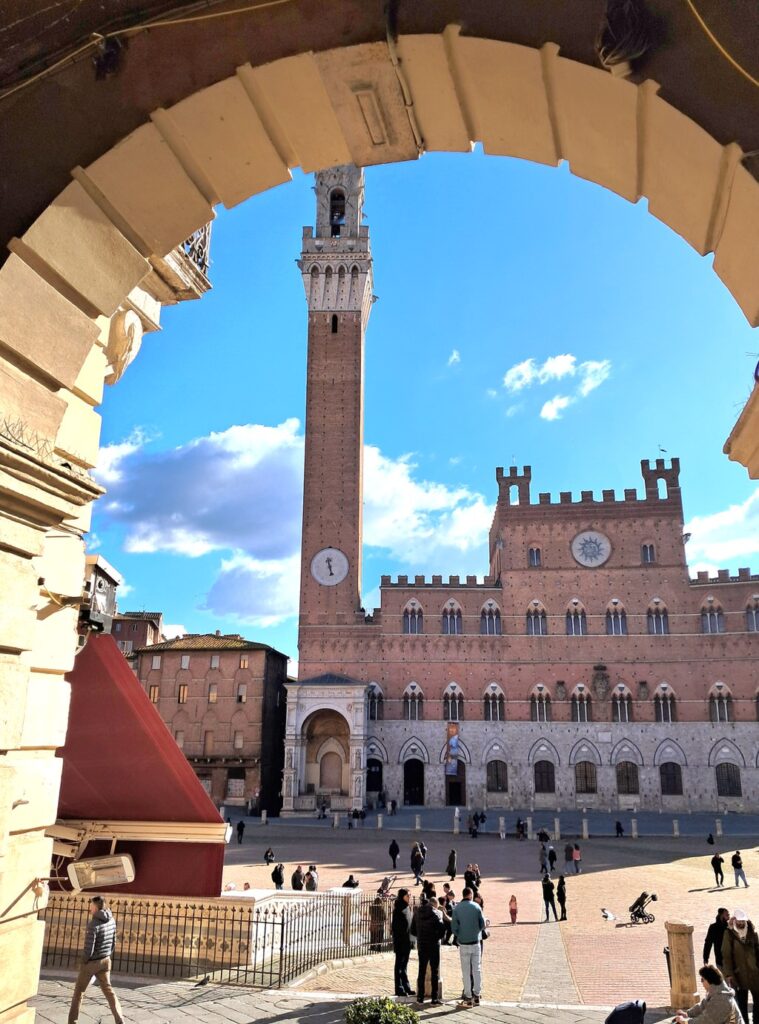
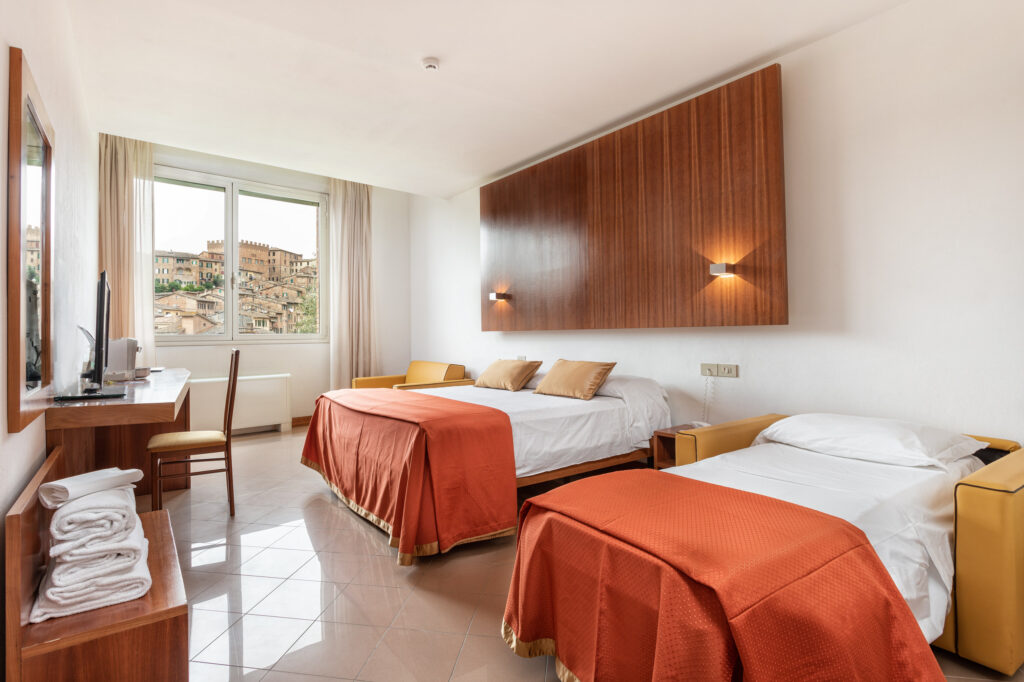
Hotel Minerva prides itself on a welcoming, family‑friendly atmosphere . Families with children are especially welcome: the hotel is known in Siena for its hospitality towards youngsters. On request it provides free cots for babies (up to 3 years) and useful accessories like bottle warmers and sterilisers . There is even a small play area with toys and books in the lobby to entertain children during any waiting time . Family rooms are spacious and some offer panoramic views over the city rooftops—imagine sipping Tuscan wine while watching Siena’s towers lit up at night after putting the children to bed . Although located in the centre, the hotel is in a quiet and silent area, ensuring a good night’s rest for children and parents . Pets (small/medium dogs and cats) are also welcome with prior notice .
Historic charm and modern comfort
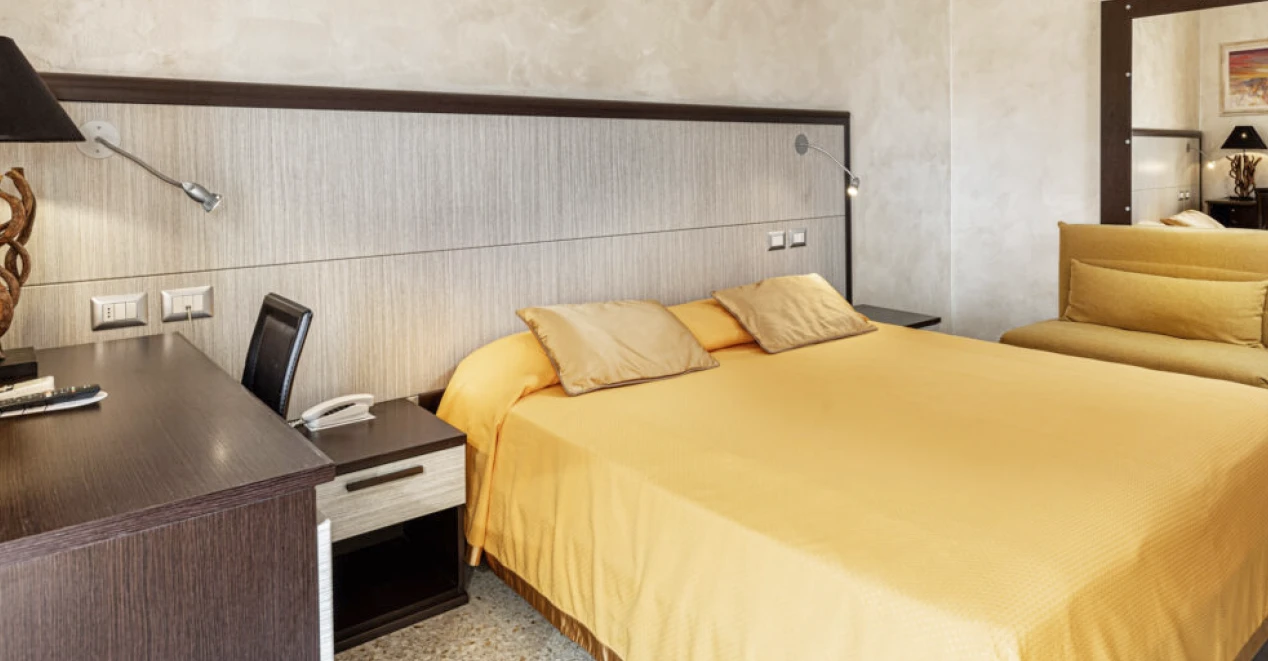
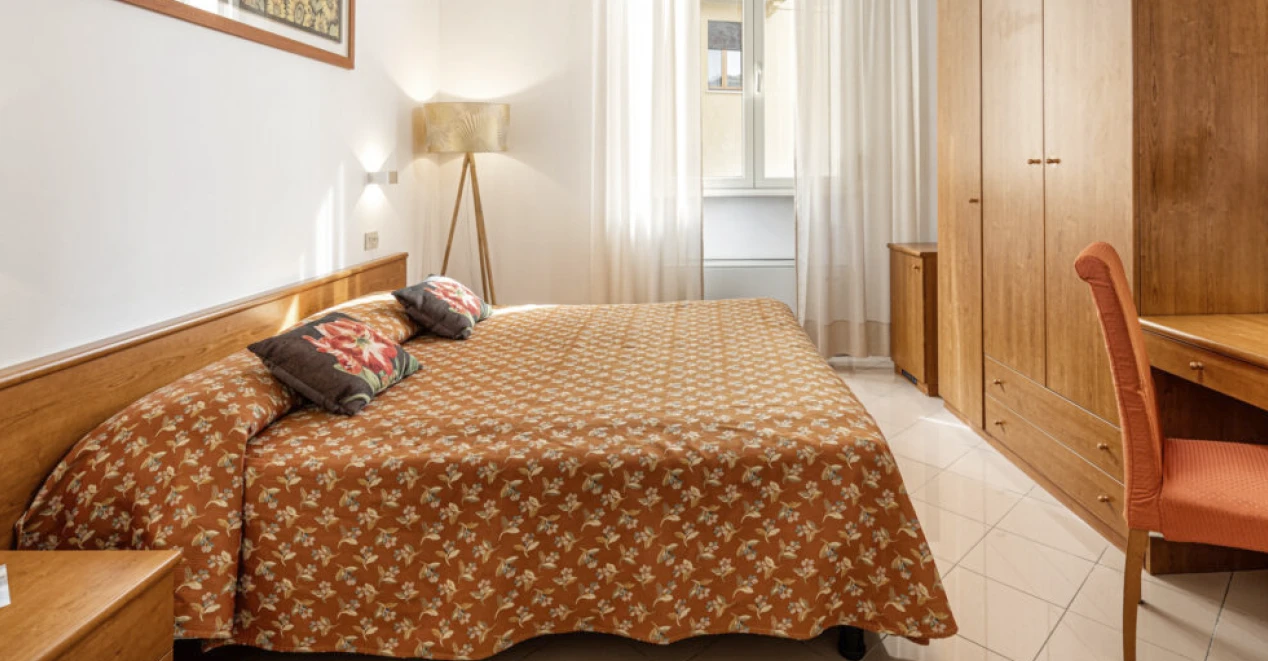
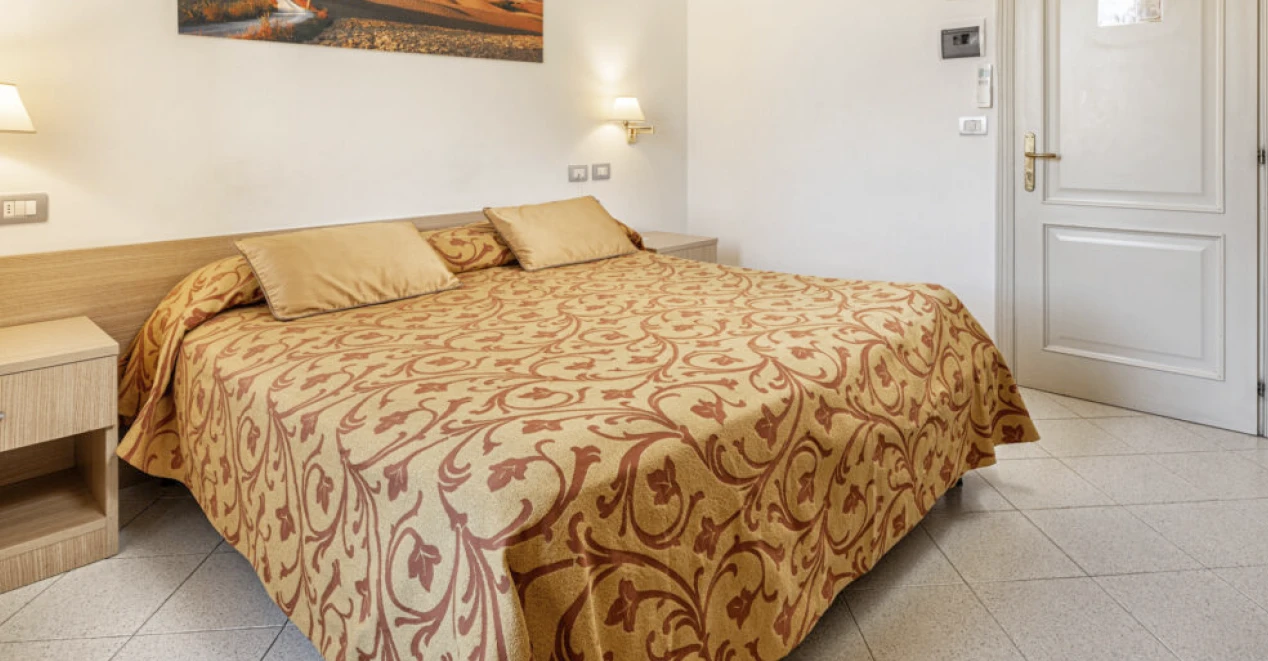
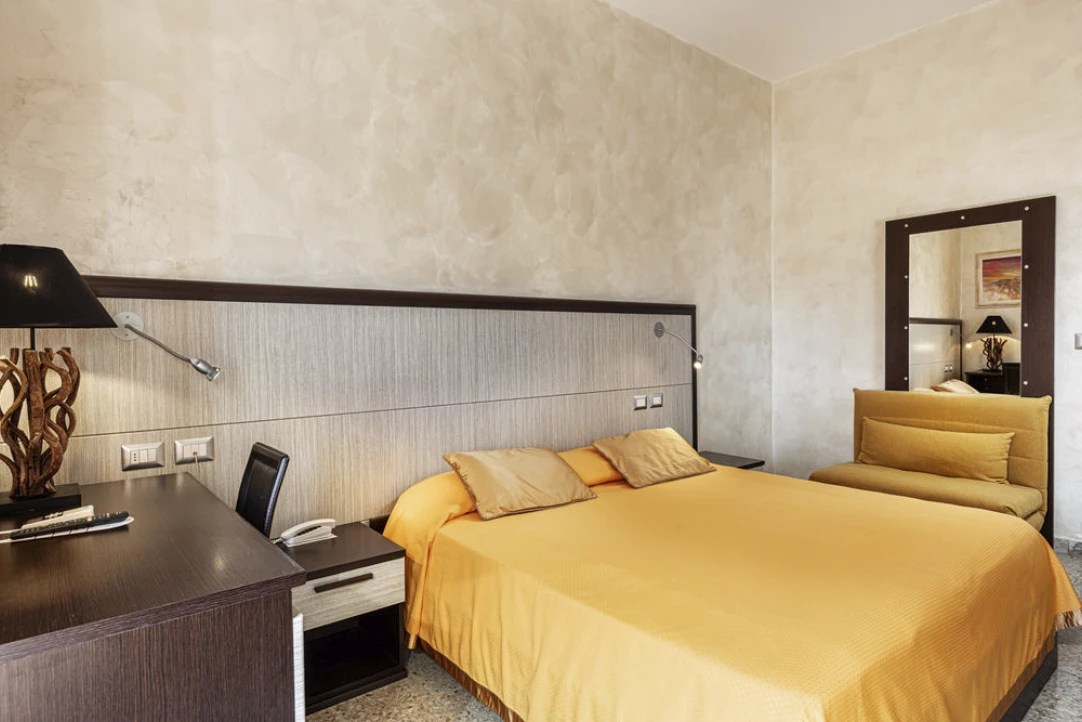
Entering the Minerva feels like stepping into timeless elegance. The hotel is one of the city’s historic accommodations: it has preserved traditional architectural elements, such as terracotta floors and exposed wooden beams, while adding modern comforts . The common areas are enriched with local artworks, almost like a small gallery, and tell the story of the hotel, which has hosted travellers from all over the world for decades . The atmosphere is intimate yet romantic, ideal for couples but also appreciated by families . Many guests return fondly, remembering staying here as children and finding the same warmth years later . The staff are available 24 hours a day at reception, always ready with a smile to give advice on itineraries or restaurants .
Panorama and relaxation
A notable plus is the panoramic garden and some rooms with balconies overlooking the historic centre. Breakfast outdoors with a view of Siena’s campaniles and towers is described as a magical moment . Inside, there is a bar open at any time for coffee, drinks or snacks . In winter, the cosy lounge with soft lighting—featuring a big screen showing images of Siena—is ideal for relaxing after a day of sightseeing . In summer, large windows provide unforgettable sunsets; imagine sipping a glass of Chianti as the sky turns pink behind the Gothic churches . Every detail at the Minerva seems designed to make you feel pampered, as if at home yet immersed in Siena’s poetry .
Perfect base for exploring the surroundings
Thanks to its easy car access and private parking, Hotel Minerva is not only convenient for the city but also an excellent base for exploring the surrounding Tuscan countryside . Within an hour you can reach famous destinations like Florence (about 75 km), the medieval towns of San Gimignano and Monteriggioni, the Etruscan city of Volterra, or the Chianti Classico hills . You can also drive south to the rolling landscapes and vineyards of the Val d’Orcia—Montepulciano, Pienza, Montalcino—within about an hour . The hotel suggests itineraries and can advise on scenic routes for motorcyclists or cyclists (it offers secure bicycle storage and a small workshop for cycle tourists) . If you prefer not to drive, the staff can help you arrange guided tours or private transfers . Coming back to the Minerva in the evening after touring Tuscany means returning to a familiar, comfortable place where you can rest, perhaps tasting a wine bought during the day on the hotel terrace .
Summary
Choosing Hotel Minerva for your stay in Siena allows you to experience the city and its attractions (including the Archaeological Museum) in a practical and enjoyable way. You will have Siena at your feet—as the hotel’s motto suggests—and an oasis of tranquillity to welcome you each time you want to recharge . Whether you’re a couple seeking romantic views or a family on an educational holiday, this hotel is likely to exceed your expectations with comfort, friendliness and the senese hospitality that makes every guest feel like a friend of the house .
What to visit around Siena
Siena is surrounded by a marvellous territory, rich in historic villages, breathtaking landscapes and food‑wine traditions. After exploring the city (including the Archaeological Museum), it is well worth dedicating some time to the surroundings, perhaps using Hotel Minerva as a base. Here are some must‑visit places :
- San Gimignano: About 45 km from Siena, the famous “city of towers” boasts 14 surviving towers dominating hills of olive groves and vineyards. A UNESCO World Heritage Site, it offers a medieval atmosphere with highlights such as Piazza della Cisterna, the Duomo with 14th‑century frescoes and tastings of Vernaccia (the local white wine) .
- Monteriggioni: Only 20 km north of Siena, this perfectly preserved fortified village—mentioned by Dante—is surrounded by a ring of medieval walls with 14 towers . Walking inside feels like stepping back in time; you can climb part of the walls and enjoy views of the countryside .
- Colle di Val d’Elsa: About half an hour by car, this town is known as the “City of Crystal”. Its ancient centre, Colle Alta, features Renaissance palaces, narrow streets and a beautiful cathedral; the highlight is the Crystal Museum showcasing centuries‑old glassmaking traditions . You can watch crystal being blown and perhaps buy unique glasses or jewellery .
- Chianti Classico: The hilly area between Siena and Florence, dotted with vineyards, castles and wineries, is worth exploring at leisure . Towns such as Castellina in Chianti, Radda in Chianti and Gaiole in Chianti offer stunning vistas and the chance to taste famous Chianti wines directly at producers’ estates . Scenic roads will lead you through vineyards and woods, with obligatory stops at farmhouses to sample olive oil and cured meats . From Minerva’s location north of the city it’s easy to access the SR222 (Chiantigiana), the road that crosses this postcard‑like landscape .
- Val d’Orcia: To the south, about 40–50 km away, lies the spectacular Val d’Orcia, also a UNESCO cultural landscape . You will encounter dreamlike towns like Pienza (the “ideal” Renaissance town and famous for pecorino cheese), Montepulciano (known for its Vino Nobile and monumental cellars carved into tufa), and Montalcino (home of Brunello wine and a 14th‑century fortress) . A trip to the Val d’Orcia regenerates the spirit; you can also relax in natural hot springs at Bagno Vignoni or Bagni San Filippo, popular since Roman times .
- Florence: The Tuscan capital is about an hour’s drive (or 1.5 hours by direct bus from Siena) . If you have never been, take advantage of the proximity to organise a day in Florence: the Hotel Minerva can advise on transportation. In a day you can admire Santa Maria del Fiore with the Duomo, Ponte Vecchio, the Uffizi (choosing a few rooms), and return to Siena in the evening with your eyes full of Renaissance wonder .
- Pisa and Lucca: A bit farther west (about two hours by car), but possible with a full day: Pisa for the Leaning Tower and Piazza dei Miracoli, and Lucca with its compact historic centre enclosed by tree‑lined walls . The hotel notes these destinations as reachable from Siena for a broader excursion .
In summary, staying at Hotel Minerva encourages exploration of Tuscany: within an hour you can reach art cities, enchanted villages and postcard landscapes . The reception will be happy to provide maps, suggestions on wineries and agriturismi, or book organised tours if you prefer not to drive . Whether you’re passionate about wine, landscape photography, medieval history or simply want to relax among hills and good food, you will find countless possibilities around Siena .
Conclusion
We hope this guide has provided all the information you need to organise your visit to the National Archaeological Museum of Siena and, more generally, your stay in this splendid city . You’ve discovered what to see in the museum and why it is a must‑see—a place where Siena’s ancient history comes alive through unique artefacts—and you’ve received practical advice on opening hours, tickets, accessibility and special initiatives . We have also suggested how to enrich your experience by exploring the surrounding area and choosing an ideal accommodation like Hotel Minerva, where traditional Sienese hospitality combines with modern comforts and an enviable panoramic location . All that remains is to wish you buon viaggio: Siena awaits, with its golden sunsets, its streets laden with stories and treasures like its Archaeological Museum ready to astonish and fascinate you .