
Introduction
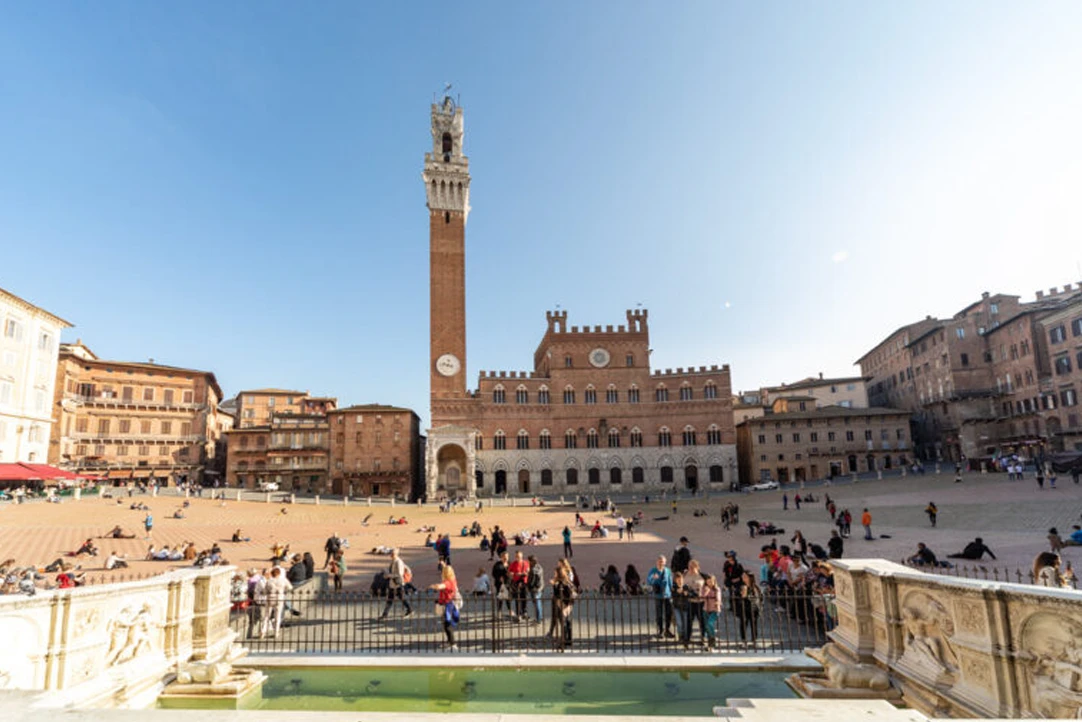
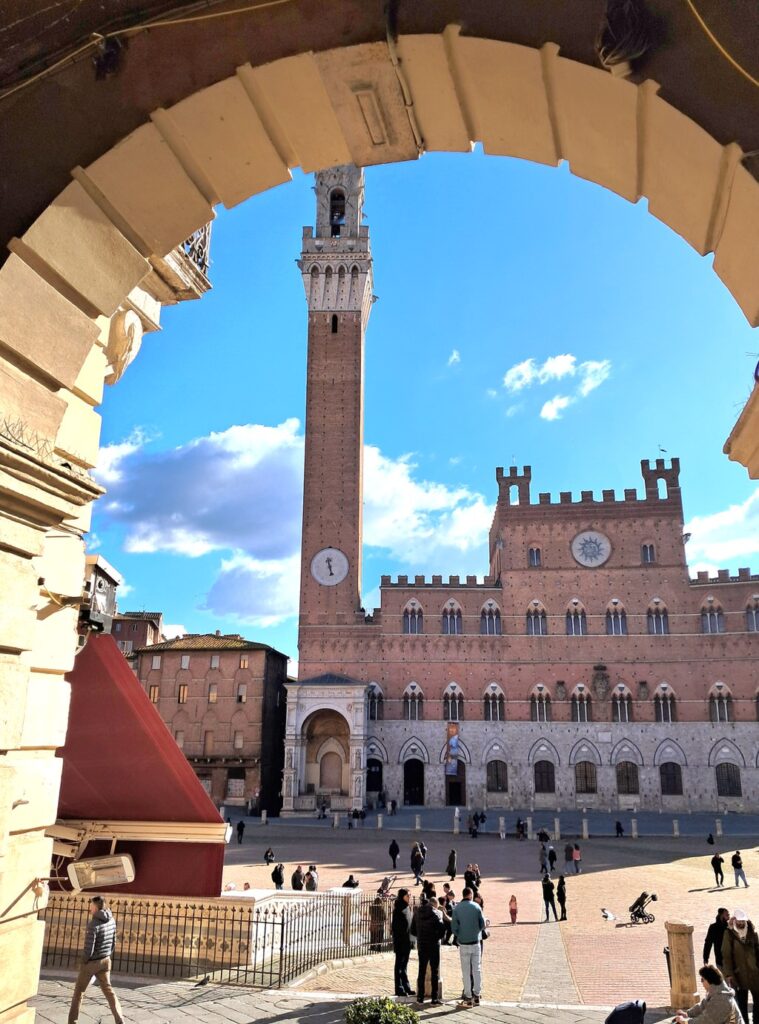
The city of Siena is famous for its perfectly preserved mediaeval centre (a UNESCO World Heritage site since 1995) and for its traditions such as the Palio di Siena, the horse race between contrade held every 2 July and 16 August. Rising majestically on Piazza del Campo, the Palazzo Pubblico is one of the most iconic symbols of the city. This magnificent Gothic palace, built between the late 13th and early 14th centuries, was originally the seat of the Republic of Siena’s government and still houses the municipal offices today . Visiting the Palazzo means immersing yourself in Siena’s civic history and admiring unique works of art: it hosts the Museo Civico, guardian of masterpieces such as Ambrogio Lorenzetti’s Allegory of Good and Bad Government and Simone Martini’s monumental Maestà .
This guide answers everything you need to know to plan your visit, from the palace’s history and architecture to must‑see artworks, opening hours, tickets and practical tips. It includes advice on getting there, suggestions for seasonal events such as the Palio and recommendations for nearby sights. The Hotel Minerva is also presented as an ideal base for exploring the city .
What is the Palazzo Pubblico and why is it unmissable?
The Palazzo Pubblico (also called Palazzo Comunale) is a prime example of secular Gothic architecture. Built from 1297 to 1310 under the Governo dei Nove, it served as the residence of the Podestà and the Signoria and the centre of political power. Remarkably, over 700 years later, it still serves this function, housing the city council chambers and municipal offices .
From an artistic standpoint the palace is essential because it contains priceless treasures. The Museo Civico conserves absolute masterpieces of 14th‑century Sienese art: Ambrogio Lorenzetti’s Allegory and Effects of Good and Bad Government and Simone Martini’s Maestà . The Allegory cycle is one of the first examples of secular political painting, a visual manifesto of good governance; viewing it in its original context is profoundly moving. Moreover, the palace overlooks Piazza del Campo; from its loggias you enjoy privileged views of the shell‑shaped square, while the Torre del Mangia offers one of the most beautiful panoramas of the city and surrounding countryside .
Location and how to reach it
The Palazzo stands in the heart of Siena, on Piazza del Campo. The entrance to the Museo Civico is under the porticoes at No. 1 Piazza del Campo. Because it lies within the pedestrianised centre (ZTL), you cannot drive to the door .
- On foot: If you are already in the centre (for example, staying inside the walls), reaching Piazza del Campo is simple: mediaeval streets converge towards the square . From Hotel Minerva, the walk takes about 15 minutes through the historic centre .
- By bus: Urban buses depart from Piazza Gramsci (main bus station); from there, a 10–15 minute walk leads to Piazza del Campo . Some bus lines stop at Piazza Indipendenza or Piazza del Mercato, a few steps from the square . Tourist buses park outside the centre, with shuttles to Piazza Gramsci.
- By train: Siena station is about 2 km north. You can take a bus (line 520 to Piazza Gramsci) or a taxi, or walk uphill for 20–30 minutes .
- By car: Do not attempt to drive to the Palazzo: ZTL cameras will fine you. Leave your car in one of the car parks just outside the walls (Parcheggio Il Campo, Santa Caterina or Parcheggio Duomo) . Escalators or short walks lead from these car parks to the centre . Guests of Hotel Minerva can use its private car park on the edge of the ZTL and then walk .
As Siena is compact, the best way to reach the Palazzo is on foot, enjoying the atmospheric lanes. Wear comfortable shoes: the streets are cobblestoned and hilly .
History of the Palazzo Pubblico
The palace’s history began at the end of the 13th century, when the Government of the Nine (the ruling council) decided to build a new government seat worthy of Siena’s prestige . Construction began around 1297 and progressed rapidly; by around 1310 the main building was completed . Designed to harmonise with the newly paved Piazza del Campo, it was always intended as a political and administrative centre .
Over the centuries the palace evolved. Between 1325 and 1344 the Torre del Mangia was erected, rising 87 m (102 m including the lightning rod), becoming one of Italy’s tallest civic towers . After the Black Death of 1348, the marble Cappella di Piazza was added at the base of the tower in 1352 as a collective ex‑voto . During Medici rule (post‑1555), some Florentine emblems were added to the façade . Remarkably, the palace’s appearance has remained largely intact, and the city’s magistrates have used it continuously for over 700 years . The Museo Civico opened inside the palace in 1800, turning the seat of government into a public cultural venue . Restoration campaigns, such as the 1980s conservation of Lorenzetti’s frescoes, have preserved the artworks .
Architectural features
The Palazzo Pubblico is a masterpiece of civil Gothic architecture . Its elegant façade dominates the lower side of Piazza del Campo with a slight concave curve following the square’s shape. The building combines red brick in the upper levels and stone in the lower level; this bichromic design reflects different construction phases and gives the building its distinctive colour palette . At the top runs a Guelf crenellation supported by hanging Gothic arches . Two small brick bell towers punctuate the roofline—one added in the 18th century for symmetry .
Central decorative elements include a large white marble disk engraved with the IHS monogram of Christ, installed in 1425, and trilobed Gothic trifore windows framed by terracotta and marble ornamentation . Marble coats of arms depict the Balzana (Siena’s black‑and‑white emblem), the Popolo Senese’s rampant lion and the Medici coat of arms (added after 1555) .
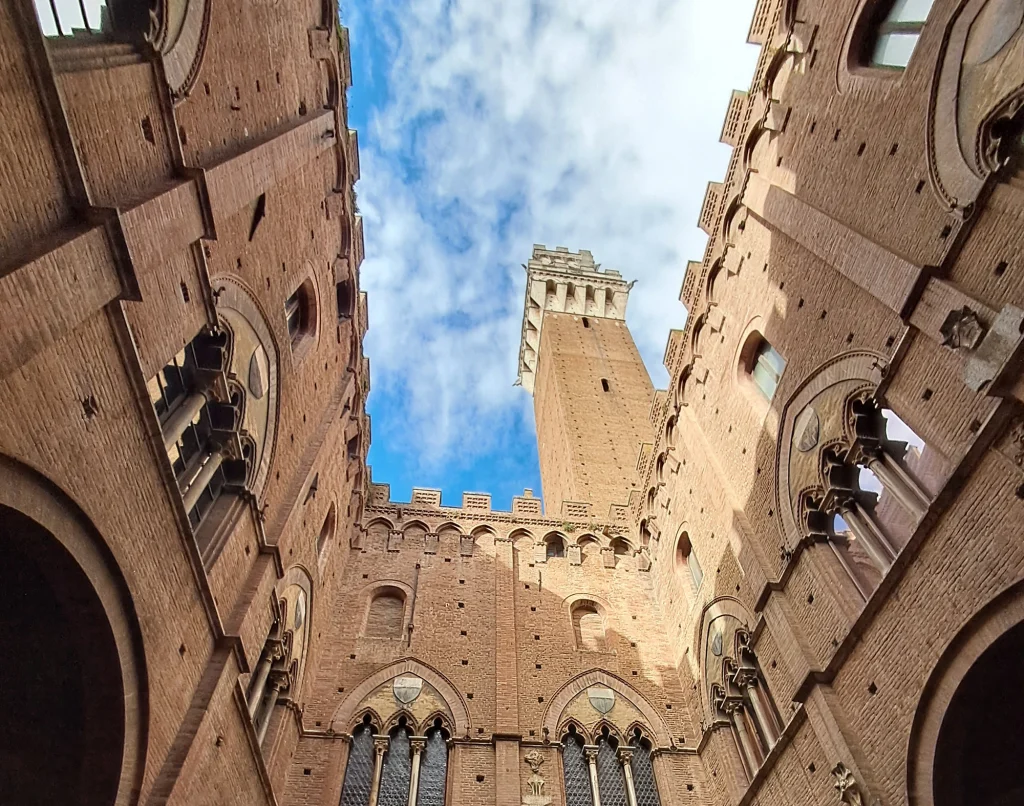
At ground level, a central stone portico houses the Museo Civico entrance; large arched openings lead into the courtyard . The Cortile del Podestà acts as a monumental atrium decorated with painted coats of arms and is the starting point for both the museum and the tower climb .
Torre del Mangia
The Torre del Mangia is the palace’s most recognisable feature. Built 1325–1344, it rises 87 metres and culminates in an elegant white marble crown designed by the painter Lippo Memmi . Its name derives from the first bell‑ringer, Giovanni di Duccio, nicknamed Mangiaguadagni (“money‑eater”) because he spent his wages on delicacies . Architecturally, the tower harmonises perfectly with the palace: its red‑brick shaft and white marble belfry match the building’s materials, and its slightly set‑back position makes it a sentinel behind the palace . At the base stands the Cappella di Piazza, a small open‑sided Gothic temple built in 1352 as a votive offering after the plague; it features marble arches and statues of Siena’s patron saints .
Visiting the interiors: Museo Civico
The Palazzo’s interior forms the Museo Civico, which preserves rooms rich in art and history . Highlights include:
- Sala del Mappamondo (Sala del Consiglio): the first great hall on the first floor, named after a lost painted world map. Here Simone Martini frescoed his monumental Maestà (1315, retouched 1321), depicting the Madonna and Child enthroned amid Siena’s patron saints. Opposite was Martini’s Guidoriccio da Fogliano (1330), a knight on horseback; its attribution is debated, but it remains an icon of Sienese imagery. The hall also displays panel paintings and the wooden stemmario (coat of arms panel) of Siena’s contrade . The room is still used for formal council meetings .
- Sala della Pace (Sala dei Nove): perhaps the most famous room, seat of the Government of the Nine, where Ambrogio Lorenzetti painted his Allegory and Effects of Good and Bad Government (1338–39). The cycle occupies three walls: on one wall the Allegory of Good Government personifies good governance surrounded by virtues; below, the people of Siena process with the city’s symbols . The next wall shows the Effects of Good Government, depicting prosperous Siena and its countryside, with lively city scenes and orderly farmland . Opposite, the Allegory of Bad Government shows a demonic tyrant and personifications of vices such as Avarice and Vanity; the Effects of Bad Government portray a city in ruin and chaos . This cycle is one of the earliest secular civic paintings and carries strong moral and political messages . Take time to study the details, using an audioguide or guide to identify each personification .
- Sala del Risorgimento (Sala di Vittorio Emanuele II): decorated in 1886 with murals by Gaetano Marinelli celebrating the Italian unification. It honours King Vittorio Emanuele II and features a marble bust of him .
- Cappella dei Signori: a small private chapel built mid‑15th century for the ruling Signori. It is adorned with frescoes by Taddeo di Bartolo (1407) showing scenes from the Virgin’s life and stars on the vaulted ceiling . A tiny stone pulpit shows where sacred readings were delivered .
- Loggia dei Nove: an open loggia on the second floor built as a viewing and rest area for the Nine. It offers splendid views over the Orto de’ Pecci and the countryside .
- Teatro dei Rinnovati: on the first floor stands this elegant theatre, created in the late 18th century by converting the Great Council hall. Though not always included in visits, special tours may show its balcony boxes and decorated ceiling .
Other rooms include the Sala dei Pilastri, Sala delle Lupe (used for civil weddings) and the ground‑floor Magazzini del Sale, which host contemporary art exhibitions . Corridors and staircases display commemorative plaques, coats of arms, weapons and banners . A typical visit ends back in the Cortile del Podestà; consider using the official audioguide (available in various languages and LIS) for detailed explanations .
Climbing the Torre del Mangia
Climbing the tower is a highly recommended experience if you can physically manage it. Access is from the Cortile del Podestà: you purchase a specific ticket and follow a spiral staircase of about 400 steps—there is no lift . The staircase narrows near the top, so the visit is not suitable for people with heart or respiratory issues, vertigo or claustrophobia; it is also inaccessible to those with limited mobility or to pregnant women . Children under six are not permitted, and minors up to 14 must be accompanied . Visits are limited to groups of 25 people every 45 minutes, so you are given a specific time slot upon purchasing your ticket . Arrive on time, as missing your slot may mean no other availability, especially in high season .
The ascent takes roughly 10–15 minutes; you can pause briefly at small landings . Reaching the top, you are rewarded with a 360‑degree view of Siena, its terracotta roofs, the Duomo, the city walls and, beyond, the Chianti hills and Crete Senesi . You can also inspect the ancient bells, notably the 600‑kg Sunto used on solemn occasions . The whole visit (ascent, time at the top and descent) takes about 30–40 minutes .
In case of heavy rain or storms, the tower is temporarily closed for safety . Remember: children under six cannot climb, and large bags must be left at the deposit .
Opening hours and seasons
Opening times vary by season:
| Period | Museo Civico | Torre del Mangia |
|---|---|---|
| 1 Nov – 28 Feb (winter) | 10:00–18:00 (last entry 17:15) | 10:00–16:00 (last entry 15:15) |
| 1 Mar – 31 Oct (summer) | 10:00–19:00 (last entry 18:15) | 10:00–19:00 (last entry 18:15) |
| Christmas Day (25 Dec) | Closed | Closed |
| New Year’s Day (1 Jan) | 12:00–18:00 (last entry 17:15) | 12:00–16:00 (last entry 15:15) |
Note that hours may change for special events; always check the official website . The museum recommends allowing at least 1 hour (preferably 1¼ hours) for the Museo Civico and about 30–40 minutes for the tower . During the Palio days (2 July and 16 August) and preceding rehearsals, the museum and tower may close or operate on restricted hours .
Ticket prices
Individual tickets
- Museo Civico: Adults €10; reduced €9 for ages 11–19, over 65, non‑resident university students, groups (over 15), military, etc. School groups pay €4.50 per student without reservation (or €5 with reservation). The family ticket (2 adults + children aged 11–19) costs €22; children under 11 enter free . Residents, Siena university students, tour guides, the disabled with companion and journalists enter free .
- Torre del Mangia: General admission €10 (no individual reductions); family ticket €25 for 2 adults + children over 11 . Children under 6 cannot climb .
Combined tickets and passes
- Museo Civico + Santa Maria della Scala: €14 (without reservation) or €15 (with reservation). Valid for 2 days; modest saving compared to buying separately .
- Museo Civico + Torre del Mangia: €15 (without reservation). Must be used on the same day; the tower must be visited first .
- Museo Civico + Santa Maria + Torre: €20 (without reservation). Valid for 3 days; a significant saving over individual tickets .
- Family pass (Musei + Torre): €40 for 2 adults + children over 11 .
Tickets including the tower cannot be purchased online; you must buy them in person because of the timed slots. Single museum tickets and passes without the tower can be purchased online (with a €1 surcharge) . Residents receive free entry; children up to 11 years always free .
Purchasing and reservations
Tickets are sold at the Palazzo’s ticket office under the courtyard; pay in cash or card. There is also a secondary ticket office, Dear Guests (Via di Città 48), which may have shorter queues . Online purchase is possible only for tickets without the tower; you receive a voucher to exchange at the ticket office . Reservation is not mandatory for individual visitors, though planning helps avoid queues in high season. For the tower, you must buy your ticket on the day. Groups should reserve by phone or email .
Planning your visit: durations and timing
Visiting durations vary:
- Museo Civico: average 1 hour; aficionados may need 1½–2 hours; a quick visit to the main works could take 30–40 minutes .
- Torre del Mangia: allow about 30 minutes including the climb and time at the top .
- Combined museum + tower: around 2–2½ hours, including waiting times .
The best times to visit depend on the season. May–June and September offer mild weather and moderate crowds; spring and autumn are generally ideal. July–August can be very hot and crowded; the Palio days bring closures and restrictions . Winter sees fewer visitors and a cosy atmosphere but shorter daylight hours . During the Palio week, focus on the festivities and schedule the museum at other times .
Accessibility
- Museo Civico: The museum is mostly accessible for visitors with mobility impairments. All rooms are on one floor; an elevator is available on request; the route has no significant steps . Wheelchairs can be provided; benches are scattered for resting . Accessible toilets are available . In general, staff are happy to assist .
- Torre del Mangia: Not accessible to those with limited mobility, wheelchair users or people with severe health problems . No alternative viewpoints exist. Children under six are not allowed; minors up to 14 must be accompanied .
- Hearing and visual accessibility: The museum offers a free app with a LIS (Italian Sign Language) videoguide . Guide dogs may face restrictions; check in advance. Written panels in Italian and English are provided .
Guided tours and audioguides
Guided tours are available:
- Private guides: Licensed guides offer tours of Siena that include the Palazzo. A two‑hour private tour costs roughly €120–150 per group and can be booked through local cooperative agencies . Guides speak multiple languages and add context and anecdotes .
- Scheduled tours: In high season the tourist office or municipality occasionally organises scheduled group tours (e.g., every Saturday at 11:00). Check local listings .
- Audioguide App: The Museo Civico offers a free mobile app with audio content in several languages (Italian, English, French, German, LIS). The content lasts about 50 minutes . Traditional audioguides may be available on request .
- Information panels: Italian and English panels describe the rooms and artworks; reading them is useful if you tour without a guide .
Visiting the Torre del Mangia is usually self‑guided; a guide can accompany you but cannot linger on the narrow stairs .
Special events
The Palazzo serves as both a museum and a living civic space. Events include :
- Palio di Siena: On 2 July and 16 August Piazza del Campo becomes a racecourse. The palace hosts key rituals: the morning Messa del Fantino in the adjacent chapel; the segnatura dei fantini (registration of jockeys) in the Sala del Consiglio; and the Corteo Storico (historical parade), which starts from the courtyard. During Palio days, the museum may close or operate on restricted hours .
- Temporary exhibitions in the Magazzini del Sale: The ground‑floor storerooms host rotating exhibitions of contemporary art, photography or design. These shows are included in the museum ticket .
- Summer concerts and cultural festivals: During the Chigiana International Festival (July–August), concerts may be held in the Cortile del Podestà; the courtyard becomes a stage for classical music .
- Official ceremonies: The palace hosts civic ceremonies such as the Masgalano award for the best pageantry at the Palio and the draw of contrade for future races . The façade is often illuminated for Christmas or New Year’s celebrations .
Check local event calendars for openings, free days (e.g., cultural heritage days) or special evening visits .
Why stay at Hotel Minerva when visiting the Palazzo Pubblico?
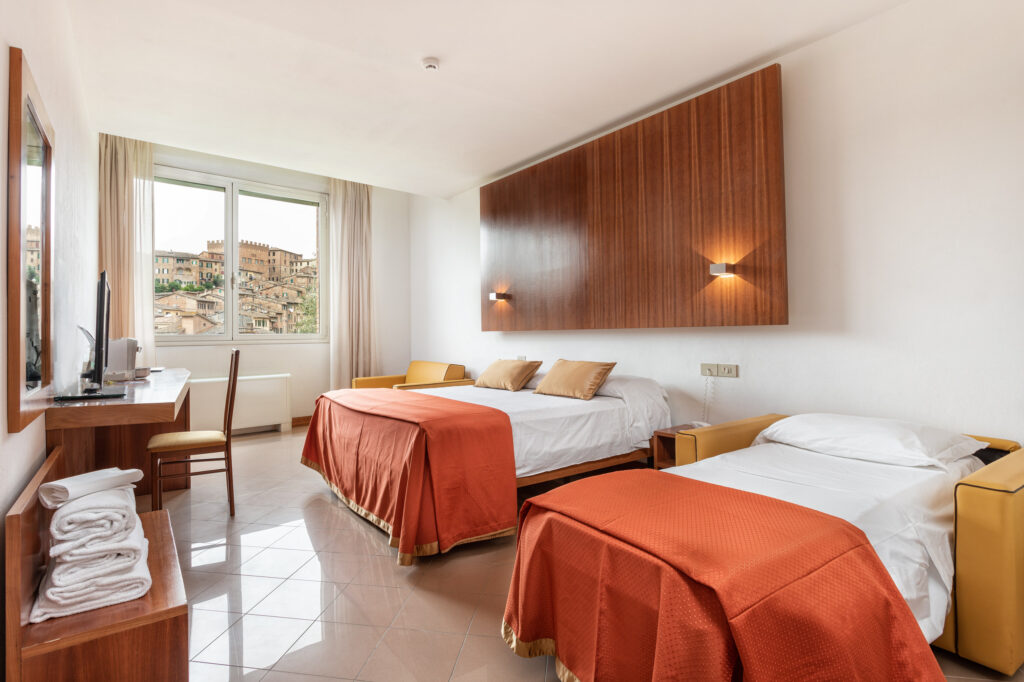
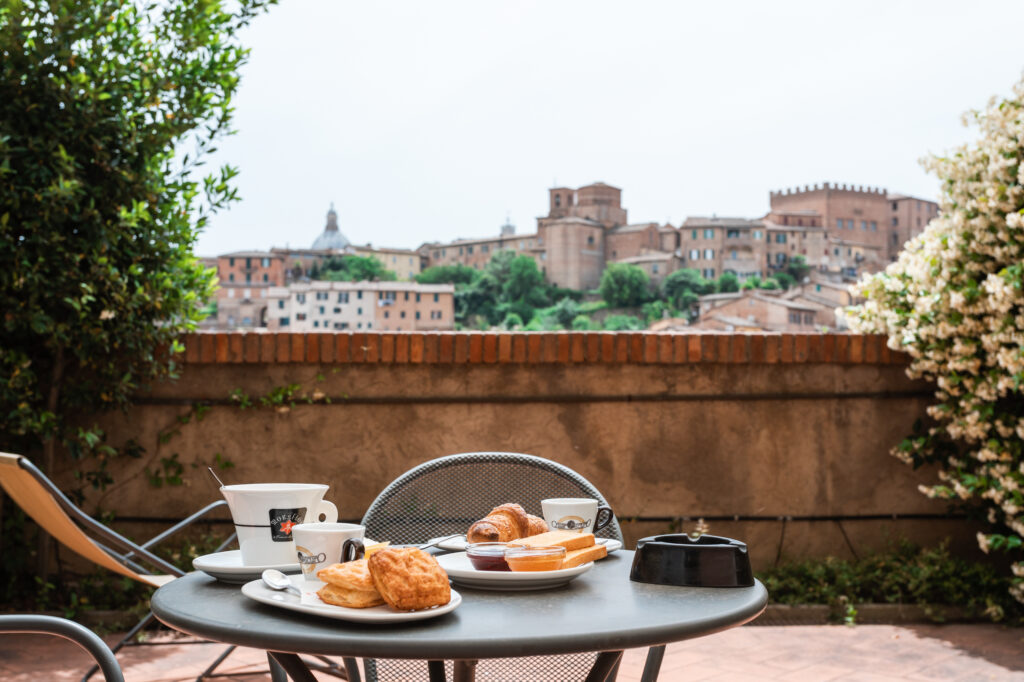
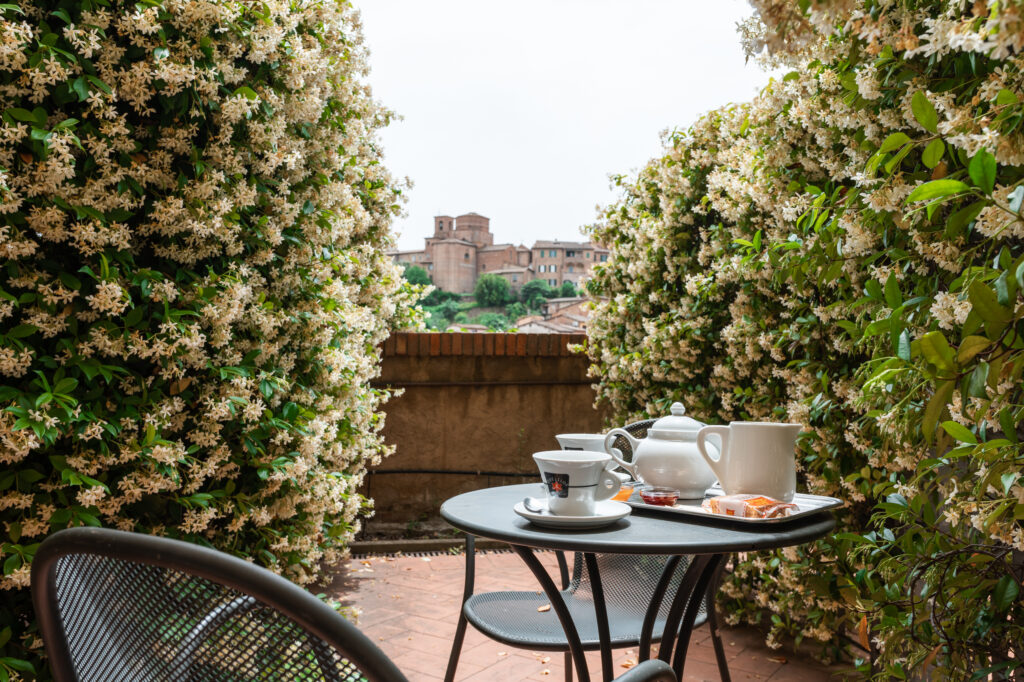
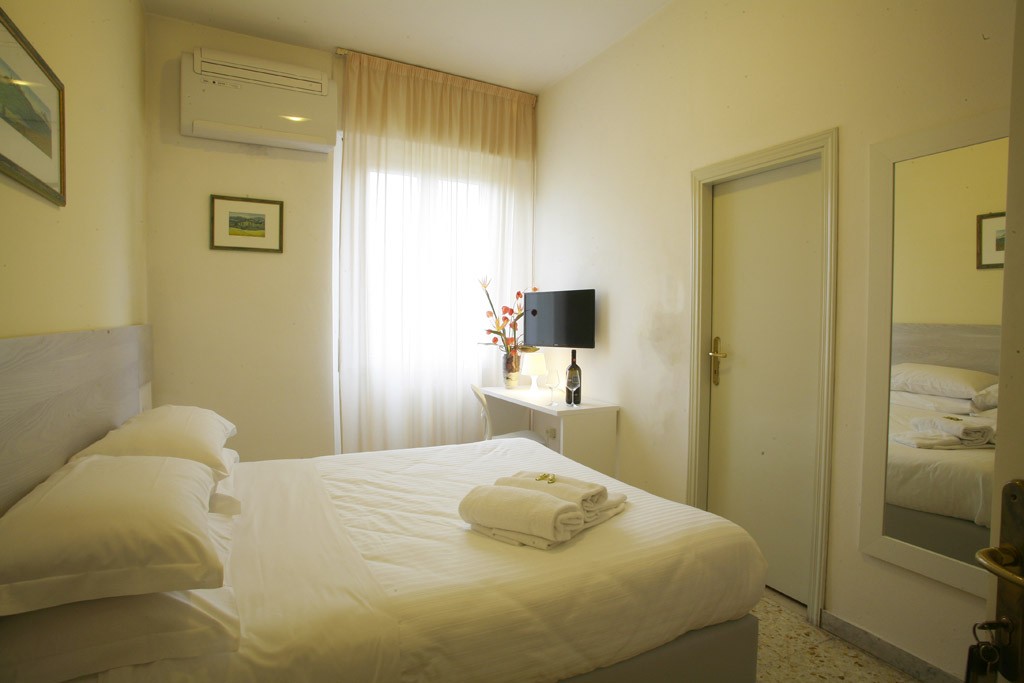
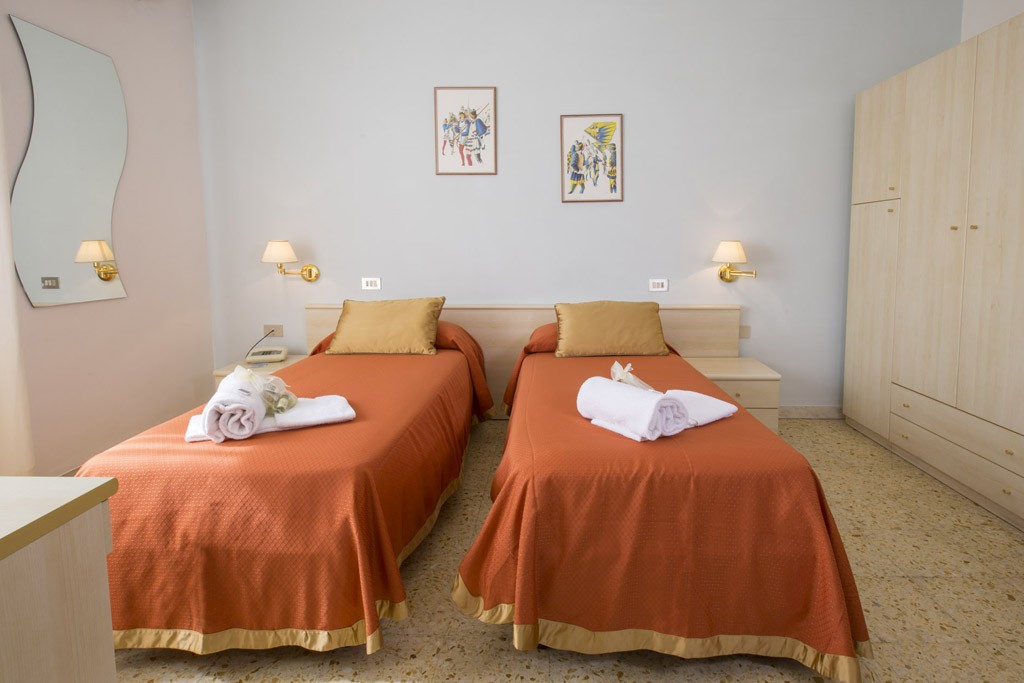
Choosing the right accommodation enhances your experience. Hotel Minerva stands within Siena’s historic walls yet just outside the ZTL, making it both central and easily accessible by car.
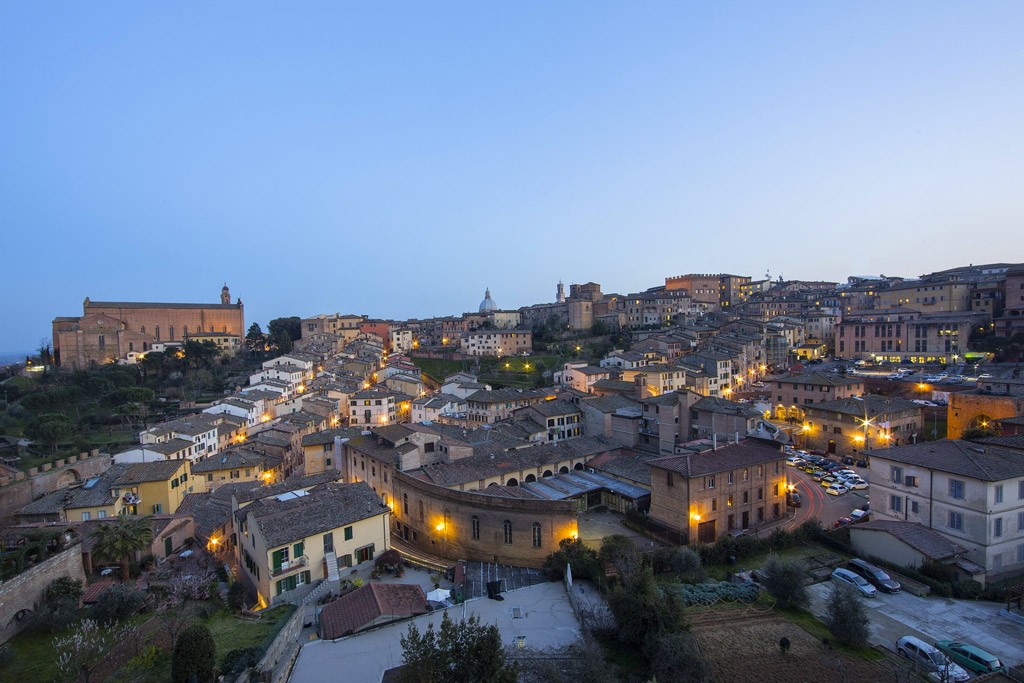
- Strategic location: The hotel lies in the northern part of the centre. Piazza del Campo and the Palazzo Pubblico are about 15 minutes’ walk away . You can walk to the square via Via Garibaldi and enjoy shops and views along the way . Staying so close allows early visits before the crowds or returning for a siesta and venturing out again in the evening .
- Accessibility and parking: The hotel sits just outside the restricted zone, so you can reach it by car. It offers a private, secure car park (paid), a rarity in Siena . Once parked, you can forget your car and explore on foot .
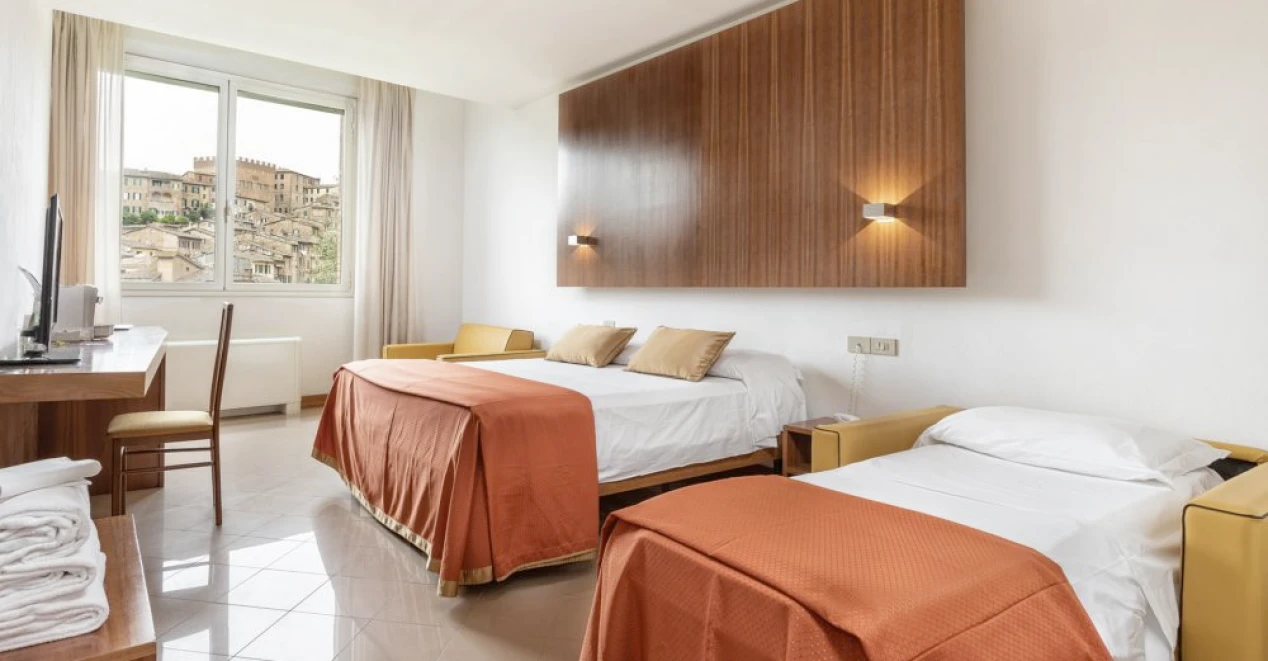
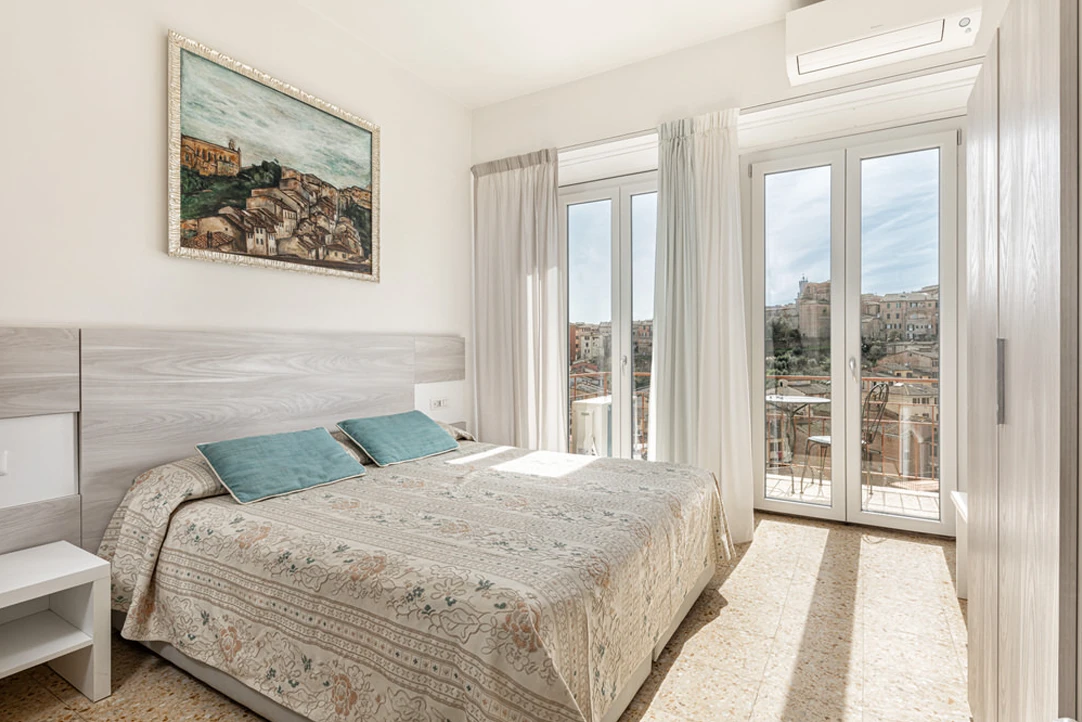
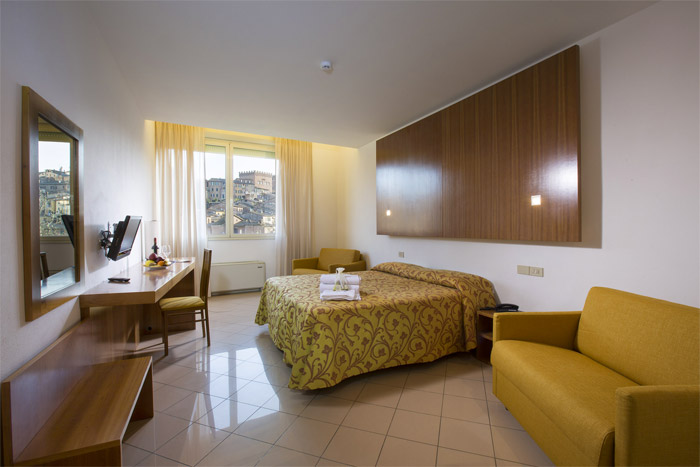
- Tranquillity and views: Despite its centrality, the hotel is in a quiet area. Many rooms have panoramas over Siena’s roofs and towers; the property includes a garden and terraces where breakfast is served . Imagine starting your day with cappuccino and Tuscan pastries while viewing the Torre del Mangia.
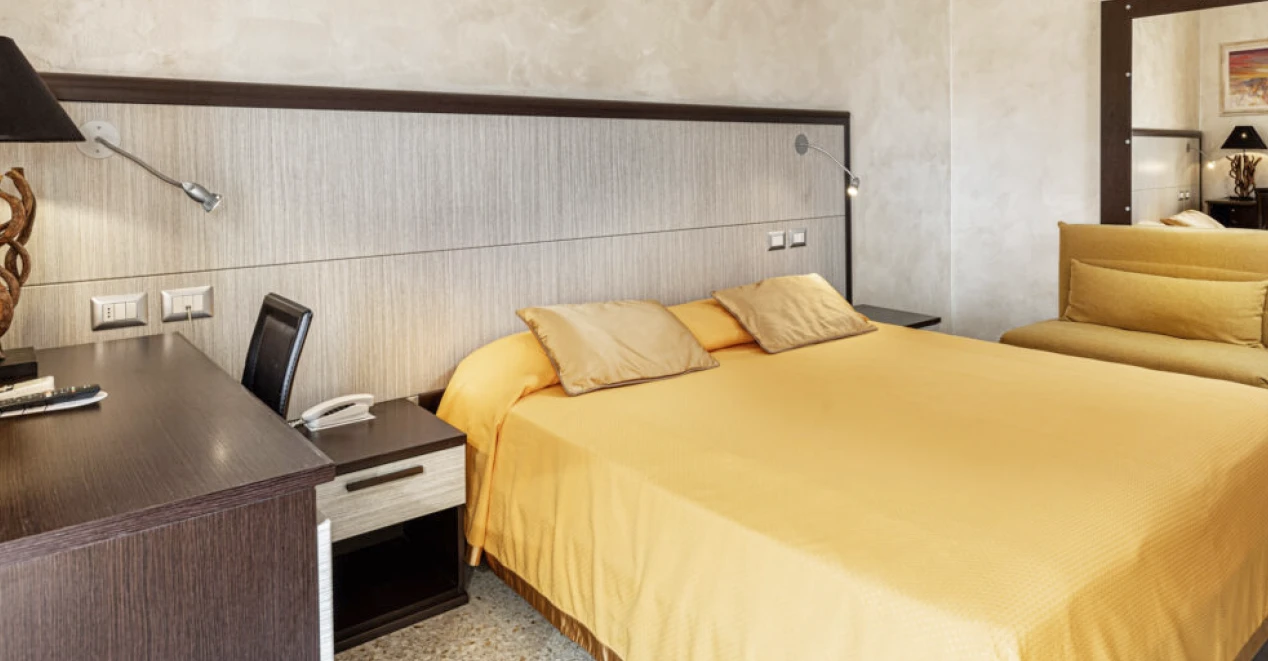
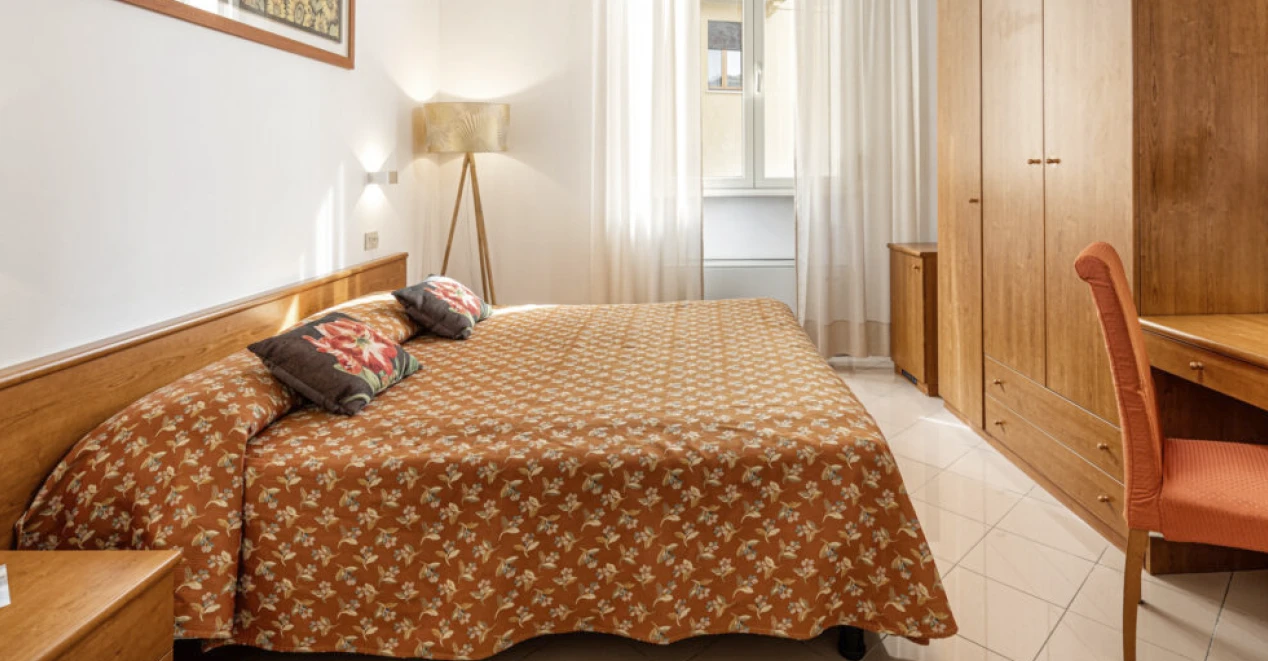
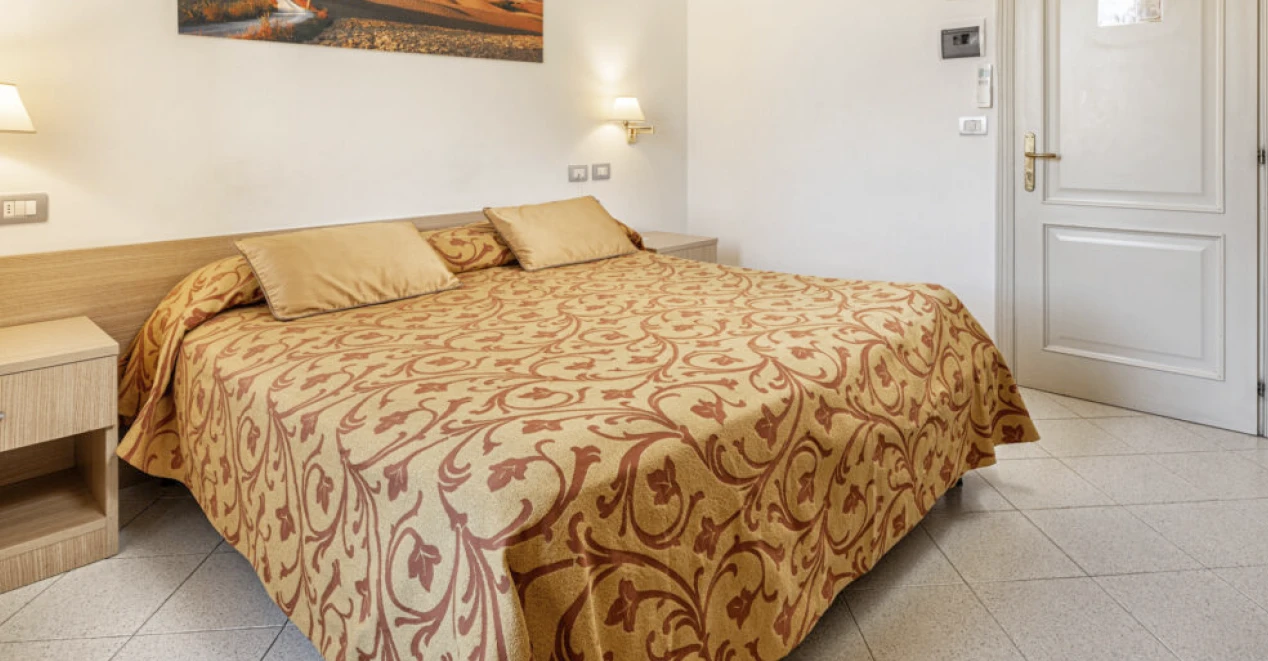
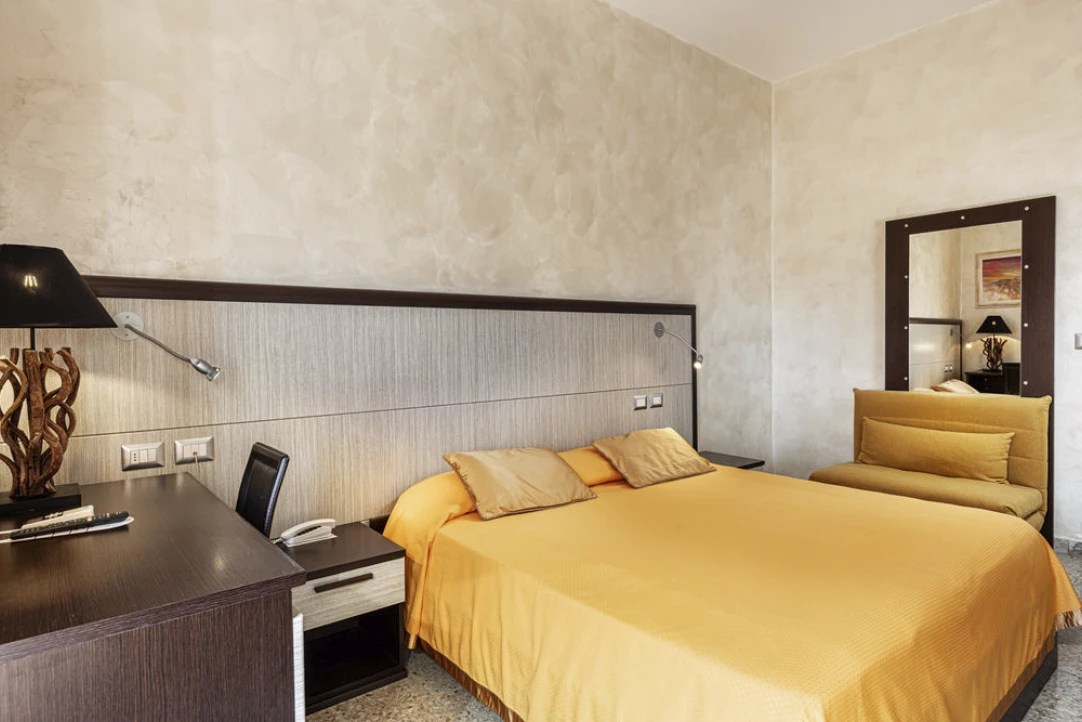
- Historic charm and comfort: Housed in a period building, Hotel Minerva blends Tuscan tradition (terracotta floors, exposed beams) with modern comforts. It has 56 rooms ranging from economy to panoramic junior suites, catering to couples, families and business travellers .
- Excellent service: The 24/7 reception provides multilingual staff ready to recommend itineraries, restaurants and hidden corners . They can advise on the best time to climb the tower or make reservations. Guests praise the personal attention and warmth .
- Relaxation after touring: The hotel offers an internal bar, a lounge area with books, free high‑speed Wi‑Fi, air conditioning, lift, luggage storage and a meeting room . Breakfast is generous, with local products; in warm weather it is served in the panoramic garden . The hotel is an ideal place to unwind after a day of walking .
- Base for exploring Siena and beyond: Located near the train station (1 km) and with easy road access, the hotel is perfect for excursions to Florence, San Gimignano, Monteriggioni, Pienza and Montalcino . Staff can help arrange wine tours or horseback rides .
Guests often note that from the Minerva “you can reach everything in minutes”; the views from the rooms make stays magical . Reviews highlight good value for a three‑star hotel .
What to see near Hotel Minerva and the Palazzo Pubblico
Siena’s compact centre means numerous attractions are within walking distance. Near Hotel Minerva (and thus also near the Palazzo), consider visiting:
- Piazza del Campo and Fonte Gaia: the heart of Siena, famous for its shell shape and the Palio . Children can safely run in the pedestrian square; at the centre is the monumentally sculpted fountain. Enjoy the square at different times of day; it never gets old .
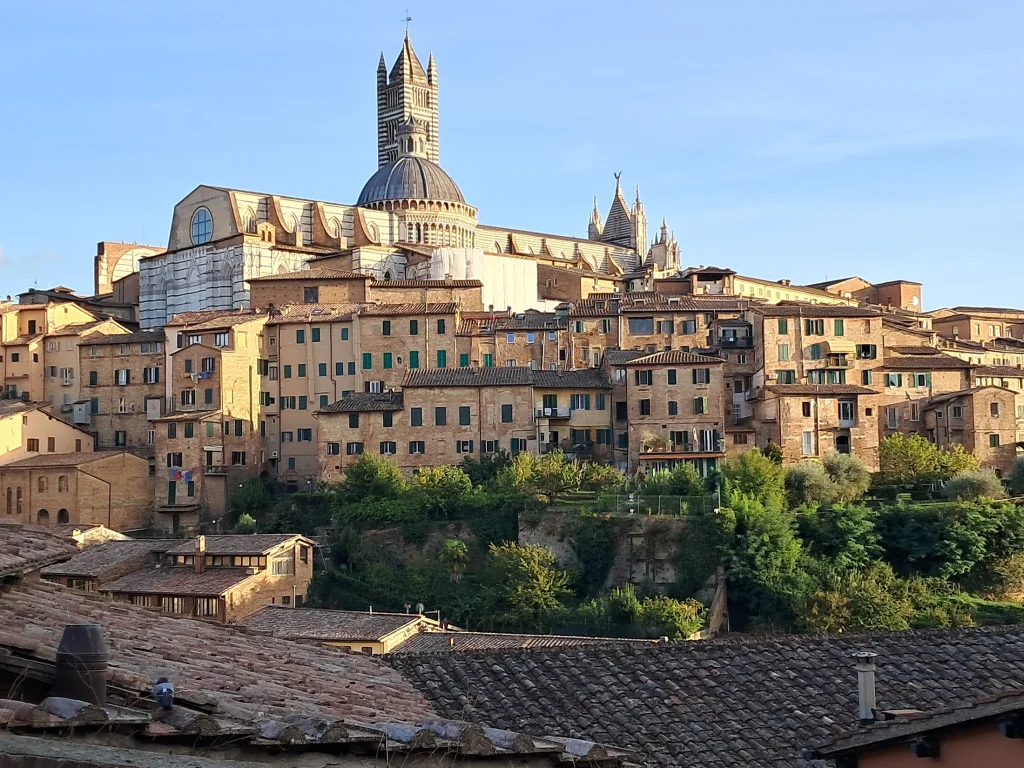
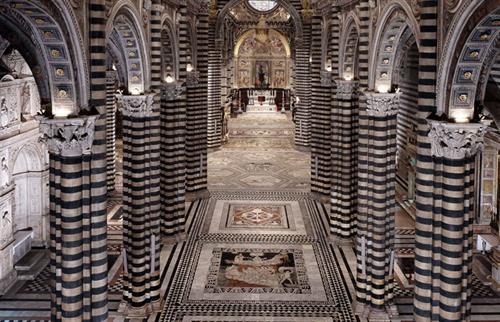
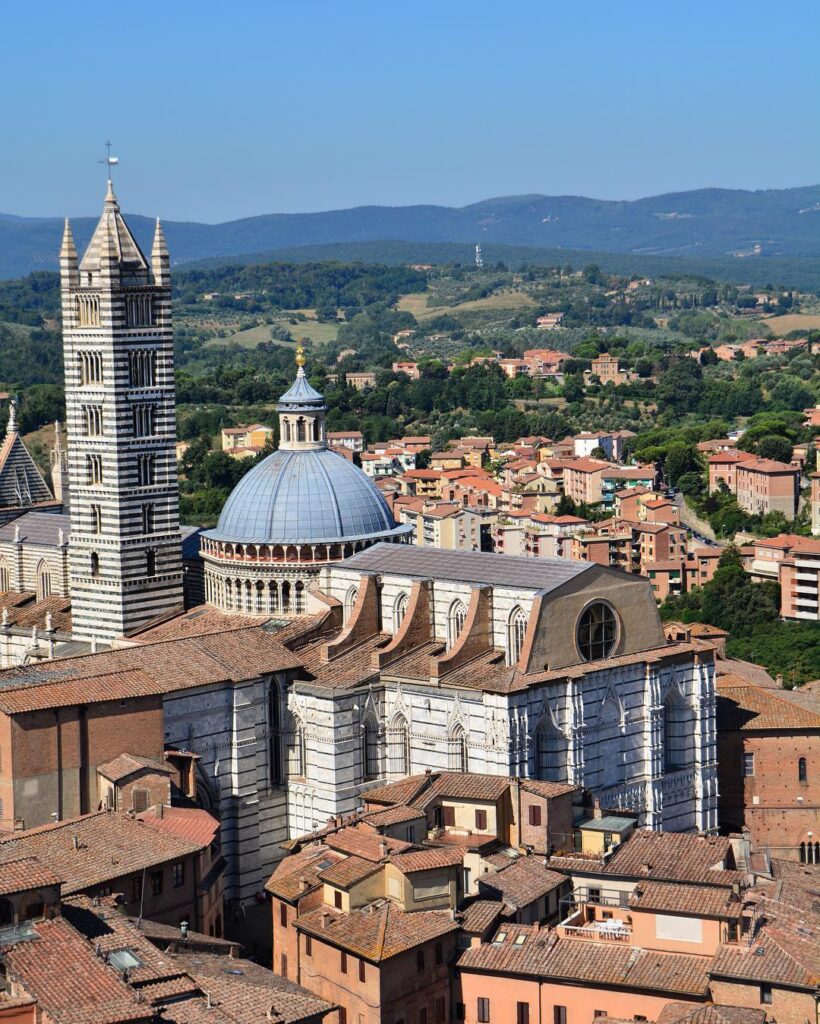
- Duomo di Siena: the striped marble Gothic cathedral with an ornate façade and elaborate marble floor. Highlights include the Piccolomini Library, sculptures by Michelangelo and Donatello, Nicola Pisano’s pulpit and the “Porta del Cielo” rooftop route . From Hotel Minerva it’s about 17 minutes on foot; try to visit early for fewer crowds .
- Basilica di San Domenico and the Sanctuary of Santa Caterina: important sites of veneration for Saint Catherine of Siena. The basilica houses her head and a finger; the adjacent sanctuary includes her family home .
- Fortezza Medicea and Enoteca Italiana: a 16th‑century fortress turned public park offering panoramic walks and housing the national wine centre . In summer, it hosts jazz festivals and food events.
- Santa Maria della Scala: the former hospital opposite the Duomo, now a museum with frescoed halls (Sala del Pellegrinaio), chapels and an archaeological section. It provides a journey through Siena’s social history .
- Pinacoteca Nazionale: a treasure house of Sienese Gothic painting, housing works by Duccio, Simone Martini, the Lorenzetti brothers and many others .
- Basilica di San Francesco and the Oratory of San Bernardino: home to the Eucharistic Miracle of 1730 and a small sacred art museum .
- Orto de’ Pecci: a green oasis behind Piazza del Campo, with orchards, farm animals and a restaurant, ideal for relaxing after sightseeing .
The article suggests planning a day around these sites, using Hotel Minerva as a central base for breaks and convenience . It also encourages travellers to experience Siena beyond monuments—wander through lanes, notice contrada symbols, talk to locals and discover hidden artisan shops .
Conclusion
The Palazzo Pubblico embodies the quintessence of Siena’s civic history and art, where past and present meet under the watchful eye of the Torre del Mangia . This guide has explored the palace’s history, architecture, key artworks, practical information, events and the unique experience of climbing the tower. It also explained why staying at Hotel Minerva enhances your visit, providing comfortable accommodation in a strategic location . By visiting the Palazzo with calm attention, gazing at every detail of the frescoes and imagining the generations of Sienese who have walked those floors, you will connect deeply with the city’s soul . Enjoy Siena’s warm hospitality, art and timeless beauty—and know that a welcoming room awaits you at Hotel Minerva after each day’s adventure.