
Introduction
Siena is a unique medieval city where every alley tells centuries of history and traditions. Among its most celebrated marvels are the magnificent Duomo, Piazza del Campo with its famous Palio, and a widespread artistic heritage that enchants visitors of all ages. Yet beyond the best‑known attractions, Siena also hides treasures ready to surprise those who know where to look. One of these is the Piccolomini Library, a jewel of Renaissance art nestled inside the Duomo of Siena, often discovered almost by chance by those visiting the cathedral. Entering this historic library is like taking a leap back in time: you will be greeted by vividly coloured frescoes, ancient illuminated manuscripts and even a classical statue, all housed in a room that leaves one speechless for its decorative richness. No wonder the Piccolomini Library is considered a “hidden gem” – a place many tourists overlook but which is in fact unmissable for fully understanding the artistic greatness of Siena and its cathedral .
This comprehensive tourist guide will explore the Piccolomini Library in detail, through a question‑and‑answer format that makes the reading suitable even for families. Each section will answer the most common questions: what this library is and when it was created, what it contains and why to visit it, how to organise a visit (from opening hours to tickets, and even accessibility for pushchairs and wheelchairs), along with many historical curiosities . Considering that a successful visit also depends on a good logistical base, we will present Hotel Minerva in Siena as the ideal starting point for exploring the city: we will discover why this hotel, located in a strategic position, is perfect for visiting the Duomo and other attractions (especially for those travelling with family) . Finally, we will conclude with a section on what to see in the surroundings: from unmissable monuments just a few steps from the hotel in the centre of Siena to day trips to enchanting villages and Tuscan landscapes within an hour’s radius . Get ready for a journey through art, history and practical tourist tips – the Piccolomini Library awaits you with its colourful treasures and fascinating stories to tell!
Discovering the Piccolomini Library: Questions and Answers about the Jewel of the Duomo
What is the Piccolomini Library and where is it located?
The Piccolomini Library is a monumental room located inside Siena’s Duomo, along the left nave just before the transept . It is a large frescoed hall, open to the public as an integral part of the visit to the cathedral. It was originally conceived as a library annexed to the Duomo: it was built in 1492 by Cardinal Francesco Piccolomini Todeschini – then archbishop of Siena – who later became Pope Pius III . The idea was to create a prestigious space to house the rich book collection of his uncle, Enea Silvio Piccolomini, better known as Pope Pius II . The library was carved out by adapting some rooms of the canonry next to the Duomo and was given its own entrance from the nave of the church . Today we can access the Piccolomini Library through an elegant decorated marble portal on the left wall of the Duomo . As soon as you cross that threshold, you find yourself in a fairytale‑like place: a large rectangular room with vaulted ceilings frescoed and walls entirely covered with paintings, cases with illuminated codices and, in the centre, a classical sculpture . In short, the Piccolomini Library is a splendid Renaissance library room hidden in the heart of Siena’s cathedral – a place where architecture, painting and illumination come together to create an absolute masterpiece .
Why is it called “Piccolomini Library”?
The name explicitly refers to the Piccolomini family, one of the most illustrious in Siena in the fifteenth century, from which two popes came . As mentioned, it was Cardinal Francesco Piccolomini Todeschini who wanted this space, to honour the memory of his uncle Enea Silvio Piccolomini (Pope Pius II) and to house the books that the latter had collected during his life as a humanist . In practice, it was meant to be the family “library” annexed to the Duomo. Curiously, however, the name remained even though the original purpose was never fully realised: the precious volumes of Pope Pius II never arrived in Siena, and the room was not used as his personal library . Nonetheless, the Library took the Piccolomini name both because of its founder and because of the obvious presence everywhere of Piccolomini heraldic symbols (such as the golden crescent moons painted on the ceiling) . Today that name is more than appropriate, because the Piccolomini Library still preserves ancient books of enormous value (albeit of different origin) while celebrating the very history of the Piccolomini through its art . We can therefore say that we are entering a “library” dedicated to the cultural legacy of the Piccolomini family, where every fresco and every manuscript on display tells something about this family and their time .
Who decorated the Piccolomini Library?
The entire hall is a feast for the eyes: it was completely frescoed between 1502 and 1507 by the painter Bernardino di Betto, known as Pinturicchio, and his workshop . Pinturicchio was an Umbrian artist very much in vogue at the time – he had worked in Rome for the popes – and was called to Siena precisely for this great decorative project . The contract with Pinturicchio, signed in June 1502, spelled out in detail how the Library should be painted: the vault was to be richly decorated with colourful grotesques (innovative ornamental motifs of the time), while the walls would host ten large narrative scenes . Pinturicchio did not work alone: he made use of talented collaborators, including Amico Aspertini, a Bolognese painter, and a young apprentice destined for fame, Raffaello Sanzio . Raphael, barely in his early twenties, participated in the realisation of some scenes and portrayed himself and the master within the frescoes . Pinturicchio’s hand remains predominant and recognisable: the bright colours, minute details and refined perspective of the scenes are typical of his mature style . Even today, more than 500 years later, the frescoes of the Library retain a surprising brilliance thanks also to restorations that over time have preserved their glazed colours . In short, the Piccolomini Library was one of the most important painting workshops of the early 16th century in Italy, entrusted to Pinturicchio and his team, who left behind an extraordinarily beautiful decorative cycle .
What do the frescoes of the Piccolomini Library depict?
The walls of the Library are decorated with ten large fresco scenes forming a single narrative cycle. They celebrate the main episodes of the life of Enea Silvio Piccolomini (Pope Pius II), the uncle of the commissioning cardinal . In practice, it is a sort of painted biography of Pius II, who was not only a pontiff but also a man of letters, a diplomat and a key figure of his time . The scenes, arranged on two registers along three walls, follow a chronological order: they start from the youth and secular career of Enea Silvio up to his ascent to the papal throne and his deeds as pope .
Among the episodes depicted (all accompanied by explanatory captions in Latin) we can admire, for example: Enea Silvio as ambassador at the Scottish court; Enea Silvio being crowned poet by Emperor Frederick III; Enea Silvio presenting Eleonora d’Aragona to the emperor and so on up to Pius II entering the Vatican triumphantly as pope . One of the most celebrated scenes is precisely the Meeting between Frederick III and Eleonora of Portugal, married in Siena in 1452: Pinturicchio paints the imperial wedding ceremony with extraordinary richness, focusing on the fabrics, jewels and sumptuous garments of the characters in a triumph of luxurious details . Another notable scene is the Canonisation of St Catherine of Siena, where among the crowd of onlookers two very special portraits are hidden: at the bottom left a young man with red stockings and a man with a red cap – according to tradition they are Raphael (the first) and Pinturicchio himself (the second), who portrayed themselves within the fresco . It is thrilling for the modern visitor to search for these figures among the multitude of characters painted almost five centuries ago .
One element that strikes all visitors is the spectacular vault of the Library: the ceiling is subdivided into panels richly decorated with golden, blue and red backgrounds, interspersed with numerous crescent moon crests – the heraldic symbol of the Piccolomini house . The effect is dazzling: raising your gaze, you have the impression of observing an artistic sky studded with symbols and allegorical figures . In the middle of the vault also stands out the official coat of arms of the Piccolomini (the five golden moons on a blue field surmounted by the cardinal’s galero), further emphasising the presence of the commissioning family . Every centimetre of the ceiling is painted and adorned, creating a truly breathtaking ensemble . In summary, the frescoes of the Piccolomini Library portray the glorification of Pope Pius II Piccolomini through key episodes of his life, and they do so with the highest Renaissance pictorial mastery: elegantly dressed figures, architectures painted in perspective, landscapes in the background and myriad details that can be observed for hours discovering new things . It is an engaging visual narrative, as well as a decorative triumph for lovers of art.
What other treasures does the Piccolomini Library hold besides the frescoes?
The Piccolomini Library is not just painting: within it are also precious artistic artefacts . First, on the walls beneath the frescoes are large wooden cupboards and display cases where magnificent illuminated codices are exhibited . These are ancient liturgical choir books – mainly antiphonaries and graduals from the 15th century – with pages hand‑decorated in gold and bright colours . These manuscripts, imposing in size (they were books used in church choirs, readable by several singers at once), feature historiated initials and exquisitely refined miniatures . Many were illuminated by famous artists of the time such as Liberale da Verona and Girolamo da Cremona, who were called to Siena in the late 1460s specifically to create these choir books . Browsing with your eyes through the cases, you can admire letters decorated with figures of saints, floral friezes and tiny sacred scenes – a real treat for lovers of the art of miniatures . These codices constitute a representative collection of Italian Renaissance illumination and are the heart of the library’s book holdings (ironically, given that Pius II’s books never arrived here: instead, the room now houses these treasures from the Duomo itself) .
Another jewel housed at the centre of the Library is the famous statue of the “Three Graces” . This is a marble sculptural group depicting the three mythological figures embraced in a circular pose. The statue on display is an ancient Roman copy (3rd century CE) of a Hellenistic Greek original . It was purchased in Rome by Cardinal Francesco Piccolomini and placed here as a symbol of harmony and classical beauty . The Three Graces, with their timeless elegance, offer an intriguing contrast in the midst of the sumptuous Christian decoration of the Library: they represent pagan classicism, but the Renaissance delighted in this dialogue between the ancient and the modern world . For some periods in history, the nudity of the statue caused scandal – it is said that in the seventeenth century a rector of the Duomo deemed it “indecent” for a sacred place, and in the nineteenth century someone even thought of removing it! – but fortunately the Graces are still there . Today visitors are enchanted by this sculpture, which adds charm to the room. Observing it up close, you will notice the details of the hairstyles and the softness with which the marble renders the bodies: an example of how the Piccolomini Library is also a small museum where one can admire classical art .
In addition to the illuminated codices and the statue, the Piccolomini Library itself is rich in secondary artistic details: from the majolica floor (rebuilt in the 19th century, with tiles decorated with the Piccolomini symbol) , to the finely sculpted entrance portals by Marrina adorned with bas‑reliefs (you will notice, for example, a high relief of St John the Evangelist on a side altar, a work by Giovanni di Stefano) . Above the entrance, inside the Library, there is also a fresco of the Coronation of Pius III (the cardinal himself who became pope) painted by Pinturicchio . In short, every element of the room has artistic or historical value. The Piccolomini Library is truly a 360‑degree museum space: frescoes, illuminated books, sculptures, architecture – everything contributes to making it a hidden treasure of Siena, a place where one’s gaze and imagination can get lost, imagining the cardinal Piccolomini and his contemporaries proudly admiring this marvel just completed .
Why is the Piccolomini Library considered a “hidden treasure”?
Although today the Piccolomini Library is open to the public and included in the Duomo’s visitor routes, it is defined as a “hidden treasure” because many visitors discover it only once inside the cathedral, almost unexpectedly . From outside the Duomo nothing hints at the existence of this frescoed room: the Library is concealed behind the nave walls and accessible through a side door that could easily pass unnoticed to an unobservant eye . In the past, before Siena became an international tourist destination, the Library was known almost only to Sienese locals and art scholars, thus remaining a secret place . Today, although more famous thanks to photos and travel accounts, it still retains that aura of discovery: many tourists, entering the Duomo perhaps to admire its marble floor, are astonished to find “a museum within the museum” when they step through the Library’s doorway . The artistic riches it contains – from Pinturicchio’s cycle to the illuminated manuscripts – are comparable to those of much larger art galleries, yet concentrated in a single room that you might miss if you do not know of its existence . In this sense it is a hidden treasure: a rare pearl hidden within a larger attraction that abundantly rewards those curious enough to explore every corner of the Duomo of Siena . For the informed tourist, visiting the Piccolomini Library adds an exclusive and unforgettable experience to their trip . It is a place that stays in your heart, because entering that room means being enveloped by the genius of the Renaissance in a total way – a true secret chest of beauty that Siena offers its guests .
Visiting the Piccolomini Library: Practical Information
Do you need a ticket to visit the Piccolomini Library? How much does it cost?
Yes, to access the Piccolomini Library you must purchase a ticket for entry to the Duomo, since the Library is inside the cathedral and follows its museum regime . There is no separate ticket just for the Library: access is included in all forms of entry to the Duomo . There are three main types of tickets to choose from :
- Cathedral ticket (single access): Allows you to visit only the Duomo and the Piccolomini Library inside it. It costs about €7 for adults; children under 6 enter for free, while children aged 7–11 benefit from a reduced rate, typically a few euros . This is the right ticket if you are mainly interested in the cathedral with the Library and not the other sites .
- OPA Si Pass (combined pass): A pass that includes all sites of the Duomo complex – that is, the Cathedral with Library, Battistero, Crypt, Museum of the Opera (with the panoramic Facciatone) and Oratory of San Bernardino – and is valid for three consecutive days . It costs around €14 for adults (slightly more, about €16, during special periods when the Duomo floor is uncovered) ; children 7–11 years old pay a reduced fee of about €3–4, while under 7 years are free . This ticket is very advantageous if you also want to see the other attractions of the Duomo: for example it allows you to climb the Facciatone for the panorama and visit the Museum with Duccio’s Maestà and other works .
- Porta del Cielo ticket: Includes everything in the OPA Si Pass plus the visit to the Porta del Cielo rooftop walk with guide . It has a higher price, about €21 full price, and a reduced €6 for children 7–11 . This experience allows you to go up to the high parts of the cathedral (not accessible to very young children or those who suffer from vertigo), offering unique views. If you are interested only in the Piccolomini Library, it is not necessary to purchase this ticket, but it is an option if you want to enrich the visit .
In summary, the cost options are presented in a table in the original article . Prices may change, so it is always advisable to check the updated rates on the official Opera del Duomo website or at the ticket office . Tickets can be bought on site (ticket office in Piazza Duomo 7 or at the Visitor Center in Via di Città 48, near Piazza del Campo) or online to avoid queues . If you visit Siena during the high season or on weekends, booking in advance can save you valuable time .
What are the opening hours of the Piccolomini Library?
The Piccolomini Library follows the same opening hours as the Duomo, with some differences between the summer and winter seasons . Generally, the Duomo of Siena is open every day, but with longer hours in the warm months and shorter hours in the cold ones. Indicative hours are :
- Spring–Summer period (approximately 1 April – 31 October): weekdays 10:00 – 19:00; Sundays and public holidays 13:30 – 18:00 .
- Autumn–Winter period (approximately 1 November – 31 March): weekdays 10:30 – 17:30; Sundays and holidays 13:30 – 17:30 .
- Christmas period (26 December – 6 January): weekdays 10:30 – 18:00; holidays 13:30 – 17:30 .
The last entry is always 30 minutes before the closing time, so for example if the Duomo closes at 19:00 you can enter (and thus access the Library) until 18:30 . Furthermore, note that on Sunday mornings and on religious holidays the cathedral is generally closed to tourist visits (open only for services), opening to tourists only from the early afternoon . This explains why on Sundays there is a 13:30–17:30 schedule .
During extraordinary events or important liturgical celebrations (such as the feast of Siena’s patron, 1 December, or special ceremonies), opening hours may vary and some parts of the complex may be temporarily closed . For example, on 1 December (the feast of St Ansano) the Duomo closes earlier than usual in the afternoon . In addition, every year for a few weeks the marble floor of the Duomo is uncovered (the “floor unveiling” event): in 2025 the dates are from 27 June to 31 July and from 18 August to 15 October . During those periods the opening time may slightly extend in the morning (for example, openings at 9:30 or 10:00) to allow more visits .
The advice is to check the updated time slots on the official Opera Duomo Siena website shortly before your visit, especially if you travel in winter or during festive periods . In any case, the standard opening hours in the high season (April–September) to see the Library are roughly from 10 am to 7 pm, while in the low season they are 10:30 am to 5:30 pm . Plan your day considering that the visit to the Duomo and Library requires at least an hour (especially if there is a queue at the entrance) .
How long does it take to visit the Piccolomini Library?
The Piccolomini Library itself is not very large – it is a single room – but the amount of details and works to see inside is considerable . The visit time depends a bit on your interest: some people take a few photos and leave after 10–15 minutes, while others stay half an hour or more, fascinated by observing every fresco and every manuscript . On average, 15–20 minutes are sufficient to calmly appreciate the Piccolomini Library once you are inside . This assumes you may want to read the explanatory panels (available in Italian and English) or use an audio guide . In fact, with the entrance ticket an audio guide (often accessible via QR code on your smartphone) is sometimes included; we recommend taking advantage of it because it provides explanations of the various painted scenes and displayed artefacts, enriching your understanding . If you use the audio guide or linger long over details, the visit to the Library could extend even to 30 minutes .
Note that inside you move freely but in a confined space (it is not as large as a church), so even if you wanted to, you will not spend hours and hours there . If you are travelling with young children, perhaps 10 minutes concentrated may be enough before they lose attention – in that case prioritise pointing out the most curious elements (for example the bright colours of the frescoes or the statue of the Three Graces) . Conversely, for an art enthusiast every extra minute will be well spent: you could return a second time to the Library during the same visit to the Duomo, for example if you purchase the OPA Si Pass valid for 3 days and want to see it again at a quieter moment .
What is the best time of day to visit it?
The Piccolomini Library can be more or less crowded depending on the time. In general, early morning (as soon as the Duomo opens, around 10:00) is an excellent time: you will find fewer people and can enjoy the silence and magic of the room almost alone . Even towards closing time (late afternoon) there is often less crowding, because organised groups and day tours have already left . Conversely, midday (between 11:30 and 15:00) is often the busiest time, with tourist groups and school parties crammed even into the Library . If you can, avoid that peak time. Consider, however, that in high summer Siena is a popular tourist destination: the Library, being an enclosed space, can become rather hot and humid in the afternoon (there is no powerful air conditioning, only dehumidifiers to preserve the frescoes). Therefore in summer it is better to visit it in the morning, when it is cooler . In winter you will not have problems with internal climate . Moreover, a small “trick”: if you are in Siena on non‑holiday weekdays, you will certainly find fewer people than on weekends. Tuesday, Wednesday or Thursday are often the quietest days to tour the Duomo and Library at ease .
Also, note that the Library is illuminated even in the evening during special openings (sometimes night openings are organised in summer): seeing it with soft artificial light can be evocative, but during the day the natural light entering from the windows enhances it better . In summary, as soon as it opens in the morning is the ideal moment to appreciate the Piccolomini Library in peace and take photos without too much crowd around .
Are photographs allowed inside the Piccolomini Library?
Yes, photography is permitted, provided you do not use flash or tripods . The current rules of visit to the Duomo complex allow amateur photos (for personal use only), while the use of tripods and of course any professional equipment without permits is prohibited . Short videos are also tolerated, but always without additional artificial lighting . In fact, you will not need it: the Library is well lit and the frescoes have such luminous colours that photos come out well even without flash (the flash is forbidden because intense light could damage the pigments of the frescoes and miniatures over time). We suggest, if you photograph the illuminated codices in the display cases, to turn off the flash to avoid reflections on the glass . Remember to turn off or silence electronic devices: the Library is a place of contemplation and often visitors inside are listening to explanations or simply enjoying the silence, so it is good practice to maintain respectful behaviour . Selfies are allowed, but perhaps avoid using a selfie stick if there are people (it could bump into something or someone). A popular shot is with the frescoed vault in the background or near the Three Graces statue (without touching it!). In any case, take home as many images as you want of this jewel – taking photos in the Piccolomini Library is a memory worth having, and fortunately there are no strict prohibitions in this regard .
Is the Piccolomini Library accessible to people with disabilities or pushchairs?
Yes, accessibility is guaranteed at least to enter the cathedral and therefore the Library . The main entrance of the Duomo is equipped with a ramp or mobile ramp that staff provide to overcome the steps, allowing entry for wheelchairs and pushchairs . Once inside the Duomo, the route is flat up to the Piccolomini Library, which in turn has a wide threshold: access inside does not present significant barriers (the staff will assist you by fully opening the portal doors if necessary) . Thus people with reduced mobility can easily visit the Library . It should be noted, however, that other parts of the complex (such as the Crypt, the Museum or the Baptistery) are unfortunately not yet accessible to wheelchair users, due to stairs and the lack of lifts . But for the Duomo and the Library you will have no issues: the floor inside is smooth and spacious, allowing wheelchairs to manoeuvre. Pushchairs can also enter; if it is very crowded, it might be a bit tight to move with a pushchair, but in calmer moments it is fine . If necessary, you can ask the security staff (usually present in the hall) if there is a space where to leave pushchairs at the entrance . For blind visitors, special tactile tours can be booked by contacting Opera Laboratori (which manages Siena’s museums) in advance . In general, the Opera del Duomo shows attention toward accessibility and will do its best to facilitate the visit for everyone . So travellers with disabilities or small children can rest assured: the Piccolomini Library is visitable without significant obstacles .
Is the visit to the Piccolomini Library suitable for children?
Certainly yes, even children can appreciate this place in their own way . Of course it depends on their age: very young children probably will not pay attention to the frescoes for more than a few minutes, but they will still be struck by the bright colours and the echoing space . School‑age children, on the other hand, might find it interesting to look for curious details in the paintings such as animals, knights’ armour, facial expressions, etc. . You can turn the visit into a little game: for example, counting how many crescent moons (the Piccolomini symbol) they can spot painted on the ceiling – there are really many! . Or challenge them to find Raphael in the fresco of the canonisation of St Catherine after explaining where to look . The Three Graces statue greatly intrigues the little ones for its shape – it can be a cue to tell them who the Graces were in mythology, keeping them engaged . Naturally, it is important to explain to children not to touch anything (especially the books on display or the walls) and not to run or shout, since it is a historic place ; but with a bit of supervision, the visit will proceed without problems . The Library is not large, so parents can easily keep an eye on the kids . Some tour operators also offer family‑friendly guided tours with language suitable for children, which make the discovery more fun and interactive . In short, the Piccolomini Library can appeal to children more than one might think: it almost seems like a “fairytale room” painted, where you see popes, emperors and fantastic creatures (dragons and strange symbols appear in the decorations), stimulating their imagination . And who knows, perhaps among those young visitors a spark for art may ignite! So do not hesitate to bring your children: Siena in general is a family‑friendly city, and this corner of the Duomo could become one of their special memories of the trip .
Hotel Minerva: The Ideal Starting Point for Exploring Siena
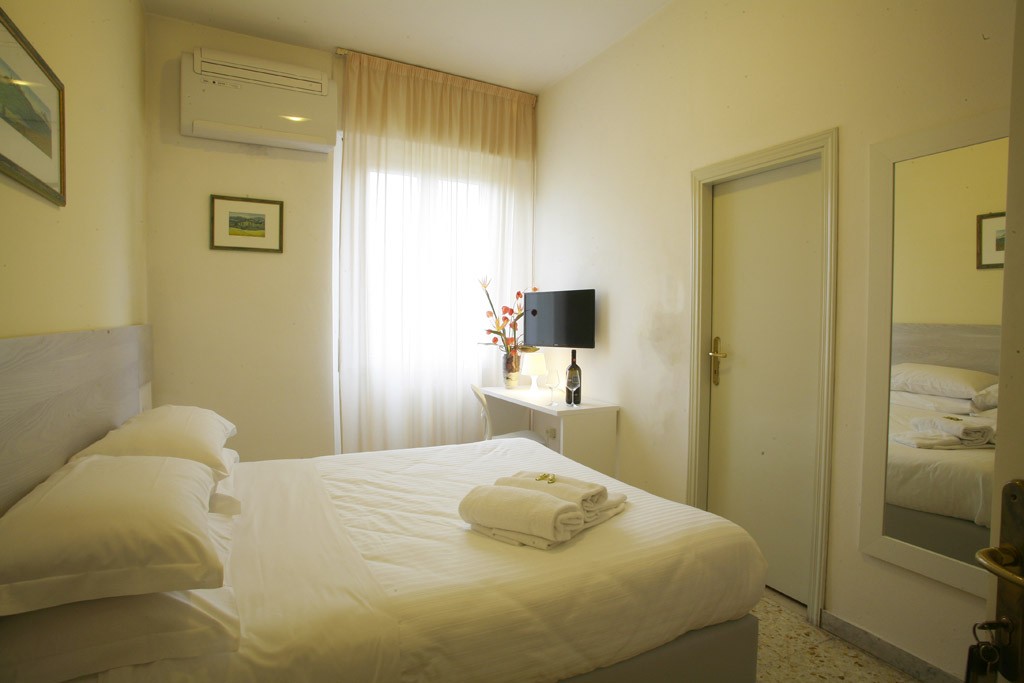
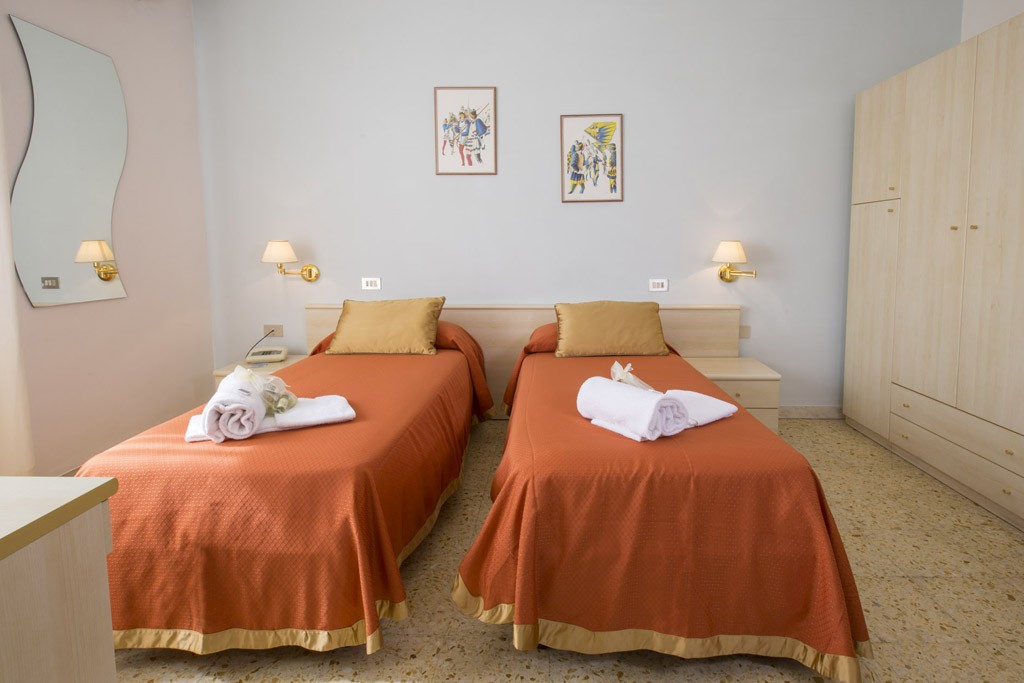
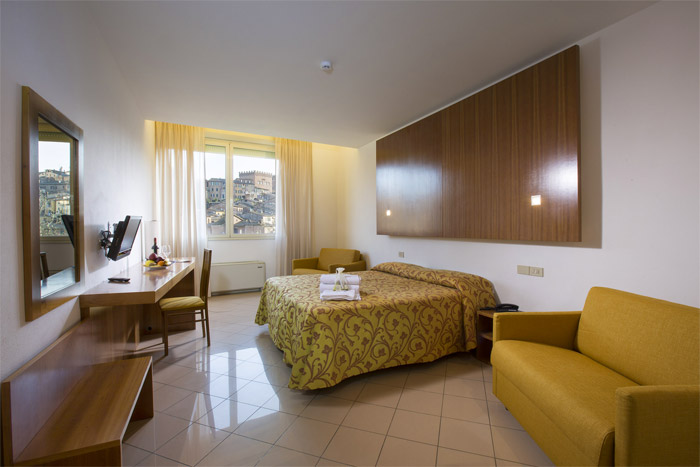
Visiting Siena and its wonders – such as the Piccolomini Library – is an extraordinary experience, and being able to rely on a comfortable and welcoming accommodation in town makes everything even more pleasant. Hotel Minerva offers exactly that kind of ideal base for travellers: it is a historic 3‑star hotel located in the heart of Siena, inside the ancient medieval walls. In this section, through some questions and answers, we will present in detail Hotel Minerva and the reasons why it is an excellent choice for those who wish to discover Siena on foot (families with children included!) .
Where exactly is Hotel Minerva located and what advantages does its position offer?
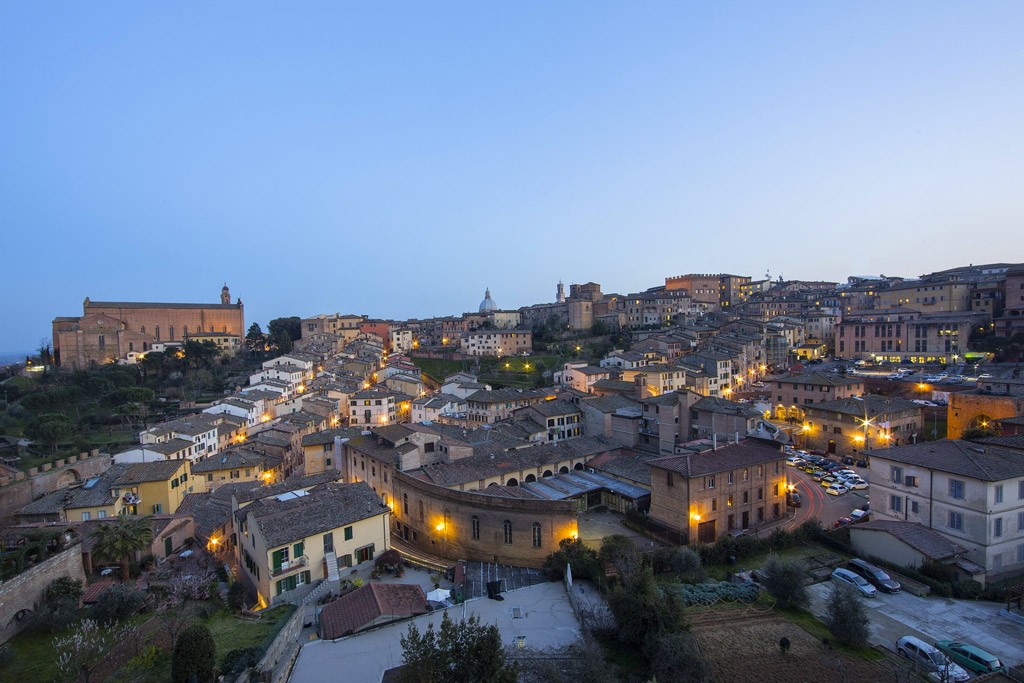
Hotel Minerva enjoys a strategic position in the centre of Siena: it is located in Via Garibaldi, within the city walls but just outside the limited traffic zone (ZTL) . This means it is easily reachable by car without encountering bans, and indeed the hotel has a private covered and video‑monitored car park where guests can leave their car safely . Once you arrive, you will realise that you probably will not need the car anymore: stepping out from Hotel Minerva, Siena unfolds around you, ready to be explored comfortably on foot . The main places of interest are truly within walking distance: for instance, Piazza del Campo is about 15 minutes on foot along picturesque streets , and the Duomo of Siena (with the Piccolomini Library) is reached with about 17 minutes of walking uphill through wonderful glimpses . The Basilica di San Francesco and Piazza Salimbeni are also nearby . To give you an idea: from the hotel terrace the gaze encompasses the profile of Siena’s bell towers and roofs, a sign that you are truly close to the historical heart of the city . Despite this proximity to attractions, Hotel Minerva is located in a quiet and safe area, away from night noise but close to shops and services . Another advantage is the proximity to the train station, which is just 1 km away: you can reach it with a 15‑minute walk or a few minutes by bus . This is useful whether you arrive in Siena by train or want to take day trips during your stay (e.g., to Florence). In summary, the location of Hotel Minerva offers the best of both worlds: accessibility and logistical convenience (you arrive by car and park worry‑free, and you have the station a stone’s throw away) and at the same time pedestrian proximity to Siena’s beauties . You can leave the hotel in the morning and after a few minutes find yourself in front of the Torre del Mangia towering over the Campo, or return late in the evening knowing the hotel is just a short distance away . This convenience will save you time and energy, allowing you to enjoy Siena without haste and without stress, perhaps returning to your room for an afternoon break before going out again for an evening gelato in Piazza del Campo . Truly, as many say, “location makes the difference”: and Hotel Minerva definitely has a winning location .
What kind of welcome and services does Hotel Minerva offer its guests?
Hotel Minerva is renowned for its warm atmosphere and customer care. As soon as you enter, you will be welcomed by a friendly and multilingual staff at the 24‑hour reception . Whether you arrive late in the evening or need advice at dawn, there will always be someone ready to help you with a smile . The staff know Siena “like their own pockets” and will be happy to suggest hidden itineraries, typical restaurants where to taste Tuscan cuisine or local events not to miss . In short, more than clients you will feel like welcome guests and friends, thanks to small gestures: do not be surprised if from the second day the staff call you by name! . The hotel itself has a longstanding history in hospitality: many travellers have returned here multiple times over the years, a sign of an environment that makes one feel at home .
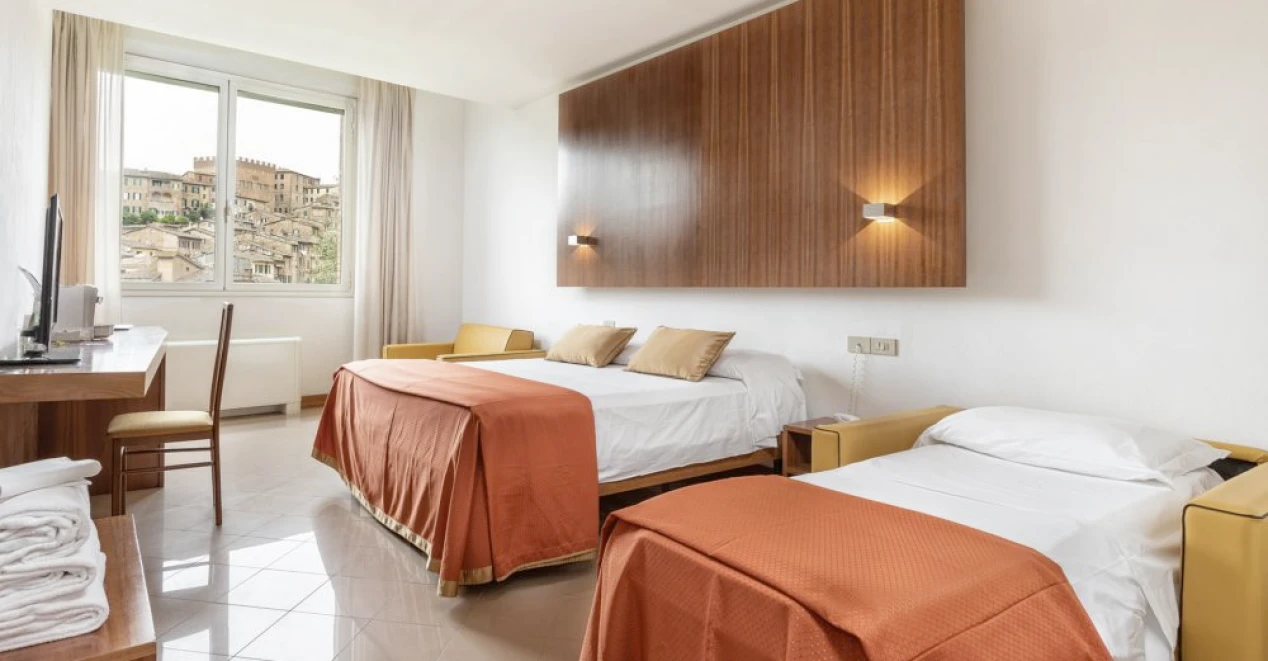
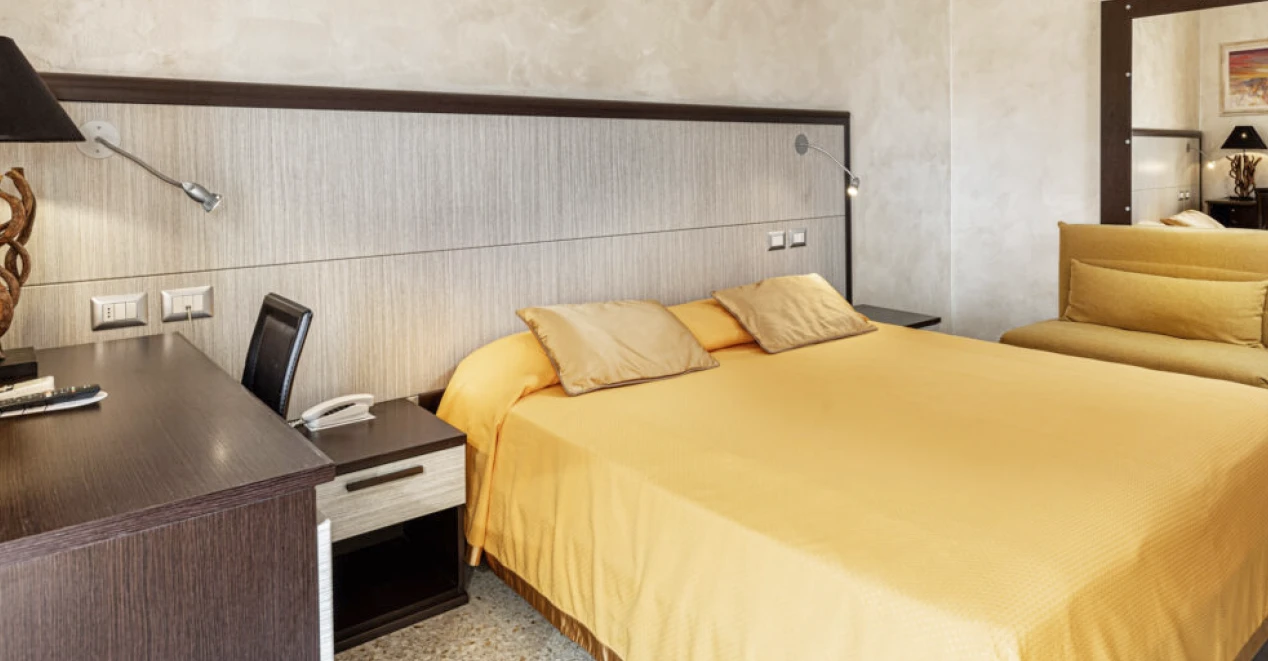
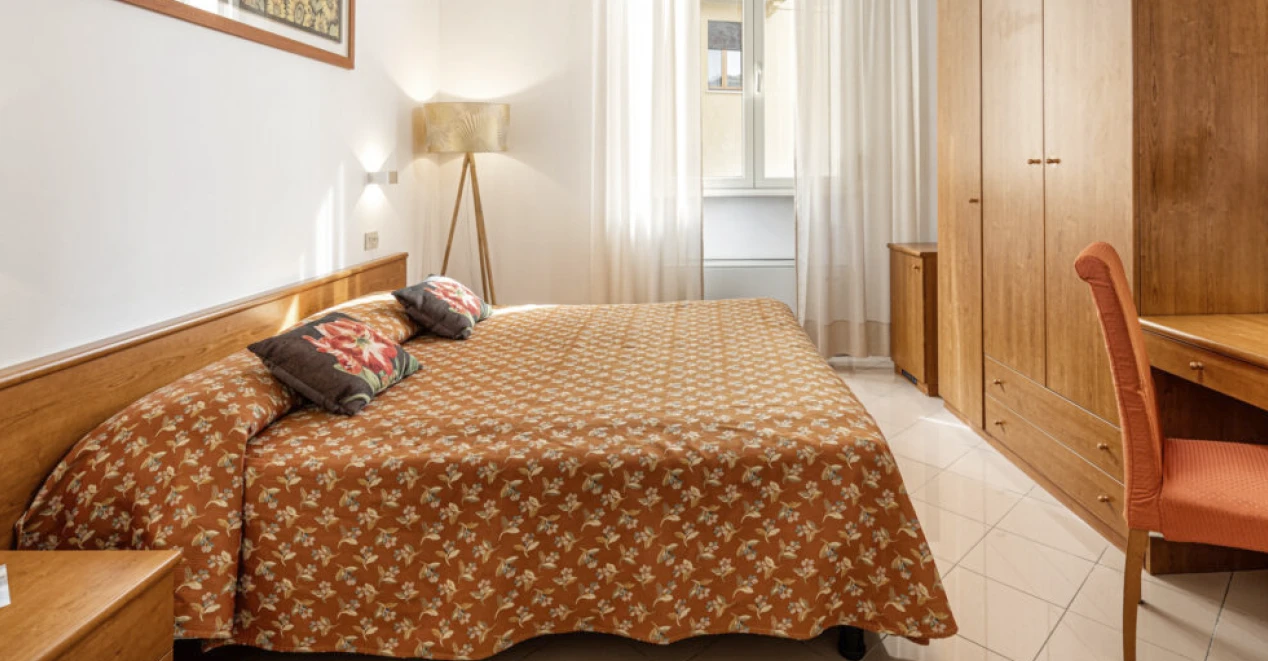
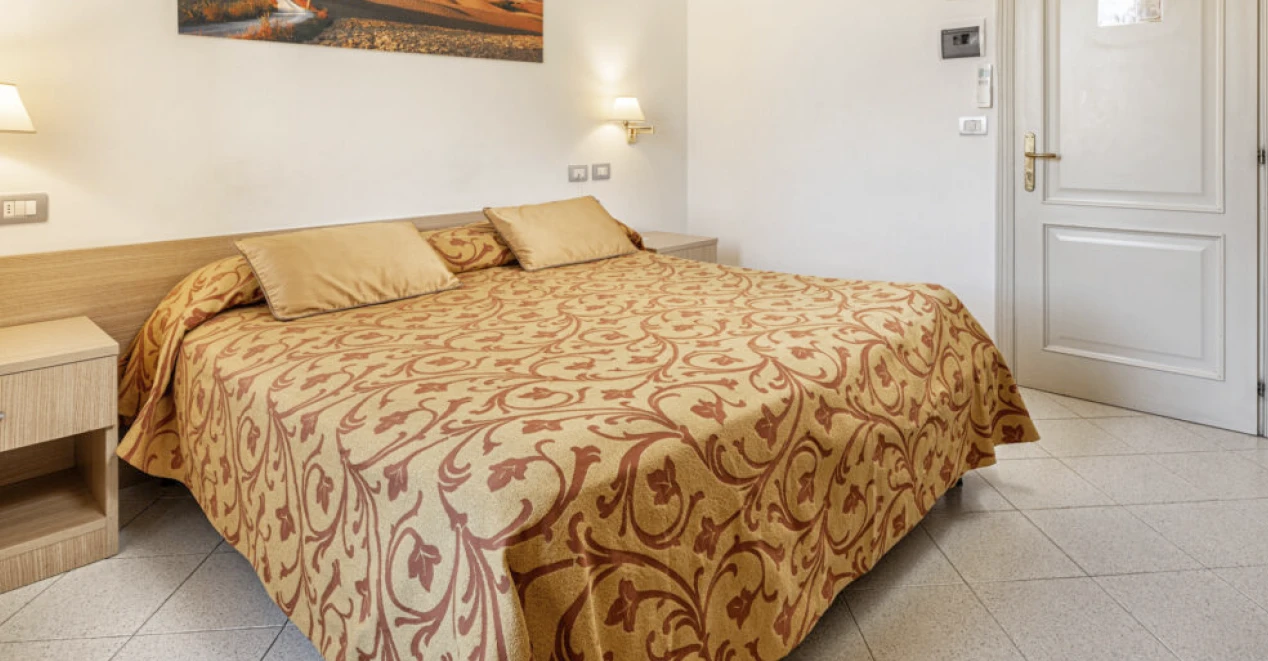
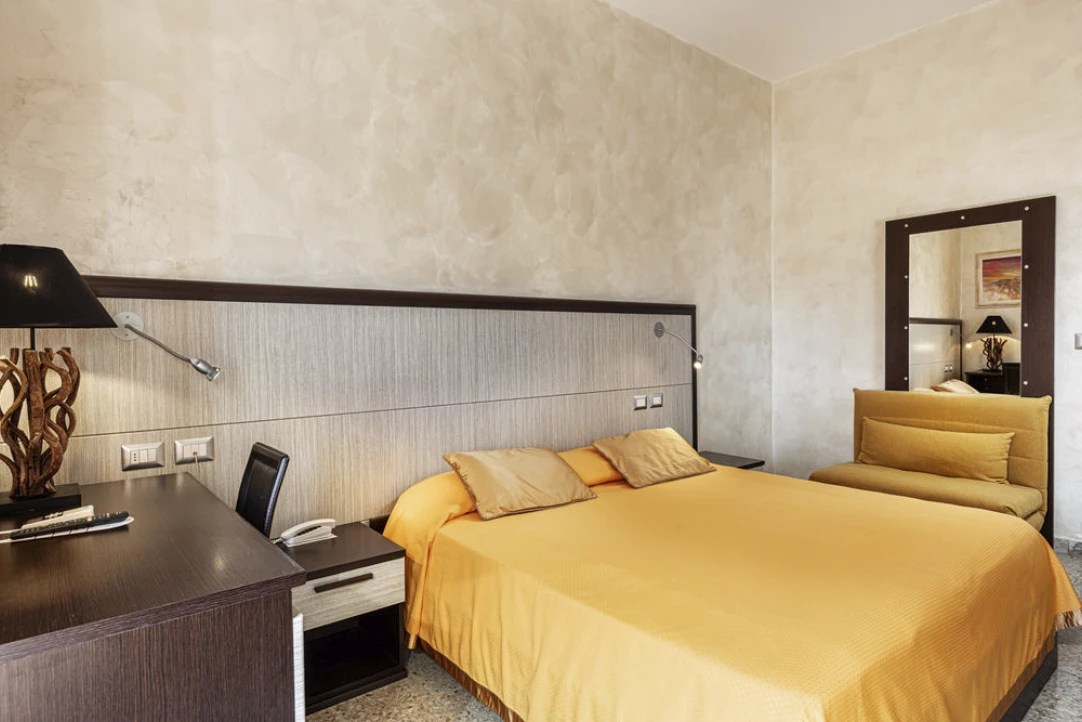
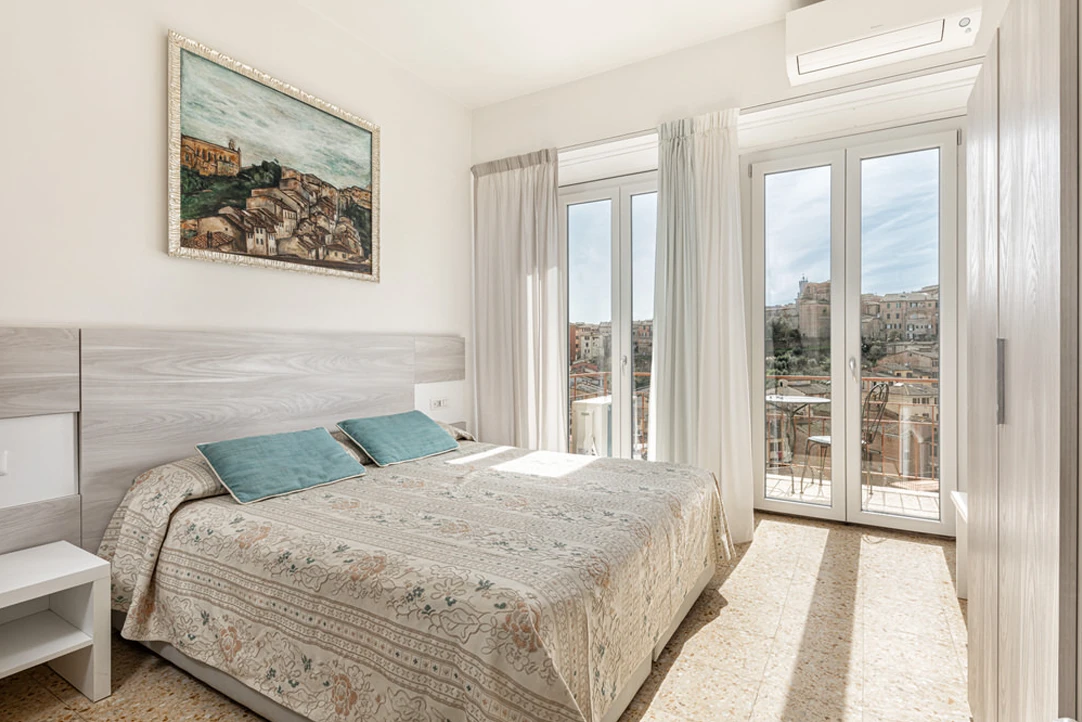
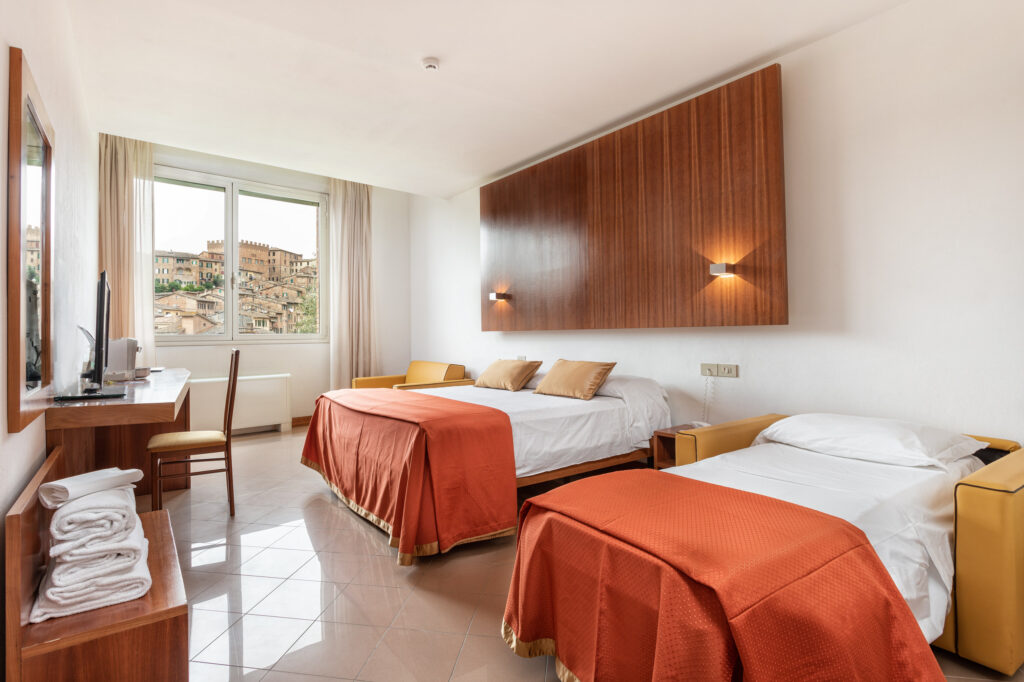
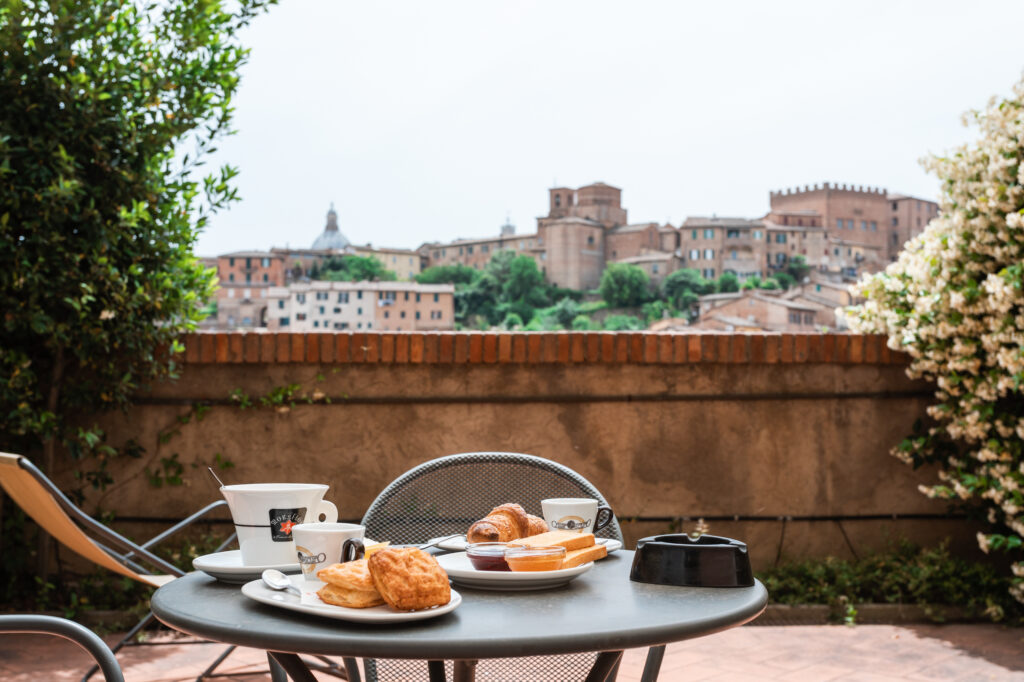
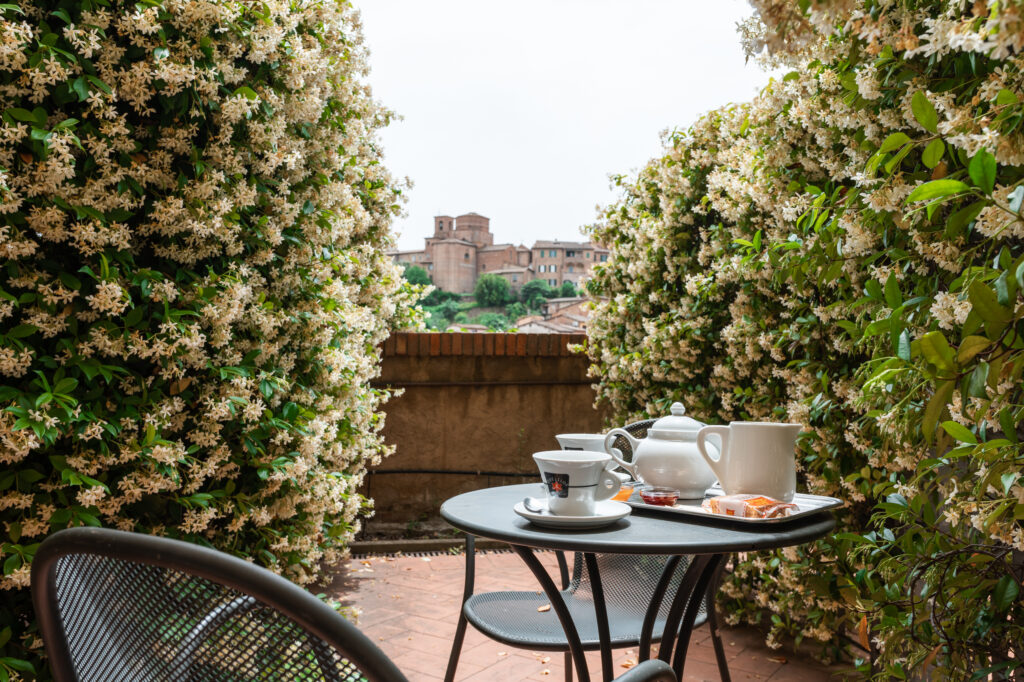
Regarding the rooms, Hotel Minerva offers 56 rooms divided into various types (Easy Economy, Elegant Standard, Superior, Junior Suite), many of which have panoramic views over the rooftops and basilicas of Siena . The rooms are equipped with air conditioning, free Wi‑Fi and modern comforts, while maintaining a touch of sober elegance . Some rooms also have a private balcony – imagine waking up and opening your balcony with a view over the city bathed in morning light ! Speaking of wake‑ups: each day a rich buffet breakfast awaits you, with a wide choice of fresh products . The hotel offers Italian and international breakfast, with fragrant croissants, homemade cakes, jams, as well as sliced meats, Tuscan cheeses, eggs and fruit – there is something for all tastes . In the beautiful season you can have breakfast outdoors in the panoramic garden, surrounded by flowers and with Siena before your eyes: a simple but magical experience that will remain among the best memories of the trip . If you prefer convenience, you can also request breakfast in your room – for a small supplement they will bring it directly to your private balcony, for a relaxing wake‑up .
Hotel Minerva also has an in‑house bar that is always open, where you can enjoy an afternoon espresso or an evening glass of Chianti . Next to the bar there is a relaxation room with comfortable sofas and art books: a perfect corner to browse a guide (perhaps precisely about Siena and the Piccolomini Library!) and plan your visits . For those with business needs, there is ultra‑fast Wi‑Fi throughout the property and even a meeting room equipped with natural light and a view of the historic roofs, accommodating up to 40 people . But do not worry, the atmosphere always remains more holiday‑like than office‑like . The hotel furnishings combine classic Tuscan elements (such as terracotta floors and exposed beams in some rooms) with contemporary artistic touches: the hotel rotates a small art gallery with works by modern Sienese painters hung in the corridors . This fusion of past and present creates a truly unique and pleasant environment, where even downtime is a pleasure .
Is Hotel Minerva suitable for families with children?
Absolutely yes: the Minerva is a family‑friendly hotel and it shows through services designed precisely for those travelling with the little ones . First of all, upon request the hotel provides cots and extra beds in the room, so the youngest children can sleep comfortably near their parents . You can also request a bottle warmer or a steriliser, useful for preparing baby food and bottles at any time . At breakfast you will find a dedicated baby menu with options suited to children’s tastes, so they start the day with a smile . In the common areas there is a small indoor play room with board games and some toys, where children can entertain themselves safely . Knowing that the kids are happy and engaged allows parents to relax and enjoy the holiday better – and that is precisely the philosophy of Minerva .
The hotel, though in the centre of Siena, is lucky enough to be close to green areas and playgrounds: for example, just steps away are two public playgrounds where you can take the kids to have fun outdoors . But the gem for families is the proximity to the Orto de’ Pecci, a fascinating medieval garden located in a green hollow right below Piazza del Campo: here you will find farm animals (geese, donkeys, goats) that will delight the little ones, as well as meadows where they can run freely . The Orto de’ Pecci is reachable on foot from the hotel in about 15 minutes and is an excellent idea for a different afternoon, immersed in nature yet in the city centre . Back at the hotel, the staff is very attentive to family needs: do not hesitate to ask for suggestions about child‑friendly restaurants or events in the city for families – they will be happy to help you (they often organise small surprises for the kids, such as coloured pencils and drawing books to use in the hotel) . Finally, Hotel Minerva offers a safe and quiet environment where parents can be at ease – the rooms are spacious enough to move around with a pushchair, and the absence of noisy disturbances at night ensures peaceful sleep for adults and children alike . In conclusion, Hotel Minerva is the ideal choice for families visiting Siena: it combines comfort, dedicated services and a warm welcome that will make you and your kids feel truly welcome .
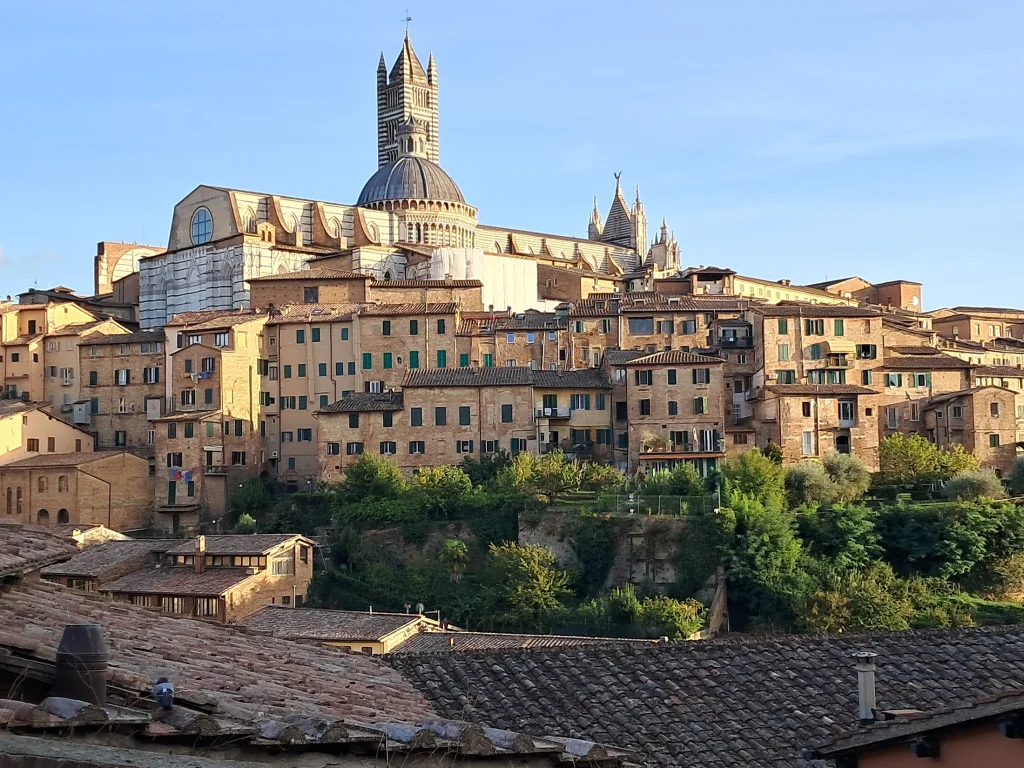
A panoramic view from the garden of Hotel Minerva: having breakfast outdoors with the rooftops of Siena and its towers on the horizon is an unforgettable experience for the whole family .
The Wonders of Siena Just Steps from Hotel Minerva
By staying at Hotel Minerva, you will find yourself in the right place to explore the entire historic centre of Siena comfortably on foot . We have already mentioned the short distances: the city is compact, and from the hotel you will easily reach both the main monuments and some lesser‑known but fascinating places . Below we list the must‑see attractions of Siena, all located within a walk from Hotel Minerva, with their approximate distances and reasons why they are worth visiting .
| Attraction | Distance from Hotel Minerva (on foot) | Why visit |
|---|---|---|
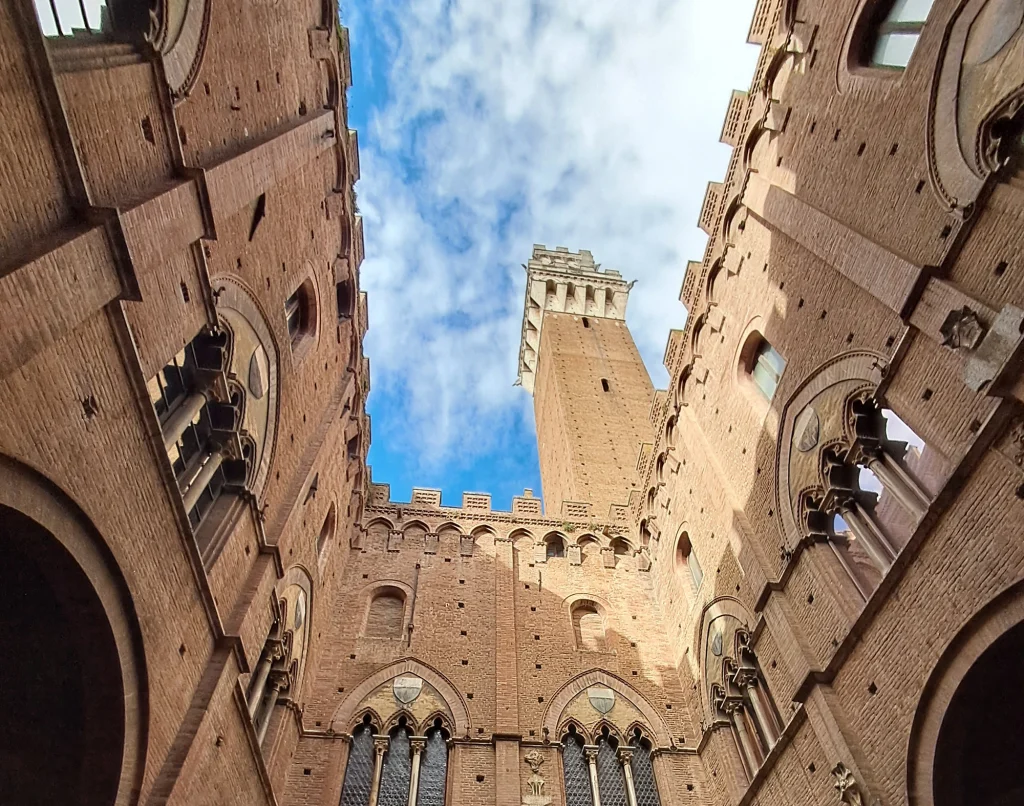
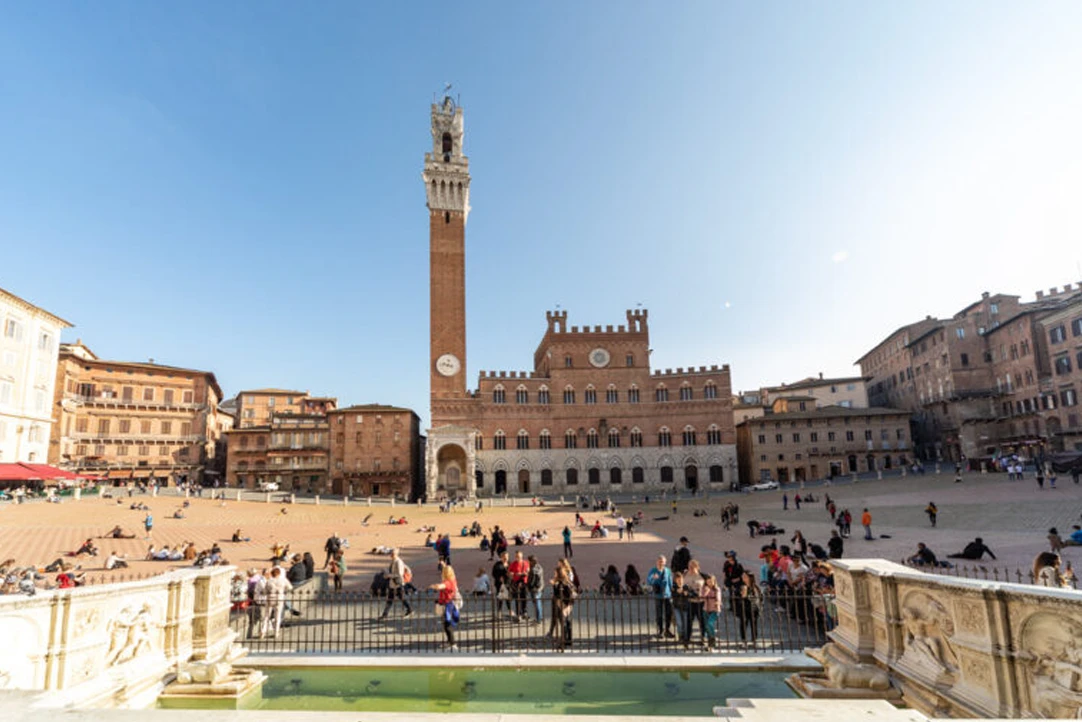
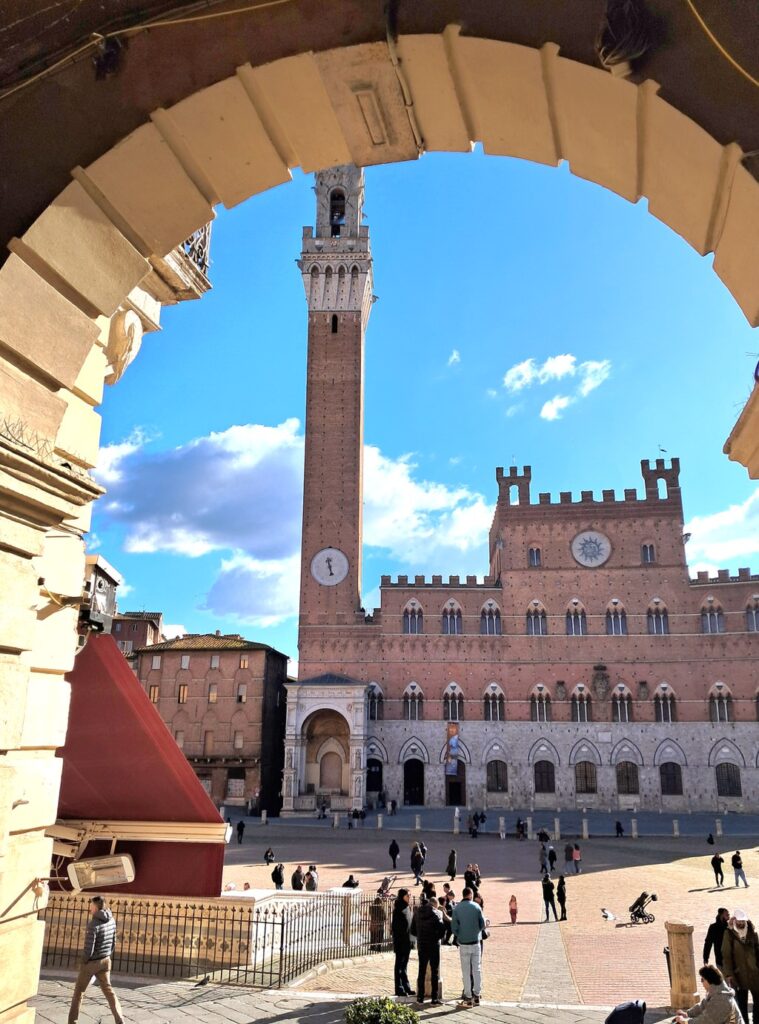
| Piazza del Campo & Torre del Mangia | ~1.2 km (15 minutes) | The heart of Siena and one of the most beautiful medieval squares in the world, famous for its shell shape and the Palio held here twice a year. Climbing the 102 m Torre del Mangia offers breathtaking views over the city’s rooftops. The atmosphere is unique, especially at sunset when the bricks turn red . |
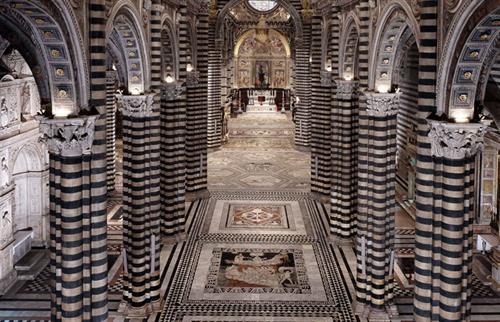
| Duomo of Siena (Cathedral of St Mary of the Assumption) | ~1.4 km (17 minutes) | A masterpiece of white‑and‑black marble Gothic architecture. It houses works by Michelangelo, Donatello, Bernini. Do not miss the inlaid floor (56 biblical and symbolic scenes) visible in its entirety only at certain times of the year. Inside the Duomo is also the Piccolomini Library . |
| Basilica of San Domenico | ~600 m (8 minutes) | An imposing brick church linked to St Catherine of Siena: inside it preserves the relic of the saint’s head and frescoes narrating her life. From the terrace behind San Domenico you enjoy a splendid view of the Duomo and the city centre . |
| Fortezza Medicea (Fortress of Santa Barbara) | ~1 km (12–13 minutes) | A massive 16th‑century fortress surrounded by tree‑lined bastions. Today it is a public park ideal for walks and jogging. Its panoramic walls allow you to admire Siena from above, and it often hosts events, summer concerts and the municipal wine shop (great for tasting local wines) . |
| Orto de’ Pecci | ~1 km (15 minutes) | An unusual green corner: a medieval garden and urban park in a valley below the historic centre. Perfect for relaxing amid nature and animals (it has a small enclosure with donkeys, goats, peacocks). From the meadow you enjoy a unique view of Siena’s profile, with the Torre del Mangia and the Duomo rising above the green . |
| Palazzo Pubblico & Museo Civico (in Piazza del Campo) | ~1.2 km (15 minutes) | The 14th‑century seat of Siena’s government houses frescoed rooms of immense value. In the Museo Civico you can admire the famous Good Government cycle by Ambrogio Lorenzetti, Simone Martini’s Maestà and other works that tell the story and art of the Sienese Republic . |
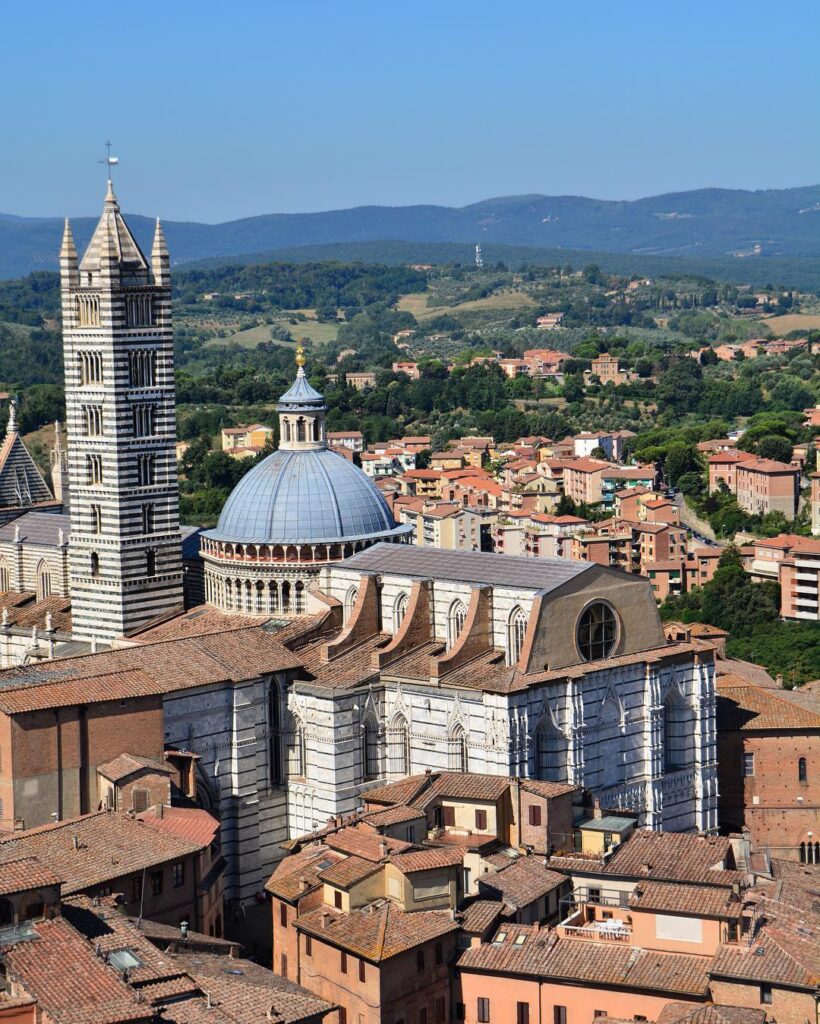
These distances and times are calculated on foot; keep in mind that Siena’s centre is hilly, so some routes may be uphill . But every effort will be rewarded by the beauty of what you will see! As you can see from the table, by staying at the Minerva you can easily build daily itineraries that include the most famous places in Siena: Piazza del Campo to start the day, a visit to the Duomo with the Piccolomini Library, a stop at the Basilica of San Domenico, and perhaps an afternoon relaxation at the Fortress or the Orto de’ Pecci . All without having to take a car or bus, simply by walking through Siena’s characteristic alleys and discovering unexpected panoramic views along the way . The historic centre of Siena is a UNESCO World Heritage site and walking through it is like strolling through an open‑air museum: you will encounter ancient fountains, noble palaces with coats of arms, historic shops… . A tip: while heading from the Minerva towards Piazza del Campo, take Via Banchi di Sopra or Via di Città, streets full of little shops and cafés where you can stop for a gelato or espresso. And do not forget to look up: often, among the rooftops, the view of the cathedral’s dome and striped bell tower will surprise you .
For those who have more days available, there are also smaller museums and churches worth visiting in Siena: for example the Pinacoteca Nazionale (with paintings from the medieval and Renaissance Sienese school), the Casa Sancta Caterina (sanctuary on the house where St Catherine was born), the Basilica di San Francesco (close to the hotel, with frescoes and miraculous hosts) and the Santa Maria della Scala museum complex opposite the Duomo (ancient hospital turned archaeological and art museum, very interesting for children for its mysterious underground areas) . At the Hotel Minerva reception you will find maps and leaflets on these “extra” attractions – you can ask the staff to help you organise visits according to your interests .
Day Trips outside Siena: Villages and Towns to Visit in the Surroundings
Siena is surrounded by a territory of incomparable beauty: hills dotted with cypresses, vineyards and olive groves as far as the eye can see, medieval villages untouched by time . If you stay a few days longer, it is certainly worth dedicating one or more day trips to the surroundings of Siena. Thanks to the central location of Hotel Minerva (and the ease of access by car or closeness to the station), it is convenient to set off on day trips and return in the evening to your comfortable lodging . Here are some of the best destinations reachable within about an hour from Siena, with reasons why you should not miss them :
| Destination | Distance from Siena (approx. driving time) | Highlights |
|---|---|---|
| Florence | ~75 km (1 h 15′) | The cradle of the Italian Renaissance. Famous for the Cathedral of Santa Maria del Fiore with Brunelleschi’s dome, Ponte Vecchio, the Uffizi Gallery (works by Botticelli, Michelangelo, Leonardo) and much more. Florence is a world‑class city of art: an unmissable day trip if you have time, easily doable from Siena (there are frequent Siena–Florence buses and trains) . |
| San Gimignano | ~45 km (1 h) | Charming medieval town known as the “Manhattan of the Middle Ages” for its tall towers (13 still stand). The historic centre is a UNESCO site: walking through its streets feels like going back to the 14th century. Try the award‑winning gelato in Piazza della Cisterna. Wonderful views of the surrounding hills from the towers . |
| Monteriggioni | 15 km (20′) | A perfectly preserved medieval castle, also mentioned by Dante. Monteriggioni is a tiny walled town: walking along its walls (partly accessible) gives beautiful views. It seems like a fairytale place, ideal for children (they can imagine knights and ladies in the castle). It can be visited in a few hours . |
| Pienza (Val d’Orcia) | ~50 km (1 h) | Delightful Renaissance town planned as an “ideal city” by Pope Pius II (a Piccolomini!) in the mid‑1400s. Famous for its panoramic views over the Val d’Orcia (a “balcony city”) and for Pecorino di Pienza cheese, renowned worldwide. Picturesque alleys with romantic names (Via dell’Amore, Via del Bacio) and splendid palaces such as Palazzo Piccolomini with suspended gardens . |
| Montalcino (Val d’Orcia) | ~40 km (1 h) | Ancient town on a hill, surrounded by vineyards that produce the famous Brunello di Montalcino wine. Visit the powerful 14th‑century fortress (panoramic view over the rows of vines) and the many wine shops where you can taste Brunello. Nearby is the Abbey of Sant’Antimo, a mystical Romanesque church immersed in silence . |
| Chianti Classico (route through Castellina, Radda, Gaiole) | ~30 km (40′ to Castellina) | The Chianti region, between Siena and Florence, offers a journey through gentle hills, rows of vines and enchanting villages. In Castellina in Chianti you can visit the fortress and a peculiar Etruscan tunnel. Radda and Gaiole are other notable stops, near castles and rural churches. Along the way, stop for a tasting at a winery: Chianti Classico with its black rooster emblem is a symbol of these lands. Postcard landscapes in every season, especially in late spring and autumn . |
(The driving times are indicative; some destinations, like Florence, can also be reached comfortably by public transport. Ask the hotel staff for timetables and information on buses or organised tours: often Hotel Minerva can help you book excursions or provide road maps to explore on your own) .
As indicated, within less than an hour’s trip from the Minerva you can find yourself among the towers of San Gimignano, on the walls of Monteriggioni or immersed in the postcard landscapes of the Val d’Orcia with its rows of cypresses . This makes Siena an excellent base for exploring southern Tuscany . If you travel with children, some particularly recommended trips are Monteriggioni (for the fairy‑tale castle atmosphere – there is also a small armour museum that children love) and a farm in Chianti where you might have a snack of bread and olive oil and watch the grape harvest (in autumn) . For couples seeking romance, Pienza at sunset or a wine tour in Montalcino can be unforgettable moments . Florence deserves at least a full day: leave early in the morning and return in the evening, happy after admiring Michelangelo’s David or the Ponte Vecchio over the Arno . Finding again the quiet of Siena and your hotel after the excursion will make you appreciate even more the serenity of the city of the Palio .
Hotel Minerva, with its parking and proximity to the roads leading out of the city, is an excellent starting point for these excursions: think that from the hotel garage you reach the Siena–Florence link road in a few minutes, or you can take the scenic Cassia road toward the Val d’Orcia . And on your return, you can leave the car and take a short stroll to the centre for dinner in a trattoria without worrying about driving at night . The hotel staff will be glad to give you driving directions or recommend local tour guides for private tours . In short, Siena and its surroundings will offer you a rich array of experiences: art, gastronomy, landscapes, history – there is truly something for everyone, including families .
Conclusion
The Piccolomini Library has proven to be a true hidden treasure, a Renaissance jewel that enriches the already extraordinary visit to the Duomo of Siena. We have discovered together its fascinating history linked to the Piccolomini family, admired in our minds Pinturicchio’s frescoes and the illuminated codices, and learned useful advice for making the most of it – from the ideal moment to enter to precautions when visiting with children. We hope that, through the questions and answers of this guide, you have become even more passionate about this unique place in the world . Siena is a city that never ceases to surprise: beyond the most famous attractions, it hides art treasures like the Piccolomini Library, ready to leave an indelible memory in visitors . A successful trip, however, also consists of comfort and relaxation: that is why we presented Hotel Minerva, a hotel that combines a central location, quality services and a family atmosphere . Whether you are a couple on a romantic getaway, a group of friends on a cultural exploration or a family with curious children, the Minerva will pamper you and make you feel at ease, providing the perfect headquarters from which to set out every day to discover Siena and Tuscany . Imagine waking up in a room with a view of the medieval rooftops, having breakfast in the garden admiring the city, then going out and within minutes finding yourself in front of Siena’s masterpieces – such as the Piccolomini Library itself. This is the convenience that transforms a vacation into an unforgettable experience .
Now all that remains is to wish you a good journey to Siena, with the certainty that a rich adventure awaits you among art, history, flavours and breathtaking views. Let yourself be conquered by the quiet poetry of this city: walking through its streets you will discover that every corner has a secret to reveal, every stone an anecdote to tell. And when you enter the colourful penumbra of the Piccolomini Library, raise your eyes toward its golden ceiling and breathe in the air of history, you will understand why we called it a “hidden treasure.” It will be one of those magical moments that only travel can provide – to keep in your memories once you return home .