
Introduction
Poggibonsi is a Tuscan town of roughly 30 000 inhabitants situated in the Alta Val d’Elsa between Siena and Florence . The historian Giovanni Villani called it the “omphalos of Tuscany” because major historic routes – the Via Francigena and the Via del Sale – have crossed here for centuries . Today the rebuilt historic centre, established after the destruction of the medieval city of Poggiobonizio in 1270, preserves fragments of medieval walls and an unfinished Renaissance fortress . The surrounding hills of vineyards and olive groves give the town an authentic atmosphere . Thanks to excellent road and rail links, Poggibonsi makes a rewarding day trip from Siena, and the Hotel Minerva (in Siena’s historic centre) is presented in this guide as the ideal base for exploring the Val d’Elsa .
A short history
Humans have inhabited the area since Etruscan and Roman times . In 1155 the Counts Guidi founded the “Città di San Lucchese” (also called Poggiobonizio) on a fortified hill. The city became prosperous but was destroyed by Florentine troops in 1270 . The current town was rebuilt shortly after on nearby hills and enclosed by medieval walls . For centuries Poggibonsi lay on the border between the rival republics of Siena and Florence; after Siena fell in the mid‑16th century, Lorenzo de’ Medici began constructing a huge fortress on Poggio Imperiale (never finished) to control the area . The town’s economy flourished in the 19th century with the opening of the Siena railway, and after the Second World War it became the chief industrial centre of the Val d’Elsa, renowned for furniture production and the commerce of wine and oil .
What to see in Poggibonsi
Poggibonsi’s attractions mix medieval ruins, Renaissance fortifications, churches, castles and nature. The highlights are:
Fortezza Medicea di Poggio Imperiale
This unfinished Renaissance fortress, designed in 1484 by Antonio and Giuliano da Sangallo for Lorenzo the Magnificent, dominates a hill above the town . Although it was never completed, the bastions and walls remain, and the site now serves as a public park where summer events are held . Walking along the ramparts provides sweeping views of the Elsa valley and the Poggibonsi skyline . A restaurant with panoramic terrace has opened inside the fort.
Archeodromo di Poggio Imperiale
Within the fortress park is an open‑air archaeological park recreating an early medieval village . Every Sunday costumed re‑enactors demonstrate ancient crafts and daily life . The site includes reconstructed huts and displays archaeological finds, and entrance is free .
Fonte delle Fate
Hidden for centuries under earth from the fortress works, this monumental travertine fountain dates from the 14th century. Comprising six arches adorned with sculpted decoration, it is one of the best‑preserved examples of medieval civic architecture in the area . Today it sits in a landscaped park filled with modern sculptures and forms part of the Elsa River Park along the Via Francigena .
Convent and Church of San Lucchese
Situated on a hill amid olive groves, this large conventual church is among the oldest in the area; the present structure, with a gabled façade and Moorish‑style bell tower, dates from the Middle Ages . Tradition holds that the hermit Lucchese (later canonised) retired here, and the church is dedicated to him . The single Gothic nave houses frescoes and terracotta works, including sculptures by Giovanni della Robbia, and the cloister affords a fine view of the fortress and town .
Collegiata di Santa Maria Assunta
The parish church of the historic centre was rebuilt in neoclassical style in the late 19th century . Its sober façade hides an elegant three‑aisle interior adorned with columns. The church preserves an ancient 1341 baptismal font and a painting of the Resurrection by Francesco Botticini . Entrance is free.
Castello di Badia (Poggio Marturi)
Five kilometres from the centre, on the banks of the Elsa, stands this romantic castle originally built in the 9th century and remodelled in the 19th century by architect Marcello Galli Dunn . Its clock tower and crenellated walls give it a fairy‑tale profile; although privately owned and operated as lodging, its exterior and the views over the Chianti landscape are worth a stop .
Rocca di Staggia
Just outside Poggibonsi lies this well‑preserved medieval castle, now run as a museum . Guided tours (for a small fee) lead visitors up the towers to learn about the Via Francigena pilgrims, Templar legacies and Renaissance influences . From the battlements you can admire the surrounding countryside .
Castello Magione
Along the road towards Siena stands Castello Magione, a 12th‑century mansion built by the Knights Templar . Listed among the “Thousand Wonders of Italy” in 2012, it hosts cultural events and retains its Romanesque church and remnants of the pilgrims’ hospital .
Museo di Paleontologia “Francesco C. Marmocchi”
Housed in the medieval Palazzo Pretorio, this small museum (created by local volunteers) exhibits fossils and archaeological finds from the region . Highlights include whale bones, horse and sirenian fossils from the Valdarno and the skeletons of two adults and a child from the Neolithic tomb of Cucule di Staggia . Exhibitions are divided into sections on palaeontology, human evolution and archaeology, and entry is free or by donation .
Riserva Naturale del Bosco di Sant’Agnese
This nature reserve lies halfway between Poggibonsi and Castellina in Chianti. It preserves a millennia‑old cypress grove that is a vestige of the ancient Etruscan forest . The reserve extends between the church of Sant’Agnese and Mediterranean scrub woods, offering peaceful walks .
Contemporary art and festivals
Modern art unexpectedly enriches the historic centre: slender “Iron Men” sculptures by Antony Gormley stand in the streets, and the “Dormienti” group by Mimmo Paladino rests in the Fonte delle Fate . At the end of August, Poggibonsi hosts the Festa della Gradinata, with medieval re‑enactments and regional dishes, while markets and village festivals celebrate local wine, wild boar and mushrooms .
Food and local experiences
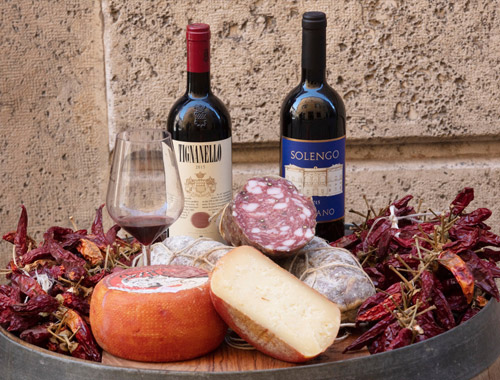
The cuisine of Poggibonsi reflects the traditions of Tuscany and Chianti. Specialities include fennel‑flavoured salami (finocchiona), lard, aged pecorino sheep’s cheese, local extra‑virgin olive oil and home‑baked bread . Typical dishes to try are:
- Pici all’aglione – hand‑rolled spaghetti served with a garlicky tomato sauce .
- Ribollita – thick Tuscan vegetable and bread soup .
- Grilled Chianina steak – from the local giant white breed of cattle .
- Wild boar stew or roast – slow‑cooked meat flavoured with herbs .
- Sienese sweets such as ricciarelli and panforte .
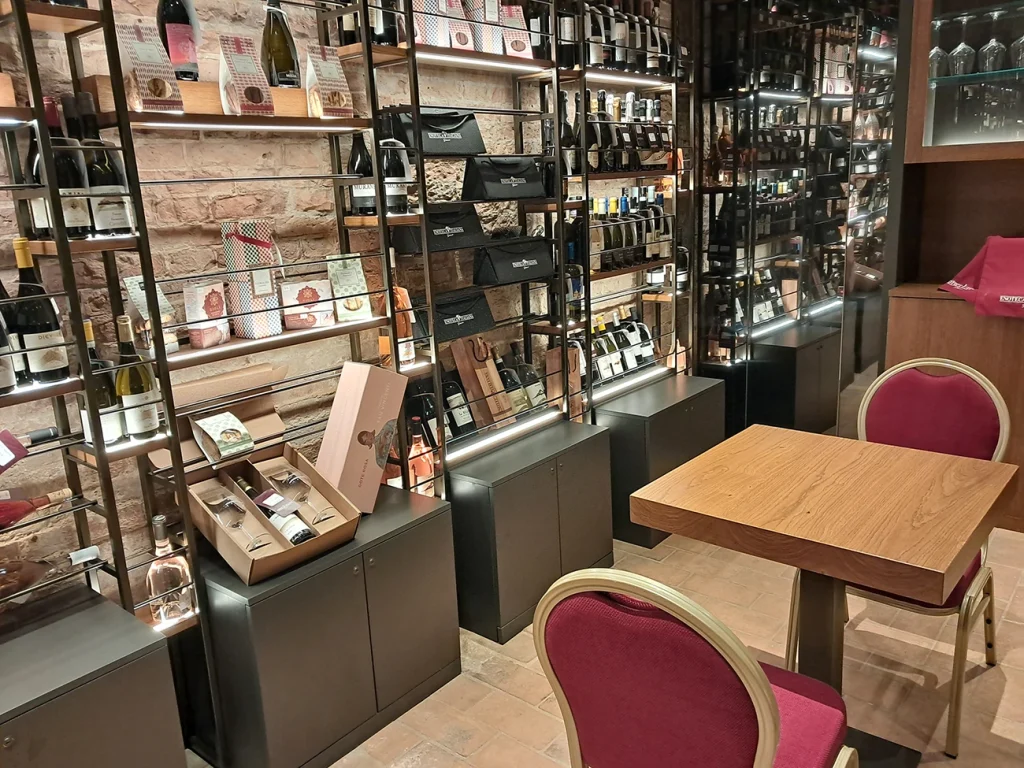
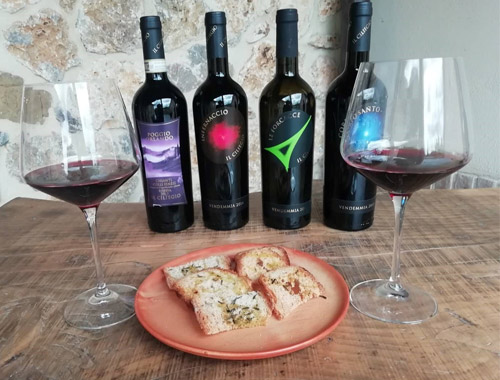
The surrounding hills produce Chianti Colli Senesi wines and other Tuscan labels . Wine bars in town offer tastings of local wines and pecorino accompanied by bruschetta . To savour local flavours al fresco, pick up a picnic basket of regional products and enjoy it on the ramparts of the fortress . Recommended eateries include the historic Antica Osteria di Bazzino, Trattoria 1126 and La Galleria (specialised in seafood), as well as bars such as Al Passo Caffè and the wine bar I Love You . The Tuesday morning market is the place to buy cheeses, charcuterie and fresh produce .
Getting there and practical information
Poggibonsi is easily reached from Siena (~25 km): take the RA3 Siena–Firenze dual carriageway and exit at “Poggibonsi Sud”; the drive takes around 25 minutes . From Florence the same dual carriageway leads to the “Colle Val d’Elsa Nord” exit in about 40 minutes . Because the historic centre is a traffic‑restricted zone, visitors should park near the medieval walls – paid blue‑line parking is available on Viale Ovest, Viale della Rimembranza and other streets . There are also free or paid municipal car parks close to the Fortezza and the Fonte delle Fate . Guests of the Hotel Minerva in Siena benefit from a private garage .
Public transport between Siena and Poggibonsi is frequent. The TIEMME bus line 130 (or 131 with a change) runs from Piazza Gramsci in Siena to Poggibonsi in roughly 30–50 minutes, depending on the route and stops . Alternatively, regional trains on the Siena–Florence line serve the Poggibonsi–San Gimignano station; from there it is a short walk or local bus ride to the centre . Cyclists will appreciate the hill‑country roads, and local buses connect different parts of town .
Most monuments and churches in Poggibonsi are free to visit or require only a donation . The Archeodromo and the Rocca di Staggia may have seasonal hours or guided tours with modest fees【500409115886306†L241-L344】. Restaurants and cafés generally open for lunch (12:00–14:30) and dinner (19:30–22:30), while shops close for a midday break . Always verify current opening times on official websites and consider reserving tables in popular osterias, especially in summer weekends .
Where to stay
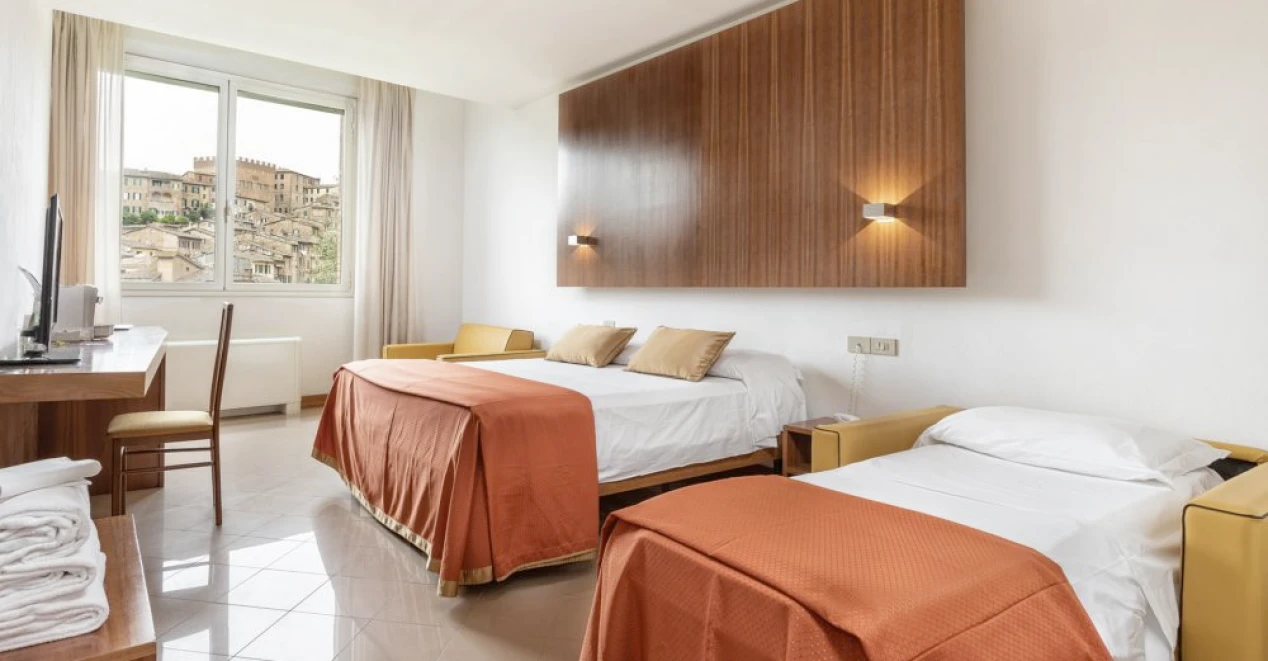
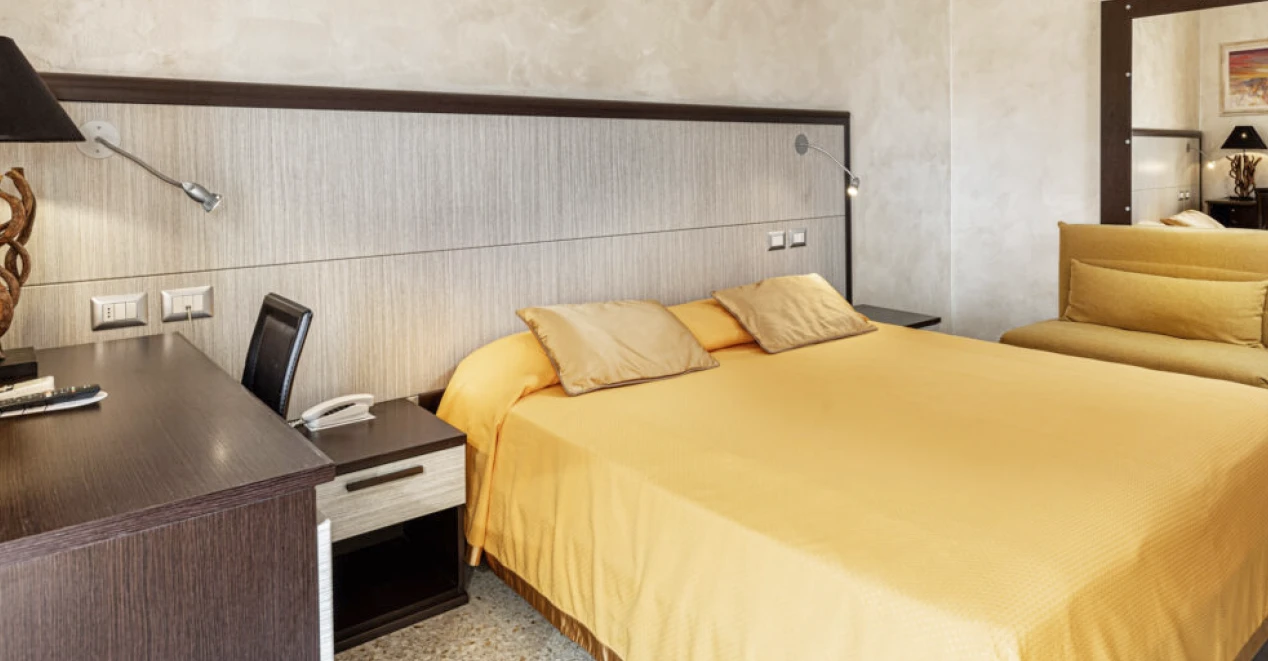
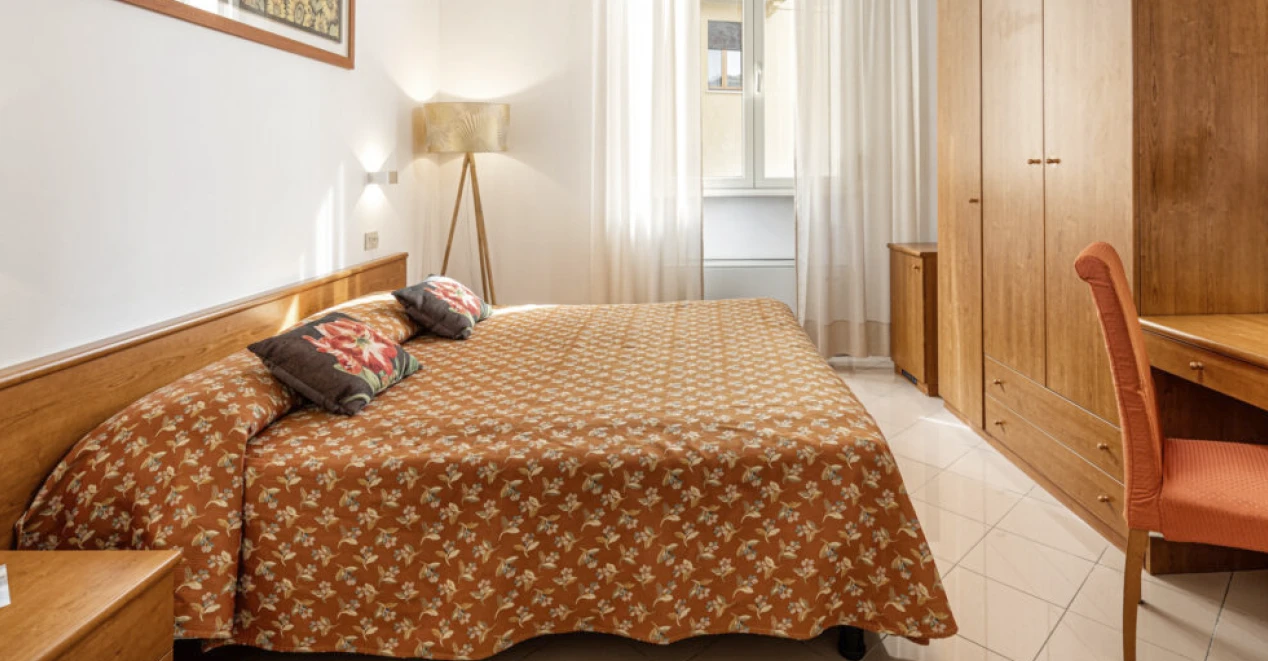
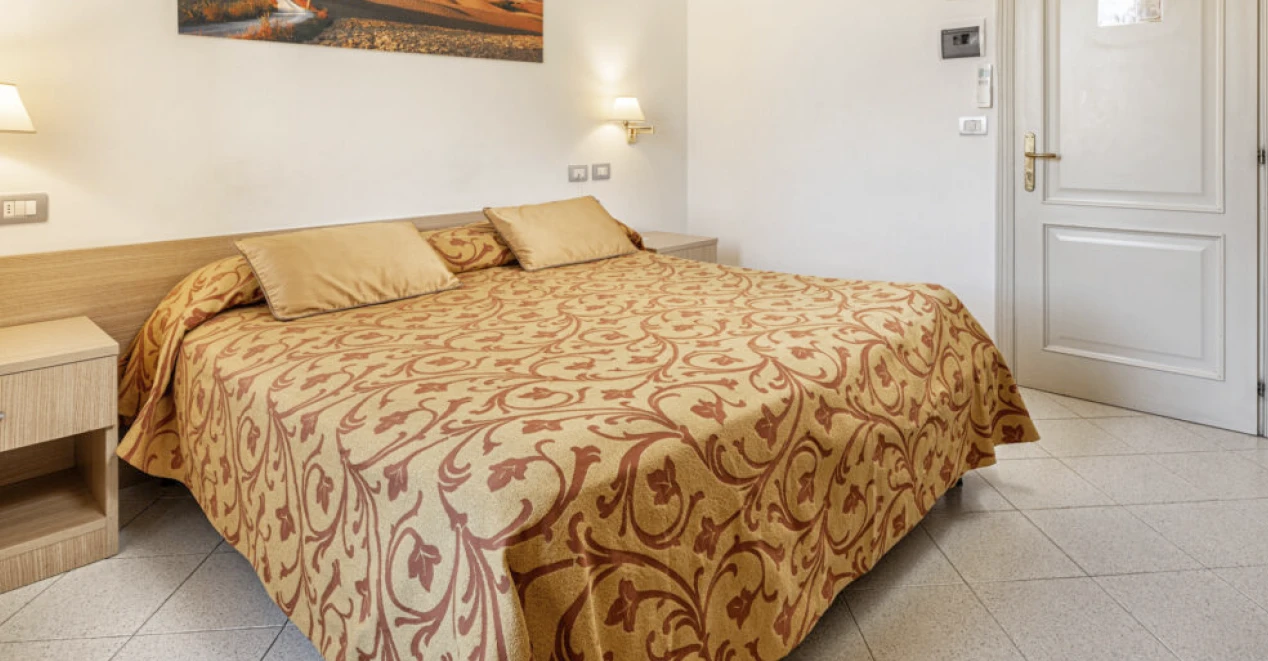
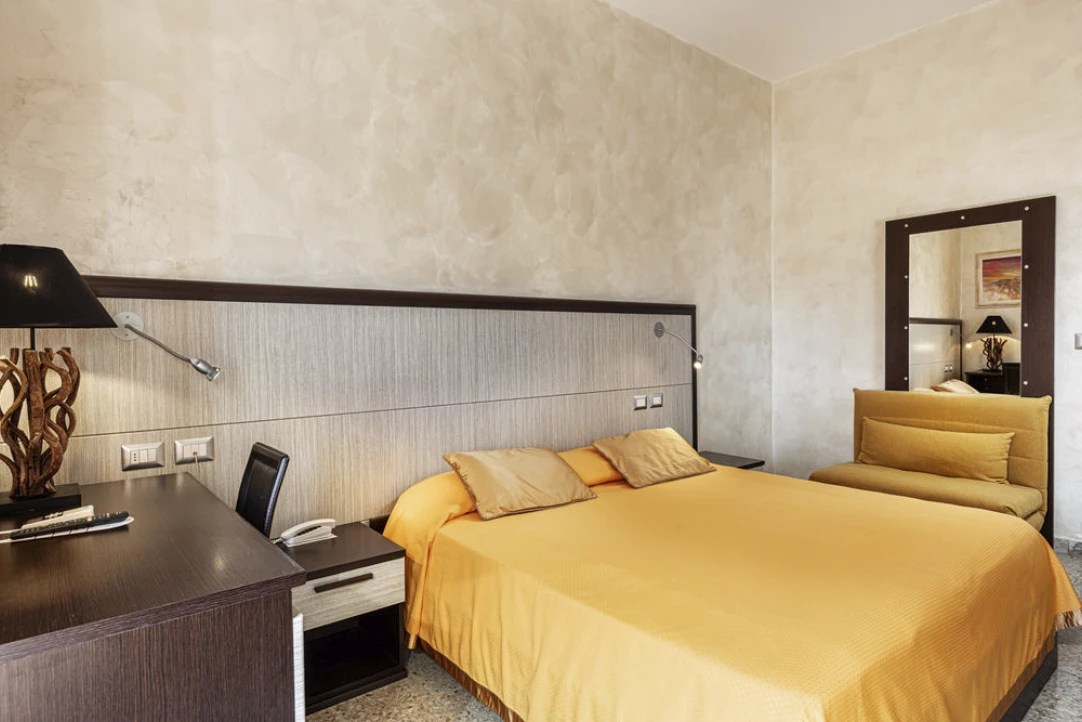
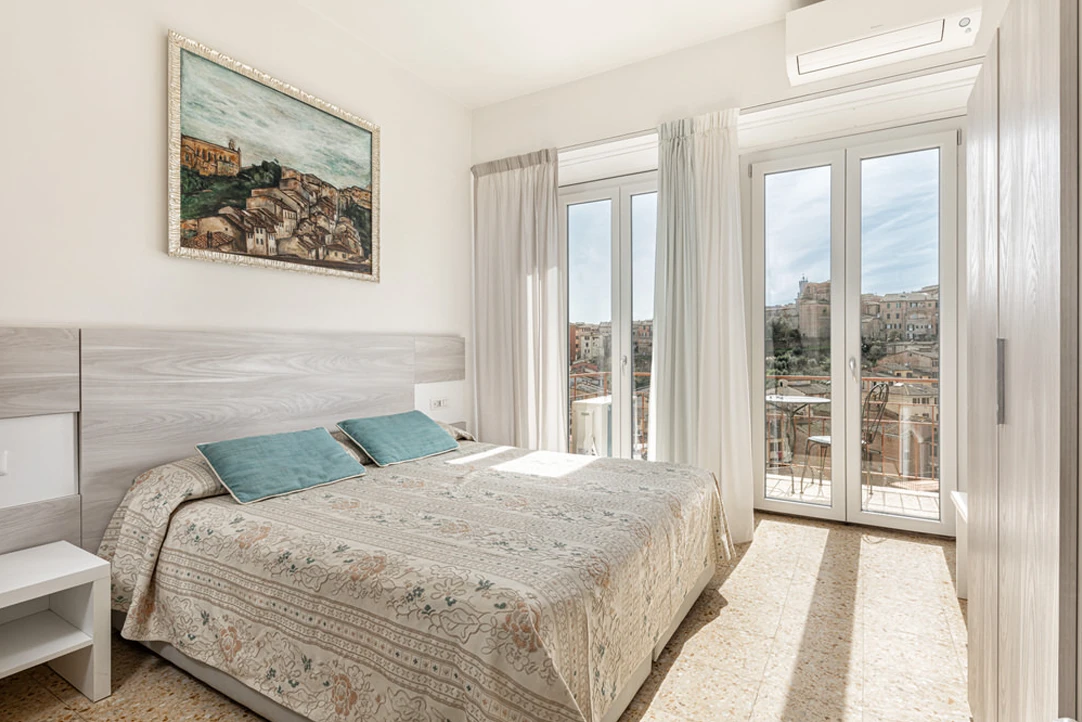
Poggibonsi offers hotels and agriturismi among the hills, but as the article points out, many travellers prefer to use Siena’s Hotel Minerva as a base. Located within the walls yet outside the restricted zone, the hotel features comfortable rooms, a Tuscan breakfast, a bar lounge and a private garage. From here you can reach Poggibonsi in about 25 minutes by car or 30–50 minutes by bus without changing accommodation .
Suggested day itineraries from Siena
Using Siena as your base, you can organise varied day trips into the Val d’Elsa and beyond:
| Day | Destination | Key activities | Estimated duration |
|---|---|---|---|
| 1 | Poggibonsi & Borgo Marturi | Visit the Medicean Fortress and Archeodromo (2–3 hours), then walk to the Fonte delle Fate and the Convent of San Lucchese (1–2 hours). In the afternoon explore the medieval centre, the Collegiata di Santa Maria Assunta and finish at the Castello di Badia for sunset before returning to Siena . | 6–8 h |
| 2 | San Gimignano & Colle Val d’Elsa | Depart for San Gimignano (≈50 min by car/bus) to climb the towers and visit its civic museum (3–4 h). Enjoy lunch and gelato, then drive 15 km to Colle Val d’Elsa to explore its walls and crystal workshops . | 8–10 h |
| 3 | Monteriggioni & Chianti | Spend the morning in Monteriggioni (13 km from Siena) walking the walls. Continue into Chianti to Castellina or Radda for lunch and wine tastings . | 8–10 h |
| 4 | Volterra or Val d’Orcia | Choose between Volterra (≈80 km) for Etruscan monuments and the alabaster museum, or the Val d’Orcia for Renaissance villages such as Pienza, Bagno Vignoni and Montepulciano . | 10–12 h |
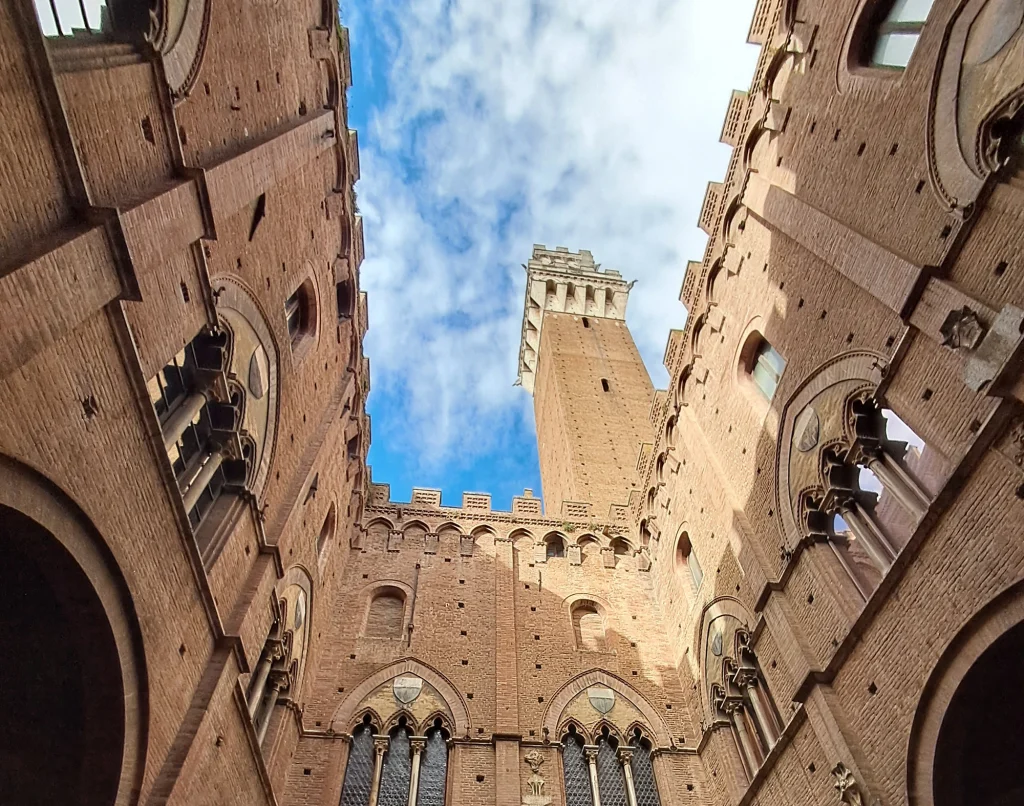
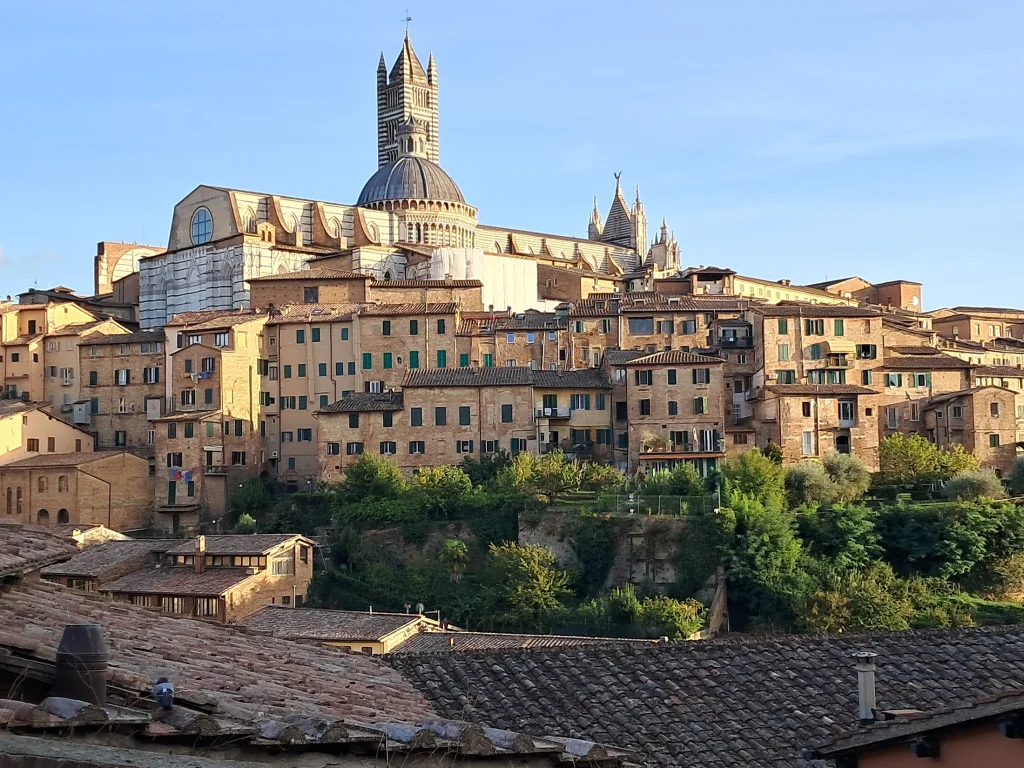
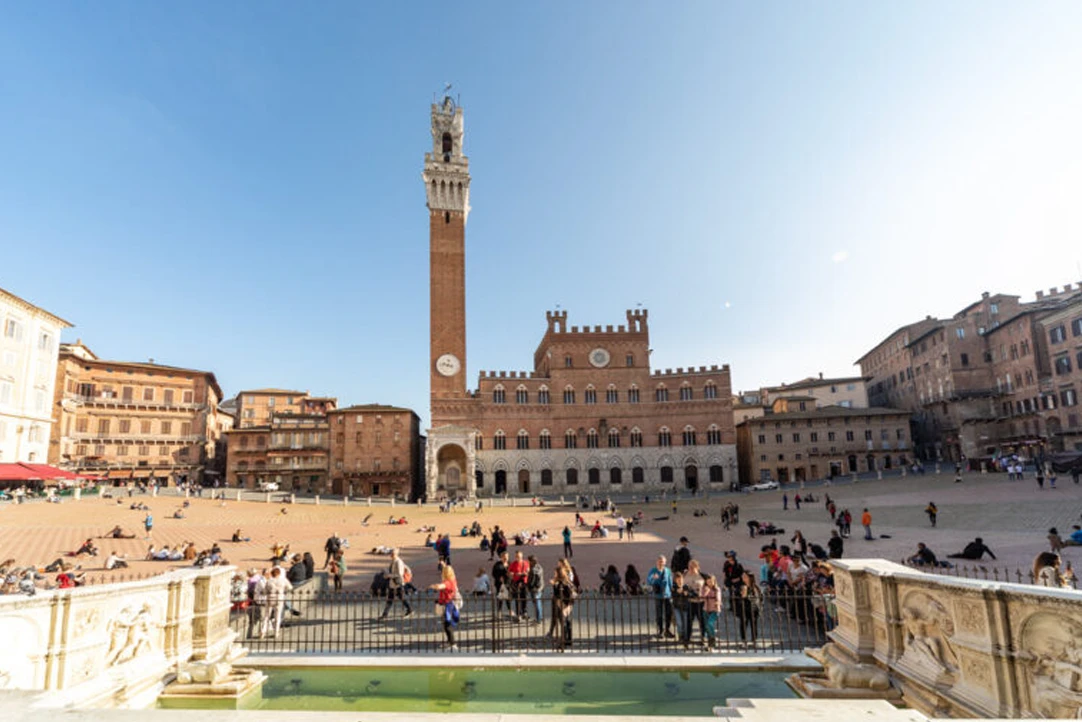
| 5 | Siena | Dedicate a full day to Siena’s historic centre – Piazza del Campo, Torre del Mangia, the Duomo and the Santa Maria della Scala complex . | varies |
The following table summarises travel distances and times from Siena:
| Destination | Distance | By car | By bus/train | | | — | — | — | — | | Poggibonsi | ~25 km | ≈25 min | 30–50 min (TIEMME 130/131) | | Monteriggioni | 13 km | ≈15 min | ≈25 min (bus 130) | | San Gimignano | 40 km | ≈50 min | ≈75 min (bus 130 via Poggibonsi) | | Colle Val d’Elsa | 18 km | ≈20 min | ≈40 min (bus 131/130) | | Volterra | 80 km | ≈1 h 15 min | ≈2 h (bus via Siena/San Gimignano) | | Montepulciano | 100 km | ≈1 h 30 min | — |
Frequently Asked Questions (FAQ)
Which sights are must‑sees in Poggibonsi? The key attractions are the Medicean Fortress and Archeodromo, the Fonte delle Fate, the Church of San Lucchese and the Collegiata di Santa Maria Assunta. Don’t miss a climb to Castello di Badia for panoramas or a visit to Castello Magione along the Via Francigena . The pedestrian streets of Via della Repubblica invite leisurely strolling, contemporary sculptures and artisanal gelato .
How can I reach Poggibonsi from the Hotel Minerva? From Siena, drive along the Siena–Firenze dual carriageway to the “Poggibonsi Sud” exit (≈25 min), take bus line 130 from Piazza Gramsci (≈30–50 min) or catch a regional train to Poggibonsi–San Gimignano station via Empoli . From the station you can walk or take a local bus to the centre .
Are there parking options in the town centre? Yes – although the historic core is a ZTL, paid parking surrounds the walls. There are also free or pay car parks near the fortress and fountain. Guests of Hotel Minerva can leave their car in the hotel’s private garage .
Which modes of transport can I use in the Val d’Elsa? Besides driving, regional buses connect Siena, Poggibonsi and San Gimignano; the countryside is ideal for cycling or walking; small urban buses connect the centre with the station and outskirts; trains link Poggibonsi to Siena and Florence .
What local dishes should I sample? Try pici all’aglione, vegetable soups such as ribollita, Chianina steak and wild boar, accompanied by Chianti Colli Senesi wine . Sweets such as ricciarelli and panforte are a must .
Do I need tickets or set visiting hours? Most monuments (churches, Fonte, fortress) are free; the Archeodromo and museum visits operate on seasonal schedules and accept donations . Guided tours like those at the Rocca di Staggia charge a small fee . It is wise to reserve tables at popular eateries, especially in summer .
Where should I stay when visiting Poggibonsi? You can stay in Poggibonsi itself or in agriturismi, but many travellers base themselves in Siena at the Hotel Minerva, which offers comfort, Tuscan breakfast and a private garage . From there it is easy to reach Poggibonsi and other Val d’Elsa destinations by car, bus or train.
Conclusion
Poggibonsi rewards travellers with a blend of medieval ruins, Renaissance fortifications, Romanesque and neoclassical churches, and living traditions. Its location in the Alta Val d’Elsa makes it a natural hub for exploring neighbouring gems such as San Gimignano, Colle Val d’Elsa, Monteriggioni and the Chianti hills. This guide draws on official sources and the hospitality of Hotel Minerva to provide practical advice; for up‑to‑date opening times and events, consult the municipality’s official site and ask Minerva’s staff for tips . Enjoy discovering Poggibonsi and the beautiful Tuscan countryside!