
Introduction
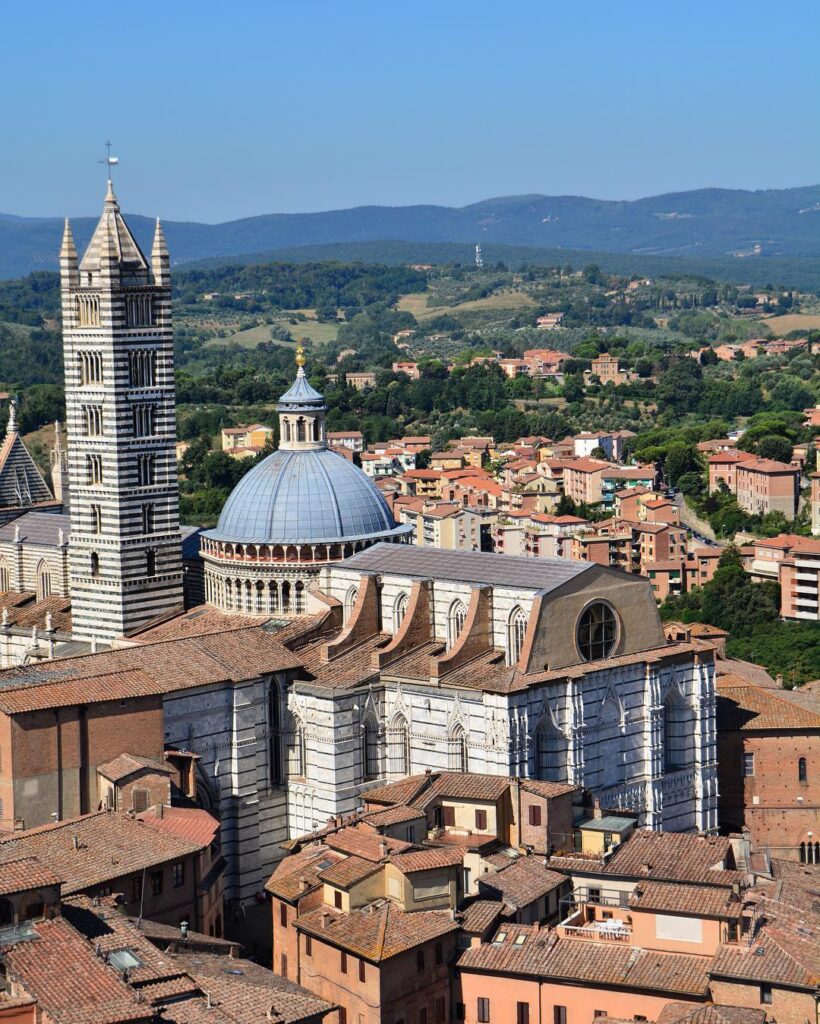
Siena is often described as a city where time seems to have stopped: mediaeval squares, towers and cobbled alleyways give the historic centre (a UNESCO World Heritage site) a fairy‑tale charm. Seen through the eyes of a family, Siena becomes an open‑air playground and a storybook to explore together. Among the city’s wonders, the Santa Maria della Scala complex stands out as one of the most fascinating places for both adults and children. Located opposite the Cathedral, this vast mediaeval hospital has been transformed into a modern museum and cultural hub. Visitors can walk back through the centuries and discover how pilgrims and the sick were cared for long ago by exploring frescoed halls and atmospheric passages. Children are captivated by the colourful murals and the stories hidden within these ancient walls; there are also hands‑on activities designed specifically for young visitors. This guide looks at Santa Maria della Scala from a family perspective, answering frequent questions, offering practical tips and providing historical curiosities. It also recommends the Hotel Minerva as an ideal base for exploring Siena with children .
A Dive into History
Santa Maria della Scala began around the 9th century as a refuge for pilgrims on the Via Francigena and gradually became a charitable institution that offered shelter and care to travellers, the poor, orphans and the sick. Over the centuries the hospital expanded, adding new wards and chapels. Its architecture reflects Siena’s hillside topography, creating a labyrinth of levels. The vast Sala del Pellegrinaio was once the main ward where pilgrims were received; its walls are covered with 15th‑century frescoes by Domenico di Bartolo and Lorenzo Vecchietta that depict everyday life and charitable work. The Cappella del Manto features a ceiling and walls decorated by Domenico Beccafumi; legend tells that the Virgin spread her cloak to protect those in need . Santa Maria della Scala also pioneered child care: within its walls there was a Casa dei Convalescenti for abandoned children, where newborn orphans were raised until adoption or apprenticeship . By the end of the 19th century the hospital’s functions moved to modern facilities and the complex fell into disuse . A major restoration in the 1980s revived the building as a cultural centre .
The Museum Complex Today: What to See
Today Santa Maria della Scala is a vast multi‑level museum with attractions for all tastes . Highlights include:
- Sala del Pellegrinaio: the former pilgrim ward is completely covered with 15th‑century frescoes showing how the sick were assisted and how doctors of the time worked. There are even images of orphaned children being cared for . This huge hall is very evocative: children can search for painted animals or curious objects together with adults.
- Cappella del Manto: a splendid chapel frescoed by Domenico Beccafumi. The name (“of the cloak”) refers to a legend in which the Madonna spreads her cloak to protect the faithful. Beccafumi’s mannerist art creates a mystical atmosphere; the vivid colours and angelic figures make children feel they have stepped into an enchanted church .
- National Archaeological Museum: in the hospital’s underground tunnels you will find a treasure of Etruscan and Roman artefacts from the Siena area. There are painted vases, votive statuettes, coins and reconstructed tombs . Children can learn about the Etruscans (a people who lived in Tuscany before the Romans) and imagine how these objects were used. The subterranean setting adds a sense of adventure .
- Temporary exhibitions: Santa Maria della Scala is a living space that hosts contemporary art exhibitions, events and installations. Each visit may reveal something new, such as photography shows or interactive displays that appeal to children .
- Children’s Art Museum: a dedicated area designed to introduce youngsters to art in a playful and creative way. Interactive exhibitions and workshops let children draw, paint and build little works inspired by what they have seen. It’s a perfect stop when kids are tired of just looking; they can create their own masterpiece to take home .
The complex also includes ancient churches, courtyards, the library and the historic photographic archive. Do not worry about seeing everything in one visit: enjoy the experience at your own pace .
Visiting with Children: Activities and Tips
Santa Maria della Scala strives to welcome families. It offers numerous child‑friendly guided tours and educational workshops . Expert guides tell anecdotes in an engaging manner, and at weekends or during school holidays the museum organises creative workshops where children can draw, colour or conduct small experiments . Even without organised activities there are many ways to keep children interested: turn the visit into a treasure hunt by asking them to spot an animal in a fresco or count how many characters wear a certain colour ; ask them to imagine being mediaeval pilgrims and think about what they would carry on their journey .
From a practical point of view, the museum is accessible to pushchairs, with a lift connecting the various floors . Toilets are available on each level, and at least one has a baby‑changing table . The on‑site cafeteria makes a convenient stop for a snack or to recharge . Children under 11 enter for free ; older children benefit from a family ticket (two adults plus children) . Tickets are valid for the entire day, so you can leave for a rest and return later .
Practical Information
- Opening hours (ticket office closes ~45 minutes before):
- High season (15 March – 1 November): open daily 10:00–19:00 (last entry 18:15) .
- Low season (2 November – 14 March): open Monday, Wednesday, Thursday, Friday 10:00–17:00; Saturday, Sunday and public holidays 10:00–19:00; closed on Tuesdays .
- Christmas period (23 December – 6 January): open daily except 25 December, 10:00–19:00 .
- Admission prices: adults €9 (online €8); reduced €7 (ages 12–19, over 65, non‑Siena university students, military, certain agreements); children up to 11 free; family ticket (two adults plus children) €20 (online €18); groups of at least 10 people €5 per person; school visits €5 per student . Combined tickets are available, e.g. Santa Maria della Scala + Museo Civico (€14) or Santa Maria + Museo Civico + Torre del Mangia (€20) .
- Location and access: the complex stands in Piazza del Duomo opposite the cathedral. The area is within the ZTL (restricted traffic zone), so visitors cannot drive up to the entrance . From the Hotel Minerva it is about 1.3 km (15–20 minutes on foot) through the centre . Those arriving by car should park at the edge of the historic centre (e.g. Santa Caterina car park, from which escalators lead to the top of San Domenico; or the railway station car park and the long escalators to Porta Camollia). From the station the cathedral is a 15‑minute walk almost on the level . Buses stop at “Duomo”; from there it’s a short walk to the museum .
Frequently Asked Questions
How long does a visit take? To see the main sections (Sala del Pellegrinaio, Cappella del Manto, Archaeological Museum) and the Children’s Art Museum, plan at least 1½–2 hours. If you want to explore every room and read all the panels or visit a temporary exhibition, allow three hours or more . With very young children you may choose a shorter visit and focus on highlights .
Is the museum suitable for very young children (under 6)? Yes. Babies and toddlers can accompany parents; the museum is accessible with pushchairs via lifts . Children may enjoy the colourful frescoes, large spaces and monumental staircases. Avoid running, as some rooms are dimly lit and the floors are ancient. Bringing a toy (such as a knight or princess figurine) can turn the visit into a game .
Can I take photographs? Photography is allowed for personal use without flash or tripod . Some temporary exhibitions or particularly delicate works may prohibit photography (look for the crossed‑out camera symbol). Professional or commercial photography requires prior authorisation .
What services are available? There is an information desk where you can request maps or clarification . While there is no large cloakroom, staff can temporarily store bulky backpacks or pushchairs . An official app (available in multiple languages) functions as an interactive audio guide and can be downloaded free; the ticket office also lends iPads pre‑loaded with the app . Traditional paper guides and expert-led guided tours are available; there is also a cafeteria and a bookshop with souvenirs, postcards and books .
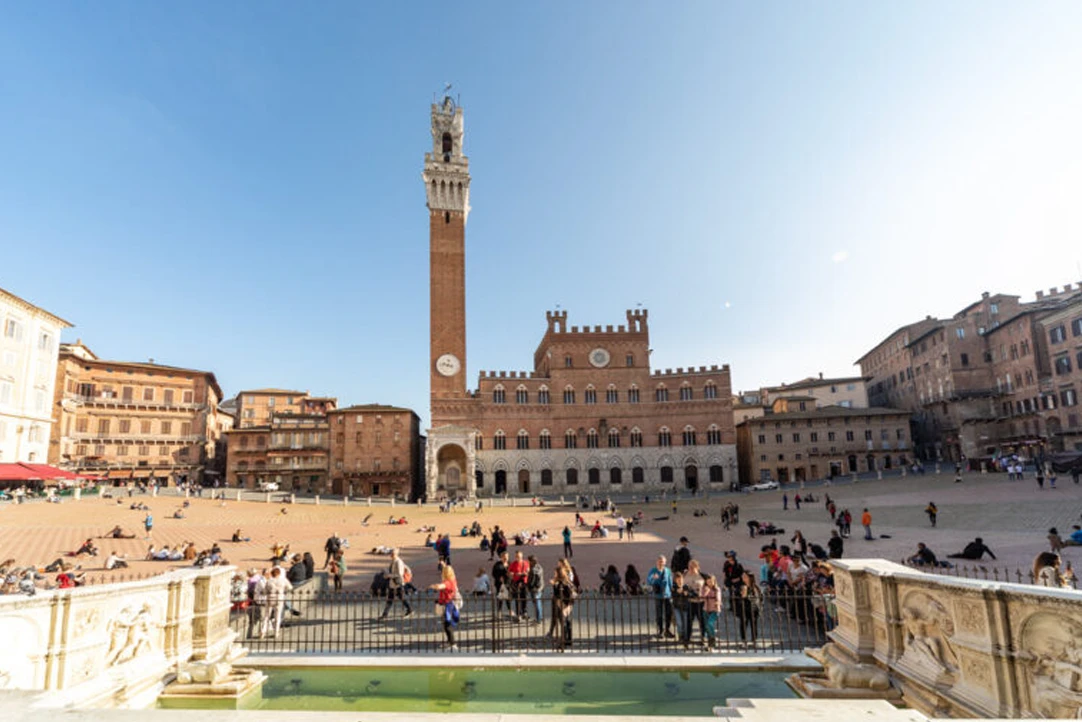
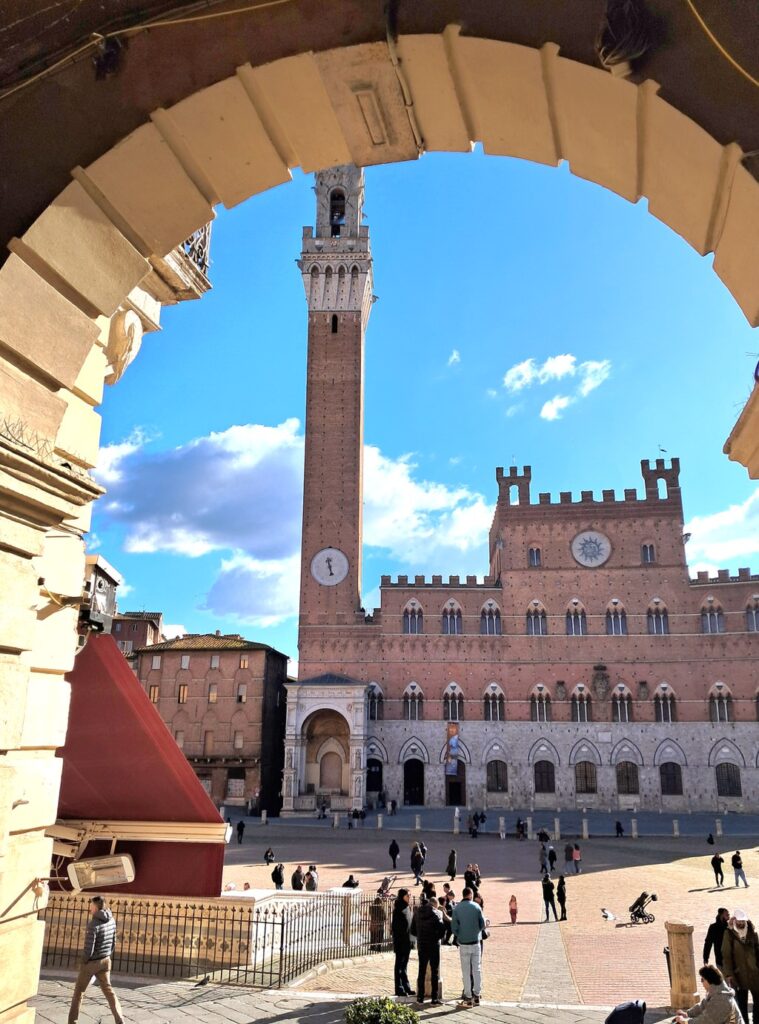
What is nearby? Santa Maria della Scala is surrounded by must‑see attractions. The Duomo is directly opposite and delights children with its striped marble columns and colourful stained glass . A few minutes away is Piazza del Campo, Siena’s main square, with its shell shape and the Fonte Gaia; children can run safely in this pedestrian space, count the nine sectors of the brick pavement and imagine the horses racing during the Palio . Other nearby sites include the Fortezza Medicea and Giardini La Lizza (large green areas with playgrounds and panoramic views ), the Orto Botanico (a historic botanical garden that offers a relaxing nature walk ), the Museo di Storia Naturale (Accademia dei Fisiocritici) with its whale skeleton and scientific collections , and the Orto de’ Pecci, a countryside corner in the city with a small farm where children can meet animals and enjoy outdoor activities .
Hotel Minerva: the Ideal Base for Exploring Siena as a Family
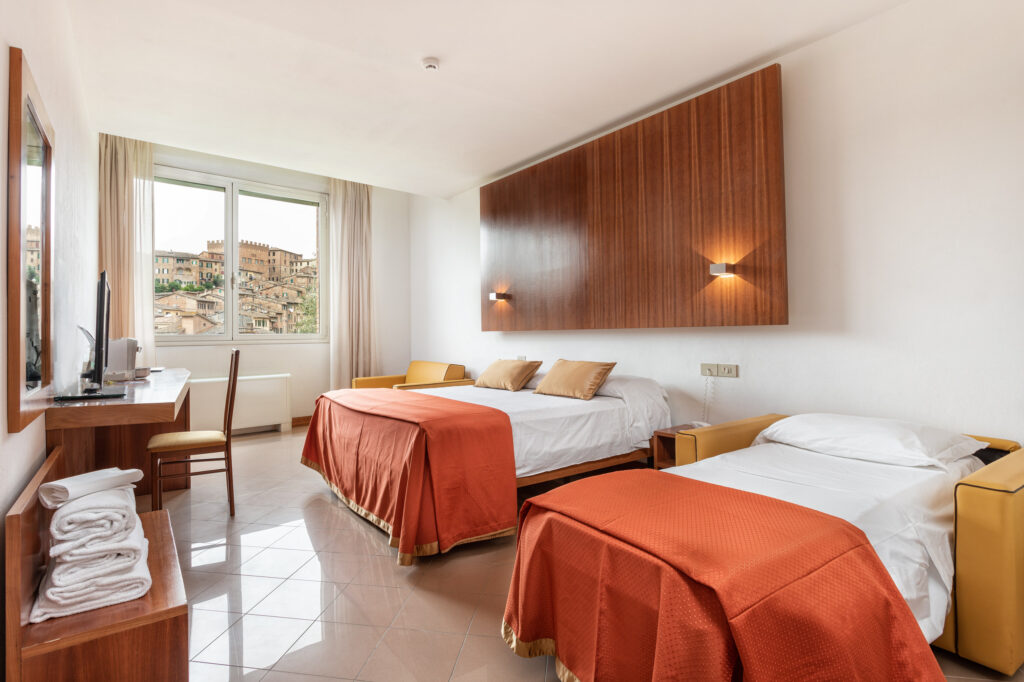
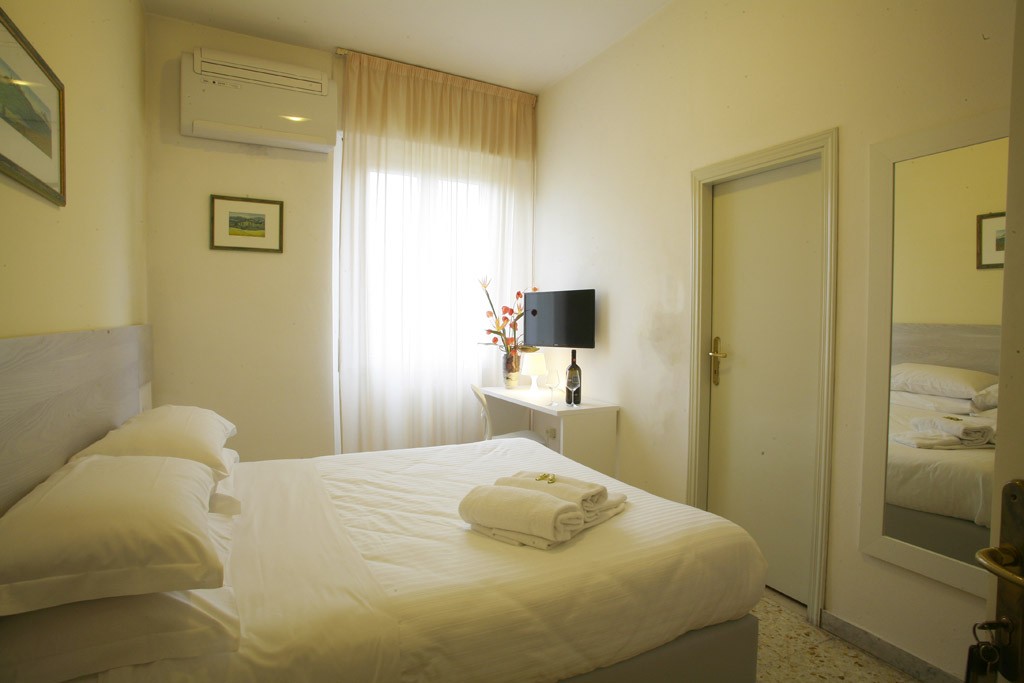
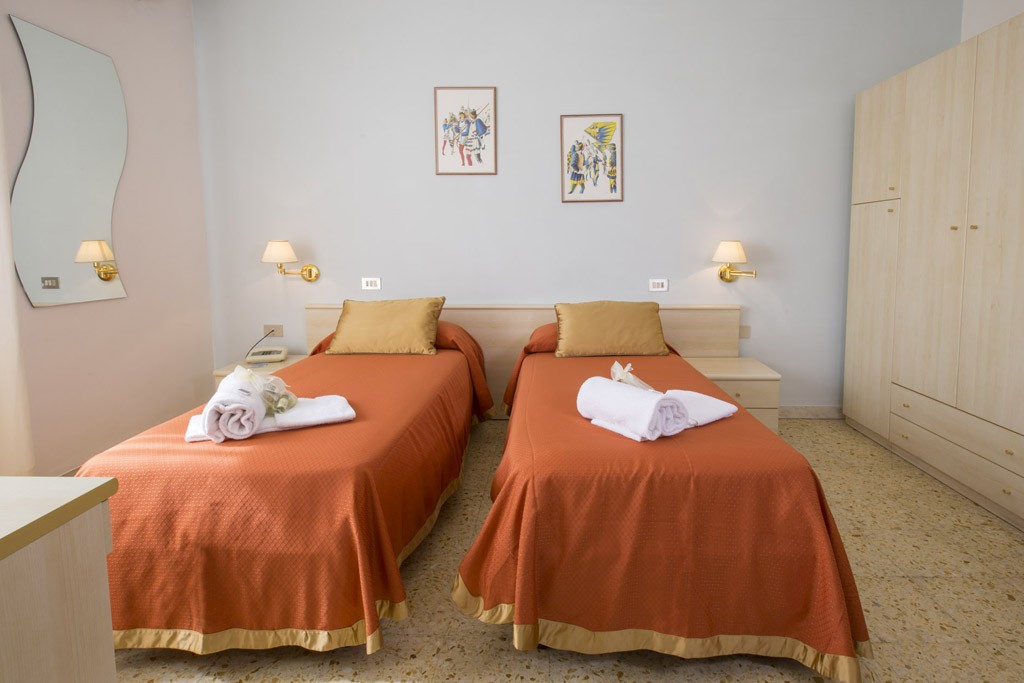
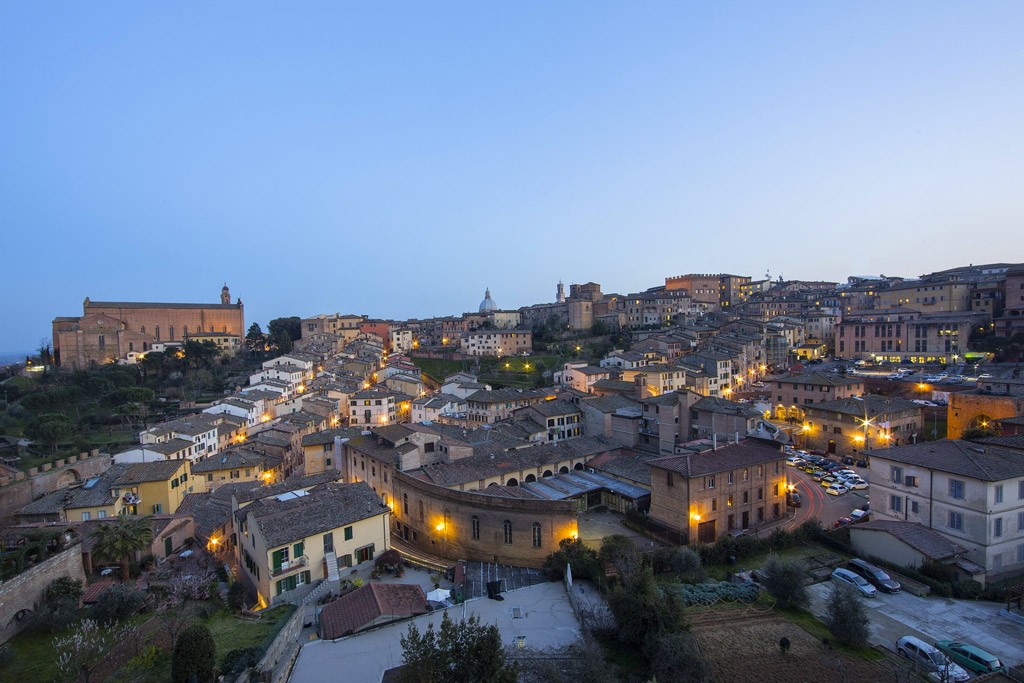
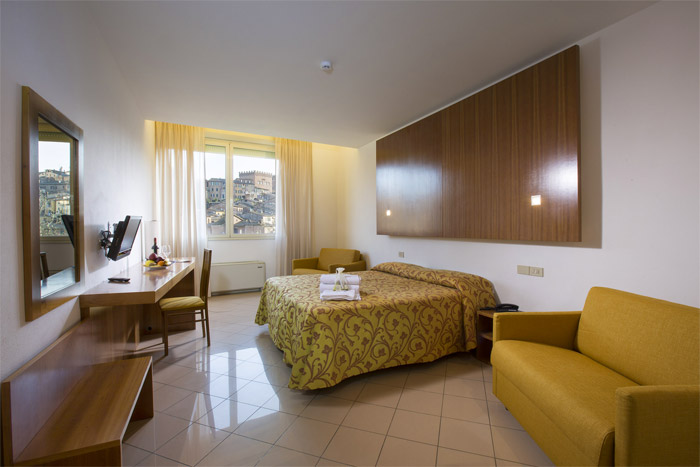
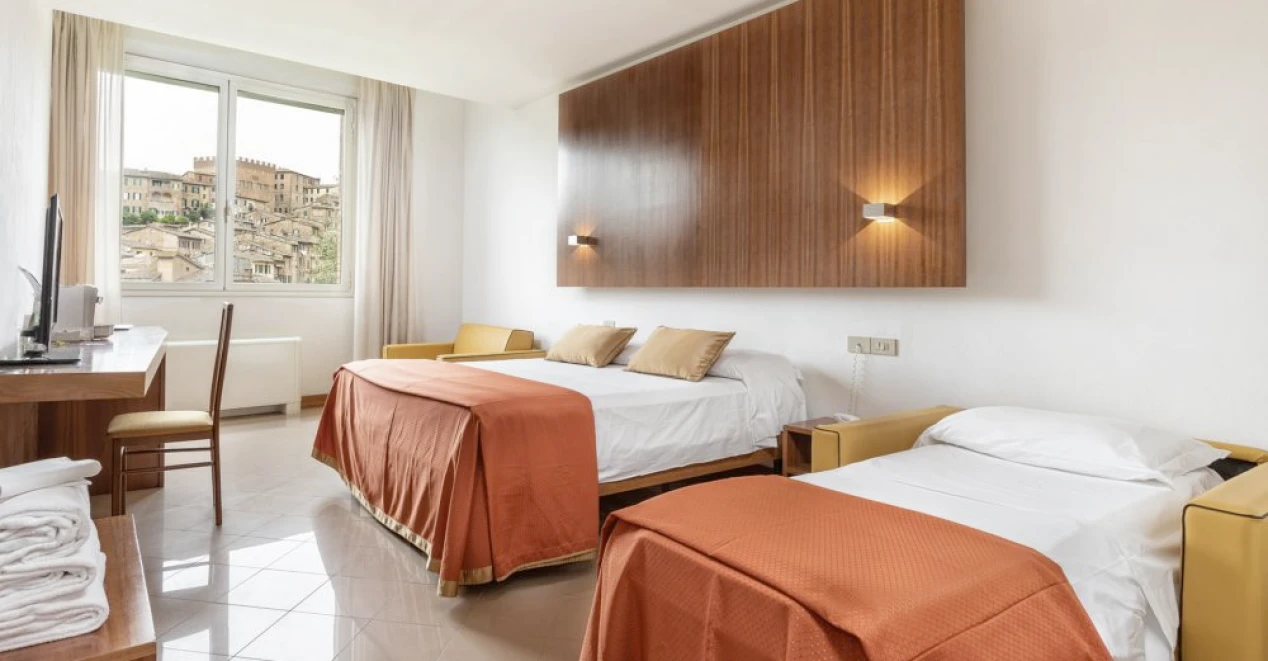
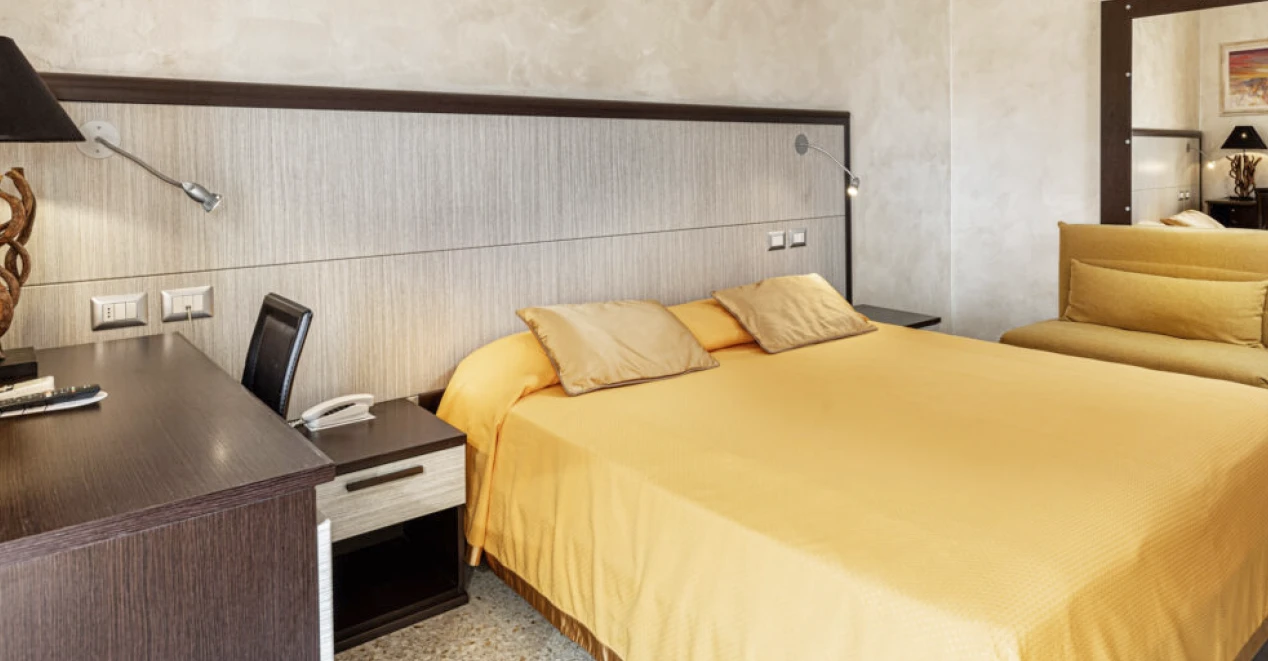
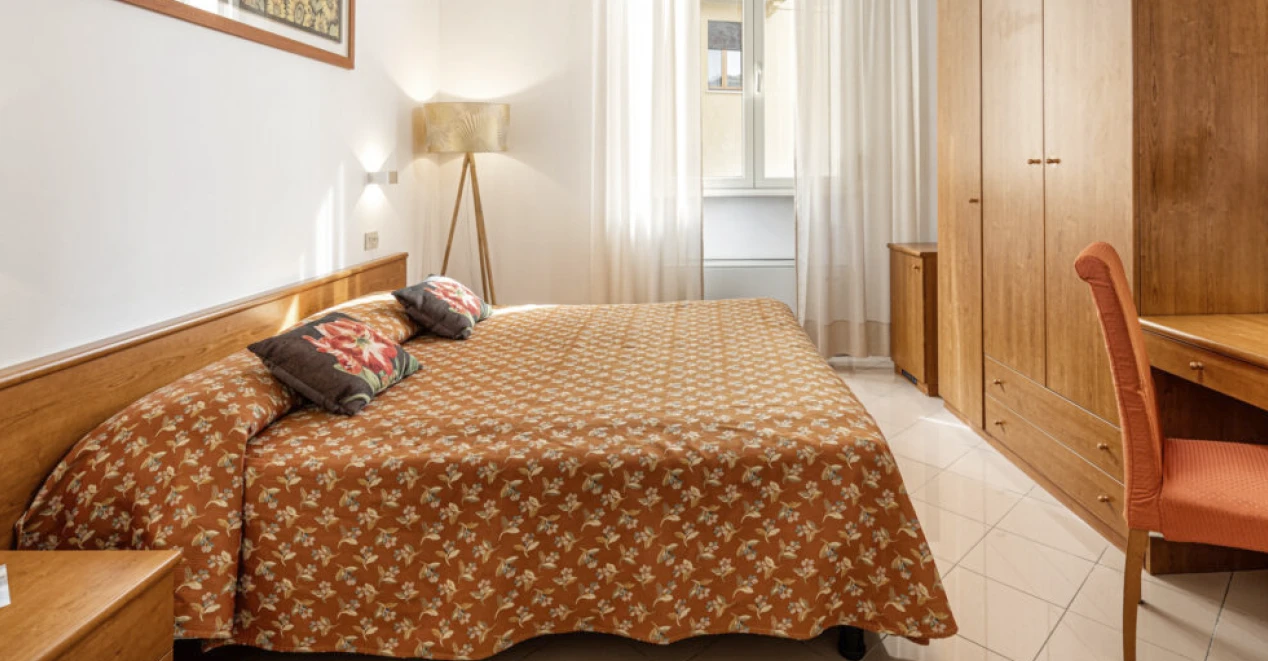
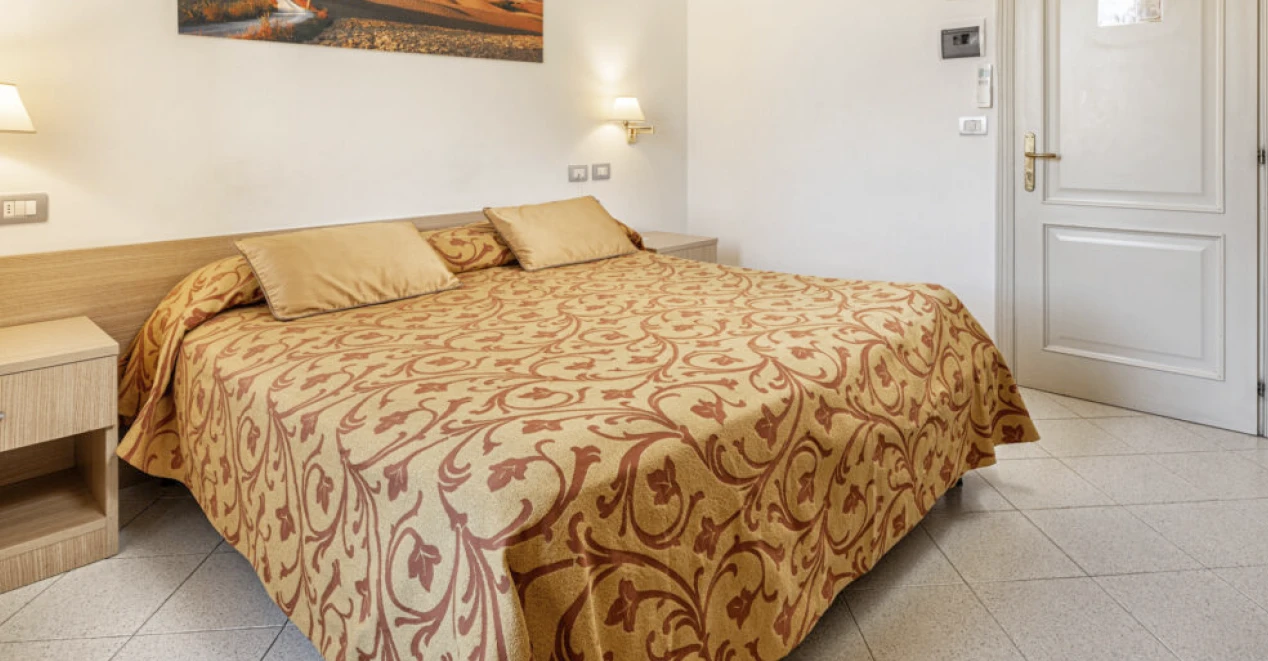
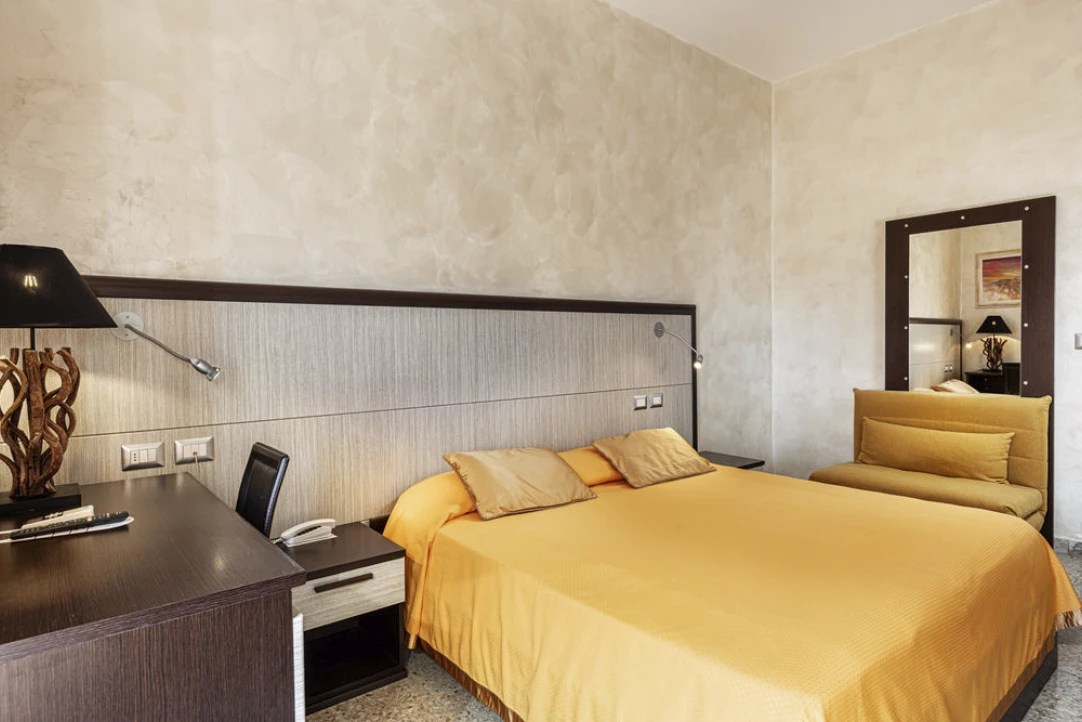
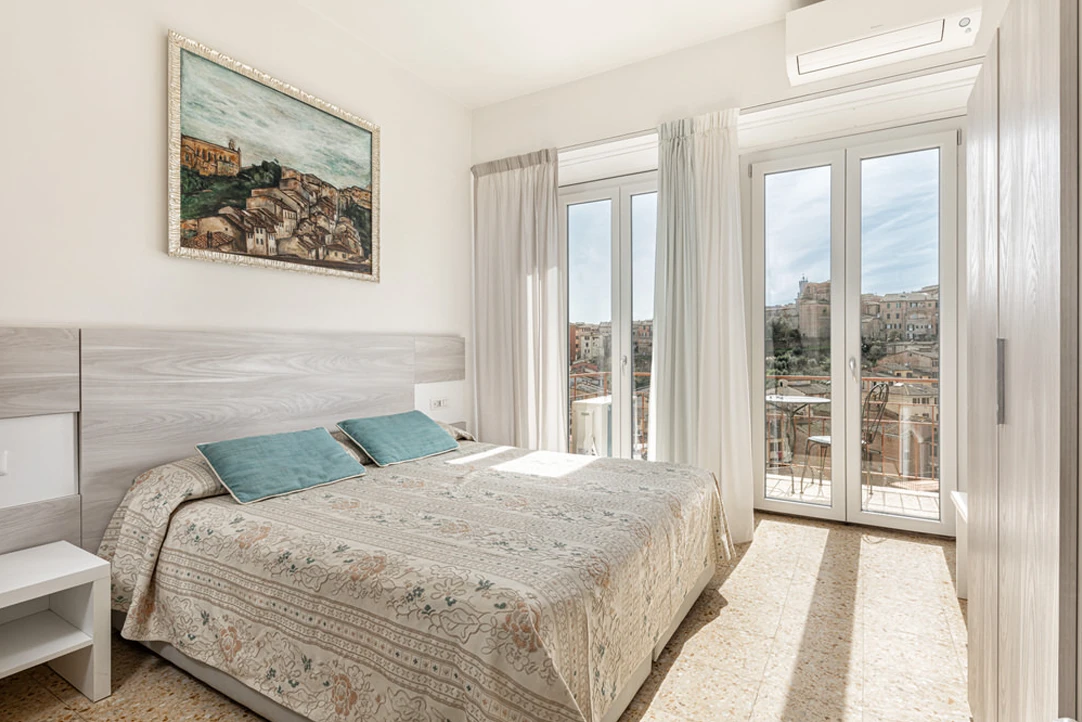
After a day of adventures, you will naturally wonder where to stay to make the most of your visit. The answer is a strategically located, family‑friendly hotel like Albergo Minerva. This three‑star hotel at Via Garibaldi 72 offers warm hospitality and all the comforts needed for an unforgettable stay . Families are welcome: cots for babies up to 3 years are provided on request, and rooms are spacious enough for extra beds. Some rooms offer panoramic views over Siena’s rooftops—perfect for an evening game of spotting illuminated landmarks with your children .
The Hotel Minerva enjoys a privileged location: inside the mediaeval walls but just outside the restricted traffic zone, so you can reach it by car and use its private covered car park . Once there, you can forget the car: Piazza del Campo is around 15 minutes away on foot, the Duomo and Santa Maria della Scala about 17 minutes, and the Fortezza Medicea less than 10 minutes . Being so close to attractions is invaluable with children—you can return for a rest or to fetch a forgotten toy without deviating from your itinerary .
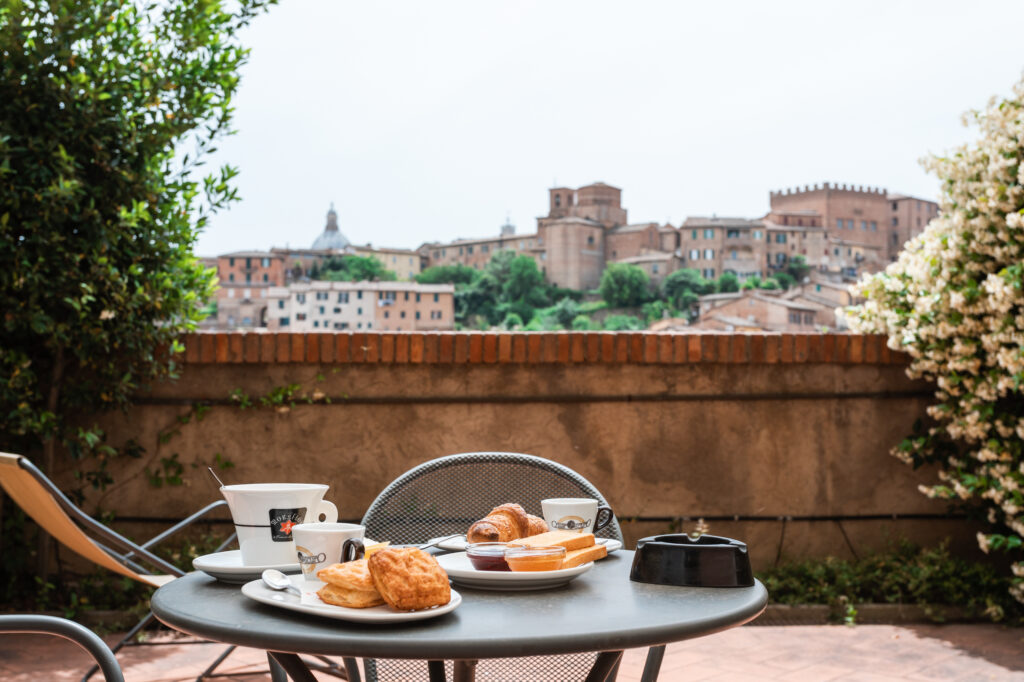
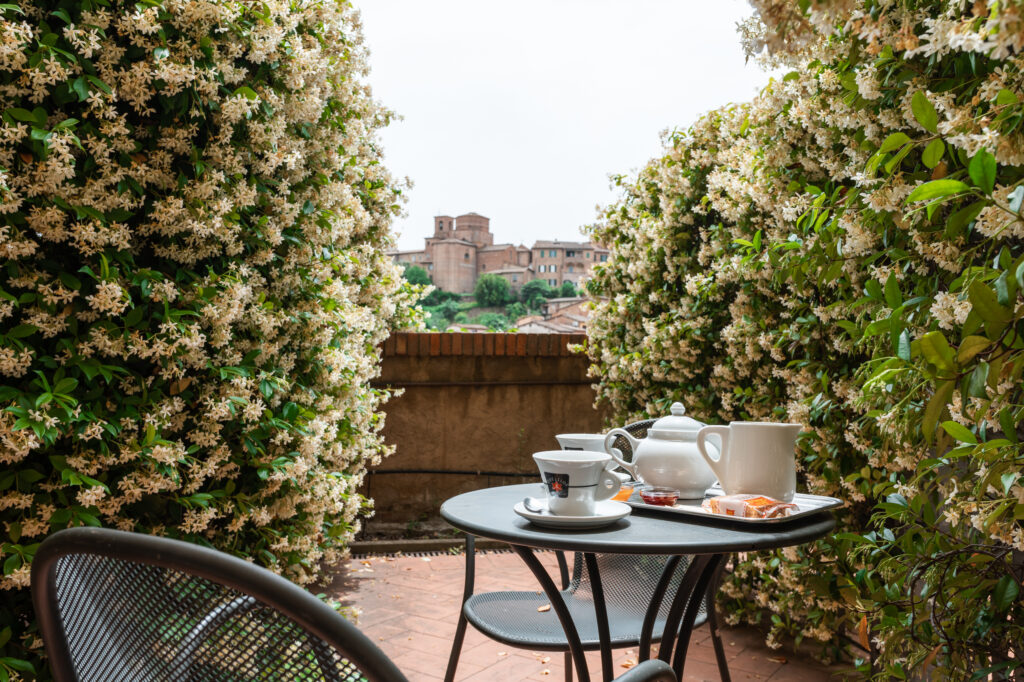
Another asset is the courtesy and availability of the staff, who are ready to help with warming a bottle late at night, calling a taxi with a child seat or suggesting the best routes . Reception is open 24 hours a day, and the area around the hotel is safe and quiet at night . Guests can enjoy a rich buffet breakfast with sweet and savoury options, free Wi‑Fi, TV with international channels, laundry service, babysitting on request and other comforts . The hotel regularly offers family packages on its website, such as discounts for multiple nights or free stays for children below a certain age . Booking directly guarantees the best rates and dedicated assistance .
Conclusion
To explore Santa Maria della Scala and the many wonders of Siena with maximum convenience, the Albergo Minerva is an ideal starting point. Reserve your family holiday through the hotel’s official website and prepare to enjoy Siena’s historical and artistic heritage. The memories you create here will stay in your hearts—and Siena may become a place you’ll want to revisit as your children grow up under the benevolent gaze of the Torre del Mangia and the goddess Minerva .