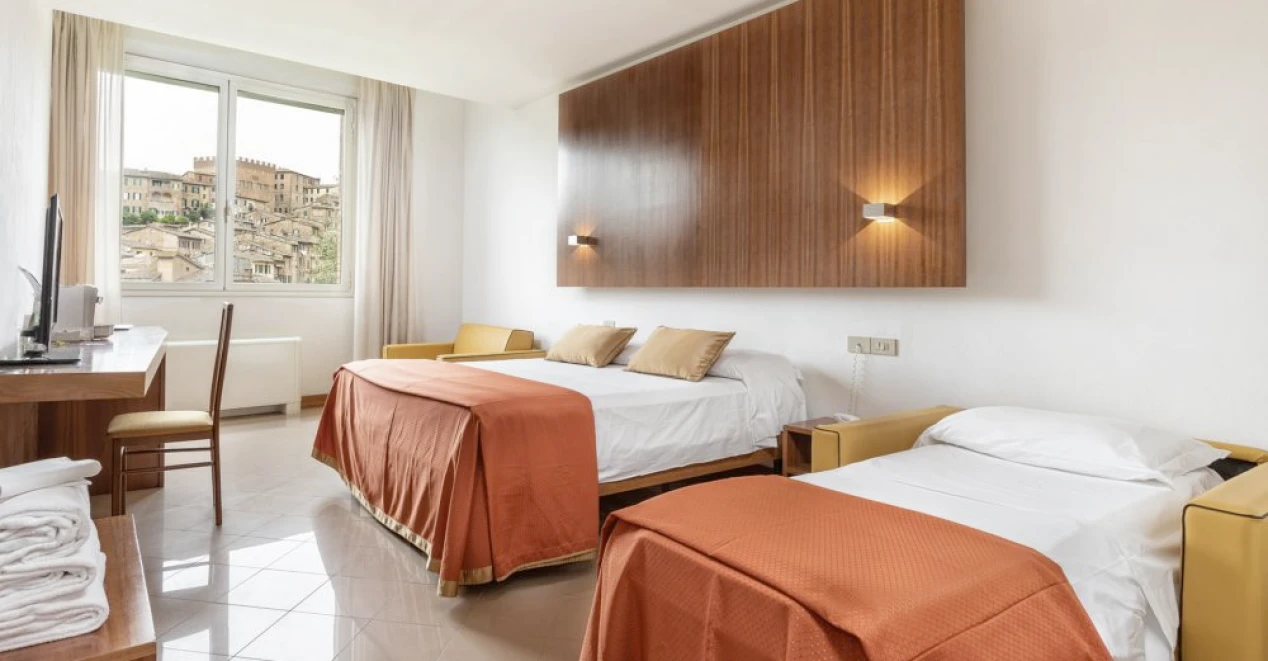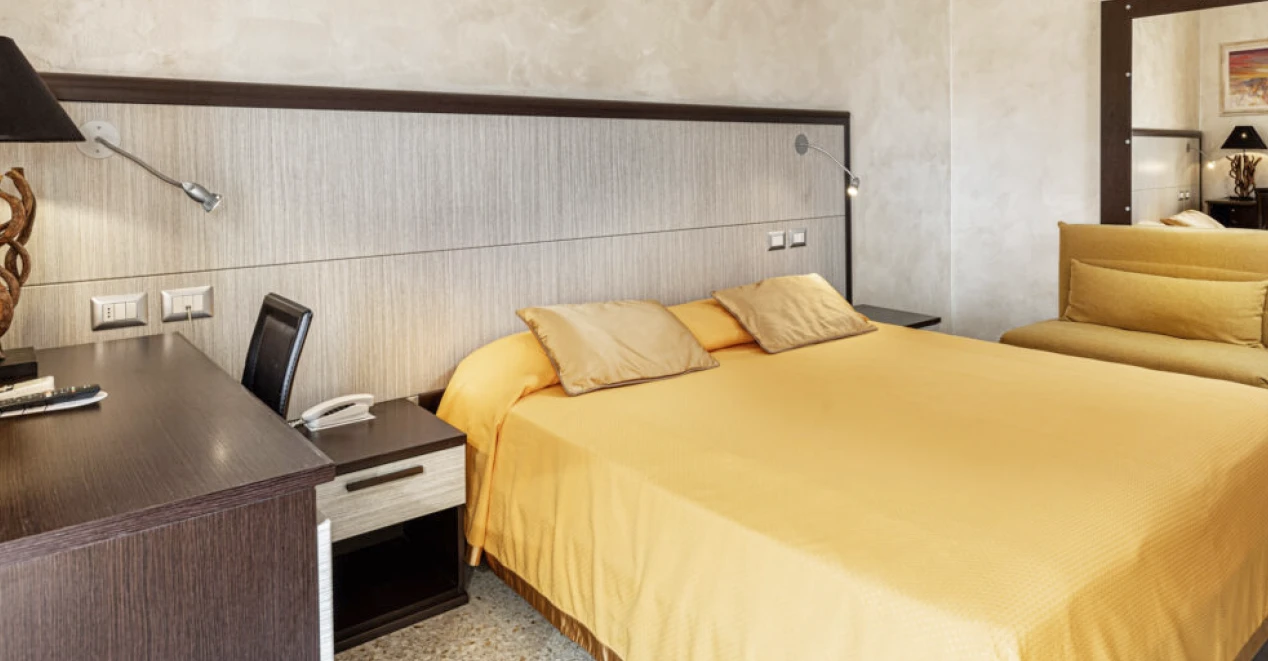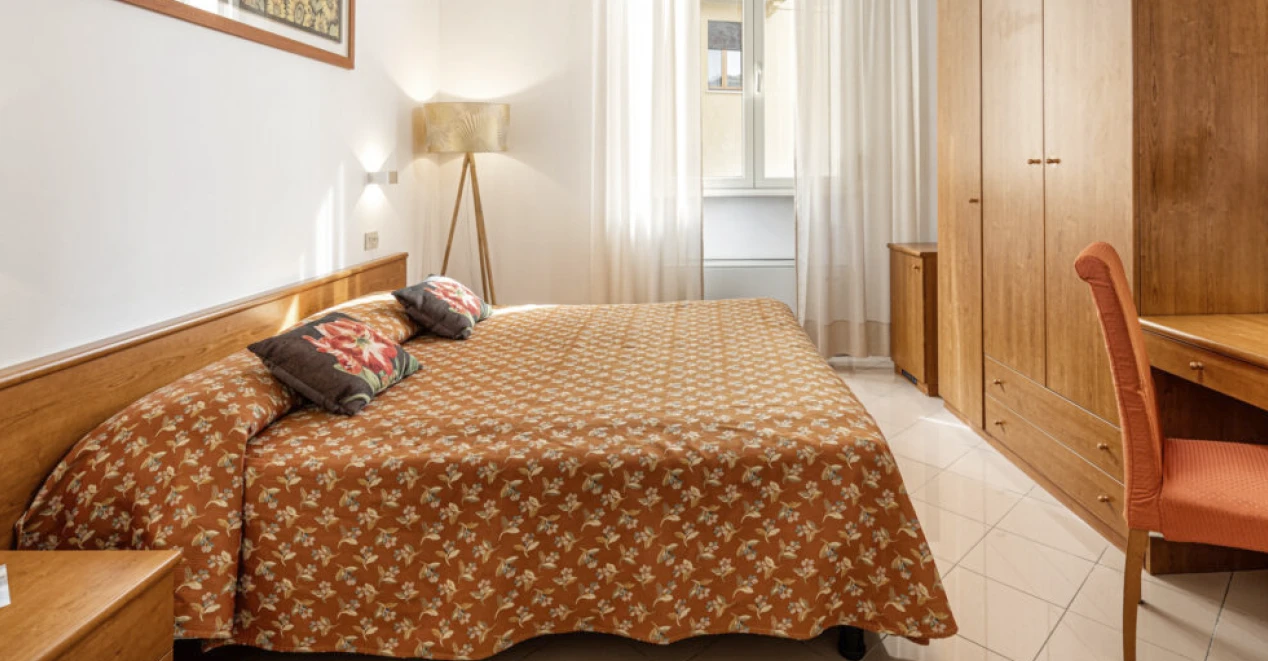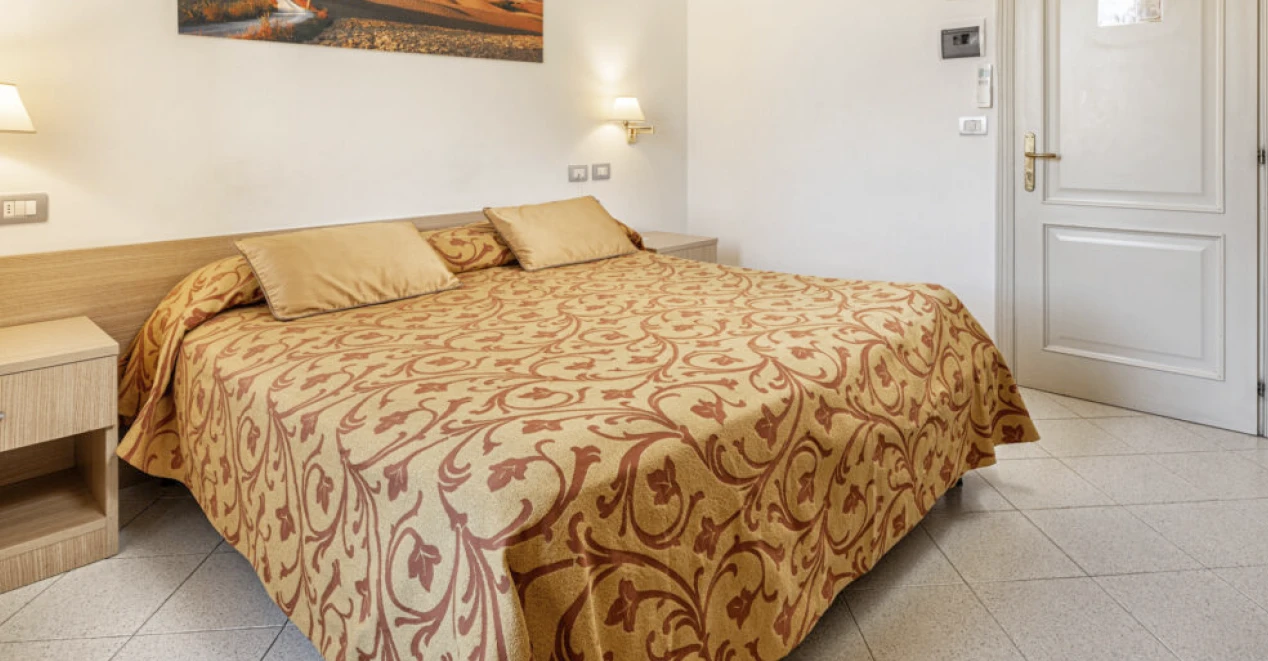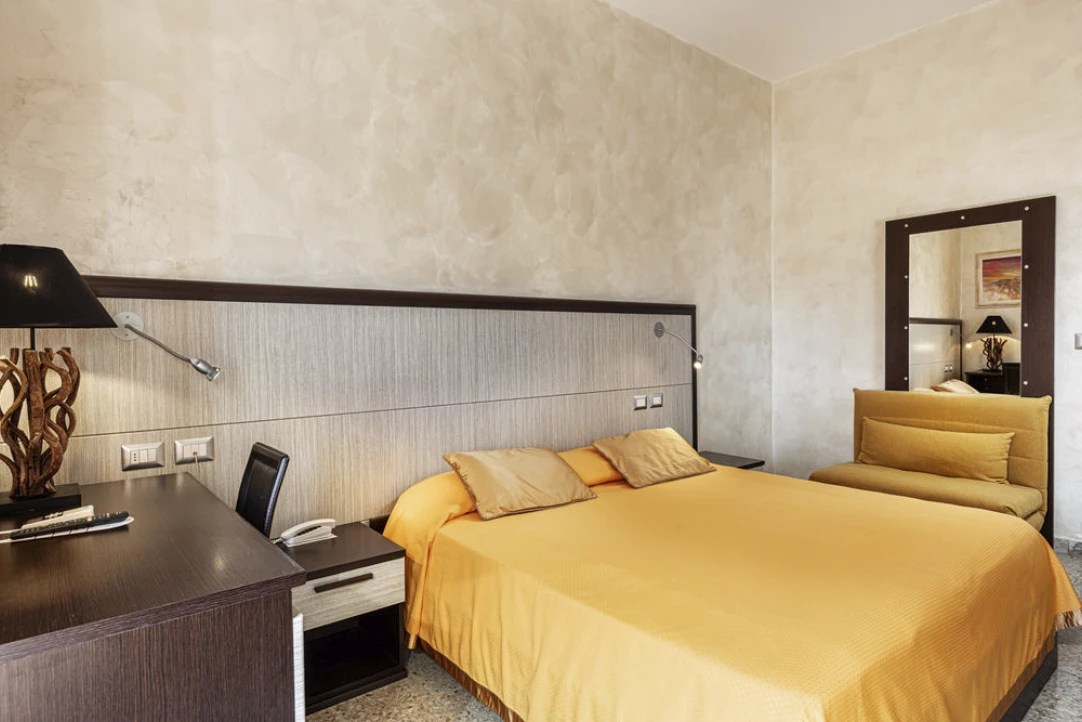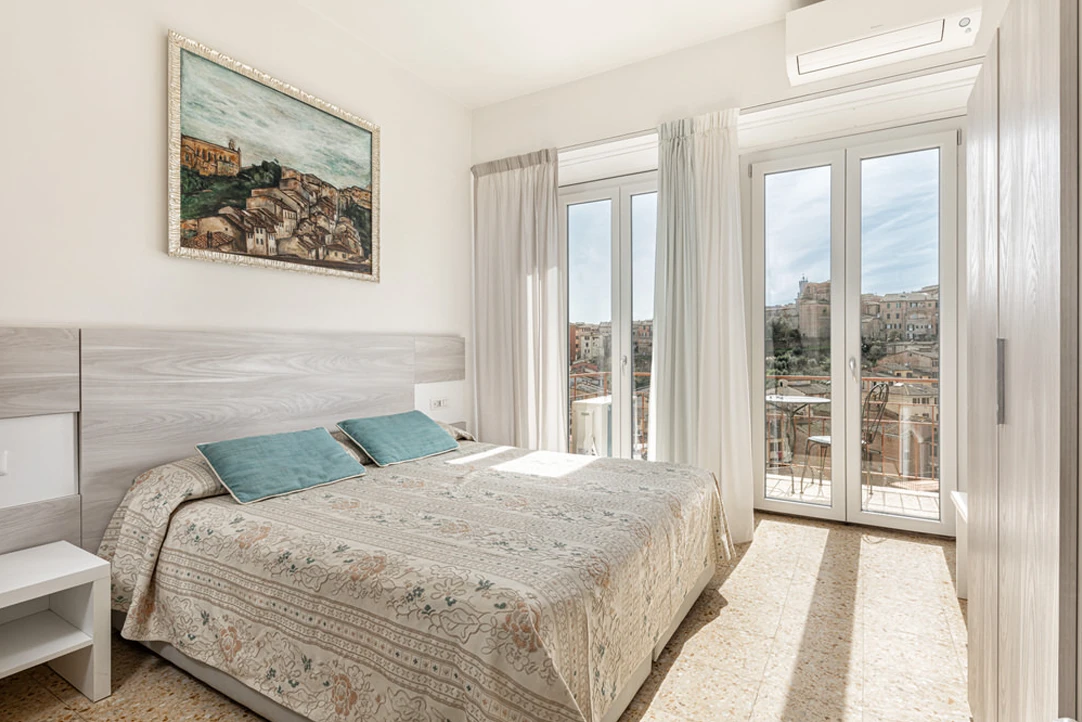

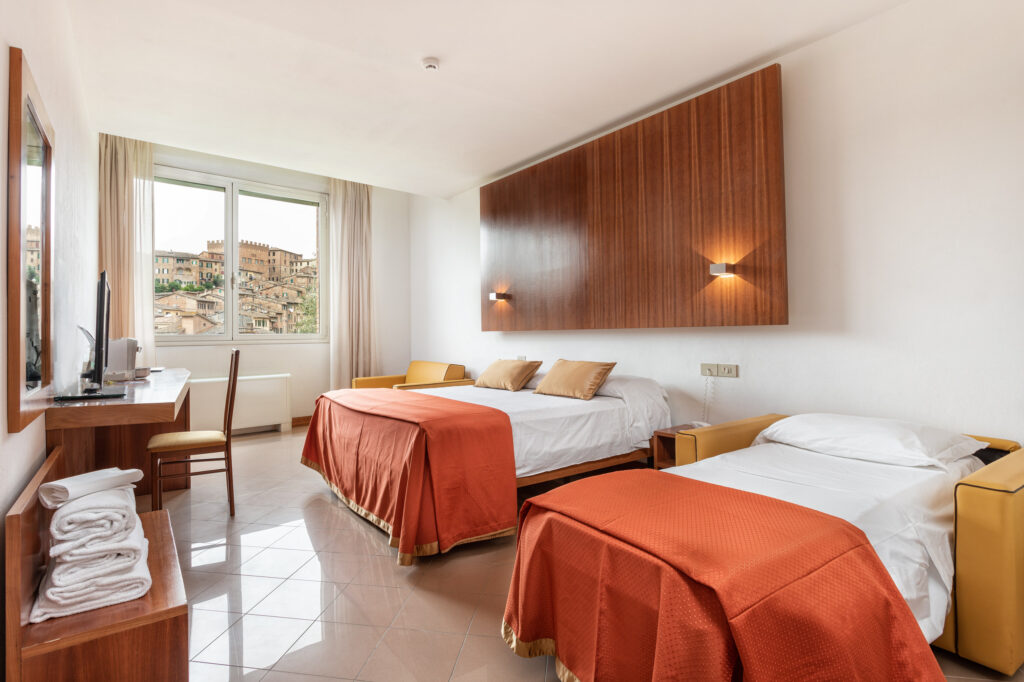
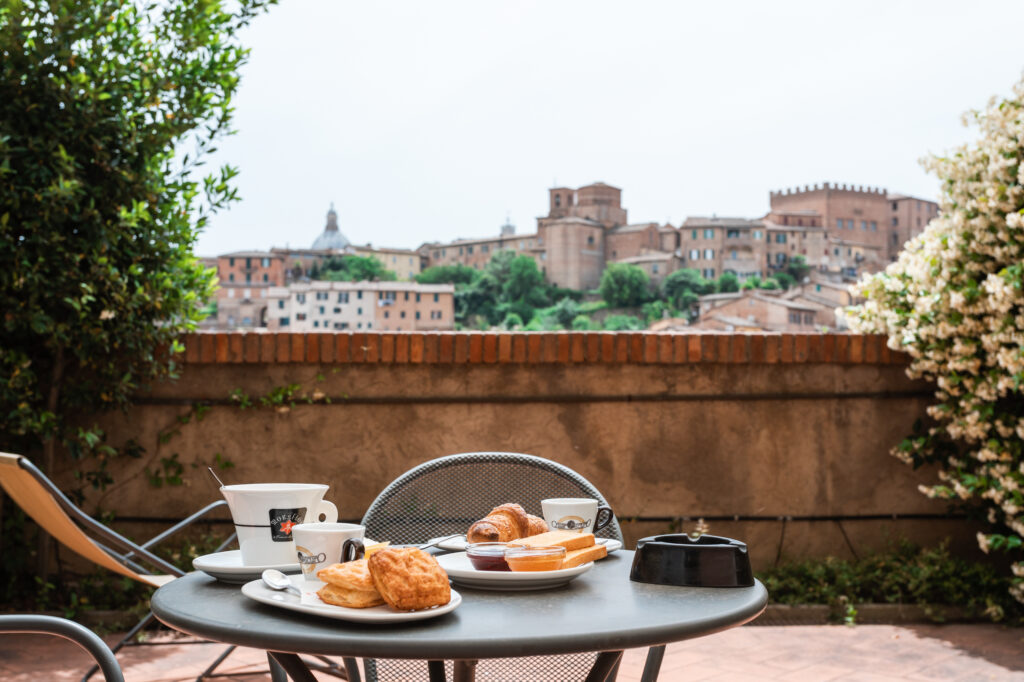
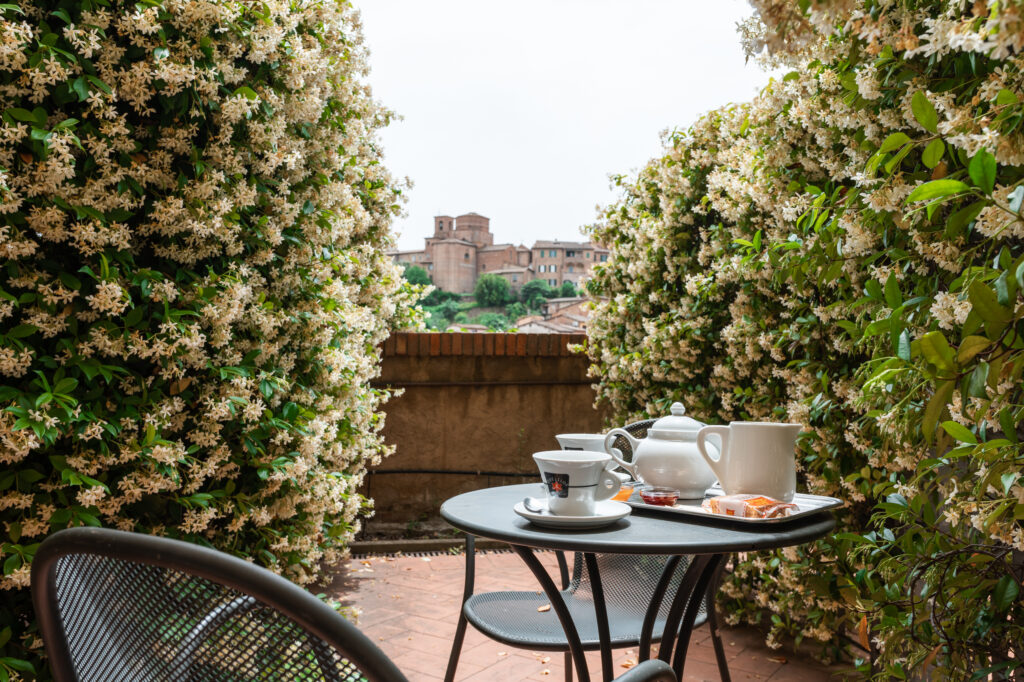
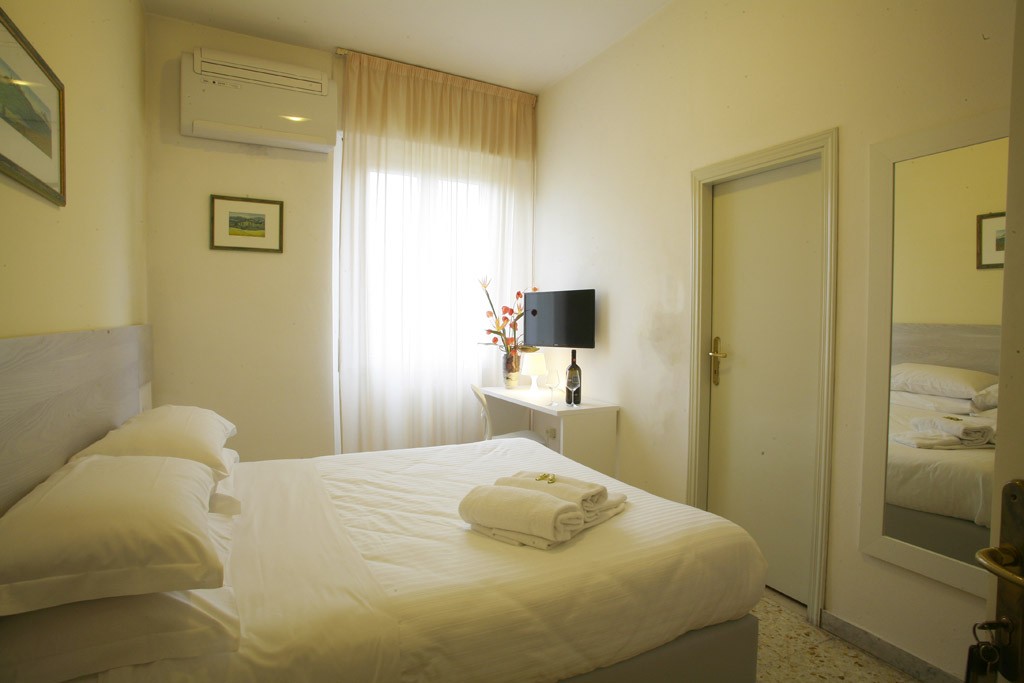
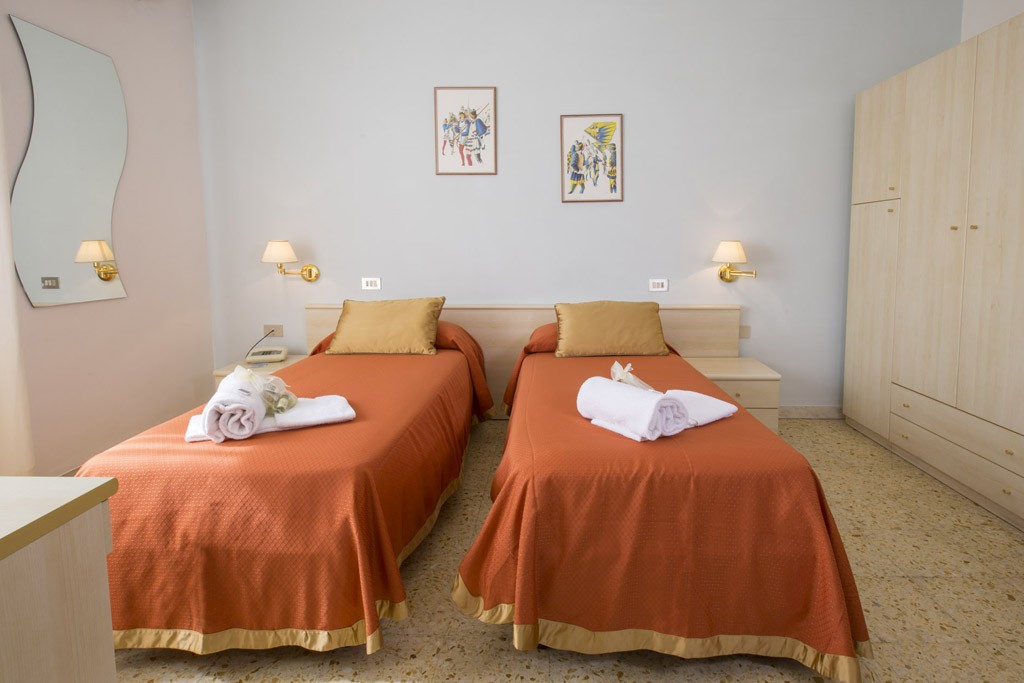
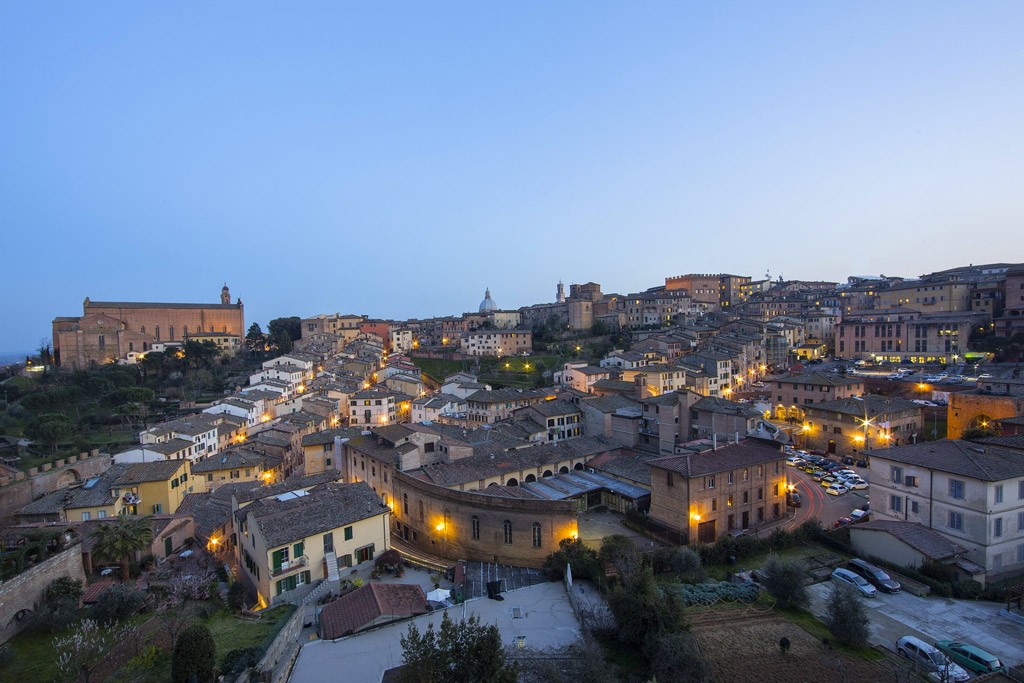
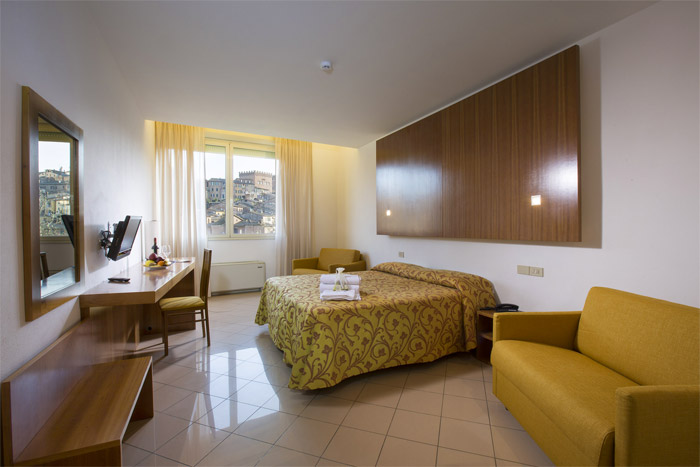
Welcome to Siena! In this informal guide we will discover what to see in four days in Siena and its splendid surroundings, based at the Hotel Minerva in Siena. The Hotel Minerva, located within the ancient city walls near Porta Camollia and the Medici Fortress, is an excellent logistical base: just 10 minutes on foot from Piazza del Campo, it also offers private parking (for a fee) just outside the ZTL – perfect for those arriving by car.
Our itinerary is designed for different types of tourists – families with children, couples in search of romance, single travellers, students and workers – and balances culture, relaxation and fun. Each day will have a different theme:
- Day 1: exploration of the historic centre of Siena on foot (the must-see attractions such as Piazza del Campo, the Duomo, the Torre del Mangia, the Sanctuary of Santa Caterina, etc.).
- Day 2: lesser-known corners and relaxing activities in the city (from the Orto Botanico to the Fortezza Medicea, passing through uncrowded museums and pleasant walks through greenery).
- Day 3: excursion to a medieval village in the province of Siena – we choose the splendid San Gimignano (known for its towers), with the possibility of including a stop at Monteriggioni.
- Day 4: a trip out of town through the Tuscan hills: we propose the magical Val d’Orcia (a UNESCO World Heritage Site since 2004, with Pienza, Bagno Vignoni, Montalcino) – alternatively, for wine lovers, a tour in the Chianti Classico (e.g. Radda in Chianti and surroundings).
Each day comes with a summary table with practical information: distances, visiting times, costs, accessibility and transport. You will also find a FAQ section with answers to common questions about transport, reservations, timetables, meals, children, parking, etc., useful tips on where to eat typical dishes for little money, and targeted advice for families, couples, singles, students and workers. The tone will be welcoming, friendly and practical, just like that of a local friend accompanying you in discovering Siena. Ready to go? Let’s go! 🙂
Day 1: Classic Siena – the historic centre on foot
Morning: From your accommodation at Hotel Minerva, reach the heart of Siena in a few minutes on foot. Start at the Basilica of San Domenico, an imposing Gothic church famous for holding the relics of Saint Catherine (the head and a finger of the patroness of Siena). Admission is free and it is a touching visit, especially for those who love the history of Sienese saints. Then proceed to the nearby Sanctuary of Santa Caterina, the saint’s birthplace, composed of arcades and chapels: a quiet place where you can breathe a mystical atmosphere. Access to the Sanctuary is free; just be prepared for a few steps down to the medieval courtyard.
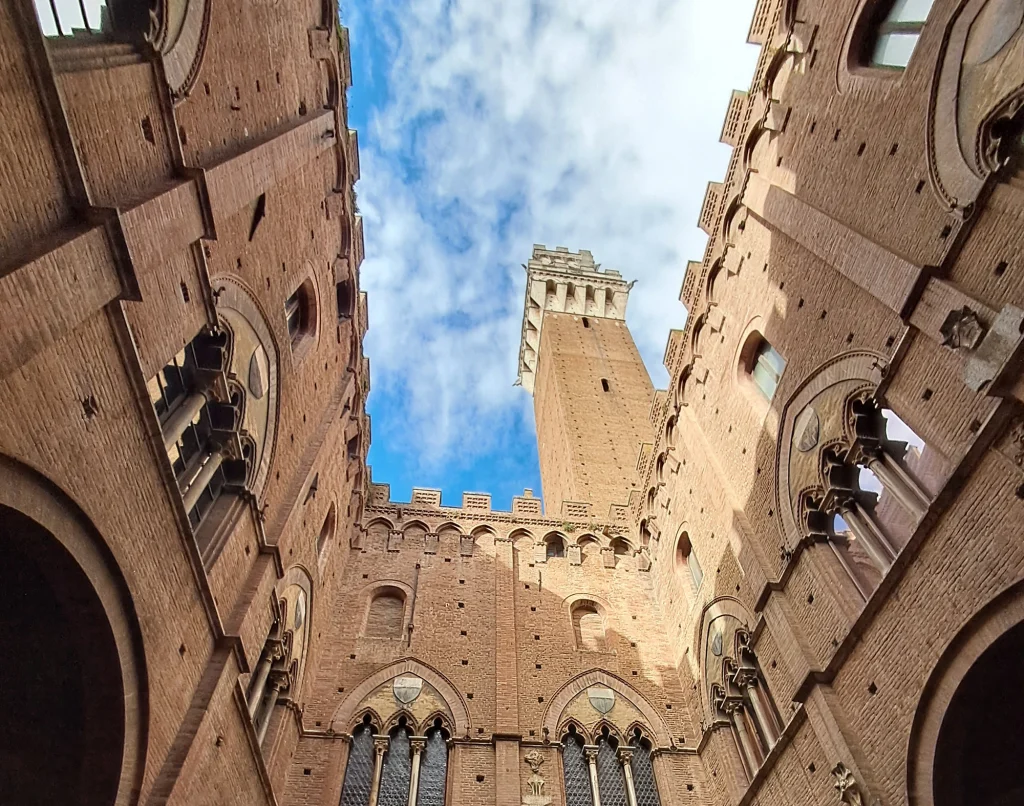
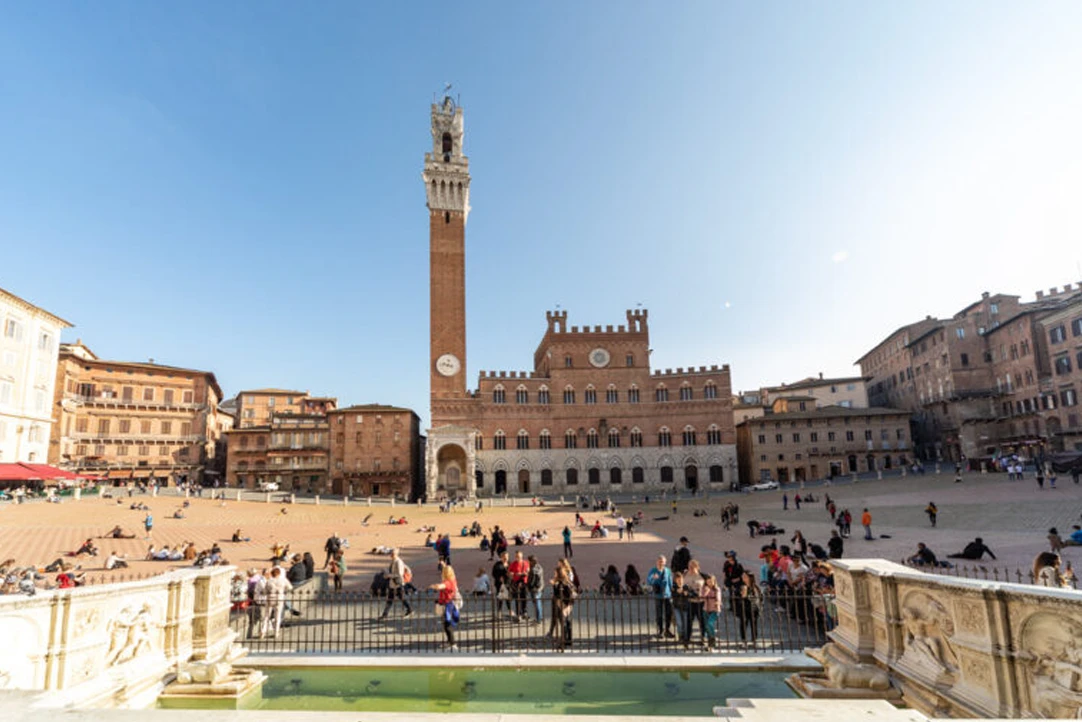
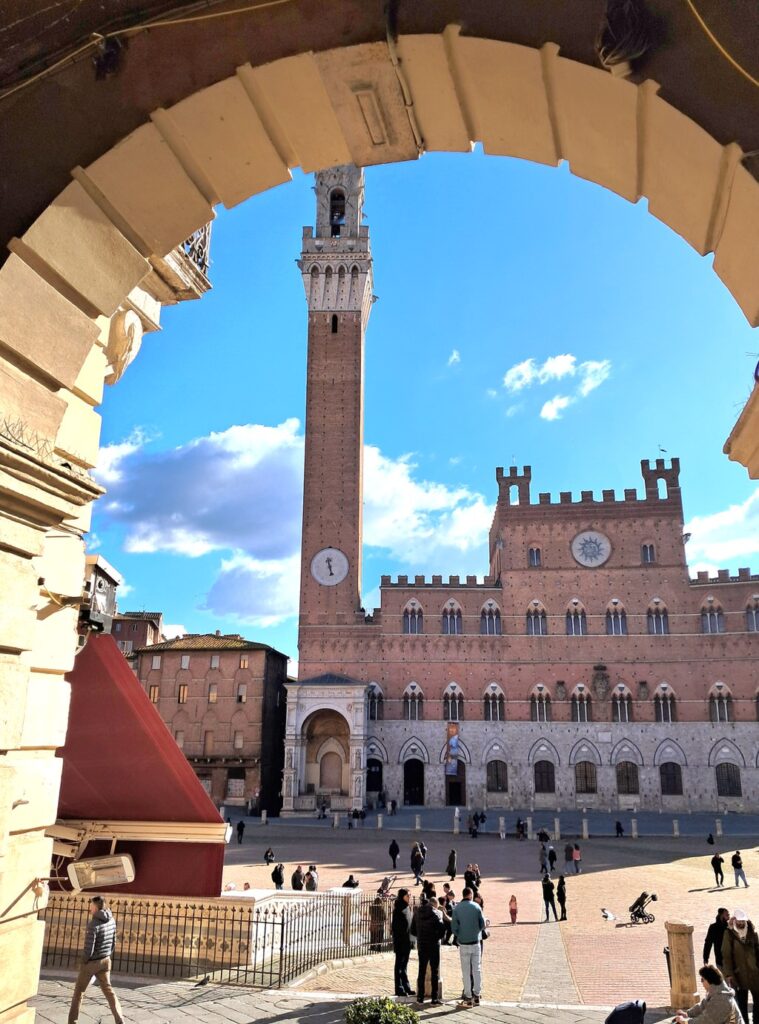
From here, lose yourselves among the alleys heading toward Piazza del Campo, the shell-shaped main square, symbol of Siena and seat of the famous Palio. Piazza del Campo will leave you speechless with its medieval harmony and the Torre del Mangia rising elegantly above the Palazzo Pubblico. You can sit on the red bricks of the “Campo” with the locals, perhaps enjoying a packed breakfast or a coffee. Admire the Fonte Gaia, the fountain (a replica) adorned with sculptures – the original by Jacopo della Quercia is in the nearby Santa Maria della Scala museum. Climb the Torre del Mangia if you feel up to it: the 87 m civic tower offers a breathtaking view over the city and countryside, rewarding the effort of its ~400 narrow steps (there is no elevator). Keep in mind that the climb is limited in numbers (max 25 people every 45 minutes) and tickets cannot be booked in advance, so go as soon as it opens to avoid queues. Admission costs about €10 (free for under 11). At the top the time of stay is limited (~30 minutes), but enough for photos and 360° views over Siena and the hills. Those who prefer to stay on the ground can in the meantime visit the Museo Civico inside the Palazzo Pubblico (with famous frescoes such as the Good Government by Ambrogio Lorenzetti) or sip a cappuccino at tables overlooking the square.
Piazza del Campo, the shell-shaped square of Siena dominated by the Palazzo Pubblico and the Torre del Mangia, is the beating heart of the city. The Palio (the famous horse race) takes place here twice a year along with various cultural events.
Lunch break: For lunch, you could try a typical trattoria a stone’s throw from Piazza del Campo. An excellent choice is the Osteria Permalico, a rustic spot loved by students, where you can taste pici all’aglione or a ribollita soup at honest prices. Alternatively, the Antica Trattoria Papei (in Piazza del Mercato, behind the Palazzo Pubblico) offers Sienese specialities such as pappa al pomodoro and stewed wild boar, with outdoor tables and a genuine atmosphere. For a quick lunch, grab a stuffed focaccia from Il Panino Tondo or a platter of cold cuts and pecorino from La Prosciutteria and enjoy it on the benches overlooking the square. Don’t forget dessert: Gelateria La Costarella (just above Piazza del Campo) has excellent artisanal gelato – try the panforte or ricciarelli flavours inspired by Sienese sweets.
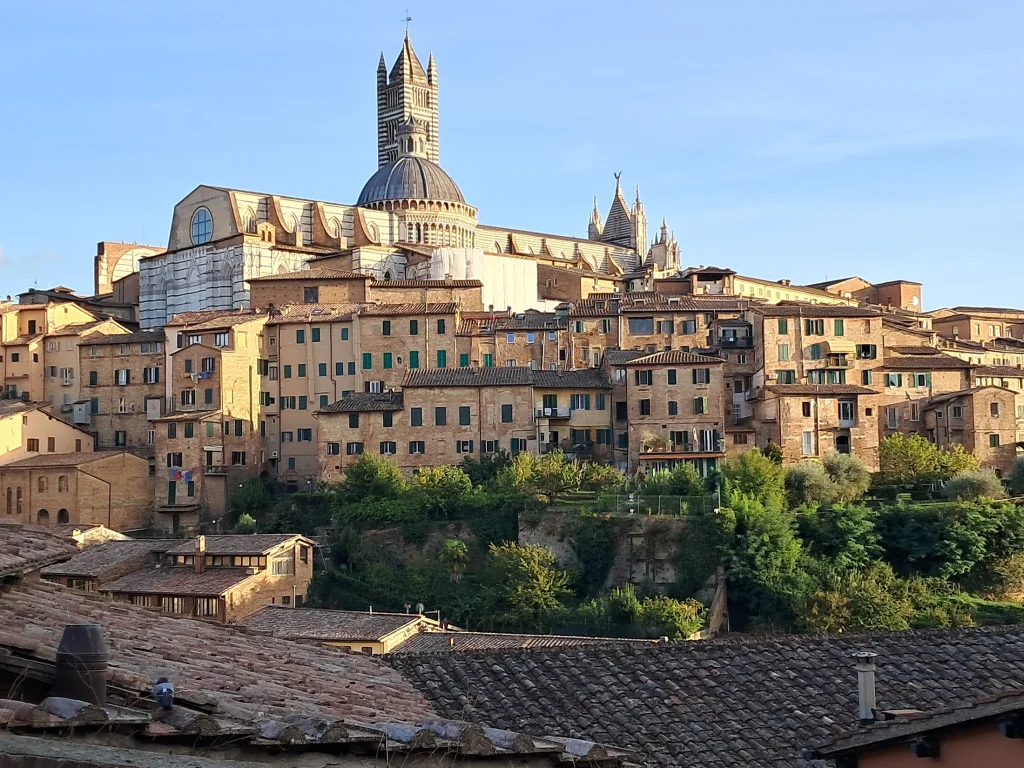
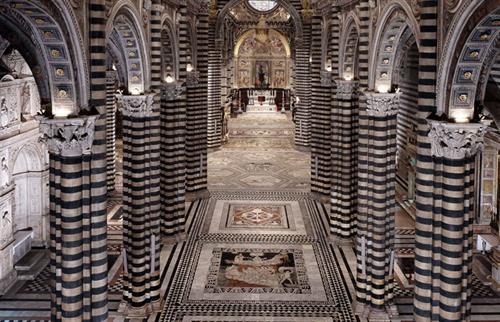
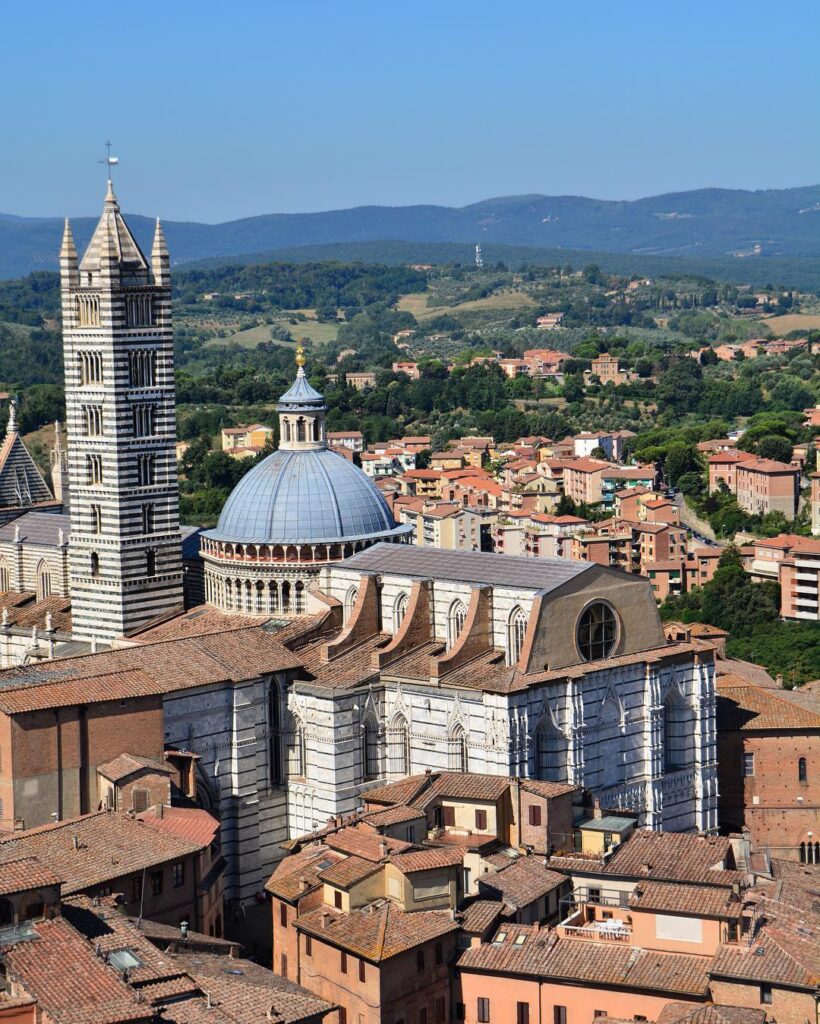
Afternoon: After eating, head to the magnificent Cattedrale di Santa Maria Assunta (the Duomo of Siena). The white and black marble façade will enchant you from the outside. Inside you will find treasures: the marble inlaid floor (uncovered only in certain periods of the year), the Piccolomini Library frescoed by Pinturicchio, sculptures by Michelangelo and the pulpit by Nicola Pisano. The individual admission to the Cathedral costs around €8; however we recommend the combined ticket OPA Si Pass which includes the Duomo, Library, Opera Museum, Crypt and Baptistery – valid for 3 days – at around €22 (reduced ~€7 for 7-11 years, free under 6). The Duomo is partially accessible: there is a ramp on the left side to enter the church, while unfortunately the Museum, Crypt and Baptistery do not have accessible entrances for the disabled. Inside you will find staff regulating the flows; dress appropriately (shoulders covered) as it is a sacred place. Allow about an hour for the complete visit. If you have energy, also climb the Facciatone (the view from the unfinished wall of the New Duomo) included in the ticket – there are narrow stairs, but the view over the roofs is wonderful.
Once out of the Duomo, you can take a look at the opposite side of Piazza Duomo: there is Santa Maria della Scala, an ancient hospital now museum. If the time permits and you are interested in history, it is worth a visit: the museum complex is enormous (over 1 km of rooms!), with frescoes from the 14th century (Sala del Pellegrinaio), Etruscan finds and the moving history of the hospital for pilgrims. The ticket is €9 full, €8 reduced, free for children under 11. Santa Maria is completely accessible with elevators, great for those with strollers or wheelchairs. However, given the fatigue that might be felt, you can also save this museum for Day 2 (optional) and instead give yourselves a lighter afternoon.
Evening: Conclude the day by calmly returning to Hotel Minerva (in about 15 minutes on foot from the Duomo/Piazza del Campo area). Along the way, you can stop for an aperitif in Piazza Salimbeni (home of Monte dei Paschi) or in Piazza del Campo itself: a glass of Chianti at sunset on the outdoor tables will give you a magical moment. For dinner, if you are still hungry after the aperitif, try an informal pizzeria like Il Pomodorino (with a breathtaking view of the city) or the Taverna di San Giuseppe for a more refined Tuscan dinner in an ancient cellar (better to reserve). Alternatively, staying close to the hotel, Ristorante La Diana on Via Garibaldi offers typical dishes and pizza with convenience. Good night – tomorrow will be a more relaxing day after all the wonders seen today!
Summary Day 1 – Siena Historic Centre (all on foot, starting and returning to Hotel Minerva)
| Attraction | Distance from Hotel Minerva | Visit duration (approx.) | Admission cost | Accessibility | Transport |
|---|---|---|---|---|---|
| Basilica of San Domenico | 500 m (5-10 min on foot) | 20-30 min | Free | Yes (level access) | On foot |
| Sanctuary House of St. Catherine | 800 m (10-12 min on foot) | 15-20 min | Free | Partial (steps) | On foot |
| Piazza del Campo | 900 m (12-15 min on foot) | 30-60 min (stroll) | Free | Yes (level square) | On foot |
| Torre del Mangia | in Piazza del Campo | 30 min (climb) | ~€10 full (Free <11) | No (400 narrow steps) | – |
| Museo Civico (Palazzo Pubblico) | in Piazza del Campo | 45 min – 1 hour | €10 full (combined Museum+Tower €15) | No (internal stairs) | – |
| Duomo of Siena (Cathedral) | 1.3 km (20 min on foot) | 45-60 min | €8 Duomo only; OPA Pass ~€22 (Reduced children €7, <6 free) | Partial: ramp for church entrance; no access to museum/crypt | – |
| Santa Maria della Scala (museum) | 1.3 km (opposite the Duomo) | 1 – 1.5 hours | €9 full; €8 reduced (11-19 years, over 65) | Yes: completely accessible (lifts) | – |
Day 2: Hidden and relaxing Siena (orchards, fortresses and smaller museums)
After the hits of the historic centre, the second day is dedicated to a quieter Siena, made up of green corners, panoramic views and small gems often ignored by mass tourism. This itinerary is perfect for relaxing a bit, perhaps after the artistic immersion of the previous day.
Morning: Start from the evocative Orto Botanico of Siena, a historic garden founded by the University in 1784, hidden in a green valley between Porta Tufi and Porta San Marco. From your hotel you can reach it with a walk of about 20 minutes crossing the centre. The Orto Botanico is an oasis of peace with 2.5 hectares of plants of all kinds, from cacti to medicinal plants, with winding paths, small caves and water basins. Birds sing here and it seems like being in the countryside despite being a few steps from the Duomo! Admission costs €5 full (special reduced €2.50 for students and over 65, free under 11). To access, you pass through the nearby Museum of Natural History of the Accademia dei Fisiocritici (in Piazzetta Silvio Gigli): take a look inside too, where fossils, animal skeletons and scientific curiosities are often displayed – free entry. The Orto Botanico has some sloping and gravel paths, therefore partial accessibility (better a baby carrier than a stroller in certain points). Enjoy the walk among the greenhouses and centuries-old trees; sit on a bench in the shade contemplating Siena peeking through the branches – a real tonic.
Once the botanical visit is finished, you can cross Porta Tufi for a short stretch outside the walls and then re-enter through Porta Giustizia: you will find yourselves in an enchanting place, the Orto de’ Pecci. It is a large green area under Piazza del Campo (you will see the Torre del Mangia from above with it in the distance) which was once the garden of an old convent and also the garden of a psychiatric hospital – today instead it is an urban park and educational farm. Here you can meet donkeys, goats, peacocks and other animals raised by the social cooperative that manages the orchard. Children love this place for running on the lawns and seeing the animals up close! Admission is free (dogs allowed on a leash). Have lunch at the Orto de’ Pecci itself: there is a restaurant with pizzeria immersed in greenery that serves homemade dishes at moderate prices (many ingredients come from the garden itself). Imagine enjoying a plate of pici cacio e pepe outdoors, with a view of the Torre del Mangia rising between the trees – unforgettable! Alternatively, you can have a picnic: buy fresh bread, Pienza pecorino cheese and Tuscan cured meats in a grocery store in the centre before descending to the Orto de’ Pecci, and then eat on the grass (there are also picnic tables). A slow lunch amid nature, just 200 metres in a straight line from Piazza del Campo.
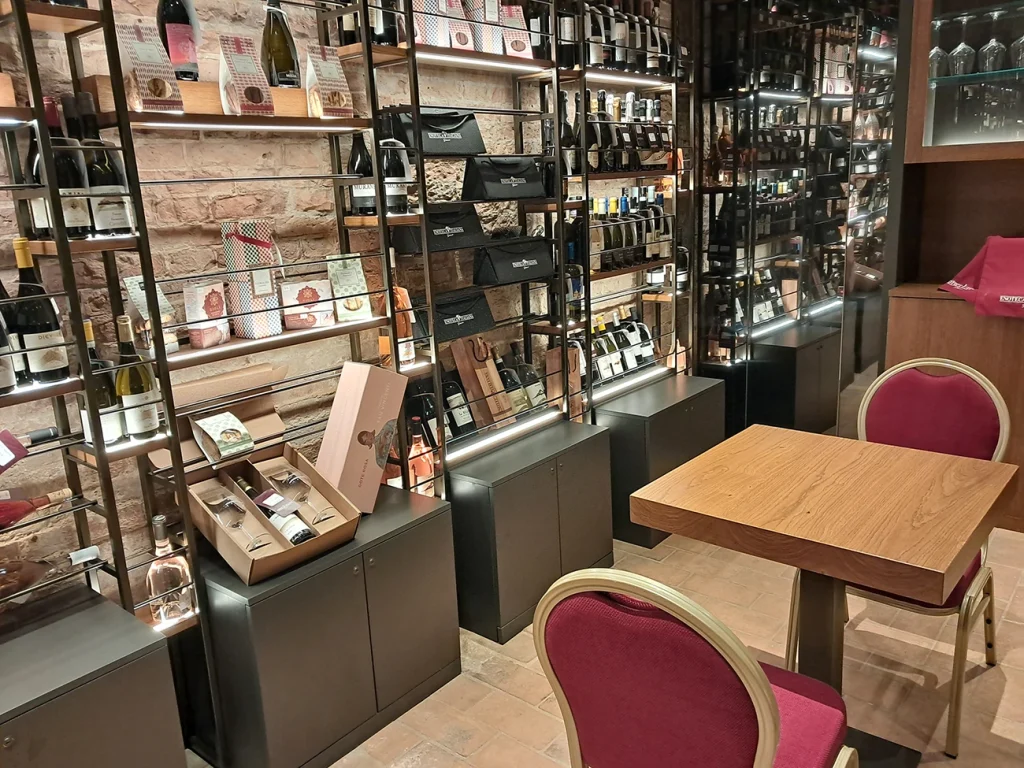
Afternoon: After lunch and a bit of relaxation on the lawns, slowly go up towards the centre (there is a convenient uphill path that brings you back near Piazza del Mercato). From here, you can head towards the Fortezza Medicea of Siena, on the opposite side of the city (San Prospero area). The walk lasts about 20 minutes crossing the centre or, if you are tired, you can take a city bus from the centre (e.g. Line 3 from Piazza Indipendenza to “Stadio/Fortezza”). The Fortezza Medicea is a massive brick fortress built in the 16th century by the Medici; today it is open to the public 24/7 for free and hosts gardens, walks and spaces for events. Climb onto the bastions to admire the panorama: on one side the view embraces the historic centre with the Duomo and Torre del Mangia, on the other the gaze stretches over the Chianti hills and the silhouette of Monte Amiata in the distance on clear days. On the walls of the Fortezza you will often find joggers and families strolling; there is also a playground for children in the adjacent gardens and large open areas perfect for them to run around freely. Inside one of the bastions is the Enoteca Italiana, an institution dedicated to Italian wine, with an enormous selection of bottles in the evocative brick “caves” (currently the enoteca is open with variable hours – if you find it open, you can taste a glass of Chianti or Brunello on site!). In summer, the Fortezza hosts concerts and open-air cinema, while all year round you can simply enjoy the peace of the place: sit on the wall, take an ice cream from the kiosk (if available) and observe local life.
After the tour of the walls, if you want a bit of “minor” culture, you can visit a less crowded museum. Two options: the Pinacoteca Nazionale di Siena (in the centre, 10 minutes from the Fortezza) or the Museo dell’Acqua (Fonte Pescaia) if you are intrigued by the ancient Siena water system. The Pinacoteca Nazionale is located in an elegant noble palace and houses the richest collection of Sienese medieval and Renaissance painting in the world (works by Duccio, Simone Martini, Lorenzetti, Sano di Pietro…). It is a must for art lovers: you will admire gold-ground panels from the 1300s and understand the evolution of the Sienese School. The museum is quiet and rarely crowded – almost a luxury after the throng of the Duomo! Cheap ticket, only €6 full and €2 reduced (EU youths 18-25); closed on Tuesdays and open the other days until 19:00. Good accessibility thanks to the internal lift and adapted services. If instead you prefer something different, the Museo dell’Acqua (inside the 14th-century Fonte di Pescaia, a 15-min walk from the walls) offers an interactive route on the history of Siena’s water supply, from medieval fountains to the “bottini” (underground aqueducts). It is very instructive especially for kids, and often organises guided tours of the tunnels (for these, however, you need to book in advance).
Close the afternoon with a walk without a particular destination through the less touristy districts: for example, explore the area of Via di Camollia (the traditional “humble” entrance to Siena, contrasted with Porta Romana considered the “noble” access). Via Camollia is full of little shops, wine bars and offers glimpses of local life far from the hustle of the Campo. Or take a trip to Piazza Salimbeni and Piazza Tolomei, elegant squares where Sienese people have an aperitif. You could also briefly visit the Synagogue of Siena in Vicolo delle Scotte, if open: it is one of the oldest in Italy (1756) and testifies to the important Sienese Jewish community – the visit lasts only half an hour.
Evening: For your last night in Siena (tomorrow you head out of town!), treat yourself to a typical and relaxed dinner. Near Hotel Minerva there are trattorias like Osteria il Vinaio di Bobbe e Davide (on Via dei Rossi) with great homemade pici and plenty of house wine. If you are still in the centre, Osteria Il Gatto on via San Marco is another little gem off the tourist trail, loved by students too, where you can taste pappardelle with wild boar or Sienese tripe without breaking the bank. After dinner, a digestive stroll is a must: enjoy Siena by night, with the monuments illuminated and the streets silent. Piazza del Campo at night is magical – perhaps toast to the holiday with a last gelato or an amaro. Then off to bed early, because tomorrow you head out to explore the province!
Summary Day 2 – Siena “secret” and relaxation (all on foot, except optional short bus segments)
| Attraction / Activity | Distance from Hotel Minerva | Duration (approx.) | Admission cost | Accessibility | Transport |
|---|---|---|---|---|---|
| Orto Botanico (historic garden) | 1.5 km (20 min on foot) | 1 hour | €5 full; €2.50 students/over 65; Free <11 | Partial (dirt paths, slopes) | On foot |
| Museum of Natural History (Fisiocritici) | 1.5 km (Orto Botanico entrance) | 30 min (optional) | Free | Yes (ground level entrance) | On foot |
| Orto de’ Pecci (urban park) | 1 km (15 min on foot from the Duomo) | 1-2 hours (with lunch) | Park free (restaurant à la carte) | Yes (large flat green areas) | On foot |
| Fortezza Medicea (panoramic walk) | 1 km (15 min on foot from Minerva); 2 km (25 min from Piazza del Campo) | 1 hour | Free (open 24h) | Yes (ramps and wide paths) | On foot / City Bus (*) |
| Enoteca Italiana (in the Fortezza) | – | 30 min (tasting) | Tastings from ~€5-10 per glass | Yes (access from the courtyard) | – |
| Pinacoteca Nazionale (art museum) | 1 km (15 min on foot from the Fortezza) | 1 hour | €6 full; €2 reduced (18-25) | Yes (lift present) | On foot |
| Museo dell’Acqua (Fonte Pescaia) | 1.4 km (20 min on foot) | 45 min | ~€5 (standard visit) | Partial (some steps) | On foot |
| Synagogue of Siena (if open) | 800 m (10 min on foot) | 30 min | ~€5 (guide included) | No (historic building with stairs) | On foot |
() City bus for the Fortezza: e.g. Line 3 from the centre to “Stadio-Fortezza” (city ticket €1.50), useful uphill.*
Day 3: Medieval villages – trip to San Gimignano (and Monteriggioni)
The third day we leave the city to explore the surroundings of Siena, rich in fairy-tale villages. Today we take you to San Gimignano, the “city of beautiful towers”, one of the most famous medieval villages in the world (UNESCO World Heritage Site since 1990). Get ready to walk among soaring towers and breathtaking views of the Tuscan hills. Departure in the morning from Hotel Minerva: you can choose to go by car (40 km, about 50 minutes of travel) or by public transport. By bus, go to the bus station in Piazza Gramsci (10 min on foot from the hotel) and take Line 130 (Autolinee Toscane) for San Gimignano via Poggibonsi: the journey lasts about 1h15 and costs a few euros. Check the timetables in advance (there is usually a bus every hour or so in the morning).
Morning in San Gimignano: On arrival in San Gimignano, you will feel like you have gone back in time. This village, surrounded by 14th-century walls, preserves 14 medieval towers that create a unique skyline (once the towers were 72!). From the parking lot (if you are driving) or the bus stop, enter the centre through Porta San Giovanni. Walk along the main street admiring artisan workshops and ancient stone houses, until you reach the splendid Piazza della Cisterna, triangular in shape, paved with bricks and surrounded by towers. In the centre there is a medieval well (from which the name “cisterna” comes) – a perfect place to sit and enjoy an ice cream. And speaking of ice cream: here you will find the Gelateria Dondoli, famous for having won world gelato championships (expect a queue, but it is worth it – try special flavours like saffron and pine nuts, a tribute to local products!).
Next to it opens Piazza del Duomo, the spiritual and political heart of the village, on which face the Collegiate Church (the Duomo) and the Palazzo Comunale with the tallest tower. Visit the Collegiate Church of Santa Maria Assunta, a Romanesque church of sober appearance but which inside houses a treasure of 14th-century frescoes depicting scenes from the Old and New Testaments (works of the Sienese and Florentine School). It is like entering a medieval “illustrated Bible” life-sized! Admission to the Collegiate costs about €5 full, €3 reduced and also includes the adjacent Museum of Sacred Art. Children under 6 do not pay. The church is accessible (ground floor, possibly a small ramp to enter). On leaving, you can climb the nearby Torre Grossa, the tallest in San Gimignano (54 m): the climb (218 steps) is less steep than that of the Torre del Mangia, and at the top the view of the sister towers and the surrounding countryside is priceless. Ticket €10 (reduced €8), purchasable in the Palazzo Comunale; included in the San Gimignano Pass together with the Duomo and civic museums (€13 approx. for everything). Here too, no elevator – stone and wooden stairs, so it is not accessible for those with mobility issues.
The medieval towers of San Gimignano rise over the village like ancient skyscrapers. Once a symbol of the power of merchant families, today they create a unique panorama in the world, which earned San Gimignano the title of UNESCO heritage.
After the cultural visit, explore freely the alleyways of San Gimignano: follow Via San Matteo and Via San Giovanni, browse through the ceramic, alabaster and typical product shops (the saffron of San Gimignano and the white wine Vernaccia are musts!). For lunch, choose one of the many small restaurants with a view. One suggestion: Le Vecchie Mura, a restaurant on the walls with a panoramic terrace, where you can enjoy a panzanella or pici while having the Tuscan hills under your eyes. Or try a medieval street food lunch: the porchetta or sandwiches with finocchiona (salami with fennel) sold in the norcinerie in the centre, accompanied perhaps by a glass of Vernaccia on the go.
Afternoon: If you have a couple of hours left, you can complete the tour of San Gimignano by visiting one of the small museums: for example the Museum of Torture (for those with particular tastes, a collection of medieval torture instruments) or the lighter Museum of Vernaccia Wine (outside Porta San Giovanni, with tasting possibilities). Alternatively, take a panoramic walk to the Rocca di Montestaffoli, the semi-ruined fortress at the top of the town: it is a public park and from its walls you get another wonderful view of the towers and vineyards. Great place for souvenir photos! Before leaving, don’t forget to buy some gastronomic souvenir: a bottle of Vernaccia di San Gimignano DOCG (local white wine) or jars of pure saffron grown here.
In the late afternoon, return to Siena. By bus: check the time of the last bus (usually around 18:00). By car: you have the freedom to make a detour for one more gem. Along the Siena-San Gimignano road is Monteriggioni, a tiny fortified village that seems straight out of a fairy tale. If you have time, stop at Monteriggioni for a brief visit (1 hour is enough, as the town is really small). Park at the foot of the walls and enter through Porta Franca: you will find yourself on the only street of the village, with stone houses and the atmosphere of a village stuck in 1200. Walk around the little square with the well, take a look at the small church of Santa Maria Assunta, and above all climb the walkways on the walls: two stretches of walk along the ancient walls, from which to admire the hills and the 14 towers that dot the perimeter. Access to the walkways and the small Armour Museum costs €5 full, €3.50 reduced (free <7 years). Monteriggioni is a place that fascinates adults and children (you might meet people in costume if you catch the summer medieval festivals). Walking on its walls will make you understand why Dante mentioned it in the Inferno comparing the towers to giants! After a few panoramic photos and maybe a coffee at the Bar delle Mura, resume the route to Siena (from Monteriggioni Siena is just 15 km, about twenty minutes by car).
Evening: Once back in Siena, dinner and relax. After the excursion out of town, you can dine directly at the hotel (if Hotel Minerva offers a restaurant service) or try a place in the station/Piazza Matteotti area. For example, the Ristorante Il Vapore near Piazza Matteotti offers homemade Tuscan cuisine, or Il Biondo in Via Camollia for a succulent steak Fiorentina. If on the way back from San Gimignano you pass through Colle di Val d’Elsa, you can have dinner there to change scenery – Colle Alta has intimate restaurants under medieval vaults (such as the Officina della Cucina Popolare). In any case, toast to the beautiful day spent, maybe with a glass of Vernaccia purchased in San Gimignano. Rest well: tomorrow awaits the last excursion, among postcard hills and dream villages!
Summary Day 3 – Excursion to San Gimignano (with stop at Monteriggioni)
| Stop / Place | Distance from Siena | Visit duration | Entry cost (main) | Accessibility | Transport from Siena |
|---|---|---|---|---|---|
| San Gimignano (medieval village) | ~40 km (50-60 min by car; 1h15 by bus) | 1 day (or 5-6h) | Village free (free entry) Tower and Duomo separate | Partial (paved streets and slopes) | Car (Pay parking) / Bus line 130 |
| Collegiata (Duomo of San Gimignano) | – (in the village centre) | 30 min | €5 full; €3 reduced (6-17 years); Free <6 years | Yes (ground floor) | – (on foot in the village) |
| Torre Grossa (Main Tower) | – (Palazzo Comunale) | 20-30 min (climb) | €10 full; €8 reduced | No (218 steps, no lift) | – |
| Civic Museums (Pinacoteca, etc.) | – | 30-45 min (each) | Pass combined Duomo + Museums €13 | Partial (historic building, no lift) | – |
| Monteriggioni (optional village) | 15 km (15-20 min by car) not directly served by bus for SG | 1-2 hours (short stop) | Village free; Wall walk + Museum €5 | Partial (cobbled streets, no access for disabled on the walls) | Car (Exit Raccordo Firenze-Siena “Monteriggioni”) Bus (Siena–Monteriggioni line, e.g. 130/A to Castellina Scalo + shuttle) |
Day 4: Tuscan hills – Val d’Orcia (Pienza, Bagno Vignoni, Montalcino)
The last day takes you to discover the living postcards of Tuscany: the gentle hills of the Val d’Orcia and the Chianti. We have chosen an itinerary in the Val d’Orcia, south of Siena, land of breathtaking landscapes, fine wines and Renaissance villages. Prepare the camera: you will see solitary cypresses on golden hills, undulating white roads and fairy-tale villages, which together make up a UNESCO site since 2004.
Note: To fully enjoy this day it is recommended to use a car (or participate in an organised tour), since destinations in Val d’Orcia are poorly connected by public transport. If you do not have a car, consider renting one for a day or joining a guided tour from Siena (many agencies offer day trips to Val d’Orcia). Alternatively, you can opt for the Chianti, which is a bit more accessible by bus as well, but further on you will find some tips on this variant.
Morning: Depart early from Hotel Minerva after a good breakfast. Take the Siena-Bettolle motorway south and exit at Pienza/San Quirico (the Siena–Pienza route is ~55 km, about 1 hour). The first stop is Pienza, the “ideal city” of the Renaissance wanted by Pope Pius II Piccolomini, a rare example of utopian urban planning realised. Park just outside the historic centre (there are various signposted paid car parks). Enter on foot via Porta al Murello: a spectacular panorama of Val d’Orcia from the viewpoint will welcome you. The town is small and delightful, visitable in a couple of hours. Stroll along Corso Rossellino, the main street, to Piazza Pio II – a real Renaissance gem with the Cathedral, Palazzo Piccolomini and the Palazzo Comunale. You will notice the harmonic perspective of the square, designed by architect Rossellino in just 3 years (1459-62) to realise Pius II’s vision. Enter freely into the Cathedral of Pienza, bright and sober, and take a look at the network of cricche (cracks) on the floors: the clay soil has been playing tricks on the structure for centuries! If open, you can visit (for a fee, ~€7) the Palazzo Piccolomini, the papal residence overlooking the valley, with frescoed rooms and a panoramic loggia over the magnificent Italianate hanging garden. You will feel like nobles looking over your lands. Don’t miss in Pienza the romantic alleys like Via dell’Amore and Via del Bacio – perfect for couple photos!
Pienza is also famous for its cheese: the Pecorino di Pienza. Go into a shop like Marusco e Maria and let yourself be enveloped by the aroma of aged cheeses. Taste the variations with pepper, truffle, or the one matured in walnut leaves. You can buy a piece of pecorino to take away (vacuum-packed for the journey).
Lunch: Continue the gastronomic tour by having lunch in one of the osterias of Pienza. An excellent choice is “Sette di Vino”, a small wine bar in the square, famous for its cheese boards and bruschettas accompanied by local Orcia DOC wine. In good weather, sit at the outdoor tables in the piazzetta di Spagna, tasting pecorino baked with honey and walnuts or pici cacio e pepe homemade. Alternatively, if you’re in picnic mode, return to the panoramic viewpoint (or to the public garden) and enjoy in the open air the cured meats and cheeses bought, with views of the hills – simple and unforgettable.
Afternoon: Set off again by car towards Bagno Vignoni, just 18 km from Pienza (about 20 minutes). Along the way you will cross San Quirico d’Orcia: if you have time, make a very short stop to see the Cipressini of San Quirico, one of the most photographed groups of cypresses in the world, which stand on a solitary hill creating an iconic image (they are along the SP146, there are lay-bys to stop). Then continue to Bagno Vignoni. This tiny thermal village will surprise you: instead of a central square there is a steaming medieval thermal basin, filled with hot water! Bagno Vignoni was already famous in Roman times and with Saint Catherine (who used to come here to bathe). Park at the entrance of the village and in two steps you will be at the Piazza delle Sorgenti, all around the large rectangular pool with thermal water at 49°C. Bathing in the historic pool is not permitted (just admire it from the outside, especially if the day is cool). However, you can immerse yourself in the benefits of the thermal waters in two ways: either having something to drink with your feet in the water in one of the thermal pools of the hotels/spas (there are some open also to non-guests, such as the Hotel Posta Marcucci or the Albergo Le Terme, which offer daily entries to their outdoor pools with a view), or free by going to the nearby “ruderi dei mulini” below the village, where the thermal water forms small streams and natural warm pools. A short walk (10 minutes downhill) takes you to the Parco dei Mulini: here you can just put your hands in the warm water or soak your feet in the basins carved in the rock, surrounded by the landscape. Remember to bring a towel! Bagno Vignoni is partially accessible: the pool-square is flat (even prams ok), while going down to the mills requires comfortable shoes and attention (dirt track).
After relaxing in the thermal baths (or taking a thousand photos of the steaming pool at the centre of the village), enjoy an ice cream or a coffee with a view of the water. If you had a light lunch, maybe it’s time for a sweet: try the ricciarelli biscuits or cavallucci sold in the small grocery shop there, or a glass of Moscadello di Montalcino (local sweet wine) in the wine bar.
At this point, if you are not tired and want to add a final jewel, in 15 minutes by car from Bagno Vignoni you reach Montalcino, home of Brunello. Montalcino stands on a hill and offers an intact medieval centre and a strong fortress. From below you will see the vineyards that produce one of the most prestigious red wines in the world, the Brunello di Montalcino DOCG. Arriving in town (panoramic road through olive groves and vines, ~40 km from Siena in total), park near the Fortress. Visit the Rocca di Montalcino (free entry to the courtyard, for a fee if you want to climb the walls, about €4). The fortress from 1361 is well preserved and from its towers gives magnificent views over the valley and Monte Amiata. Inside the Rocca there is a wine shop: you can stop for a Brunello tasting in an unparalleled historic atmosphere. In the town it is worth seeing the Piazza del Popolo with the 14th-century loggia and strolling among the wine bars and shops: Montalcino is less touristy than San Gimignano and maintains a refined quiet. If you are wine lovers, you can visit the Museum of Brunello (just outside town) or simply choose a bottle of Brunello in one of the shops to take home a precious souvenir (prices are not cheap, but a 2015 or 2016 bottle is worth the investment for connoisseurs). Note that many wine bars offer Brunello by the glass (from €8 upwards) if you want to taste it without necessarily buying a whole bottle.
Toward late afternoon, return to Siena (Siena is about 40 km from Montalcino, ~1 hour drive). Enjoy the landscape at sunset while returning – the hills will take golden colours and the rows of cypresses will cast long shadows on the fields: the essence of Tuscany will remain in your eyes and heart.
Evening (end of day 4): On arrival in Siena, it will probably be dinner time. For the final evening, you might dine in a typical place that offers dishes based on the products just discovered: for example the Osteria Enoteca Sotto le Fonti (near Fontebranda) pairs Sienese cuisine with an excellent wine list – you could uncork that Brunello you bought (some restaurants allow the cork fee if you bring your bottle). Otherwise, the Osteria La Chiacchera (Costa di Sant’Antonio) offers views over Siena and a genuine Tuscan menu, or remain informal with a dinner based on mixed boards and salads, if you had a big lunch in Val d’Orcia. Conclude the evening perhaps with a digestive walk up to the nearby Basilica of San Francesco to see the city at night, or simply relax in the common rooms of Hotel Minerva thinking back on the four intense days just spent. Congratulations, you have explored Siena and its surroundings in 4 days! You have seen Gothic squares, medieval towers, poetic hills and tasted unique flavours. Siena will bid you farewell – and who knows, you may return for the Palio or to delve into some corner left behind. Safe travels and thank you for discovering these Tuscan wonders with us!
Summary Day 4 – Val d’Orcia itinerary (by car from Hotel Minerva – circular tour Siena–Val d’Orcia–Siena)
| Destination / Stop | Distance from Siena | Visit duration | Main entry costs | Accessibility | Transport (car recommended) |
|---|---|---|---|---|---|
| Pienza (UNESCO village) | ~55 km (1h by car) | 2 hours (historic centre) | Free access to the village; Duomo free; Palazzo Piccolomini €7 (optional) | Partial (flat areas in the centre, some slight slopes) | 🚗 (Paid parking outside the walls) |
| Pienza viewpoint (Val d’Orcia panorama) | – (in the town) | 15 min (photos) | Free | Yes (open-air viewpoint) | – (on foot) |
| Bagno Vignoni (thermal village) | ~50 km from Siena; 18 km from Pienza (20 min) | 1-2 hours (relax) | Free access to the village and historic pool; Free springs Parco dei Mulini; Private spa optional ~€20-30 entry | Yes in the central square (Partial towards the mills area) | 🚗 (Parking at the village entrance) |
| Montalcino (wine village) | ~40 km from Siena; 30 km from Bagno Vignoni (30-40 min) | 1-2 hours (centre + fortress) | Free access to the village; Fortress: free courtyard, walls €4 approx. | Partial (centre on a slope, Fortress with stairs for towers) | 🚗 (Parking near the Fortress or centre) |
| Brunello tasting (Wine bar) | – (in Montalcino) | 30 min | €8-15 per glass (Brunello) Cellars outside town by reservation | Yes (wine bar in the Fortress accessible) | – |
| On the road: San Quirico cypresses, Val d’Orcia panoramas | along the route | Variable (photo stops) | Free (panoramic views) | – | 🚗 |
Chianti alternative (Day 4 option): as an alternative to the Val d’Orcia, you can dedicate the 4th day to discovering the Chianti Classico, north of Siena. This itinerary is ideal for fans of Chianti red wine and gentle hills covered in vineyards and woods. Depart from Siena to Castellina in Chianti (18 km), visit its village and the Rocca with views over the vines. Continue to Radda in Chianti (33 km from Siena, ~45 minutes), former capital of the Chianti League: stroll through its tiny centre and maybe have lunch with crostini and Chianti in a fiaschetteria like La Bottega di Giovannino. In the afternoon, you can do a tasting in a historic cellar – for example at the Castello di Brolio (Gaiole in Chianti), where modern Chianti was born: the castle can be visited with gardens and wine museum, and offers tastings of Barone Ricasoli wines. Or choose a smaller family-run farm along the SR222 “Chiantigiana” (there are dozens: look for signs “Degustazione – Vendita diretta”). You will enjoy splendid panoramas: rows of vines, olive groves and villages like Volpaia or Panzano that deserve a photo stop. The return to Siena from Radda is short (about 30 km). The Chianti is partly doable by bus (lines to Radda/Castellina depart from Siena, but with reduced schedules), however to visit wineries scattered among the hills the car is definitely preferable. If you choose the Chianti, you will have a different but equally fascinating experience: perhaps fewer “classic postcards”, but more contact with the world of wine and the rural Tuscany of the farms.
FAQ – Frequently Asked Questions about travelling to Siena and surroundings
Q: Do we need to rent a car for these excursions or can we move by public transport?
A: It depends on the destinations. For the centre of Siena you do not need a car: indeed, it is discouraged because the centre is largely pedestrianised/ZTL and can be easily walked around. Hotel Minerva is very central, so for Days 1 and 2 move on foot or at most with short rides on city buses (ticket €1.50) if you are tired. For day trips: San Gimignano and Monteriggioni are reachable by bus (line 130 from Siena to San Gimignano, with a stop 3 km from Monteriggioni), but the schedules must be checked and the bus takes longer than the car. If you do not have a car, you can still visit San Gimignano by bus (depart from Piazza Gramsci), but for Monteriggioni the connection is less direct (bus to Castellina Scalo and walk ~2 km to the castle). Val d’Orcia and Chianti: here the car is strongly recommended. Villages like Pienza, Bagno Vignoni, Montalcino have very few buses (1-2 a day) and no line that conveniently links them in one day. The same for touring the Chianti: there are buses to Radda/Gaiole but not to the wineries in the countryside. If you do not have a car, consider joining an organised tour (there are many departing from Siena to Val d’Orcia or Chianti, by minivan). Alternatively, you can rent a car for 1-2 days at car rental agencies near the Siena station. Note: Hotel Minerva offers a guarded car park for a fee, just outside the ZTL – very convenient for those with their own or a rental car.
Q: Does Hotel Minerva have parking? Where can we park the car in Siena and the villages?
A: Yes, Hotel Minerva has a private guarded garage (around €12-20 per day for guests) with direct access to the hotel. It is also located outside the ZTL of Siena, so you can get there by car without risking fines. In the nearby area there are also public on-street spaces free overnight (19:00-9:00) about ~300 m from the hotel. To visit Siena centre, you’d better leave the car at the hotel or use the official car parks: for example Parking Santa Caterina or Parking Stadio/Fortezza (€2/hour approx.) from where you can then take the escalators or walk. In villages outside Siena: Monteriggioni has a paid car park right outside the walls (rate ~€2/hour, or cheap daily forfait). San Gimignano has several numbered parking lots (P1-P4) along the gates, also paid (about €1.50-2/hour). In high season they fill up quickly, so arrive in the morning. Pienza has paid parking just outside the historic centre (blue lines, €1.50/hour approx.). Bagno Vignoni the same, parking at the entrance with parking meter. Montalcino: free parking around the Fortress or paid near the centre. In short, in almost all main villages you will find convenient parking near the historic centre, but allow a few euros of expense and bring coins for the parking meters (not all accept cards).
Q: Do museums and attractions need to be booked in advance? Do we need to buy tickets online?
A: Generally in Siena it is not strictly necessary to book tickets in advance, except for a few particular cases. The Duomo of Siena and the Torre del Mangia operate with ticket offices on site: you can buy on the spot (the Duomo rarely runs out of admissions, the Torre del Mangia has limited entrance but not bookable online – you must buy the ticket on site at the Museo Civico). In high season (July-August) or on public holidays, it can be useful to go early in the morning to avoid the queue, especially for the Tower. If you want to do the special visit Porta del Cielo (undergrounds and attics of the Duomo) then yes, that must be booked because it is with a guide at fixed times and limited seats – find information on the Opera del Duomo website. Museo Civico, Pinacoteca, Santa Maria della Scala: no need to book, just show up during opening hours. Also in San Gimignano tickets for Duomo/Tower are bought on site or you can buy the San Gimignano Pass at the ticket office on arrival (online not mandatory). Regarding thermal baths and wineries: if you want to use a spa in Bagno Vignoni it is advisable to call beforehand to check availability, especially at the weekend – some facilities have limited entries. The wineries in Chianti or Montalcino often require reservations for tours and tastings, so if you aim at a specific cellar (e.g. Castello di Brolio, or Banfi in Montalcino) better contact them the day before. Generally, however, for our basic itinerary you should not need to book anything well in advance. The only exception: if you travel during the Palio (2 July or 16 August), on those special days the city is very crowded and some attractions may have reduced hours or complicated access; moreover it is advisable to book restaurants and hotels well in advance. But outside the Palio, you can easily improvise admission to the attractions following your pace.
Q: What are the opening hours of churches, museums and shops? Do I have to take into account closures during the week or lunch breaks?
A: Yes, it is important to get oriented with Italian times: many museums and shops observe the lunch break and some weekly closing days. In Siena:
- Duomo of Siena: generally open from 10:30 to 17:30 (winter period) and until ~19:00 in summer; on Sundays and holidays it only opens in the afternoon (13:30-17:30). Attention: if you arrive at lunchtime in low season months, you might find it temporarily closed because the cathedral remains open but the rest of the complex (museum, etc.) closes 12:30-13:30 during the Sunday Mass. It is better to check the Opera del Duomo website for updated times, especially if there are special celebrations.
- Museo Civico and Torre del Mangia: open every day approximately 10:00-19:00 in summer (last entry to the Tower 18:15), and until 16-17 in winter. Closed on 25 December and variable on 1 January. The Tower is closed in case of heavy rain or bad weather for safety.
- Pinacoteca Nazionale: closed on Tuesdays. Open Monday and holidays 9:00-13:30; Wed–Sun 9:00-19:00. So be careful not to plan it on Tuesday.
- Santa Maria della Scala: open every day except Tuesday in low season (e.g. in January it was closed on Tuesdays, Wed-Thu-Fri 10:00-17:00, Saturday until 19:00). In high summer season, often open every day 10:00-19:00. Check their website for certainty, but usually Monday is open and Tuesday could be closed outside tourist season.
- Churches: Basilica of San Domenico open ~7:00-18:30 (with lunch break 12:30-14:00 approximately). Sanctuary of Santa Caterina open 8:00-18:00. Basilica of San Francesco (the one with the “hosts”) open morning and afternoon, with closure midday. In general many churches close in the lunchtime slot (13-15).
- Shops: shops in Siena centre (clothing, souvenirs, groceries) typically open ~9:30 and close for a break around 13:00, reopening 15:30-16:00 until 19:30-20:00. However, in central tourist areas some remain open also in the early afternoon, especially at weekends. Supermarkets in the centre are few, but for example Conad in Via Pantaneto has continuous hours until 20. Pharmacies have shifts but the one in Piazza Matteotti is often open with long hours.
- Restaurants: for lunch they usually serve from 12:30 to 14:30, then they close and reopen for dinner from 19:30 to 22:30 (Italian dinner times are later than in other countries). Many restaurants in Siena have a weekly closing day, often Wednesday or Thursday, or Monday at lunchtime (after the weekend). The smaller osterias often close one day (you will find it indicated on the door). Bars/cafés generally open from 7 to 20, some continuous schedule. Ice cream shops in the centre have long hours until late in summer.
In short: pay attention to Tuesday (a “critical” day for museums in Siena) and to the time slot 13-15 in which many attractions close or reduce service. Plan accordingly, perhaps taking advantage of that moment for lunch or for outdoor activities.
Q: We have small children – are the itineraries feasible with a stroller? Are there activities suitable for them?
A: Yes, our itineraries can be adapted to the needs of the little ones. Siena city has ups and downs and cobblestones, but with a good sturdy stroller you will get around everywhere (perhaps a light and manoeuvrable model to tackle steep slopes). Keep in mind that the centre has slopes (for example from the Duomo to the Campo there is a descent and then a climb), so expect to push a bit! Some attractions though are not accessible with a stroller: for example, to climb the Torre del Mangia you will need to take turns (one parent climbs, the other stays with the kids below) and it is not safe to carry a baby in your arms at the top given the narrow stairs. The Duomo instead yes, as said it has a ramp, and inside there is enough space to move with the stroller (maybe avoid the most crowded times). In museums like Santa Maria della Scala, elevators allow the use of the stroller. For transfers, children under 4 travel free on buses and coaches in general (without occupying a seat). If you have very small children, consider a baby carrier/sling for areas with stairs (Sanctuary of S. Caterina, fortresses, etc.).
As activities suitable for them: the Museum of Natural History (Fisiocritici) with the whale skeleton and stuffed animals intrigues kids. The Orto de’ Pecci is perfect: free run on the grass, farm animals to see and simple food at the restaurant (they have high chairs and kids menu). The Fortezza Medicea is also ideal to let them run safely (there are walls but you can keep an eye on them, and a small playground next to the stadium). Ice creams and sweets will not be lacking to reward them: look for the artisanal gelaterias mentioned (in San Gimignano for example there is even a small square with a carousel). In the villages, Monteriggioni enchants children because it seems like a fairy castle – there is a small Museum of armours where they can even wear helmets and armour in miniature, fun and inexpensive. In Val d’Orcia, Bagno Vignoni with the warm water will fascinate them (obviously be careful not to let them get too close or they might want to get into the historic pool! Better to take them to the free pools down by the mills, where they can play with the warm water in relative safety). The dirt roads with cypresses can become an “adventure” scenario if you tell them stories of knights or fairies.
In practice, children are welcome everywhere in Siena (the city is quiet and safe). Organise the days with frequent breaks: a park, an ice cream, a play moment. In Piazza del Campo kids often enjoy chasing pigeons or rolling down the slope of the square – let them blow off steam there, perhaps at less crowded times. In the restaurants, many offer half portions or simple dishes (pasta with tomato sauce, cutlet with chips, etc.). And remember that children under certain ages enter free to many attractions: Duomo free under 6, Santa Maria under 11, Torre del Mangia under 11, state museums under 18 free (Pinacoteca free <18). Don’t forget to ask if there are family discounts (e.g. family ticket Torre del Mangia €40 for 2 adults + kids). In short, Siena with kids is doable, with a bit of flexibility.
Q: Where can we eat without spending much and try the local cuisine?
A: Siena is rich in trattorias and wine bars where you can eat well without spending a fortune. Here are some foodie suggestions:
- Trattoria Papei (Piazza del Mercato, Siena): authentic Tuscan cuisine, also frequented by locals. Recommended dishes: pici with wild boar ragù, ribollita, Sienese tripe. Informal atmosphere, outdoor tables in summer. Honest prices (first courses ~€8-9, main courses 12-15€).
- Osteria Permalico (Vicolo di Provenzano, Siena): family-run osteria a few steps from Piazza del Campo. Specialties: pici all’aglione, platter of Tuscan cold cuts, with honest house wine. Small place, best to arrive early. Very loved by students and locals for its good value for money.
- Osteria La Chiacchera (Costa di Sant’Antonio, Siena): reachable by descending a picturesque staircase near the Duomo. It has a terrace with a superb view of the hills. Offers homemade dishes like pasta with breadcrumbs, hunter’s style rabbit, and homemade desserts. Medium prices but priceless view. Perfect for a sunny lunch.
- Caffè Nannini (Banchi di Sopra, Siena): for breakfast or a snack, a must stop. It is the historic pastry shop of the famous singer’s family. Try the cantucci, the ricciarelli and the panforte accompanied by a good cappuccino. Coffee/pastry prices (coffee ~€1.20, pastries €1.50-2), elegant but welcoming environment.
- Il Bandierino (Piazza del Campo, Siena): one of the bars/restaurants overlooking the Campo. For an aperitif or snack with a view. They make platters, bruschettas, salads and first courses. Prices are somewhat touristy given the location, but it is fine to sit for an hour on the square enjoying a Tuscan crostino and a glass of Chianti.
- Bar dell’Orso (Località Monteriggioni, Castellina Scalo): if you are driving and pass by Monteriggioni at lunchtime, stop here! This rustic spot just outside the village is famous for the lampredotto sandwiches and porchetta, as well as handmade pasta. Frequented by truck drivers and locals – a sign of authenticity. Cheap and abundant (a giant sandwich ~€5).
- Gelateria Dondoli (Piazza Cisterna, San Gimignano): as already mentioned, top ice cream! Recommended flavours: Cream of Santa Fina (saffron and pine nuts) or Champelmo (pink grapefruit and sparkling wine). Normal prices (medium cone €3-4). There is often a queue, but it moves quickly. World champion winning gelato, not to be missed if you have a sweet tooth.
- Le Vecchie Mura (San Gimignano): restaurant with a top panorama over the valleys. Offers Tuscan cuisine and pizza. Prices in line with the tourist norm (€9-12 first courses, €16-18 main courses), but the view is worth the extra. Book a table on the terrace. Suitable for romantic dinners.
- Sette di Vino (Piazza di Spagna, Pienza): small wine bar with kitchen. Famous for its ribollita and the pecorino cheese baked with sauces. Offers boards of Pienza pecorino in various maturations with matching mustard – paradise for cheese lovers. Excellent wines by the glass (also the possibility to taste the local Orcia DOC). Few tables, homely atmosphere. Expect €15-20 per person with wine. Closes after lunch (reopens in the evening only in high season).
- Trattoria Latte di Luna (Pienza): a valid alternative in Pienza, known for the handmade pici and the roast pork. It has a pleasant outdoor garden. Excellent quality-price ratio (appetizer, first course, dessert around €25). Booking necessary in summer.
- Enoteca La Fortezza (Montalcino): Inside the fortress of Montalcino, a wine bar where you can accompany a glass of Brunello with Tuscan crostinis or local pecorino. They also offer light lunch (soups, cold cuts). Suggestive atmosphere among the medieval walls. Wine prices appropriate to Brunello (glasses €8-10), food at moderate prices.
In general, for lunch you can often manage with a snack: bakeries sell filled focaccia, ciaccino (flatbread) and pizza by the slice. An excellent bakery in Siena is Il Magnifico (via dei Pellegrini) – try the focaccia with rosemary and oil, divine. For dinner it is worth sitting down calmly and enjoying the evening: Italians dine later so do not be surprised if around 19 the places are semi-empty, the peak is from 20:30 onwards.
Tailored tips for various types of travellers
Every traveller is different: here are some targeted tips to enjoy Siena and its surroundings according to your needs and interests.
- Families with children: As already mentioned, plan the days with flexible rhythms. Bring snacks, water and perhaps a small ball or soap bubbles to entertain them during the visits (Piazza del Campo lends itself to an impromptu match when it’s not crowded!). Take advantage of places where they can blow off steam: Orto de’ Pecci (they also have swings and animals), the Lizza gardens near the Fortezza (there is a playground and rides in summer), the bastions of the Fortezza for running safely. Involve them in the stories: tell the legend of Senius and Aschius (founders of Siena chased by the she-wolf), or make a “hunt of the Contrade” – the kids will enjoy finding in the streets the little fountains or plaques with the symbols of the Contrade animals (an educational and fun game). In restaurants, ask for half portions as said, and don’t worry if they make noise: Italians love children, you’ll receive smiles rather than frowns. One last tip: ice creams and pastries can be motivation incentives (e.g. “if we climb up to the Duomo, then ice cream!”). Siena is a city on a child’s scale: no cars in the centre, manageable distances and lots of visual stimulation (flags, drums if you catch a contrada rehearsal, horses…). You’ll see that they will be enchanted too.
- Couples on a romantic trip: Siena is often considered less than Florence for couples, but in reality it is very romantic. Its medieval corners at sunset, the silent alleys at night, the soft lights… create special moments: for example climb the Torre del Mangia near closing time to find yourselves almost alone on top with the city at your feet – it’s an experience to make your heart race. Or dine in a small intimate restaurant like La Taverna di San Giuseppe (set in a stone cave from 1100, candlelit atmosphere). Stroll hand in hand along Via di Pantaneto after dinner, where there are places with live jazz music (the club Un Tubo – check if there are concerts). In Val d’Orcia, nothing is more romantic than watching the sunset from the terraces of Pienza overlooking the rolling fields, maybe sharing a glass of wine. In Bagno Vignoni, treat yourself to a couple’s thermal bath under the stars (many thermal hotels open in the evening). And what about Monteriggioni at night? If you stay nearby, the illuminated and almost deserted village after the day-trippers is a love nest. In Chianti, a wine tasting in a castle or a picnic among the vines at sunset can be an indelible memory. Siena also offers beautiful backdrops for couple photos – set the camera on a tripod and capture yourselves with Piazza del Campo deserted at dawn, for example. In short, make the most of the slow, stress-free atmosphere: here no one will rush you, take your time for each other.
- Solo travellers: If you are alone, Siena is a pleasant and safe place where you’ll feel at ease. To socialise, you could join some guided tours (walking tour of Siena, wine tour in Chianti) so as to meet other travellers. At night, the area of Piazza del Campo and Via Pantaneto is full of informal places where it is easy to chat: for example sit at the bar of a wine bar like Liberamente Osteria in the Campo – sipping a drink you often strike up conversation with someone. Since Siena is a university city, there are many young people including internationals: try the pub The Freak Bar or Cuchina Sounds in Pantaneto, well-known Erasmus/student hangouts, where they organise music nights or language exchanges. Even local Airbnb hosts or the staff at Hotel Minerva will be happy to chat and share tips (Tuscan hospitality is warm). As for safety already said, you can walk anywhere with confidence. An advantage of travelling solo: you can customise the times as you like – maybe linger longer in the Pinacoteca if you love medieval art without anyone sighing, or climb every available tower! For meals, no embarrassment: many little restaurants have outdoor tables perfect for one, and if you prefer you can also get takeaway (cheeses, cold cuts, street food) and have urban picnics. A nice place for a solo lunch is in the Fontebranda Gardens: buy a sandwich and sit near the medieval fountain, enjoying the peace. Remember: Siena is also meditative – strolling through semi-empty alleys early in the morning or late at night will make you feel as if in a set from another time, an experience that those travelling in groups sometimes miss.
- Students and young low-budget travellers: Good news: Siena offers several economic and fun opportunities. Besides the “cheap eats” (Permalico, paninis, etc.), know that as students up to 25 years you have discounts in state museums (Pinacoteca €2) and can take advantage of the first Sundays of the month free. Consider staying in a hostel or guesthouse to save money (there is one called Siena Hostel Guidoriccio a bit outside the centre, or many guesthouses about €40/night in low season in the centre). Hotel Minerva anyway often has offers for students (being near the University, it’s appreciated for conferences). Another tip: Siena hosts a large university, so you’ll find university canteens where with a few euros you can eat (there is one on via Sant’Agata and one in San Francesco). You don’t need to be enrolled in the Uni to access: ask if they accept external paying visitors, usually yes around €10 for a complete meal. In the evening, as said, the student nightlife is concentrated in Via Pantaneto and surroundings: craft beer bars like La Diana offer local craft beers (e.g. Birrificio La Diana produces in Siena). Also try the typical Siena drink: the Mischiata (a sort of mixture of liquors… strong, go easy!). If you fancy a disco, there are no big clubs in Siena city, but there are pubs with music until late. Or you can take a bus to La Casa del Popolo de Castellina Scalo when they organise “2000s parties” to dance (a truly Italian experience!). Another suggestion: the Palio dei Somari in Torrita di Siena (March) or village festivals in the surroundings – attend and you’ll get a genuine taste of Tuscan life spending little (pasta at the festivals at €5, wine at €1). If you’re in summer, find out about any concerts at the Fortezza or open-air cinema – often free or low-priced. In short, there’s fun without going broke, and the city is full of peers to make friends.
- Workers travelling (bleisure): If you are in Siena for work or want to combine smart working and tourism, Hotel Minerva offers Wi-Fi and probably quiet business spaces (it also has meeting rooms if needed). You can organise visits in half a day and dedicate the other half to work. For example, you can work in the morning from your hotel (or in a co-working space – in Siena there’s one called Simpol Labs in the centre) and then go out in the afternoon for a reduced itinerary. Or vice versa, do the sightseeing early in the morning and work from 14:00 onwards when it’s hotter. Siena is a “slow” city that adapts well to those who work: lunch breaks are relaxed, you can have lunch in 1 hour in a osteria and return to emails. In the evening, after work, there’s plenty to see without major displacements – a great advantage. For example, finish your calls at 18, and in 5 minutes you’re strolling in Piazza del Campo with a gelato. Try to insert a “walking meeting” along the walls of the Fortezza – maybe the Tuscan air will inspire some good creative idea! If you have the company car, watch out for the ZTL as mentioned: the Minerva being just outside makes life easier, but if you move around the centre inquire about gate times (usually 7:30-20). Another thing: sometimes for work there’s little time, so if you need to cut something, focus on a couple of highlights (e.g. Duomo and Campo) and maybe hire a private guide to optimise (in 2 hours they’ll tell you Sienese history while you see the main points – cost ~€120 perhaps splitting with colleagues). Also, ask at the hotel if they offer express laundry service if you’re on a long business trip, and inquire about transport to the airport if you need: from Siena there’s a direct bus to Florence Airport and to Rome Fiumicino (convenient to return post-work without going back to Florence city). Combining work and leisure in Siena is feasible and, indeed, the relaxing environment increases productivity (word of someone who studied and worked here!).
We hope that these tips help you to make the most of Siena and its surroundings, whatever type of travellers you are. The city of the Palio will welcome you with open arms and, we are sure, will give you four unforgettable days of art, landscapes and good food. Safe travels and enjoy your time in the Sienese land! 🏰🌻🍷