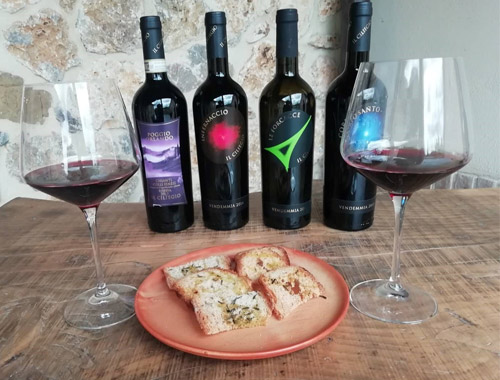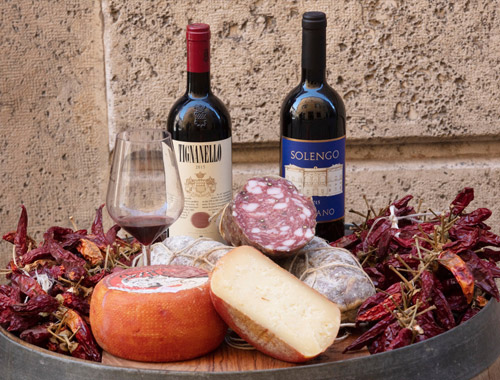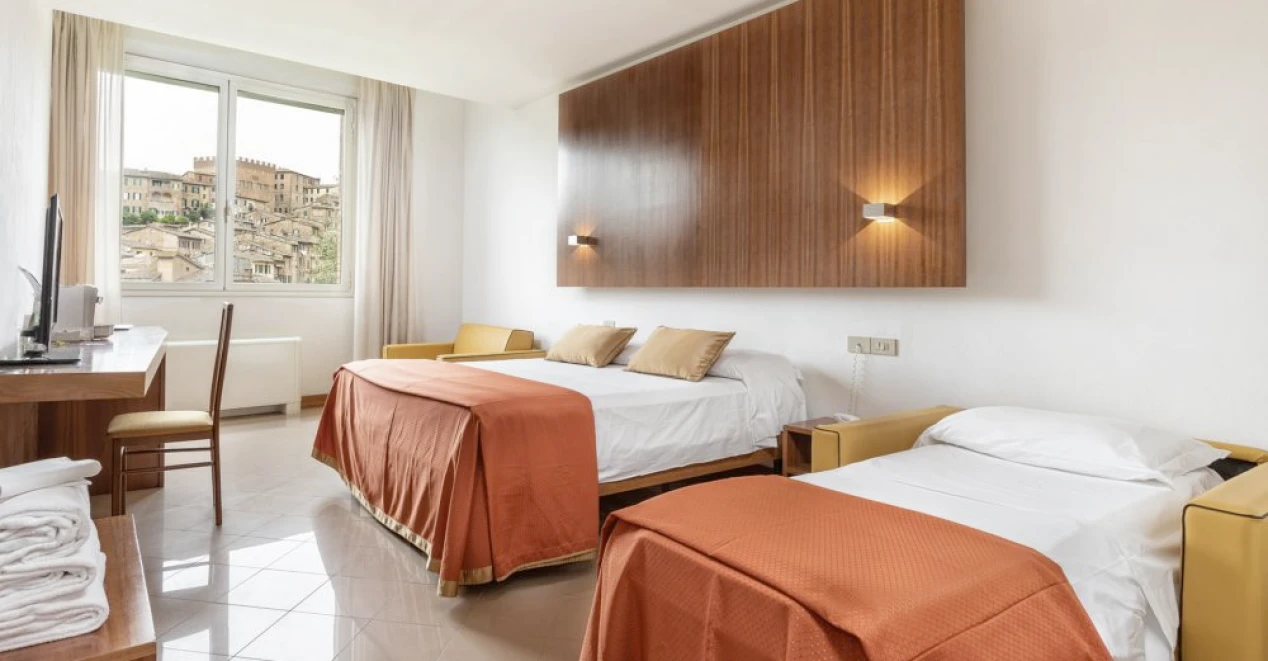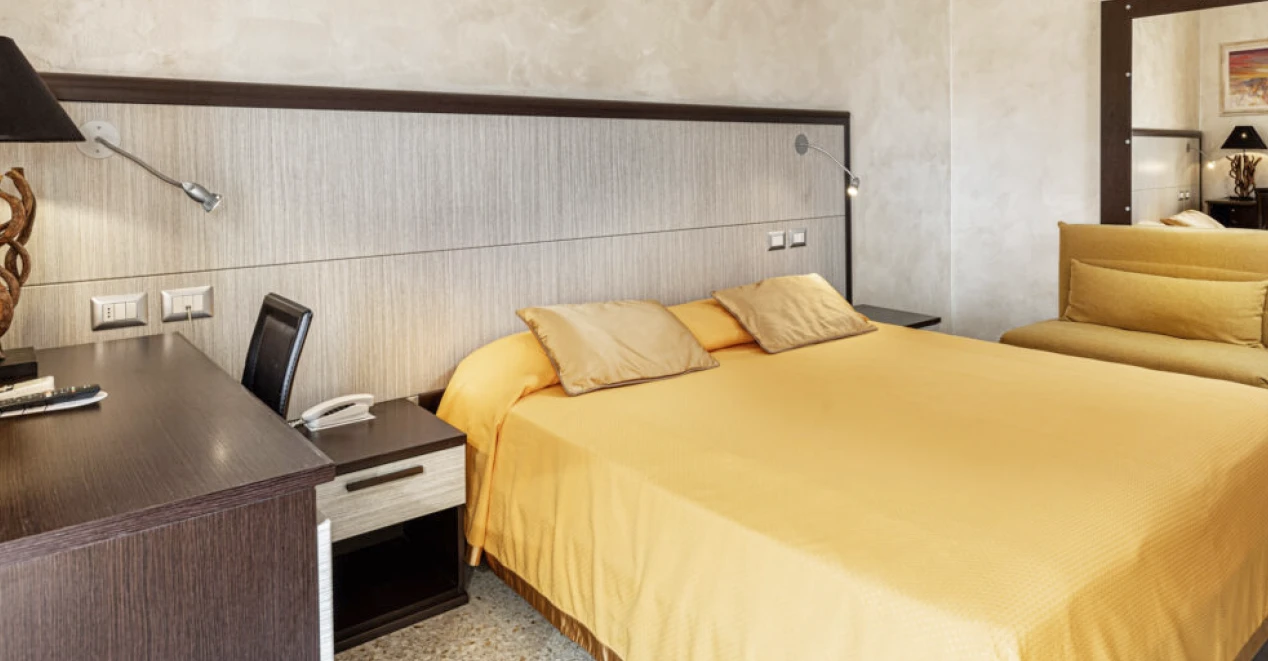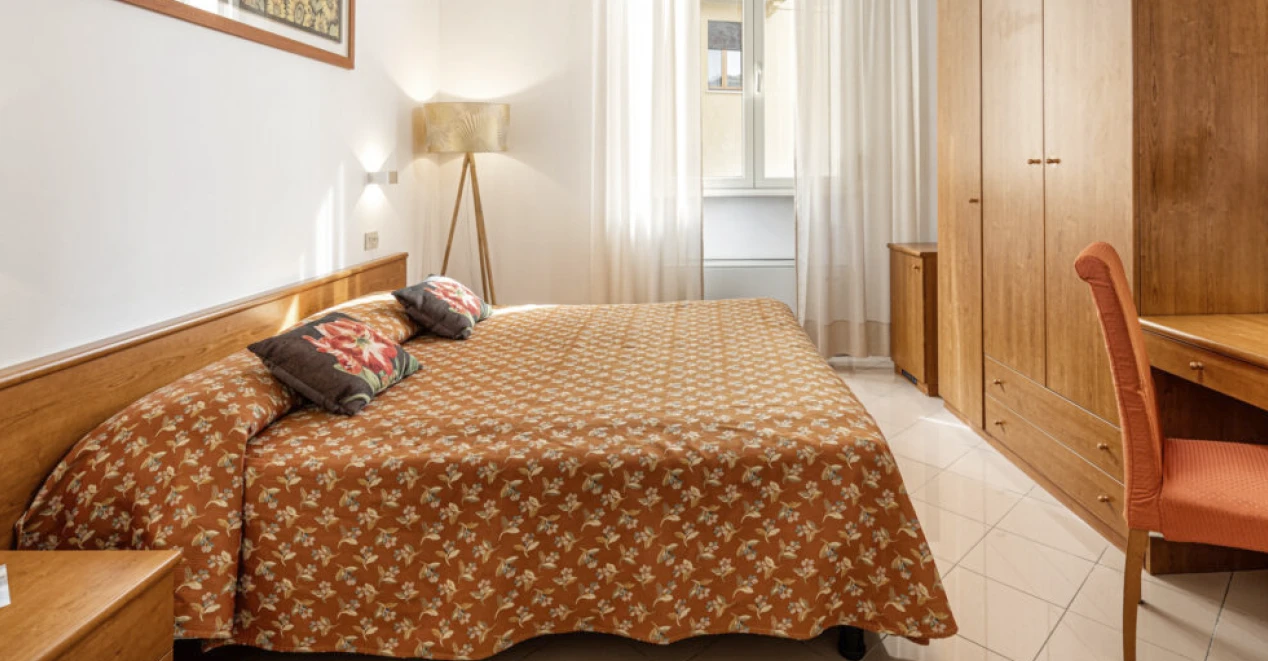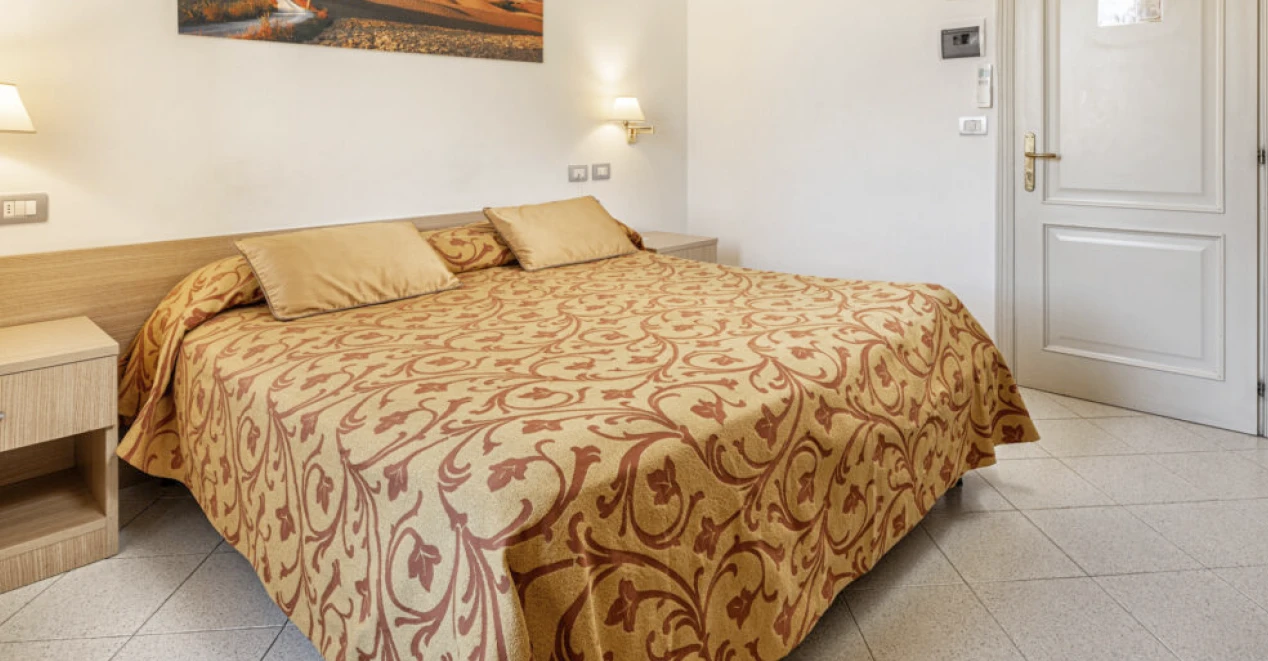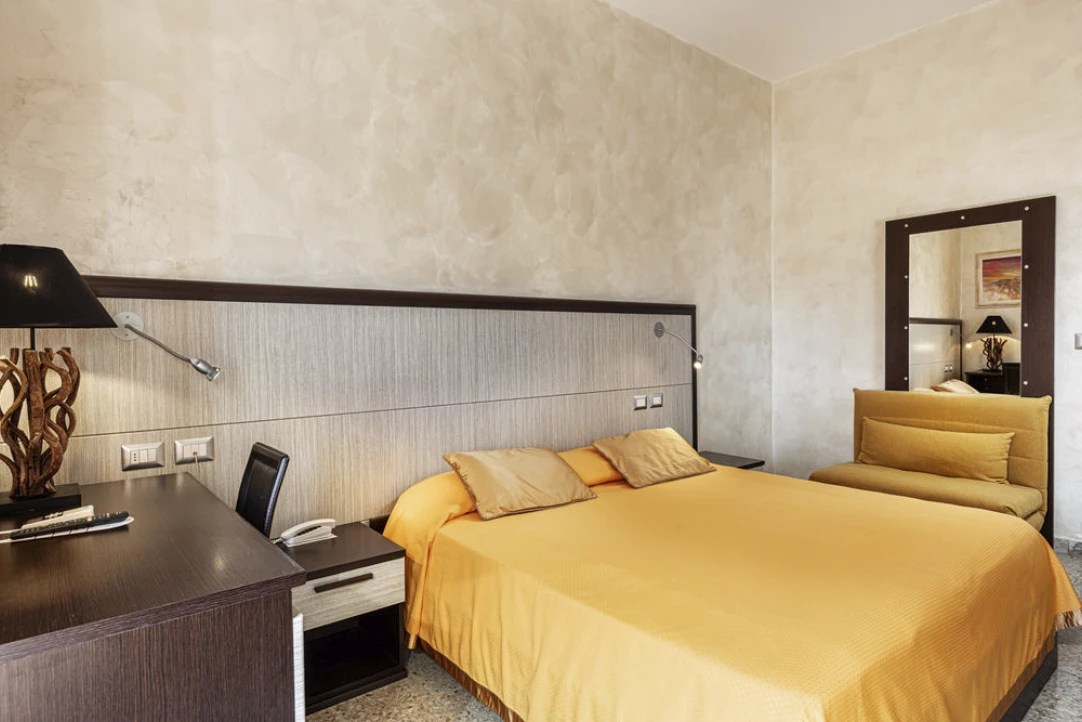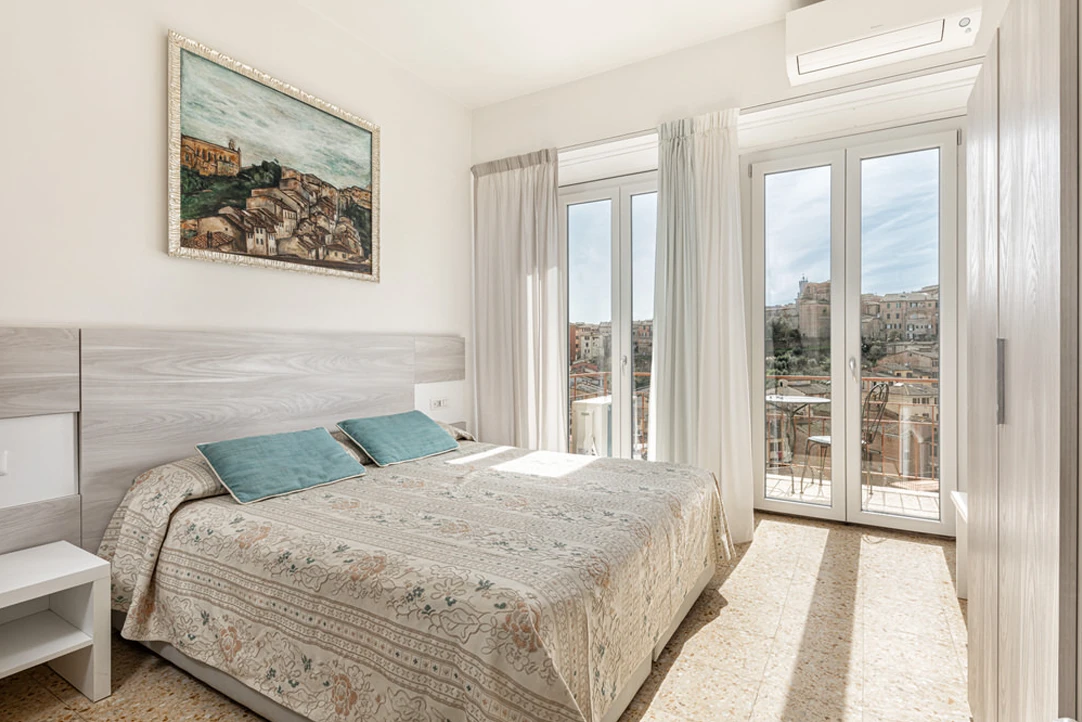

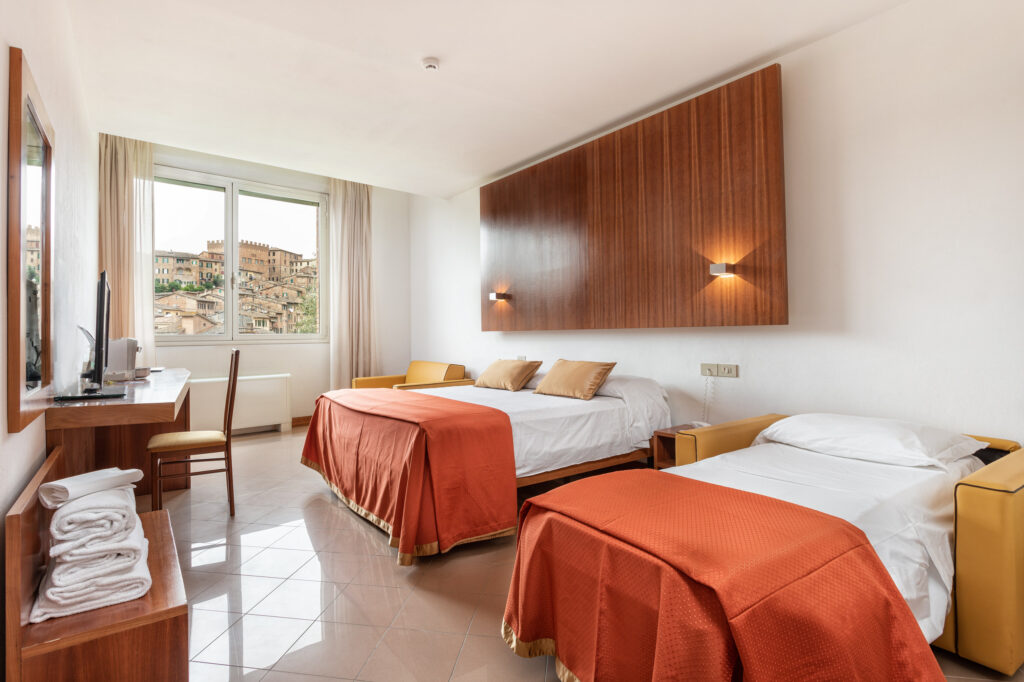
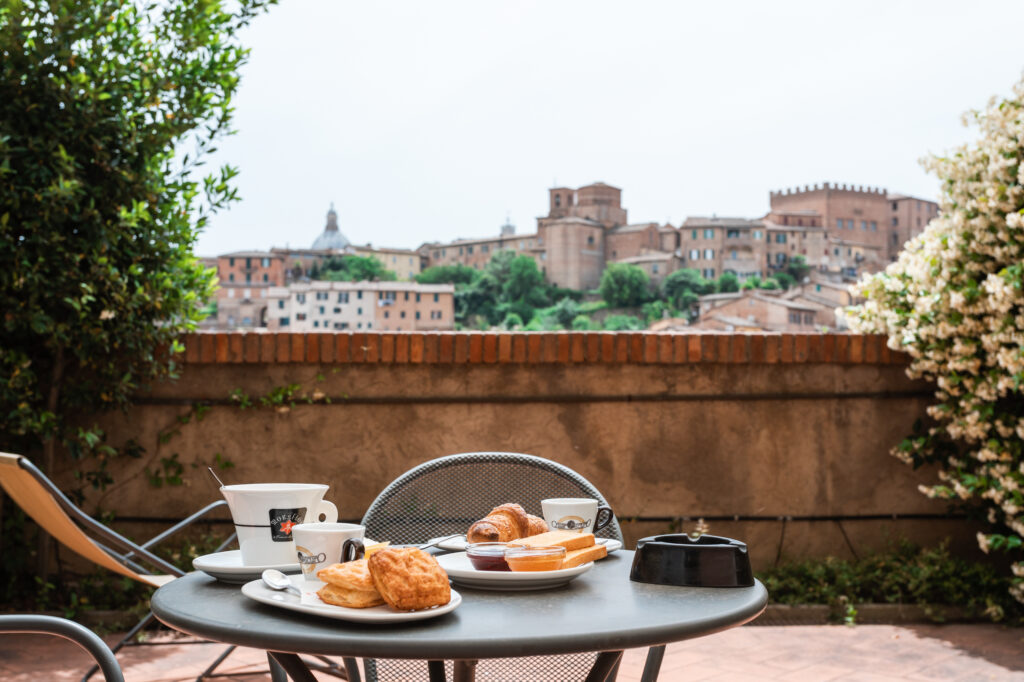
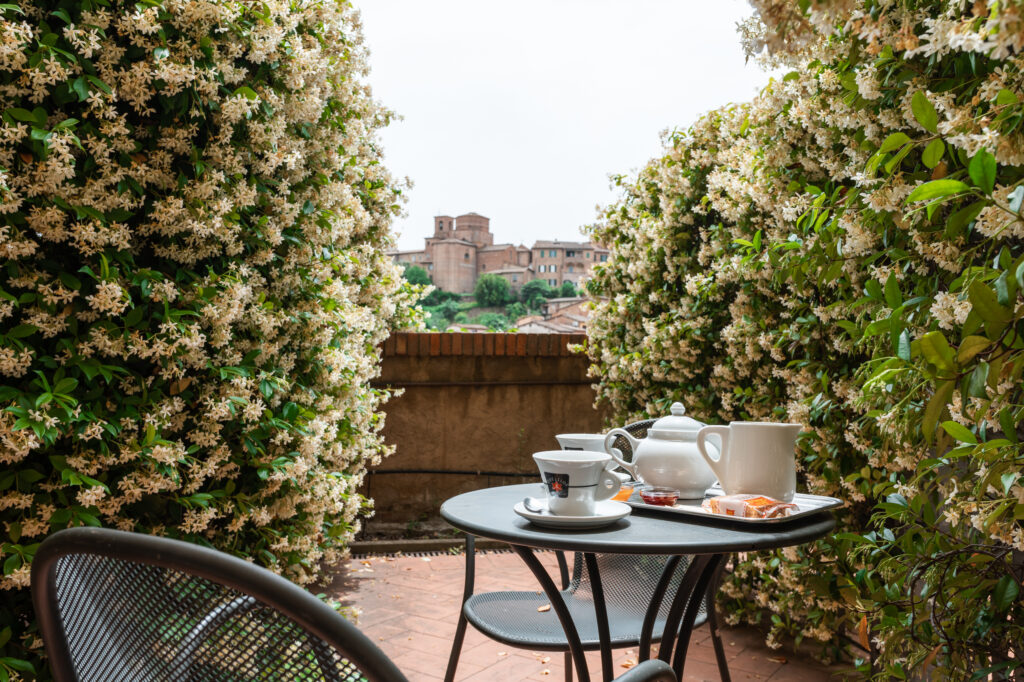
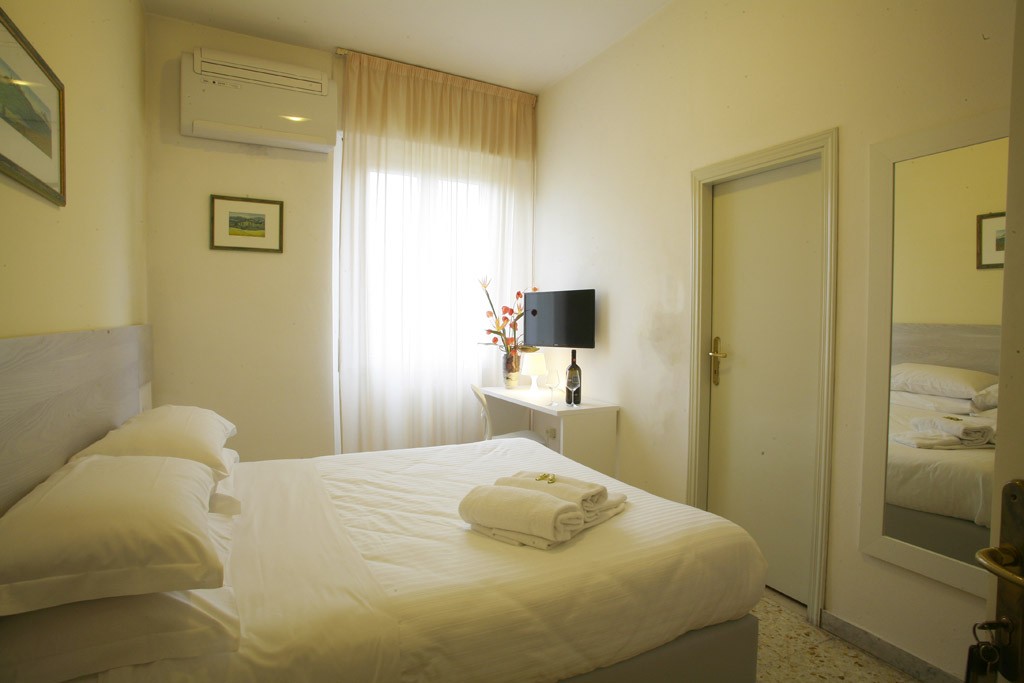
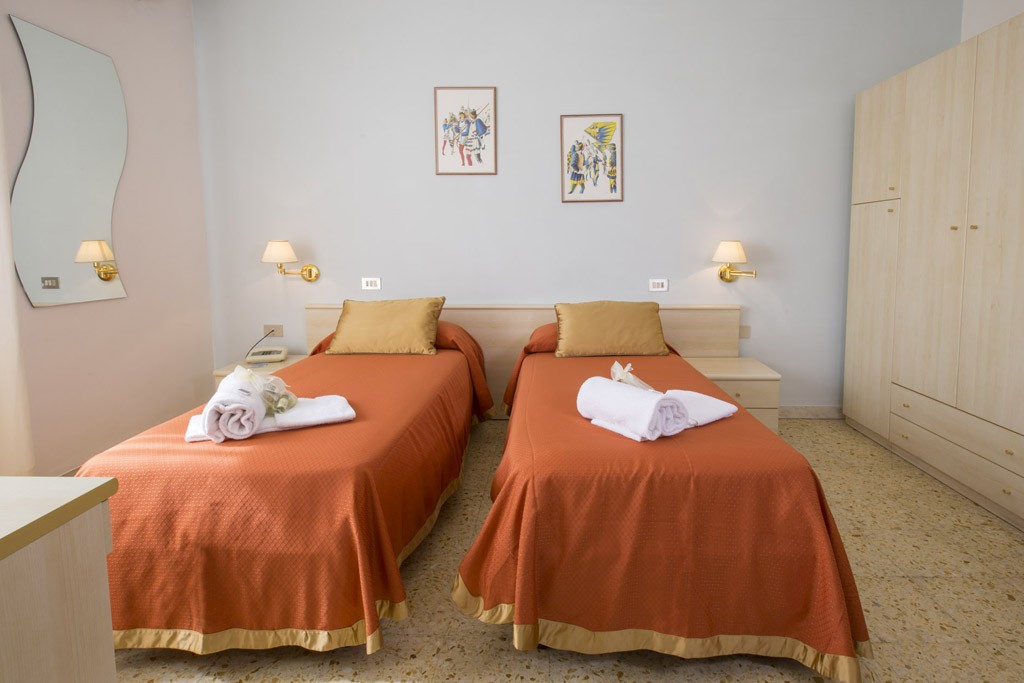
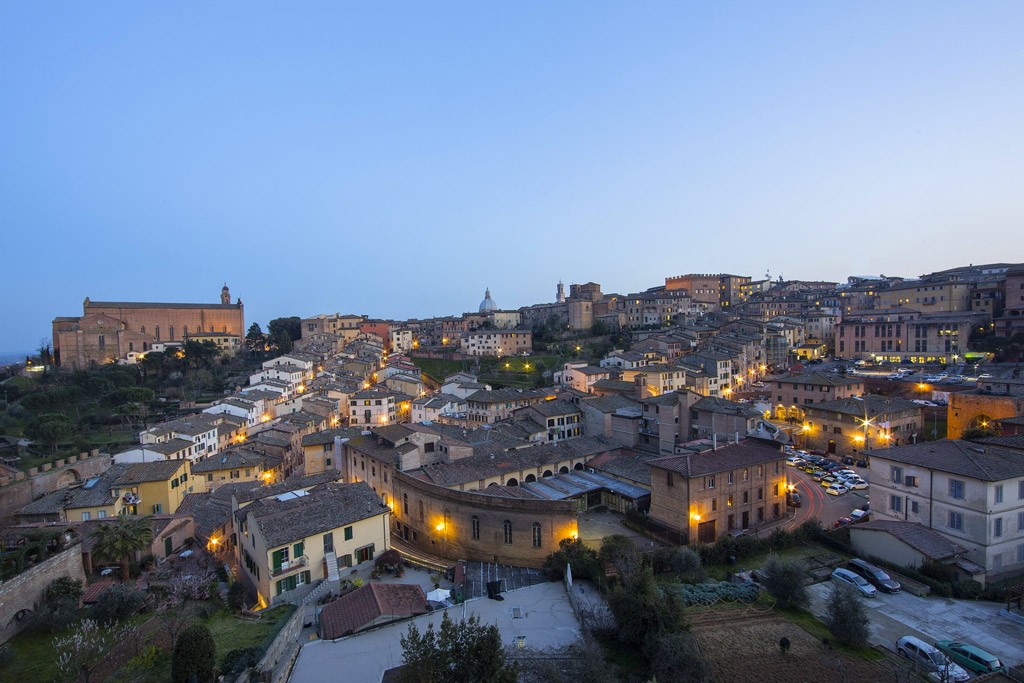
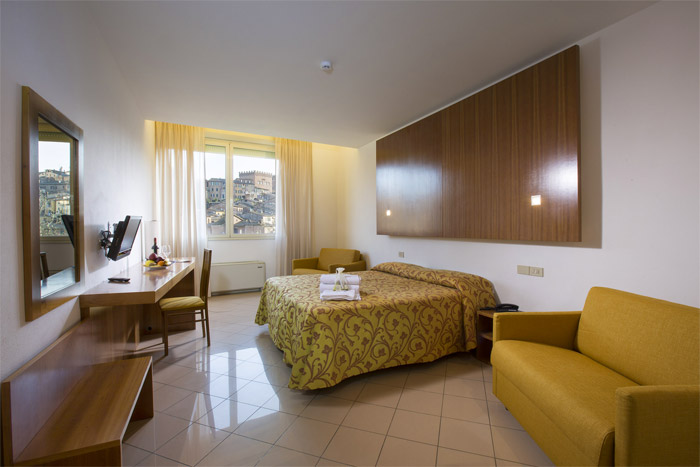
Welcome to Siena! 🙂 Get ready to discover the best of this enchanting medieval city and its surroundings over three unforgettable days. Every morning we’ll depart from the Hotel Minerva in Siena, a 3-star hotel on Via Garibaldi with a parking garage and a splendid view of the historic center. The location is very convenient: only 10 minutes on foot to reach Piazza del Campo from your hotel, so you can explore almost everything without needing a car. We’ve designed an informal and flexible itinerary, suitable for families, couples, solo travellers, students and business travellers. You’ll also find tips on where to eat (from cheap sandwiches to typical osterias) and plenty of practical advice to enjoy Siena to the fullest. Ready to go? Let’s get started! 🚶♂️🍷
Day 1: Siena historic center on foot 🏰
The first day is dedicated to the wonders of Siena’s historic center, all easily reachable on foot from Hotel Minerva. Put on comfortable shoes and get ready to climb a few steps: Siena’s medieval streets are charming but often sloped! We’ll start exploring iconic spots: Piazza del Campo, the Duomo of Siena, the Torre del Mangia, the Sanctuary of Santa Caterina and much more. Here’s the recommended itinerary:
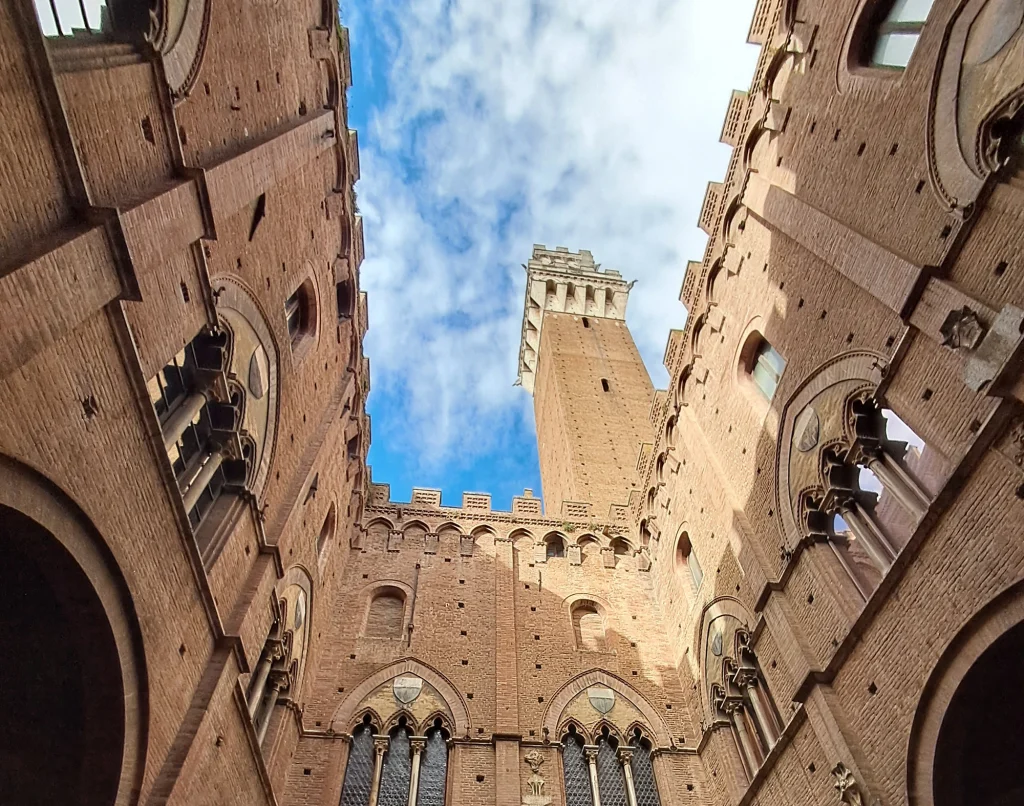
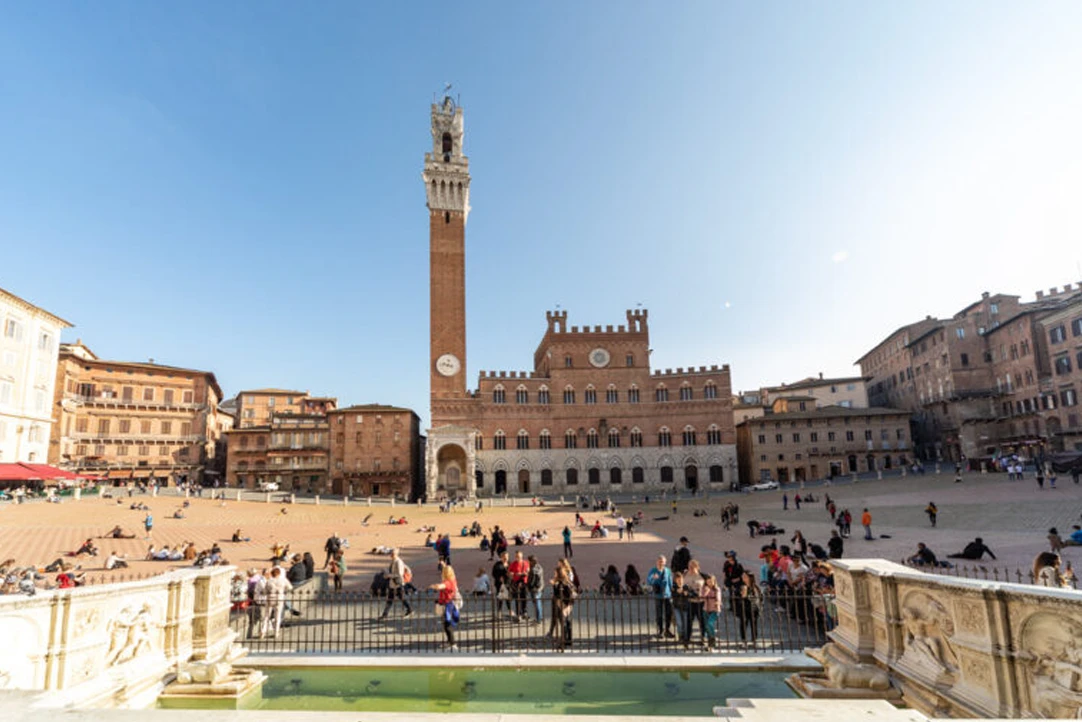
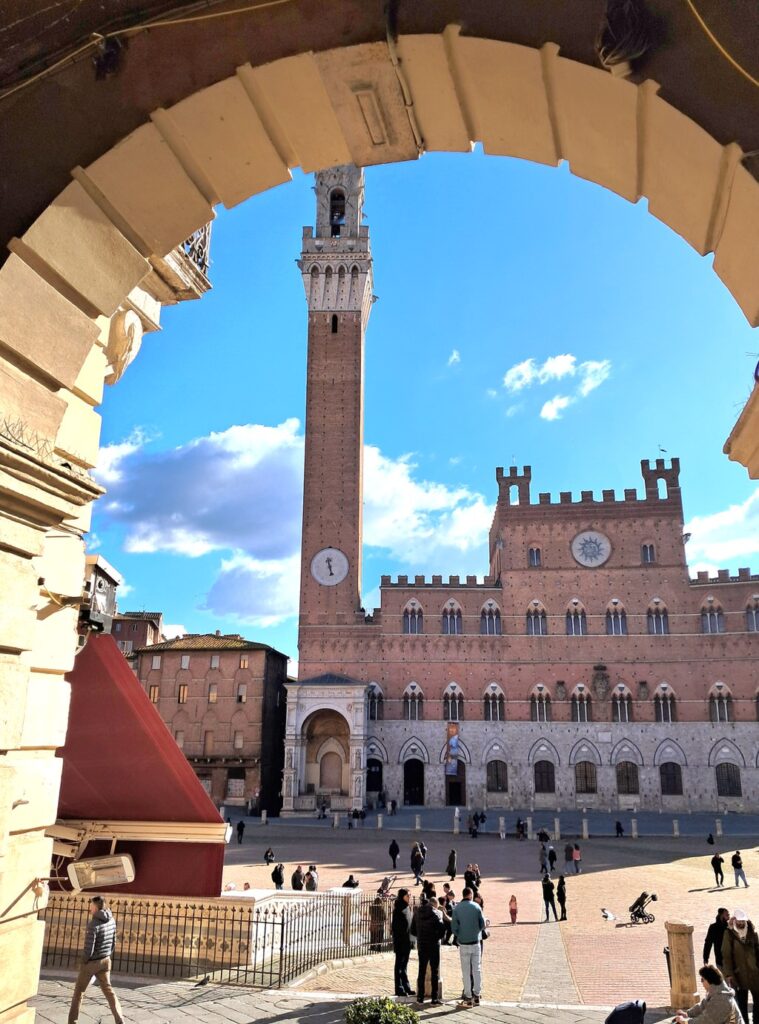
- From Hotel Minerva to Piazza del Campo: Leave the hotel and walk along Via Garibaldi towards the heart of the city. In about 10 minutes you’ll reach Piazza del Campo, Siena’s main square, famous for its shell shape and for the Palio horse race held twice a year. Here you can immediately admire the large Palazzo Pubblico (the town hall) with the Torre del Mangia rising 88 meters. At the center of the square is the Fonte Gaia, an ornamental fountain (a copy of the original by Jacopo della Quercia) – a great spot for your first photos. Take time to sit on the “campo” (the sloping red-brick pavement) and enjoy the unique medieval atmosphere of this UNESCO World Heritage square.
- Palazzo Pubblico and Torre del Mangia: Still on Piazza del Campo, you might visit the Civic Museum inside the Palazzo Pubblico, famous for Ambrogio Lorenzetti’s Good Government frescoes. But the highlight is climbing the Torre del Mangia! 💪 There are about 400 steps, but the view from the top makes it worth it: you’ll have Siena at your feet and be able to see as far as the Chianti hills on clear days. The tower is open daily (approximate hours 10:00 – 19:00 in summer, shorter in winter). Cost: €10 to climb the tower; alternatively, there’s a combined ticket Torre + Civic Museum for €15. If you travel with small children, note that the staircase is narrow: decide whether you all climb or perhaps one parent stays in the square to rest. 😉 For those who prefer not to climb, from the Civic Museum’s loggia there’s also a panoramic view over the rooftops.
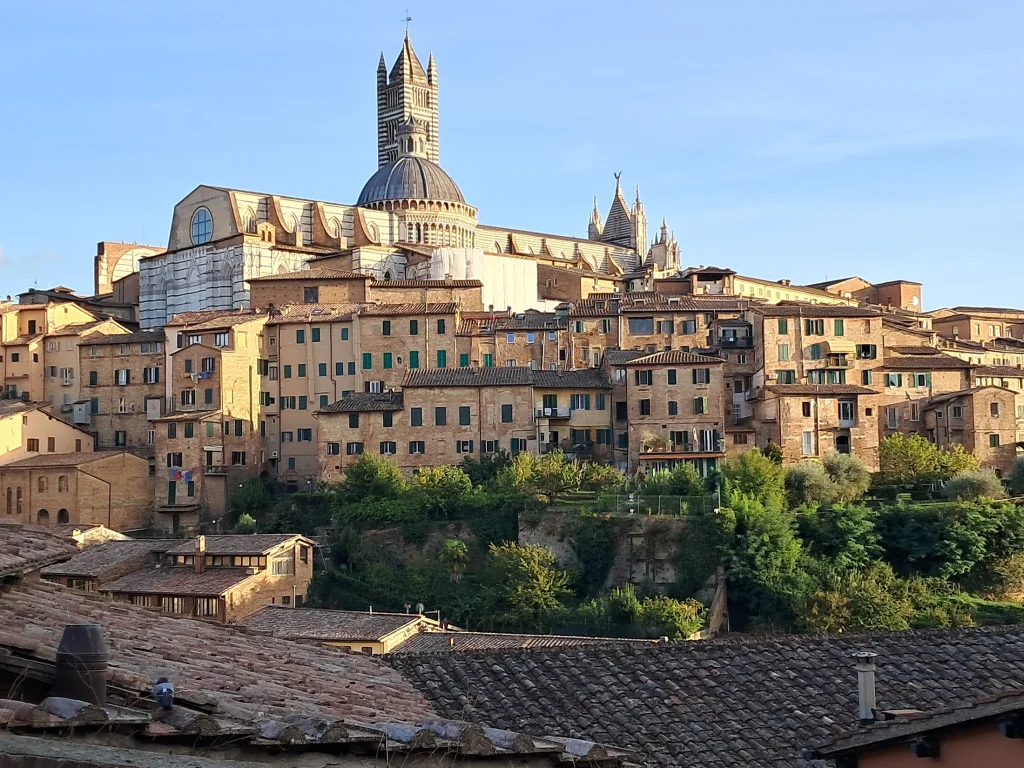
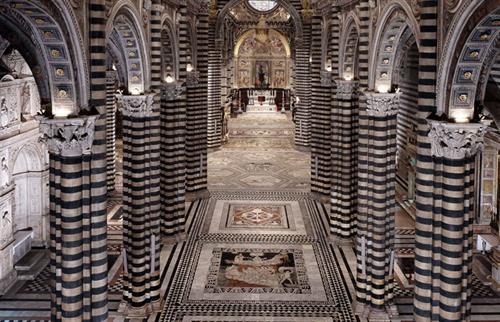
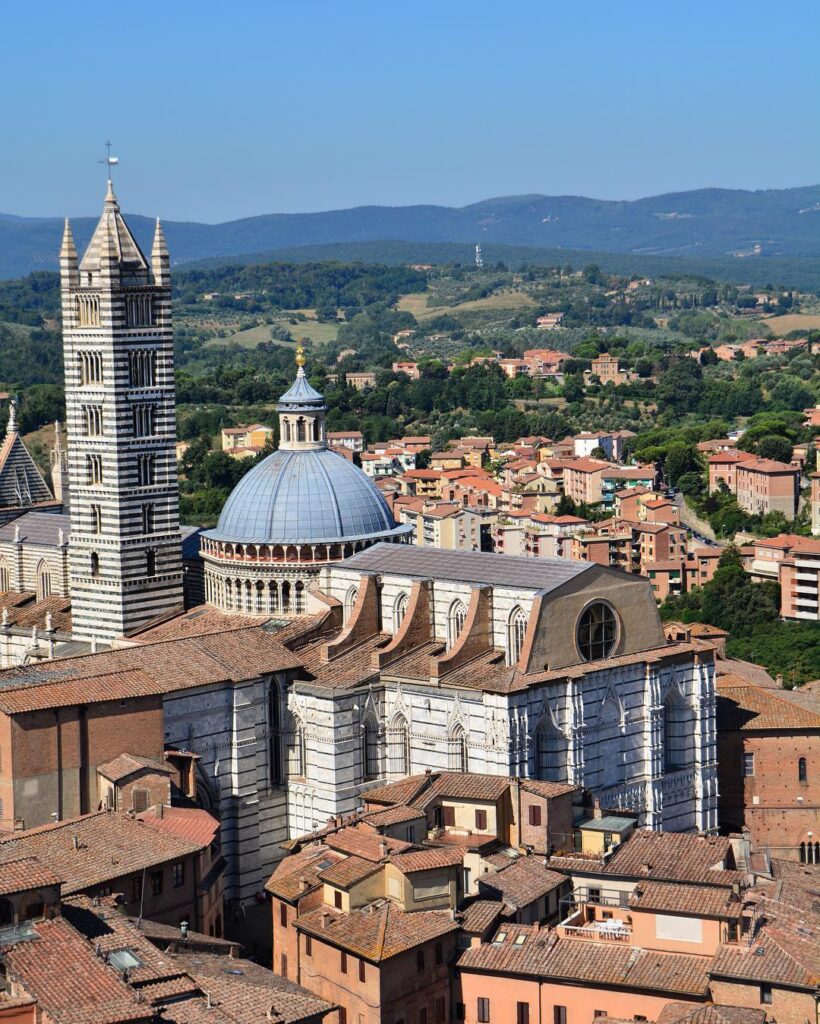
- Siena Cathedral (Santa Maria Assunta): From Piazza del Campo, a 5-minute walk up narrow streets (following via di Città or via del Capitano) brings you to the magnificent Duomo di Siena. The Gothic façade in white and dark green marble will take your breath away. The interior is equally spectacular: the floor is decorated with unique mosaics (note: it’s fully visible only at certain times of the year), and don’t miss the Piccolomini Library with its vibrant Pinturicchio frescoes. If you love art, consider also the Opera del Duomo Museum (next to the cathedral) from which you can climb the “Facciatone”, another fabulous panoramic point. Hours: around 10:00 – 19:00 (shorter on Sundays). Tickets: there are combined options; for example the OPA Si Pass includes the Cathedral, Library, Crypt, Baptistery and Museum for about €15 (varies with season). Single entrance to the cathedral is about €8 in high season. Tip: during high season it’s worth buying the Duomo ticket online or at the museum’s ticket office, especially if the floor mosaic is on display – you’ll save time in line.
- Lunch in the center: After so many wonders, it’ll be lunchtime. In the area between the Duomo and Piazza del Campo you’ll find various tasty options. If you want something quick and typical, try a gourmet sandwich or a platter of Tuscan cured meats at Prètto, Prosciutteria Toscana (on Via dei Termini, a few steps from the Campo) – it’s recommended for local products and sandwiches stuffed with pecorino and finocchiona. For a sit-down lunch at a good price there’s Osteria Il Carroccio near Piazza del Campo offering traditional Sienese dishes. Don’t forget dessert: a slice of panforte or some ricciarelli (typical almond sweets) from a historic pasticceria like Nannini, or a nice artisanal gelato. On Piazza del Campo you’ll find Gelateria La Costarella with a view of the square, or for a truly special gelato there’s Gelateria Dondoli in San Gimignano on day three 😉🍨.
- Sanctuary of Santa Caterina: In the afternoon we resume the tour at an important spiritual place for Siena. From the Campo head towards Fontebranda (follow via di Fontebranda downhill) to reach the Sanctuary of Santa Caterina, built around the birthplace of Siena’s most famous saint, Caterina Benincasa. Along the way you’ll pass under a medieval arch and find the striking Loggia della Mercanzia at the junction of via di Città and Banchi di Sopra (stop to admire the statues and Gothic capitals of this 15th-century loggia, once a meeting place for Sienese merchants). Continuing, go down the stairs of via della Sapienza and you’ll arrive at the Sanctuary: a complex of buildings and chapels built where Saint Catherine’s house stood. Entrance is free. You can see the Oratory of the Crucifix (with the cross from which Catherine received the stigmata), the Oratory of the Kitchen and that of the Chamber, all linked to the saint’s life. At the entrance you’ll notice the Portico of the Municipalities, built with bricks donated by almost all the towns of Italy – a curious detail to look for on the columns!
- Fontebranda: A few steps below the Sanctuary is the medieval Fontebranda, the most famous fountain in Siena. It’s an ancient public fountain covered by Gothic arches, also mentioned by Dante. Tradition says that those who drink water from Fontebranda will become as “light-hearted” as the Sienese 😄 (meaning a bit crazy). Santa Caterina herself was called “the saint of Fontebranda” because she was born in this district. Visiting the fountain is quick and free, and it’s a dive into the atmosphere of medieval Siena.
- Basilica of San Domenico: From Fontebranda, if you’re up for a climb, reach the nearby Basilica of San Domenico (5-10 minutes up via Camporegio). This large brick church is important because it houses relics of Saint Catherine: her incorrupt head is kept in a side chapel – a somewhat macabre detail but significant for devotees. The interior is austere but you’ll find beautiful frescoes telling the saint’s life. Hours: open until about 18:00, entrance free (being a church). From the terrace in front of San Domenico you also enjoy a splendid panoramic view of the Duomo and the Torre del Mangia – great for sunset photos! A stop here at sunset is really romantic.
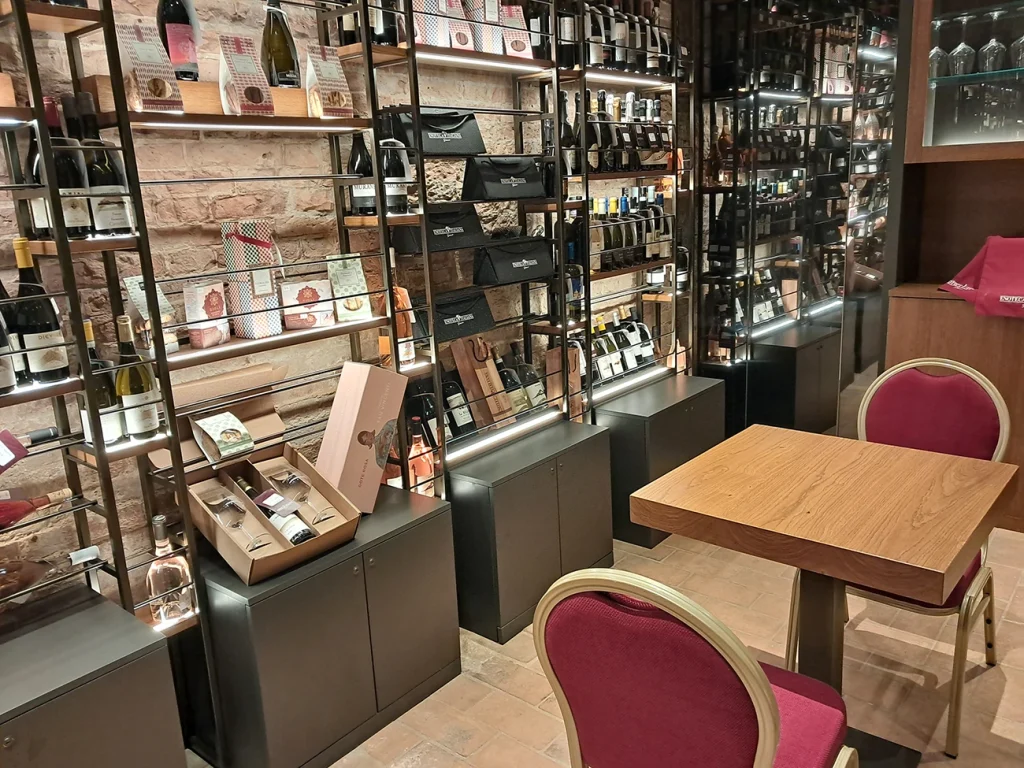
- Aperitif or dinner with a view: After this intense day, treat yourself to some relaxation. You can leisurely make your way back to the hotel (from San Domenico it’s a 10-minute walk to Hotel Minerva). Along the way, maybe stop at Piazza Salimbeni, an elegant square home to Monte dei Paschi (one of the world’s oldest banks) – in the evening it’s very atmospheric with soft lighting. For the aperitif, a nice place is Il Campo itself: sit at a table on the square and toast with a glass of Vernaccia di San Gimignano or Chianti while people-watching. If you prefer a young and lively atmosphere, try the pub Cacio & Pere (on Via dei Termini) popular with students for live music and platters. Dinner: options abound – for a typical experience try an osteria in the centre like Osteria da Divo (Tuscan cuisine in Etruscan caves, very atmospheric) or Osteria il Rialto near Piazza del Campo. And to finish sweetly, a gelato alla crema with cantuccini at Gelato di Fiore or a taste of vin santo and cantuccini.
Summary table – Day 1 (Siena historic center)
| Stop | What to see/do | Estimated duration | Entrance cost | Distance/Travel time |
|---|---|---|---|---|
| Hotel Minerva | Starting point (Via Garibaldi 72). Panoramic view of Siena. | – (start) | None | – (600 m from the station; 10 min walk to the centre) |
| Piazza del Campo | Main shell-shaped square; Town Hall, Fonte Gaia. | 30-45 min | Free | 10 min walk from the hotel |
| Torre del Mangia | Climb 400 steps for a panoramic view of Siena. Civic Museum in the Town Hall. | 1 hr (climb + photos) | €10 Tower (€15 combined Tower + Museum) | 0 min (in Piazza del Campo) |
| Siena Cathedral | Gothic cathedral, marble façade, Piccolomini Library, artworks. | 45-60 min | €8-15 (Duomo, varies season; Full Pass ~€15) | 5 min walk from Piazza del Campo |
| Sanctuary of St. Catherine | St. Catherine’s birthplace, oratories and chapels of the sanctuary. | 30 min | Free | 8 min walk from the Duomo (downhill towards Fontebranda) |
| Fontebranda | Ancient covered medieval fountain. | 15 min | Free | 2 min walk from the Sanctuary (at the base of the stairs) |
| Basilica of San Domenico | Gothic church with St. Catherine’s relic; panoramic view of the centre. | 20-30 min | Free | 10 min walk from Fontebranda (steep climb) |
| TOTAL | Includes main visits of the historic center. | 6-7 hours (full day at a relaxed pace) | – | About 3 km total walking (all day) |
Note: The day 1 itinerary is packed with attractions – adapt it to your pace! If you spend longer at the Duomo or prefer to take your time with just some things, you can always postpone some visits to day 2 (e.g. Civic Museum or smaller sites). In the evening many monuments close around 18-19, so plan your stops accordingly. Remember that Siena at night is safe and magical: even after dinner, a stroll in the illuminated Piazza del Campo is worth it. 🌙
Day 2: Lesser-known places and relaxation in Siena 🌿
After seeing the “big” attractions of the center, on the second day we explore a quieter and hidden Siena, perfect for relaxing. We’ll discover green spots, fortresses and lesser-visited museums, perfect for getting some fresh air and delving into local culture at a relaxed pace. This itinerary is great for those with special interests (botany, art) or for travellers with kids who want to let them play outdoors. We’ll set off again from your Hotel Minerva and this time head towards areas slightly off the main tourist circuit, yet all reachable on foot.
- Typical breakfast and slow start: This morning you can take it easy. If you want to have breakfast outside the hotel, there’s a famous pastry shop in Piazza Matteotti (near Piazza Gramsci) or Bar La Lizza just outside the Fortress, known for its pistachio croissants. A good cappuccino and away we go, ready to discover Siena’s hidden side!
- Basilica of San Francesco and surroundings (optional): If you’re a church enthusiast and want to see another important site, 5 minutes from Hotel Minerva there’s the Basilica of San Francesco (in Piazza San Francesco). This massive Gothic church houses the Eucharistic Miracle of Siena (some consecrated hosts from 1730 kept intact over the centuries). It opens early morning. Nearby, in Piazza dell’Abbadia, there’s a small church and the steps of the ancient abbey, and continuing you meet Palazzo Tolomei (one of the oldest private palaces, seen from outside) and Piazza Indipendenza. These places are pleasant to see while strolling leisurely in the Banchi di Sopra district, perhaps doing some shopping in the shops and observing authentic glimpses of Sienese life.
- National Pinacotheca of Siena: Mid-morning you can dedicate yourself to a gem for art lovers: the Pinacoteca Nazionale, on via San Pietro. This state museum is less crowded than the Duomo, but houses the richest collection of Sienese painting from the 13th and 14th centuries. You’ll find masterpieces by Duccio di Buoninsegna, Simone Martini, Ambrogio Lorenzetti and other masters of the Sienese School. The rooms are in chronological order and allow you to understand the evolution of local art, with wonderful gold backgrounds. Visit time: about 1.5 hours (depends on your interest). Cost: the full ticket is only €4! (Italian state museums have very affordable prices; under 18s are free, reduced 18-25 years €2). Hours: generally open mornings and afternoons, closed on Mondays. If travelling with family, it might interest kids less, but there are some lively paintings (stories of saints, battles) you can “tell” to engage them.
- Botanical Garden of Siena: Now let’s immerse ourselves in greenery. From the Pinacotheca, in about 10 minutes going down Via San Pietro and then Via Mattioli, reach Siena’s Botanical Garden of the University. It’s an unexpected place: a 19th-century historic garden of 2.5 hectares inside the city walls, between Porta Tufi and Porta San Marco. You’ll find shaded paths, ponds with aquatic plants, greenhouses and even a small grotto; over 2,000 plant species, from Tuscan to exotic plants. For children it’s like a small “garden of wonders” where they can run freely (watch them around the ponds!). Hours: generally open daily, with continuous hours 10:00 – 18:30 on weekends (in winter it may close earlier in the afternoon). Entrance: full €5; reduced €2.50 for university students and over 65; free for children under 11. Curiosity: the Botanical Garden is in a hidden valley: a real oasis of peace in the heart of Siena. While walking, look for the Medieval Fountain set in the green and the “spermoteca”, a 19th-century seed and resin collection (it sounds strange but it’s interesting! 😉).
- Natural History Museum – Academy of the Fisiocritici: Adjacent to the Botanical Garden (entry from Piazzetta Silvio Gigli, right next door) is a small free museum that few tourists know: the Natural History Museum of the Academy of the Fisiocritici. It is one of Tuscany’s oldest scientific museums, founded in 1691. Inside, in somewhat “vintage” rooms, you’ll find fossils, skeletons (there’s a complete whale skeleton!), mineral collections, taxidermied animals and period scientific instruments. It feels like stepping into a 19th-century museum preserved intact – a fascinating experience if you love science or have curious kids (for the very young it might look a bit dusty, but many enjoy seeing the stuffed animals). Entrance: technically free with a voluntary donation – feel free to leave a few euros if you appreciate the visit, it will support the Academy. Hours: note, the museum is open only limited hours (generally mornings on weekdays, e.g. Mon-Fri 9-14; often closed Saturday and Sunday, check in advance). If you find it closed or it doesn’t interest you, no problem: the Botanical Garden visit is enough on its own.
- Light lunch in the San Pietro/Botanical Garden area: After museums and gardens, you might be hungry. You’re in the Terzo di Città, a quiet district. For an inexpensive and tasty lunch nearby, stop at Taverna di San Giuseppe (on via Giovanni Dupré, a bit further down, known for Tuscan cuisine, though at lunch it might be more of a sit-down meal) or get something quick. A great “fast” choice is having a picnic! You can buy sandwiches or stuffed focaccia at the bakery Il Magnifico (on via San Pietro) or a slice of pizza, then sit on a bench. Where? Right in the nearby Orto de’ Pecci which we’ll discuss shortly, or at the Lizza Gardens near the Medicean Fortress. Another idea: in the Contrada dell’Oca (Fontebranda area) there’s a small place called Il Kiosko with simple dishes and outdoor tables, loved by locals, if you’re there around lunchtime.
- Orto de’ Pecci: In the afternoon, to really relax, we recommend a walk in the Orto de’ Pecci. It is a large urban garden located in a green basin just behind Piazza del Campo (imagine, only 200 meters in line of sight from the “Casino dei Nobili” of the Campo there is this patch of countryside!). To reach it from the Duomo or Piazza del Mercato, go down along via di Porta Giustizia. Suddenly you’ll find yourself surrounded by greenery: lawns, reconstructed medieval gardens, fruit trees and farm animals (chickens, rabbits, often donkeys and peacocks) 🐇🦚. The Orto de’ Pecci is run by a social cooperative and is part of the Sienese educational farms. Why go? Because it’s ideal for families with kids (there’s space to run and a small playground), but also for couples or friends who want to relax on the lawn with views of the city. Indeed you can see the Torre del Mangia and the Duomo standing out above, offering a unique contrast between countryside and city. Entrance to the garden is free (it’s a public park). There’s also a restaurant “All’Orto de’ Pecci” with a pergola: you could have a snack or rural aperitif there. Note: officially picnics are not allowed inside (there are signs, because of the restaurant), but in practice many people sit on the grass to nibble something – if you do so discreetly and respecting the environment it shouldn’t be a problem. 😊 Bring a blanket to sit on. This place also has a particular history: in the Middle Ages this was a monks’ garden and criminals on their way to the gallows outside Porta Giustizia passed through. But today, fear not: you’ll only find peace and maybe some university students studying outdoors.
- Medicean Fortress & Italian Wine Cellar: To close the day, climb up to the Antica Fortezza Medicea, located just outside Porta Camollia (not far from your hotel). From the Orto de’ Pecci you can return to the center and then head to the Fortress, or go directly up via Via di Follonica and Via Camollia. The Medicean Fortress of Siena (also called the Santa Barbara Fortress) is a massive pentagonal brick fortress built in 1560 by Cosimo I de’ Medici, right after Florence conquered Siena. Today it’s become a panoramic public park: you can stroll along the tree-lined ramparts, sit on benches and admire the view of the city and surrounding hills. It’s a spot locals love for jogging and taking kids to ride bikes, and it’s always open and free. Inside the Fortress is an open-air amphitheater where they hold cinema and concerts in summer. It also houses the Enoteca Italiana, a sort of permanent exhibition of Italian wines with a wine bar. Although in recent years the wine cellar has reduced activities, you can often taste excellent Tuscan wines at one of the bastions of the fortress, at the “Parladivino” wine bar. Imagine sipping a Chianti Classico or a Brunello di Montalcino at sunset, with the cool evening air – a great relaxing ending, right? 🍷
- Dinner in the Fortezza/Stadio area: After the visit, if you’re not already full from the tastings at the wine bar, you can dine near the Fortress. A cheerful and affordable option is the pizzeria Il Pomodorino, right opposite the fortress, serving pizza and other dishes with a nice panoramic view of Siena from the terrace (also very suitable for families). Or return towards the hotel and stop along Via Camollia, full of less touristy local trattorias: for example Osteria La Chiacchera or Ristorante Da Michele offer authentic Tuscan cuisine at fair prices. After dinner, if you still have energy, you might go back to the center for a final gelato or a drink – Piazza del Campo at night is quiet and magical. But since tomorrow we have an excursion outside the city, maybe best not to go to bed too late. 😉
Summary table – Day 2 (Unusual Siena and relaxation)
| Stop/Activity | Description and tips | Duration | Cost (€/person) | Notes and distance |
|---|---|---|---|---|
| Basilica di San Francesco (optional) | Gothic church with Eucharistic miracle. | 20 min | Free | 5 min walk from the hotel |
| National Pinacotheca | Sienese painting museum (Duccio, Lorenzetti). | 1.5 hrs | €4 full, €2 reduced | 10 min walk from San Francesco |
| Botanical Garden | Historic botanical garden, plants and greenhouses. | 1 hour | €5 full (kids free) | 10 min walk from the Pinacotheca |
| Natural History Museum | Ancient scientific collections (whale, minerals). | 1 hour (if open) | Voluntary donation | Adjacent to the Botanical Garden |
| Orto de’ Pecci | Urban garden and farm in greenery. Relaxation, view of towers. | 1 hour (flexible) | Free (public park) | 5-10 min walk from Piazza del Campo |
| Medicean Fortress + Wine Cellar | Walk on the ramparts, panorama, wine tasting. | 1 hour | Free access (wine from €5 per glass) | 15 min walk from Piazza del Campo / 5 min from Hotel Minerva |
| TOTAL day | Museum + nature + relaxation: light day. | ~5-6 hours of touring + relaxation | – | About 4-5 km total walking (throughout the day) |
Tip: Day 2 is deliberately more relaxed. You can customise it as you like. For example, if you’re not into art, skip the Pinacotheca and maybe spend more time in a park or shopping in the center. Conversely, if you’re tireless, you could add other hidden gems: for example the Water Museum (medieval aqueduct tunnel outside Porta San Marco) or the Siena Synagogue on vicolo delle Scotte, small but significant (paid entry, check hours). Siena offers a lot beyond the classic routes, just explore with curiosity!
Day 3: Day trip – Monteriggioni and San Gimignano ⛪️🌄
On the third day we leave the city to discover the surroundings of Siena, full of fairy-tale medieval villages, vineyards and postcard Tuscan landscapes. We suggest a trip combining two must-see destinations, Monteriggioni and San Gimignano, easily visited in a day starting from Siena. Both are north of Siena and can be reached by public transport (bus) as well as your own car. Get ready to walk along ancient walls and under centuries-old towers! 🚗🚌
Transport options: If you have a car, no problem: Hotel Minerva has a parking garage (useful to keep the car during the stay). Monteriggioni is about 20 minutes’ drive from Siena (25 km) and San Gimignano another 35 minutes from Monteriggioni. Take the Siena-Firenze Superstrada (RA 3) exiting at Monteriggioni. For San Gimignano from there follow signs for Colle Val d’Elsa/San Gimignano. If instead you travel without a car, know it’s still doable: from Siena city centre the bus 130 (Autolinee Toscane) connects Siena with Colle Val d’Elsa and San Gimignano. You can board at the Piazza Gramsci stop (near Via Tozzi) at around 9:40 in the morning: in about 30 minutes you’ll reach Monteriggioni (cost around €8 round trip for Monteriggioni). Later you can catch the next bus 130 to San Gimignano (from the “Colonna di Monteriggioni” stop the trip is about 1 hour). Bus 130 runs roughly every hour, but check updated schedules (Hotel Minerva can help with times, or find PDF schedules online). Alternatively, organised tours from Siena combine multiple destinations (e.g. Chianti + San Gimignano + Monteriggioni in one day) if you prefer not to think about logistics – note though that with a tour you have less flexibility.
Now, here’s the suggested itinerary for the day:
- Morning in Monteriggioni: Let’s start early to be in Monteriggioni around 10:00. Upon arrival, park in the area at the foot of the village (if you’re driving, there are paid parking lots below the walls) or get off at the Monteriggioni Paese bus stop. You’ll be facing a real intact medieval castle: Monteriggioni is a small village surrounded by imposing circular walls with 14 towers (the very towers Dante mentioned in the Inferno, comparing them to giants!). Enter via Porta Franca (or Porta Romea) and you’ll find yourself in Piazza Roma, a picturesque little square with a well in the center and the old Church of Santa Maria Assunta of Monteriggioni, a simple but very nice Romanesque church. The atmosphere here is magical: it feels like going back 700 years. Take the wall walk: today you can walk two stretches of the ramparts, going up via internal stairs (entrance near the gate). From the top you’ll enjoy a wonderful view of the Sienese hills and be able to photograph the merlons and towers up close. Wall walk cost: only about €3 (a combined ticket includes the small Armour Museum too). Hours: approximately 9:30-13:30 and 14:00-18:00, closed on Tuesdays. After the wall walk, visit the Armour Museum (included in the ticket): it’s a small exhibition of medieval armour and costumes, where you can try on helmets and gauntlets – fun especially for children, but also for adults who love the Middle Ages. Then leisurely explore the village: Monteriggioni is tiny, a couple of hours are enough to see it. Wander through the lanes, discover the craft shops (selling local products, wine, honey, ceramics) and maybe take a coffee break at one of the outdoor bars in the square. Typical snack: try the ciaccino, a sort of typical focaccia, or an artisanal gelato if it’s hot.
- Transfer to San Gimignano: Around noon set off for San Gimignano, the famous city of towers. By car it will take about 35 minutes (32 km) crossing the Chianti Sienese countryside. If you’re on the 130 bus, catch the midday bus: in about 57 minutes you’ll arrive at the San Gimignano terminus (the bus stops outside the walls, at Porta San Giovanni). Already from afar, you’ll see the towers rising on the hill: an authentic medieval skyline!
- Afternoon in San Gimignano: Enter through Porta San Giovanni into San Gimignano’s walls. The town is small but full of charm, with 14 remaining medieval towers (once there were 72! 😮). Stroll along via San Giovanni between shops selling ceramics and products made with saffron (San Gimignano’s saffron is protected). Along the street you’ll find the Arco dei Becci, an old passage in the second walls, and soon you’ll arrive in Piazza della Cisterna, San Gimignano’s living room: a triangular square with a well dating back to 1273 (the “cistern”). This square is surrounded by towers and noble palaces, a perfect setting for stunning photos. Stop for a moment, look up and count the towers around: it will feel like being on the set of a historical film. For lunch, if you haven’t eaten yet, you can stop here. A suggested panoramic spot is La Sosta sulla Francigena, near Porta San Giovanni, where for about €18 you can enjoy a rustic Tuscan lunch with a view over the hills. Alternatively, since San Gimignano is famous, you MUST try the world champion gelato: Gelateria Dondoli, right on Piazza della Cisterna. Choose unusual flavours like Crema di Santa Fina (saffron cream and pine nuts) or simply enjoy a classic – there’s often a queue, but it moves quickly. 🍦 After recharging, continue to Piazza del Duomo, adjacent, where you’ll see side-by-side the high towers (Torri Salvucci and Torre Rognosa) and find the Town Hall (Palazzo Comunale) and the Collegiate Church of Santa Maria Assunta (that is San Gimignano’s Duomo). Enter the Collegiata: it’s a splendid church, with interiors entirely frescoed (cycle of New and Old Testament stories by Ghirlandaio and others). Entrance to SG Duomo: about €4, approximate hours 10:00-19:30 (Sunday opens later). It’s worth seeing the frescoed walls and the splendid Chapel of Santa Fina (dedicated to a local saint). If you want a panorama here too, you can climb the Torre Grossa, the only tower in San Gimignano open to the public, 54 m high. The entrance to the Torre Grossa is through the Town Hall/Civic Museum (combined museum + tower ticket ~€9). From the top you’ll enjoy another dreamy view of the surrounding towers and the countryside (but watch out, you’ve already climbed many stairs in Siena… consider your remaining energy!). A free alternative for a great view is to reach the Rocca di Montestaffoli, a ruin on the highest point of the village (3-4 minutes’ walk from Piazza Duomo, following signs for “Rocca”). Here there’s a public park with an ancient cut tower from which you can enjoy a magnificent view for free. There are often few tourists here, so it’s perfect for a quiet moment. If you still have time and are curious about unusual things, San Gimignano also has a Museum of Torture (macabre but interesting, expensive ticket ~€12), or a small Vernaccia Wine Museum at Villa della Rocca: the latter offers tastings of Vernaccia, the famous local white wine. Decide whether to devote time to these extra visits according to your interests.
- Return to Siena: In the late afternoon it will be time to head back. If you have a car, you could take a different route back: for example via the Strada del Chianti, passing through Castellina in Chianti – it will take a bit longer but you’ll cross charming vineyard-covered hills at sunset. If you’re on the bus, catch the 130 again from San Gimignano (there are trips in the afternoon, last one around 18, which will get you back to Siena in about an hour). You’ll arrive in Siena presumably by 19:00-19:30.
- Dinner and relaxation in Siena: After covering many kilometres between villages, treat yourself to a quiet dinner in Siena. You could try an elegant restaurant like Osteria Le Logge (revisited Tuscan cuisine, romantic atmosphere – booking recommended) to celebrate the end of the trip. Or, if you’re tired, there’s always the possibility of dining at the hotel or at a nearby spot (near the Minerva, for example, there’s Pizzeria Tia Loca for something informal, or Ristorante Il Vinaio di Bobbe e Davide for a quality Florentine steak). After dinner, if you still haven’t done so, toast with one last glass of Tuscan wine at Cambio, a pub/wine bar in the center with live music, or take a digestive stroll to Fontebranda under the moonlight. Tomorrow we set off again, but Siena and Tuscany will remain in your heart! 💖
Summary table – Day 3 (Monteriggioni and San Gimignano)
| Place | What to do/see | Duration | Entrance/Costs | Distances and times |
|---|---|---|---|---|
| Monteriggioni | Fortified medieval village: walls and towers, small church, armour museum. | 1.5 – 2 hours | Village free; Walls + Museum €3 | 25 km from Siena (20’ by car; 30’ by bus) |
| San Gimignano | City of towers: medieval squares (Cisterna, Duomo), frescoed Collegiate Church, panoramic towers. | 3 – 4 hours | Village free; Duomo €4; Torre Grossa €9; gelato €3 😂 | 32 km from Monteriggioni (35’ by car; ~1h by bus) |
| Return to Siena | – | 1 hr approx | Bus 130 ~€6 (from S. Gim to Siena); fuel/tolls if by car | Arrive around 18-19 in Siena |
Photo tip: bring your camera or keep your smartphone charged, because every corner of Monteriggioni and San Gimignano is photogenic. 📸 In Monteriggioni, shoot from the ramparts with the hills in the background, and in San Gimignano look for the viewpoint at the Rocca di Montestaffoli for a postcard shot with all the towers. Morning and sunset are the best times for light. If you go in summer, remember a hat and water: the Tuscan sun beats hard on medieval walls!
Frequently Asked Questions (FAQ)
Below are some common questions travellers have during this 3-day itinerary in Siena, with answers and practical tips.
Q: How can I get around Siena? Do I need a car for this itinerary?
A: In Siena’s historic centre you get around on foot: distances are short (from your hotel Piazza del Campo is only 10 minutes on foot). Actually, many central streets are pedestrian-only and ZTL, so a car in the centre is unnecessary and inconvenient. For the surroundings (day 3), a car is helpful but not essential: Monteriggioni and San Gimignano are connected by public buses (line 130 from Siena). If you have a car, use it for comfort and freedom (you can also explore scenic Chianti roads). If you don’t have one, plan the bus schedules well: it’s doable. Within Siena city, there is a network of urban buses (TIEMME) but for central attractions you won’t need them. You might only use them if you want to reach areas like the FS station (but that’s 1.1 km from the centre, doable on foot or via an escalator that goes up from the Porta Siena shopping center). Tip: download the Tabnet or DropTicket app to buy urban bus tickets and check the Autolinee Toscane website for schedules for the trips.
Q: Where to park the car in Siena?
A: Hotel Minerva has its own private garage (limited spaces, better to book) – so if you’re staying there, the best solution is to leave the car at the hotel and walk around. If instead you need to park elsewhere, know that around the centre there are various paid parking lots. The most convenient is Parcheggio Santa Caterina (near Fontebranda) connected to the centre by an escalator, or the Stadio/Fortezza Parking (Tartarugone) but it’s expensive for long stays (about €2 per hour, €26 per day). Free car parks near the centre unfortunately hardly exist: at most in areas outside the walls (e.g. Due Ponti or Colonna San Marco area) but then you have to take an urban bus back. In general, if you come by car, use the hotel garage or prepare to pay a bit for public parking.
Q: Is Siena accessible for people with disabilities or strollers?
A: Siena’s centre has sloped medieval streets and stone paving, so there are some challenges. However, much has been done for accessibility: for example from Santa Caterina car park there are lifts/escalators that bring you near the Duomo. The Duomo itself has accessible entrances (there’s a lateral ramp for wheelchairs). The Torre del Mangia unfortunately not (400 steps without a lift). With a stroller, prepare for ups and downs: maybe one parent will have to push harder. The good news: Hotel Minerva has a lift and accessible rooms, so for accommodation you’re fine. In museums like the Pinacotheca and Santa Maria della Scala there is a lift. Generally, Siena should be taken calmly: if you have mobility difficulties, take your time, perhaps choose slightly longer but less steep routes (e.g. to go up to the Duomo avoid via della Sapienza which is very steep, better go via via di Città). And don’t hesitate to ask the tourist offices: they can suggest specific routes.
Q: Is it worth buying cumulative tickets or City Passes in Siena?
A: Yes, it’s worthwhile. There isn’t a single city pass for all attractions, but the main institutions offer combined tickets. In particular, the Siena Cathedral has the OPA Si Pass which includes the Cathedral, Piccolomini Library, Opera Museum, Crypt, Baptistery and Oratory (costs around €15 and is valid 3 days). If you’re interested in these attractions, getting it saves you money and queue time at ticket offices. Another useful combined ticket is Torre del Mangia + Civic Museum at €15 (you save €1 compared to buying individually and have a single entry). Santa Maria della Scala (the large museum opposite the Duomo) also offers integrated tickets for its sections. Always ask at ticket desks “Are there combined reductions?” – for example the Civic Museum has conventions with the Duomo at certain times. For San Gimignano, there’s a pass combining 3-4 civic museums (Torre Grossa, Palazzo Comunale, etc.) around €13; decide if you want to see everything. Generally, yes to passes if you want to see many interiors; if you prefer to enjoy places from outside and see fewer, buy individual tickets when needed.
Q: Do I need to book visits or restaurants in advance?
A: In low season no, but in high season yes, recommended. For attractions: the Duomo of Siena in August has long queues – you can buy tickets online on the official site (OPA Siena) or through portals like GetYourGuide to avoid the queue. Same for the Torre del Mangia: in some periods they sell timed entries, check the Siena Municipality website. Museums like the Pinacotheca or Santa Maria della Scala generally don’t require advance booking because they rarely overcrowd. For day trips: if you want special tastings (e.g. a visit to a Chianti winery) it’s best to book a day in advance. Restaurants: Siena has many venues, but the more famous ones (e.g. Osteria Le Logge, Osteria da Divo, etc.) fill up at weekends or in summer – a phone call the same morning for the evening is a good idea. For quick lunches or simple trattorias you don’t need to. Hotel Minerva offers breakfast on site and, if you want dinner there, check with reception if they have a partner restaurant or evening bar service.
Q: What if it rains?
A: Don’t worry, Siena offers many indoor activities. If you catch rain on day 1 or 2, you can spend more time at museums: for example Santa Maria della Scala, the former hospital opposite the Duomo, is a huge underground museum complex rich in art and archaeology – perfect for 2-3 hours indoors. Or the already mentioned Pinacoteca Nazionale. Also interesting is the Water Museum (visited with guided tours in the medieval aqueduct tunnels – very special). Alternatively, pop into a contrada: many of Siena’s 17 districts have small district museums (on the history of the Palio) that sometimes open to visitors on request, or organise guided tours – this could be the perfect chance to discover them. Another idea: indoor tasting – for example visit the Emporio Mediterraneo Wine Shop on via di Città, where you can sample wines and local products indoors, or take a Tuscan cooking class (many cooking schools in Siena offer classes even last minute if a group forms). And if it’s really pouring and you want to rest, treat yourself to an afternoon at the Rapolano Terme (30 min from Siena, reachable by bus): a nice hot thermal bath while it rains is bliss! In short, bad weather won’t ruin the trip: just adapt the program.
Q: What’s the best time to visit Siena?
A: Siena is beautiful year-round, but the best times are spring and autumn. In April-May and September-October the climate is mild, the hills are lush green and there are fewer crowds than in July-August. Summer is still lovely because of the Palio (July 2 and August 16): if you happen to be there on those dates, you’ll experience a unique emotion with the centre abuzz – but be prepared for higher prices and lots of people. Winter in Siena is calm: December is atmospheric for Christmas lights, February can be chilly but the medieval charm in the mist has its own appeal. Let’s say there are no times to avoid. If you can choose, just avoid the days immediately around the Palio if you’re not interested in the event, because many attractions have reduced hours and the city is focused on the festival (on the other hand, if you’re interested in the Palio… immerse yourself in the crowd!).
Q: Where can I taste typical cuisine without spending much?
A: Great question, because in Siena you eat well everywhere, but here are some insider tips: for a cheap meal try the osterias frequented by locals. For example, Osteria Il Grattacielo (near Piazza Salimbeni) is a rustic hole where you can have lunch with daily Tuscan dishes for less than €15. La Sosta di Violante (via di Pantaneto) offers pici with Cinta Senese ragù and ribollita with a great value for money. For sandwiches and platters, in addition to the already mentioned Prètto, there’s the Pizzicheria de Miccoli on via di Città: you go into this old delicatessen and choose between salamis, cheeses and sauces for your sandwich – super typical! A sandwich with finocchiona and pecorino costs about €5-6. 🍷 House wine: if you want to try local wine without spending much, order a glass of house wine (often a simple but good Chianti) which costs ~€4. Typical sweets: go into a Nannini pastry shop (there’s one on Banchi di Sopra) and grab some ricciarelli or cavallucci (spiced biscuits) – they cost a few euros and are perfect with coffee. Finally, for an inexpensive but good dinner, pizzeria: “Il Pomodorino” as mentioned has pizzas with a view; or La Vecchia Taverna di Bacco offers homemade cooking at honest prices. Remember that cover and service in Italy can add €2-3 per person to the bill, this is normal.
Q: Are there picnic areas or spaces for children along the itineraries?
A: Yes! We’ve included Orto de’ Pecci and the Fortress precisely for that. The Orto de’ Pecci is ideal for a picnic on the lawn (see notes above) and has a small playground. At the Medicean Fortress, just outside the walls, there are the Lizza Gardens with rides, and plenty of space to run safely. Even inside the fortress children often ride bikes or scooters. Another convenient green area is the Parco Unità d’Italia (near the Basilica di San Francesco) with benches and playgrounds. If you go on the day trip, in San Gimignano there’s a public park at the Rocca (perfect to let them blow off steam after museums and churches). And generally, whenever you see a large square without too many cars (e.g. Piazza del Campo early in the morning or towards evening, Piazza Jacopo della Quercia behind the Duomo), you can let the kids run a bit – the Sienese themselves do it. 😄 Just watch out on the steep streets, they might get hurt running on cobbles.
Q: Can I buy tickets or tours directly at the hotel?
A: Hotel Minerva is very attentive to tourists, it often offers packages and agreements (for example tickets for the Cathedral or wine tours). Ask at reception: they might have OPA Si Pass tickets for the Duomo on sale, or discount vouchers for wine bars. They can also call a taxi if needed or help you book a guided tour. Since they also have special offers (like tickets included at certain times, e.g. “Cathedral” promotion or “Wine tasting” seen on their website), it’s worth asking at check-in. In general though, tickets for museums and buses are easily bought on site, so it’s not obligatory to get them at the hotel.
Final tips for types of travellers 🎯
Each traveller is different: here are some targeted tips to enjoy Siena and its surroundings based on your needs or travel company.
- 👨👩👧👦 Families with children: Siena is child-friendly in many ways (pedestrian spaces, gelaterias, parks). Use a baby carrier or backpack if little ones don’t walk well: the paved streets make the stroller a bit uncomfortable in the centre (but doable). Take advantage of “play” places like Orto de’ Pecci and the Fortress to let them run. Art museums can bore them: alternate cultural visits with play moments (e.g. after the Duomo, promise a gelato; after the Pinacotheca, a turn at the gardens). Involve them with legends: tell them about the Palio and the Contrade (maybe looking for the animal flags around the city like a treasure hunt). Restaurants: many offer half portions of pasta with tomato or cutlet, don’t hesitate to ask. And if you have a stroller, check the entrance: almost everywhere has space, but small osterias might be a bit tight. Lastly, watch bathrooms: in the centre there are public toilets (e.g. in Piazza del Campo under the Costone) with changing tables; always bring what you need just in case.
- 💕 Romantic couples: Siena is pure atmosphere! Enjoy the sunsets: a special one is from the Terrace of the Basilica di San Domenico with a view of the Duomo, or from the Fortress ramparts with the sky colouring over the hills – a perfect moment for a photo embracing. In the evening, stroll hand in hand along lanes lit only by lampposts, such as via di Stalloreggi or via del Pellegrini, it will seem like another era. For a candlelit dinner choose a secluded restaurant: Osteria delle Campane or Antica Osteria da Divo (inside Etruscan caves) will give you intimacy and great wine. If you’re there on a Saturday night, you might go to a classical music concert at the Accademia Chigiana (check the program) hosted in a splendid historic palace – very evocative. And of course, make a wish together in Piazza del Campo at night, when you’re almost alone and you can only hear your own steps on the tufo… moments you’ll remember forever. 💖
- 🎒 Solo travellers (or with friends): Siena is a safe and vibrant city, great for solo travellers. You’ll easily meet other travellers on guided tours (you can join a group walking tour that leaves every morning from Piazza del Campo, so you meet people and discover historical tidbits). In the evening, throw yourself into meeting spots: Via Pantaneto and Piazza del Campo are full of students and young people, especially on weekends. A popular pub for socializing is The Fool’s Tavern or the already mentioned Cacio e Pere, where it’s not strange to strike up conversation with locals or other tourists. If you love photography, wake up early and take a lap at sunrise through the empty streets – it will be a peaceful moment just for you (Siena at dawn is magical and all “yours”). To save money, an idea is to have lunch where you see lots of university students: for example in the Pian dei Mantellini area there are bars making sandwiches for 3-4 euros. And don’t be afraid to explore side alleys: Siena is small, it’s hard to really get lost (at most ask “Campo?” and you’ll be redirected). Bring a good book: reading on a bench in the Lizza Gardens under the oaks, with a view of the walls, is pure relaxation alone.
- 🎓 Students and youth on a budget: In addition to the “solo” tips above, add: take advantage of the many free or discounted things. If you’re under 25, bring ID: Pinacotheca at €2, Duomo reduced, many museums free under 18. Some tours (like treasure hunts organized by the tourist office) are designed for students. For cheap lodging there are hostels and guesthouses outside the walls, but Minerva’s location is already economical for a central stay. Always walk, obviously. Food: besides bakeries, look for university cafeterias: in Siena the DSU canteens sometimes accept non-students at a fixed price (about €10 buffet, all included). Experiences: drop by the University for Foreigners at Palazzo San Niccolò – they often organize international evenings open to everyone. And if you’re up for partying, know that nightlife isn’t very lively but there are some clubs just outside (e.g. UnTubooo for live alternative music). Last tip: public water fountains – fill your bottle at fountains (there’s one in Piazza del Campo near the Town Hall entrance, and others scattered): you save and drink fresh Siena water.
- 💼 Business travellers (in town on work): Maybe you’re in Siena for work or a conference and want to use your spare time. Hotel Minerva has Wi-Fi and a meeting room, so you’re sorted for working. For a quick lunch between calls, there are bars and cafeterias on Via Garibaldi and Piazza Matteotti where you can eat in 10 minutes (recommendation Il Basilico for salads and quick pasta dishes). If you only have an evening free, our itinerary is useful: in one evening you can climb the Torre del Mangia at 18:00, then dine and stroll around Piazza del Campo. Or, if you prefer to relax after stressful meetings, choose the wine & sunset option: go to the Fortress at the Italian Wine Cellar and enjoy a glass in peace. Do you have a company car? If so, take advantage of perhaps the post-work afternoon for a 2-3 hour dash into Chianti: from Siena in 25 minutes you’re in Castellina in Chianti, take a few photos of the vineyards and return for dinner – refreshing! Also, if you need to entertain clients/colleagues, take them to dinner in a “wow” place like Compagnia dei Vinattieri or to a Brunello vertical tasting in a wine cellar – you’ll impress. Finally, for a corporate souvenir, go to the Manganelli Drugstore (an ancient grocer) and buy panforte or cantuccini to give at the office back home.
We hope you enjoyed and find useful this guide to exploring Siena and its surroundings in 3 days. 🎉 Siena is a city that combines art, history, good food and dream landscapes – let yourself be captivated by its slow pace and its centuries-old traditions. Don’t forget to say a final farewell to the city perhaps from the Duomo’s Facciatone or the panoramic terrace of your Hotel Minerva before you leave. Have a good trip and… come back soon to Siena, the city with a medieval heart awaits you with open arms! 👋🏼